Rugby: cones

June 2026

If you watch the data, restart kicks happen more often than any other set-piece in a modern rugby match. A Six Nations game produces around twelve to sixteen restarts, more than the average lineout count and far more than scrums. Yet most teams - especially below elite level - still treat them as an afterthought. That is the gap top coaches are now closing.
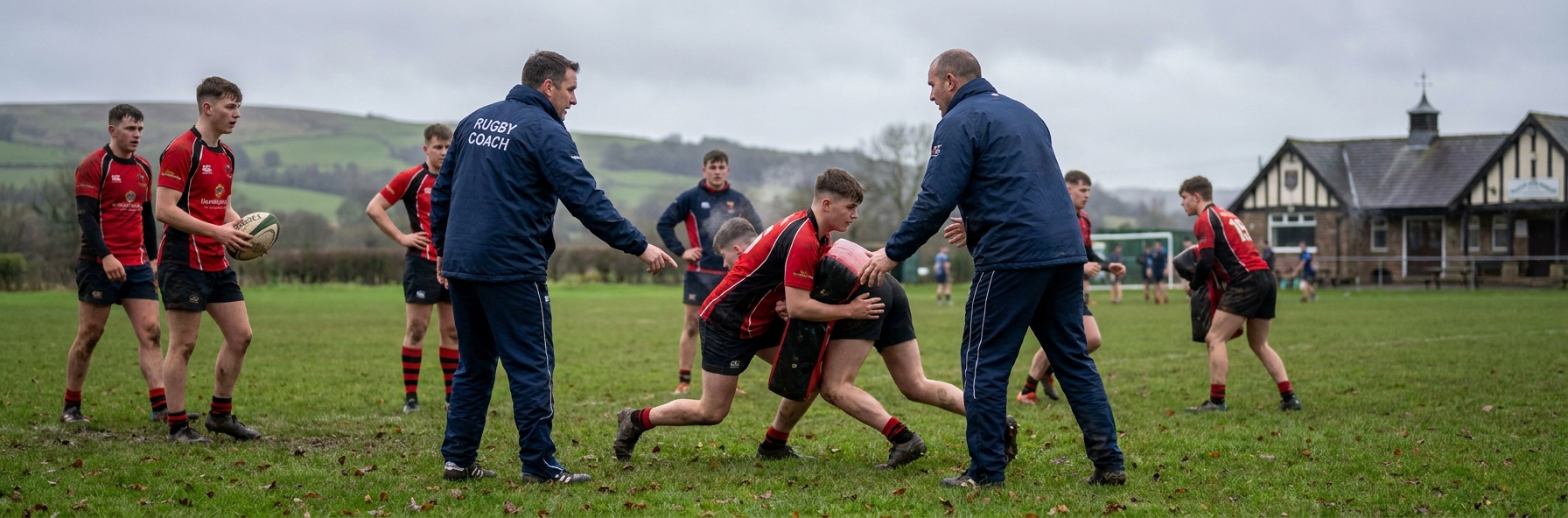
The phrase "restart is the third set-piece" has become a coaching slogan in 2026 for good reason. The team that wins the restart battle controls field position, momentum and the opening sixty seconds of every passage of play. Conceding a try and then conceding the restart immediately afterwards is one of the most common ways to lose a match.

Why Restarts Are Suddenly Critical

Two things have changed. First, kickers have become more accurate. Restarts now land precisely on the 10-metre line and in the 15-metre channel, contested by tall, athletic chasers who jump for the ball. The days of a 22-metre dollop into the middle of the pitch are gone.

Second, the reward for retention has grown. With modern attacking shapes, a team that retains its own restart is straight into structured phase play in the opposition half. A team that loses the restart is defending in their own 22 with a disorganised line. The swing between those two outcomes is enormous.

Building a Reception Pod

Top teams now train a dedicated restart reception pod, exactly as they train a lineout pod. The pod typically has four roles, and every player must know which role they have before the kick is taken.

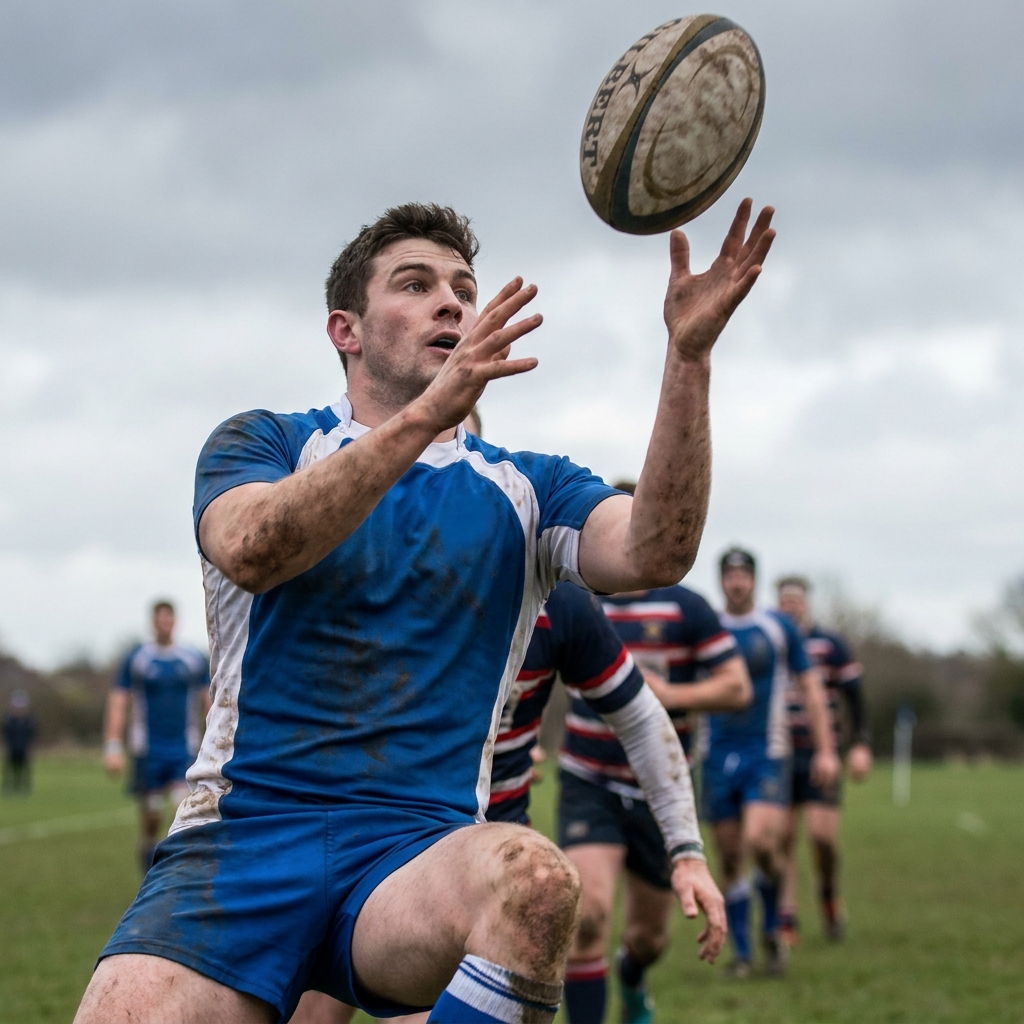
The catcher: Usually a lock or back-rower, chosen for height and timing. They call early - "mine" or the channel number - and commit to the catch.

The lifter: A prop or hooker who arrives at the catcher's side, hands ready, to give a lift on the contested ball. Lifting is legal at restarts and dramatically improves your win rate against good chasers.

The protector: A second forward who stands between the catcher and the chase, taking the contact if it comes and forming the first ruck cleanly.

The exit option: A back, usually the fly-half or full-back, in position to receive the next pass and either kick to touch or launch a counter.

How to Coach Restart Reception

Restart skills are perishable. Train them every week, even if only for ten minutes. Build the session in three blocks.

Block 1 - Catching under contest (5 minutes): One coach kicks high balls from the halfway line. Your designated catchers work in pairs - one catches, one acts as a chaser jumping to contest. Rotate every two reps. The focus is timing the jump, not winning every ball.

Block 2 - Receiving as a unit (10 minutes): Full pod of four sets up. Coach kicks restarts. Pod must catch, secure, ruck and recycle clean ball to a back. Add an opposition chase line of three after five reps.

Block 3 - Restart-to-exit scenarios (10 minutes): 12v12 or 10v10 game starting from a restart. After receiving, the team in possession has one rule: get out of their own half within three phases. This trains the link between reception and territorial exit.

Attacking Restarts - The Other Half

Receiving is half the picture. The other half is recovering your own restart. Modern restart kicks are aimed at one of three landing zones: short on the 10 (5-7 metres beyond the kick mark), mid-deep at the 15-metre line, or long into the far corner. Each option requires a different chase pattern.

The short restart is the highest-percentage recovery option but the hardest to execute accurately. Reserve it for moments when you genuinely need the ball back - after conceding a try, with time running out, or to disrupt a stronger opponent. Drill the kicker until they can land a restart in a one-metre window on demand.

Key Coaching Points

  • Restarts are the most frequent set-piece - train them weekly
  • Build a named reception pod with four clear roles: catcher, lifter, protector, exit
  • Lifting is legal at restarts - use it
  • The exit kick after a clean catch is as important as the catch itself
  • Reserve the short restart for moments when winning it really matters

Recommended Drills

VIEW ALL KICKING DRILLS

cones DRILLS
View All

Continuous Passing Square 2 Pa...

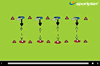
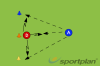
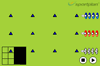
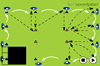
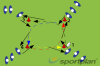
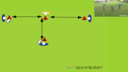
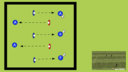
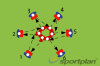
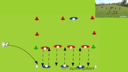
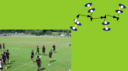
Set up a square of cones, and get the players to form equal lines behind each cone.The ball starts in the hands of a player behind cone 1, who runs (black running line) towards cone 2, passes the ball to the player behind cone 2 who passes the ball back to the first player. The first player then runs towards cone 3 and passes the ball to the player standing behind cone 3.The player who passed the ball from behind cone 2 runs (blue running line) following the run of the first player and receives a pass from the player behind cone 3 before running towards cone 4 and passing the ball to the player behind cone 4.The player who passed the ball from behind cone 3 runs (yellow running line) following the run of the second player and receives a pass from the player behind cone 4 before running towards cone 1 and passing the ball to the player behind cone 1.The player who passed the ball from behind cone 4 runs (red running line) following the run and receives a pass from the player behind cone 1 before running towards cone 2 and passing the ball to the player behind cone 2. The player who passed the ball from behind cone 1 runs (black running line) following the run and receives a pass from the player behind cone 2 before running towards cone 3 and passing the ball to the player behind cone 3, and the drill continues.Change the direction which the ball is going.Progressions:Get the players to change direction on your command (shout/whistle etc)Multiple ballsAs a group must complete 10 successful passes before the session can move on, every time a ball is dropped the whole group does an exercise (e.g. 10 press ups).

General

Rugby: 1 vs 1 colour cones - A...

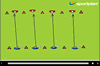
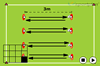
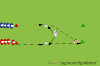
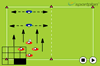
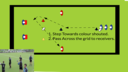
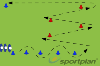
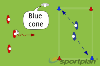
<span id=&quot;docs-internal-guid-0bcf75a9-9414-f74b-43eb-51b4947c502d&quot;> <ul style=&quot;margin-top: 0pt; margin-bottom: 0pt;&quot;> <li style=&quot;list-style-type: disc; font-size: 7.5pt; font-family: Verdana; color: #000000; background-color: transparent; font-weight: 400; font-style: normal; font-variant: normal; text-decoration: none; vertical-align: baseline; white-space: pre;&quot; dir=&quot;ltr&quot;> <p style=&quot;line-height: 1.38; margin-top: 0pt; margin-bottom: 0pt;&quot; dir=&quot;ltr&quot;><span style=&quot;font-size: 7.5pt; font-family: Verdana; color: #000000; background-color: transparent; font-weight: 400; font-style: normal; font-variant: normal; text-decoration: none; vertical-align: baseline; white-space: pre-wrap;&quot;>4 players are required for this drill; 1 attacker, 2 defenders and 1 scrum half. <li style=&quot;list-style-type: disc; font-size: 7.5pt; font-family: Verdana; color: #000000; background-color: transparent; font-weight: 400; font-style: normal; font-variant: normal; text-decoration: none; vertical-align: baseline; white-space: pre;&quot; dir=&quot;ltr&quot;> <p style=&quot;line-height: 1.38; margin-top: 0pt; margin-bottom: 0pt;&quot; dir=&quot;ltr&quot;><span style=&quot;font-size: 7.5pt; font-family: Verdana; color: #000000; background-color: transparent; font-weight: 400; font-style: normal; font-variant: normal; text-decoration: none; vertical-align: baseline; white-space: pre-wrap;&quot;>Once the defenders are set up in either corner of the try line they are assigned a coloured ball. <li style=&quot;list-style-type: disc; font-size: 7.5pt; font-family: Verdana; color: #000000; background-color: transparent; font-weight: 400; font-style: normal; font-variant: normal; text-decoration: none; vertical-align: baseline; white-space: pre;&quot; dir=&quot;ltr&quot;> <p style=&quot;line-height: 1.38; margin-top: 0pt; margin-bottom: 0pt;&quot; dir=&quot;ltr&quot;><span style=&quot;font-size: 7.5pt; font-family: Verdana; color: #000000; background-color: transparent; font-weight: 400; font-style: normal; font-variant: normal; text-decoration: none; vertical-align: baseline; white-space: pre-wrap;&quot;>The attacker is to start in one corner of the baseline. <li style=&quot;list-style-type: disc; font-size: 7.5pt; font-family: Verdana; color: #000000; background-color: transparent; font-weight: 400; font-style: normal; font-variant: normal; text-decoration: none; vertical-align: baseline; white-space: pre;&quot; dir=&quot;ltr&quot;> <p style=&quot;line-height: 1.38; margin-top: 0pt; margin-bottom: 0pt;&quot; dir=&quot;ltr&quot;><span style=&quot;font-size: 7.5pt; font-family: Verdana; color: #000000; background-color: transparent; font-weight: 400; font-style: normal; font-variant: normal; text-decoration: none; vertical-align: baseline; white-space: pre-wrap;&quot;>The drill begins when the attacking player is fed a coloured ball by the scrum half. <li style=&quot;list-style-type: disc; font-size: 7.5pt; font-family: Verdana; color: #000000; background-color: transparent; font-weight: 400; font-style: normal; font-variant: normal; text-decoration: none; vertical-align: baseline; white-space: pre;&quot; dir=&quot;ltr&quot;> <p style=&quot;line-height: 1.38; margin-top: 0pt; margin-bottom: 0pt;&quot; dir=&quot;ltr&quot;><span style=&quot;font-size: 7.5pt; font-family: Verdana; color: #000000; background-color: transparent; font-weight: 400; font-style: normal; font-variant: normal; text-decoration: none; vertical-align: baseline; white-space: pre-wrap;&quot;>The defender associated with that coloured ball will then come out to defend the try line from their corner. <li style=&quot;list-style-type: disc; font-size: 7.5pt; font-family: Verdana; color: #000000; background-color: transparent; font-weight: 400; font-style: normal; font-variant: normal; text-decoration: none; vertical-align: baseline; white-space: pre;&quot; dir=&quot;ltr&quot;> <p style=&quot;line-height: 1.38; margin-top: 0pt; margin-bottom: 0pt;&quot; dir=&quot;ltr&quot;><span style=&quot;font-size: 7.5pt; font-family: Verdana; color: #000000; background-color: transparent; font-weight: 400; font-style: normal; font-variant: normal; text-decoration: none; vertical-align: baseline; white-space: pre-wrap;&quot;>This drill relies on both the reaction speeds of the defenders noticing which ball is in play and also that of the attacker noticing which defender is in play and consequently where there is space to attack.

General

Unfortunately there were no results for your search! Please try again
cones ANSWERS
View All

where can I get an under 8 year program of training?

where can I get an under 8 year program of training or activities to introduce them to the game of Rugby?

Archived User Coach

How to begin coaching when the sport is not popular?

How to begin coaching when the sport is not popular and many of player candidates are not familiar with rugby ? What is key of initiation ? How to start from white paper ?
Narek Sargsyan Coach, Armenia

Im starting coaching Under 6s what drills and games?

Im starting coaching Under 6s what drills and games work best?

Nick Begy Coach, England

How would you help a 17yr old scrum half understand about not taking all the good ball on himself,this has just started creeping into his game

 a

Archived User Coach

u8s running sideways not forward!

What drills would anybody reccomend to encourage forward running in an u8s side,whilst keeping it fun?Some players tend to crab along the pitch.

Archived User Coach

drills to improve the flat line technique

teahcing primary school kids and could use some drills

Archived User Coach

U10s organisation in defence. How to improve?

I have started an under 10s team up, and I would say about 8 from the 13 children I have , did not play rugby until about 6 months ago. Of these players, there seems to be a lot of potential, as we are scoring tries against teams, that very rarely concede tries.the problem I got with them, is that we are very poor at organising our selves in defense when the opposition has the ball, which does result in us conceding quite a few tries. We have some very good tacklers in the team. Can anyone offer some ideas on how I can get them to organise themselves? Thanks . Chris.
christopher jenkins Coach, Wales

Warm up to improve agility, balance and coordination?

Can anyone recommend a warm up drill for improving agility, balance and coordination?Currently attending level 1 introducing children to rugby; I have some ideas already in mind. I'm interested to hear other ideas.Thanks

Matthew Langtree Coach, United Kingdom

Improve Attack Depth

My players often line-up too flat on attack, especially in later phases. How can I work on improving their depth?

Shaun F Coach, Canada

good tackling drill that is not too hard or impact??

For school assignment, i am teaching 12-13 year old girls rugby and need tackling drills

Erin Chant Coach, Australia

Getting a straight defensive line and speed

Hi. I coach a B level under 12 team at school with very mixed abilities. I cant get my boys to get up in a defensive line together or even come up in defense. Any drill very much appreciated.

James Pattinson Coach, Australia

working on passing backwards within primary and secondary

any ideas of drills that can be used for primary and secondary pupils for passing backwards? currently having an issue with them staying onside and keeping behind the ball carrier

Alex Seager Coach, England

need to get back into sport

im currently injured and have been for the past 10\11 months and I will be for the next 7 months would be great to get some drills working on my stepping for when I get back to playing

ben leach Coach, England

passing

drills for passing with u8s

Poppy R Coach, United Kingdom

hitt training with ball for u10

do you have a who can support me with a hitt training with ball for u10?

maurits schotte Coach, Netherlands

KICKI

MAY YOU PLEASE SHOW ME AN EXAMPLE OF A KICKING AND PASSING DRILL

lindiwe Coach, South Africa

JOIN SPORTPLAN FOR FREE

  • search our library of 1100+ rugby drills
  • create your own professional coaching plans
  • or access our tried and tested plans

Sportplan App

Give it a try - it's better in the app

YOUR SESSION IS STARTING SOON... Join the growing community of rugby coaches plus 1100+ drills and pro tools to make coaching easy.
LET'S DO IT