








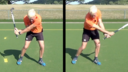
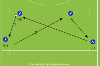
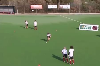
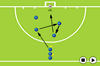



Excellent drills, very detailed videos. Useful site for my U15 boys team.

Any tips for the new hockey self pass rules

The new rules - what will UK coaches be focussing on most? (Living in NZ, we're playing them now!)
Dear colleagues, I am coaching a 1st women team (Argentina) and the system that is working for us very well is 3-1-3-3. Given the quality players we've got in the midfield and attack we try to emphasize our offensive game all the time. The problem I am struggling to resolve is that the forwards do not get involved in chances to score inside the circle very often. The few chances the forwards have they are able to score but it is our midfielders who most of the time get to the circle in possession with the ball. I would like to see a quick transfer of the ball from the midfielders to the forwards who need to be in touch with the ball more often during the game and have the midfielders supporting the attack rather than being the leaders of the attack.Is there any drill or way to improve this aspect of the game? Thanks for your time. Martin
I've always coached keepers to save with two hands were possible, because of the greater surface area. One of my keepers in a rep squad has been told off for doing so. Question is: Shouldn't it be personal preference? Which is faster? I would have thought both were equally quick if done properly. That's certainly been my experience, and I've played international level.
Hi I am a first timer coach, my team is u/11 year old girls. Some of the girls are first timers too.. how can I have a productive practice of one hour?
Hi,I need to play 4 linked hockey sessions to a specific theme I don't know which one to chose such as I can't say attack because there can be so much to cover . So any help?
Here is how to find drill, quick save and print use the Sportplan animator
Suggestions on how to play this system. I have very young 1st team so feel i must play defensive hockey. Thanks
Hi all- I am 37 years old. I played field hockey for 3 years only (in high school). As you can imagine, I'm not very good/experienced. I was a competitive soccer player which made me good enough athletically to play field hockey but anyway, the point is: I never played field hockey at a high level.I now find myself in a head coaching position. (Long story-I did coach some field hockey some years ago and had a blast but it was a while back). Anyway, I have three assistant coaches who aren't much more experienced than I am. Our high school program is VERY weak and so nobody really steps up to coach there.Basically, my question is: what do I do? I have some girls who have played but not much. Then I have girls who literally don't know how to hold their stick and are quite I athletic. We barely have enough girls to field a team. As for drills, I'm trying to use this site but if you were in my position, what specifically would you be doing with these girls so they don't lose 7-0 every game? Right now, I'm focusing on body control and comfort with the ball- (we are playing possession and they are so uncomfortable they just hit the ball away because they don't have the skills to hold). Any help you can give is greatly appreciated!Brooke Asked using Sportplan Mobile App
I just became the head coach of a middle school field hockey team and would like some pointers on how to coach. I have experience with goal keeping and defensive drills, I was a keeper, so I would like to learn more about offense as well. Any help is appreciated!!
Have any other coaches got tips, advice or drill ideas on how i can improve my team's ability to counter attack?

What is the best formation and game play for 7 sides tournament in defending and attacking?
how can I help my goalkeeper to stop a direct shot froma corner hit
Hi allOver the weekend I coached my U18s and we did well but I wanted to find out, is there any tactics, coaching sessions for indoor hockey to help defend in different structures or heck even stop attackers from getting their angles right0
Would you say switching it around to a 1-2-3 would make for better attacking formations?
can you give me passing drills for u12
Dear colleagues, I am coaching a 1st women team (Argentina) and the system that is working for us very well is 3-1-3-3. Given the quality players we've got in the midfield and attack we try to emphasize our offensive game all the time. The problem I am struggling to resolve is that the forwards do not get involved in chances to score inside the circle very often. The few chances the forwards have they are able to score but it is our midfielders who most of the time get to the circle in possession with the ball. I would like to see a quick transfer of the ball from the midfielders to the forwards who need to be in touch with the ball more often during the game and have the midfielders supporting the attack rather than being the leaders of the attack.Is there any drill or way to improve this aspect of the game? Thanks for your time. Martin
I just became the head coach of a middle school field hockey team and would like some pointers on how to coach. I have experience with goal keeping and defensive drills, I was a keeper, so I would like to learn more about offense as well. Any help is appreciated!!
Would you say switching it around to a 1-2-3 would make for better attacking formations?
What is the best formation and game play for 7 sides tournament in defending and attacking?

in more ways than one
 sportplan_hockey




A few weeks into the league season, poor first touches are costing teams the ball. Coach body shape, scanning and receiving on the move to keep possession.

Pre-season fitness fades fast once the league starts. Build conditioning into ball work and use rolling subs well to keep your squad sharp all season.

The first weeks of the season decide whether a junior or new player sticks with adult hockey. Here is how to keep them safe, give them a clear job and build their confidence from the very first bully.
Coaches from around the world look to Sportplan for coaching confidence.
Excellent drills, very detailed videos. Useful site for my U15 boys team.

I love using Sportplan. It's been a great help for co-ordinating hockey practice and being able to help tweak skills and getting the most out of my players!

Great site. An absolute must for coaches who are willing to change and learn new drills. Superb, simply superb.

Wow what a great website, I have found sportplan an important tool for me when planning my netball sessions with my netball team. There are alot of very helpful tips/ideas/skills that I can learn and teach to my team. Thank you sportplan I hope to continue to use your helpful tips and to learn more about improving my teams netball skills. Thanks again....keep it up....

I have been using Sportplan now for 3 years and can honestly say that I have never repeated the same session twice. My girls are always focused and are improving every year. Thanks Sportplan.
What a fantastic tool. The Chalkboard and session tools make an unbelievable difference in making training plans in both time and organization. I will be instructing all of my assistant coaches that this tool must be used for all sessions during the season, so that we may build a club coaching resource library.
I can't get enough of the Sportplan, It has given me back the enthusiasm i was starting to lose. My girls are so keen and are ready at 14 to take the next up in their game. Sportplan will help no end.



