







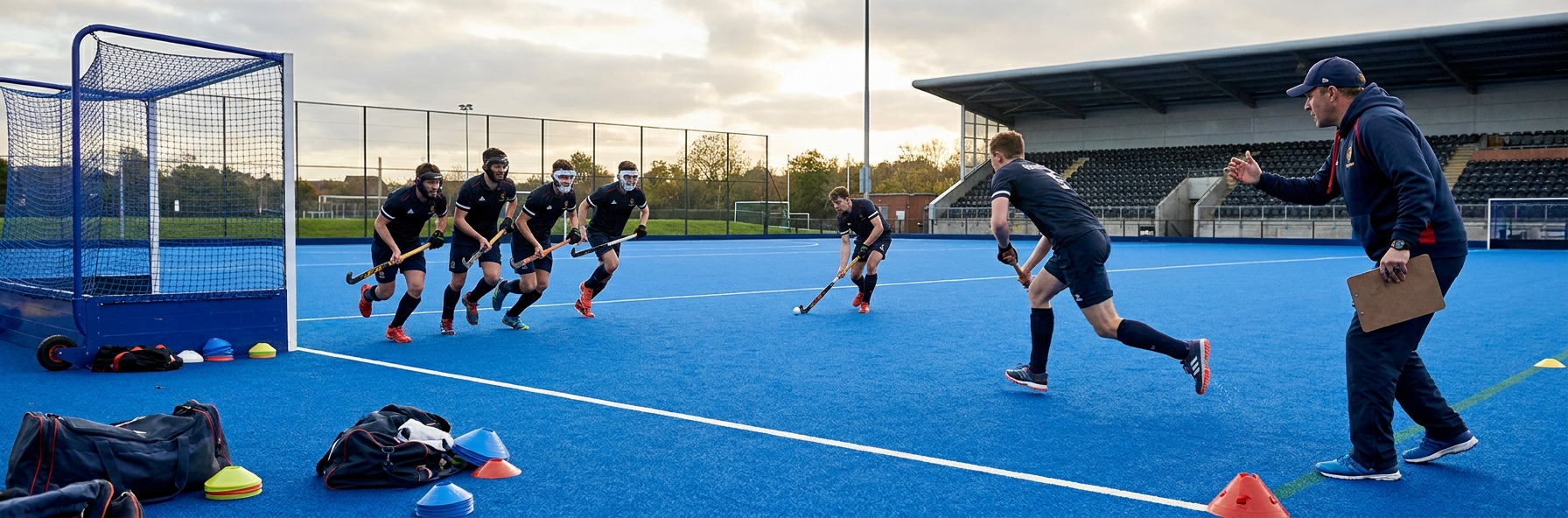
2026 is the first full season with mandatory face masks for every penalty corner defender at every level. The change started with FIH safety regulations in early 2025 and is now embedded everywhere from the Hockey Pro League to county weekend leagues. The equipment is settled. What hasn't settled yet is how teams are using it.
Most clubs put the mask on and ran the same defensive system they used in 2024. That is a mistake. The mask changes the geometry of the corner - what the runners can see, what the postman dares to do, and how aggressively the unit can commit. Coaches who have rebuilt their PC defence around the new equipment are conceding fewer corners. The teams who haven't are still being beaten by the drag flick they have always been beaten by.
What the Mask Actually Changes
Two things, primarily. First, peripheral vision is reduced. The mask narrows the field of view, especially upward, which matters when defending a high drag flick. Second, the fear of facial injury is gone, which is the larger psychological shift. Defenders who used to flinch at the moment of release are now committed; they hold their line, get lower, and intercept rather than evade.
FIH certifies masks in two categories. Category 1 withstands shots up to 80mph and is mandatory at senior and elite levels. Category 2, rated to 60mph, is the standard for junior and recreational hockey. Whatever level you coach, the kit your players wear should match the speed of flick they are likely to face.
Rebuilding the Outrunner Role
The outrunner has the most demanding job on the corner and the most rewarding upside. In 2024 they sprinted out, half-turned at the last moment to protect the face, and accepted that some flicks would simply beat them. In 2026 they sprint flat, stay square to the ball, and aim to block.
Three coaching points decide whether your outrunner is effective.
Start position. Two metres behind the goal line, on the angle of the most likely flick direction. With a right-handed flicker, that usually means a metre inside the right post. The outrunner runs a straight line toward the top of the D, not a curve, and aims to arrive at the ball as the stick draws back.
Body shape at impact. Low, square, weight forward. The mask allows the chest to face the ball, so the runner becomes a wider target. Stick down and slightly to the outside of the body - the most common drag is low and to the postman side, and the stick belongs there to intercept.
Recovery. If the flick goes over the runner or wide, the runner does not turn to chase. They drop straight back toward the near post to support the goalkeeper on a rebound. The chasing runner is always one of the other defenders, never the outrunner.
The Postman Has a New Job
Traditionally the postman stood on the line at the far post, watching for high flicks to the back board. Several elite teams have now redefined the role into something closer to a second goalkeeper.
The new postman starts on the line but steps off it once the ball is injected, taking a half-metre position inside the goalmouth. From there they cover three things at once: high flicks toward the far post, deflections from the postman side, and second-phase shots when the rebound comes out. The mask gives them the confidence to be active rather than passive.
The risk is the high flick that beats them inside the post. Mitigate it by drilling the postman to track the ball with their stick high, paddle-style, ready to deflect anything chest-height or above. The drop-step back to the line is the same as a goalkeeper's recovery from the angle.
The Goalkeeper's Sightlines
The goalkeeper used to expect an outrunner who half-turned and a postman who held the line. The visual cue for "the flick is past us" used to be obvious. With the new defensive shape, the goalkeeper sees a flat outrunner and a stepped-off postman, which can briefly obscure the ball at the moment of release.
Two adjustments help. First, the goalkeeper takes a starting position a metre off the line, slightly higher than in 2024, to clear the sightline above the outrunner's helmet. Second, the goalkeeper and outrunner agree a verbal cue - usually a single word like "out" or "set" - so the goalkeeper knows exactly when the outrunner has committed and adjusts their own angle accordingly.
Training the New System
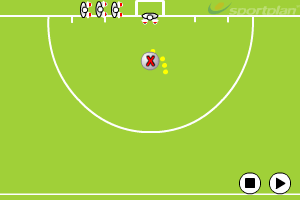
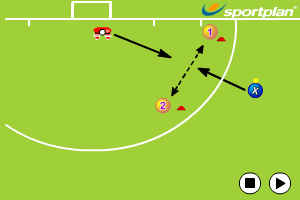
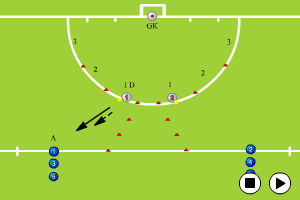
Don't run live corners until the roles are walked through at quarter speed. Use cones to mark the outrunner's line, the postman's stepped-off position and the goalkeeper's angle. Build up to half pace with a stationary flicker, then full pace with a moving flicker. Only once those reps are clean should the unit defend a live corner.
Film every corner you defend in matches and review them in the weekly clip pack. The same three questions apply: did the outrunner stay square, did the postman step off, did the goalkeeper see the ball at release? If any answer is no, you have a clear training task for the following Tuesday.
Key Coaching Points
- Match the mask category to the level of flick you face
- Outrunner runs straight, stays square, stick to the postman side
- Postman steps off the line as a second goalkeeper
- Goalkeeper takes a higher starting position to clear sightlines
- Walk the system at quarter speed before any live reps

 sportplan_hockey









