





I have thoroughly enjoyed using your site to help me with my coaching plans for my under 9's netball team.

Serial steppers at 14 years old, how do I stop this terrible habit? Half my team step and have been playing for many years.

Hi, I have a lady in my team who keeps getting pulled up for footwork (dragging)! i cant get to many matches and she doesnt do it in training, i videoed a game to see what the problem was and it seems that she has a very wide landing stance when on the run, almost as if she needs to take another step, ive tried to encourage her (and done a drill) to land on outside feet and small step footwork patterns etc but nothing seems to be working! Has anyone ever had the same problem?! Any ideas?!?! Sarah %3A)

When a player ( one that has played Netball for some years ) receives a pass how do you stop her from taking a giant step and taking time to control balance, instead of a shoulder width step and have control stright away?
Hi all coaches - any tips on how to coach a player who is getting pulled up for "late take off" footwork - i find it difficult to explain clearly - Thanks! Alison

My centre was penalised for stepping in the centre circle - she took her centre stance and after the whistle was blown she stepped out with one foot. I didnt think a centre had a 'landing foot' at a centre pass, providing both feet are in the circle when the whistle blows, but the umpire said when she returned to the circle she put her left foot in first so that became her landing foot even though play had not been started. I told her just to stay in the circle but I would like to know if the umpire was correct or if she had it wrong
I have recently started coaching a u/12 team, something very new to me as I have always coached older kids or adults. My shooters make a lot of stepping errors specifically after a spilt landing. How do I help them remember which foot they put down first?
Hi all, My daughter is about to start coaching for the first time and it's expected she'll have a group of 10 years olds in C or D grade. I'm struggling to remember what her capabilities were at that age and she's looking for some suggestions for drills to start off with until she gets a handle on where they're at. Is anyone currently working with kids around that age/ability bracket? Does anyone know if any of the weekly drills are aimed at beginners/introductory levels? From the ones I'm seen, they're aimed at an intermediate level so I'm assuming some of the games would be OK, but most of the drills would be beyond their capability.Thanks in advance.
How does a defender know where to judge her 3 foot defensive stance when shooters opt for a simultaneous split landing?
When a shooter lands in the circle and then turns on her landing heel to get closer to the post, am I right in thinking that the 3ft distance for the defender is measured from where her landing foot toe now is rather than where it was when she originally landed? And is it dependant upon whether the defender is marking from in front or behind ie if it's from behind then it's 3 ft from the shooter's landing heel and if it's from in front then it's from their landing toe?
Hi, two of my 13 year old players are constantly stepping. I have tried drills, with the landing on their outside foot, both feet and even put a coin in one of their shoes, so they can tell which one they landed on but they still step. Any suggestions? Thanks
I need some training tips to help girls with landing and foot work?
How to improve you players stepping
If the GS steps forward towards post in circle keeping her landing foot up does defender mark 3ft from landing foot or step in Asked using Sportplan Mobile App

Can anyone assist me with some drills to perfect the split landing in the circle. I have a couple of shooters who are moving their grounded foot and getting stepping calls. How to we perfect the 2 grounded feet split landing.Cheers Kristy

Is pivoting from heel to toe and vide versa stepping? Asked using Sportplan Mobile App

I would like clarification regarding a rule and I can't seem to find it when going through the rule book.A pass is thrown within the field of play to another player, this player lands with one foot in the court, whilst the second landing foot lands on the sideline of the court. Is play deemed to continue, or is it deemed that the ball has gone out of play as the player has stepped in possession of the ball out of bounds.
hey i hurt my foot playing netball i roll on one side as i was landing. The doctor said all i had done was torn some tissue. But they didn't tell if i can play on the weekend and train on Wednesday. Can i?
How does a defender know where to judge her 3 foot defensive stance when shooters opt for a simultaneous split landing?
Can anyone assist me with some drills to perfect the split landing in the circle. I have a couple of shooters who are moving their grounded foot and getting stepping calls. How to we perfect the 2 grounded feet split landing.Cheers Kristy
Hi, I have a lady in my team who keeps getting pulled up for footwork (dragging)! i cant get to many matches and she doesnt do it in training, i videoed a game to see what the problem was and it seems that she has a very wide landing stance when on the run, almost as if she needs to take another step, ive tried to encourage her (and done a drill) to land on outside feet and small step footwork patterns etc but nothing seems to be working! Has anyone ever had the same problem?! Any ideas?!?! Sarah %3A)
in more ways than one
 sportplan_netball

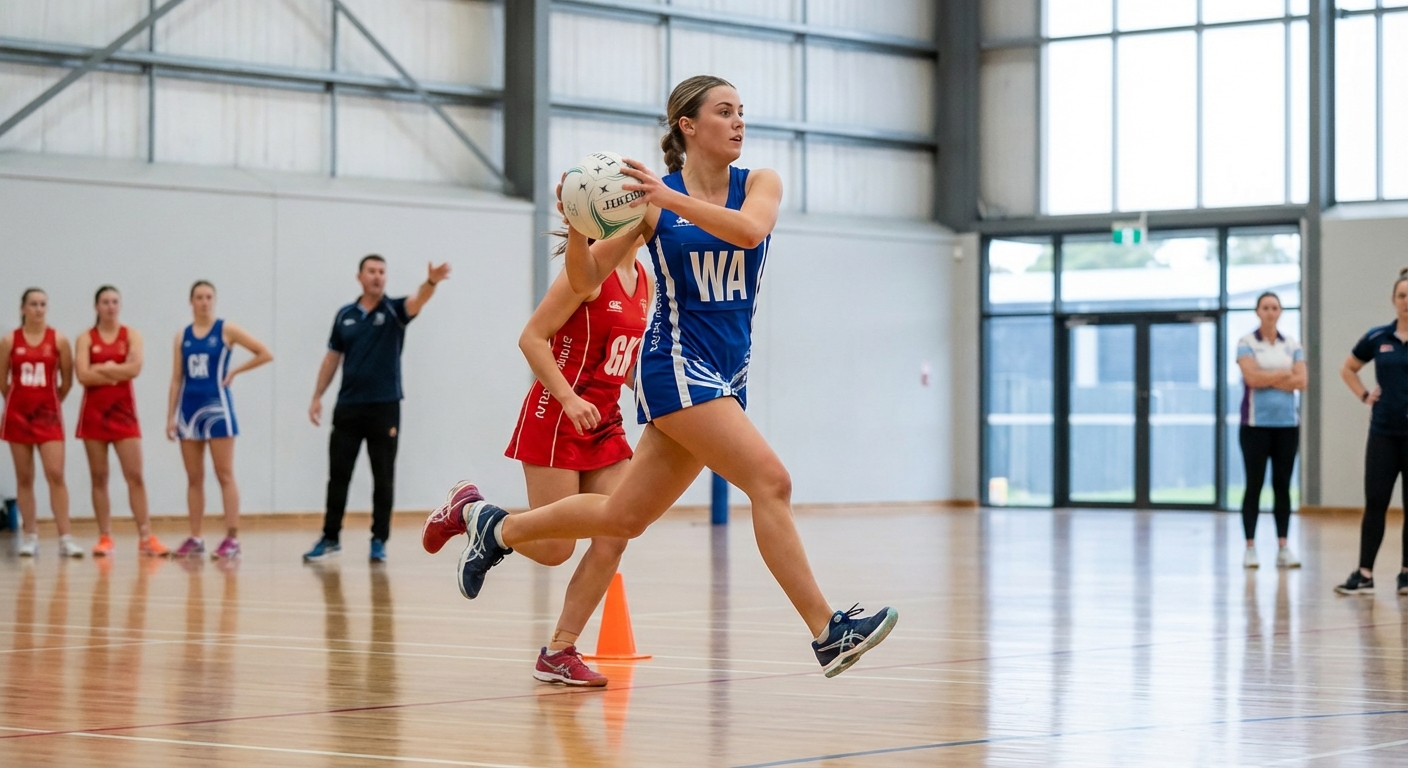
The Wing Attack is the critical link between midcourt possession and circle feeding. This masterclass breaks down the movement patterns, timing, and spatial awareness that separate elite WAs from the rest, with practical drills to develop these skills at every level.
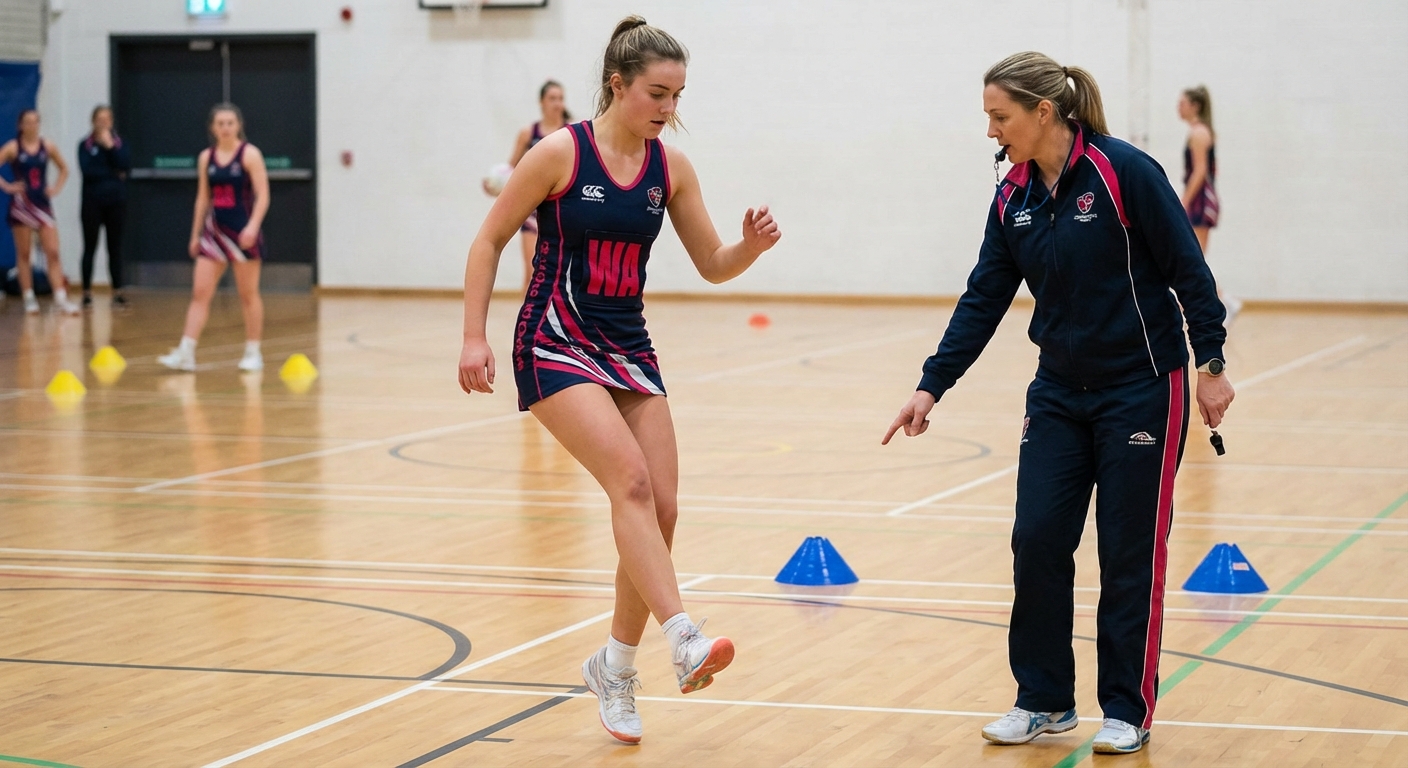
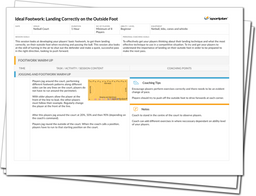
Footwork is the foundation of every skill in netball. This guide provides a clear explanation of the stepping rule, the mechanics of one-foot and two-foot landings, pivoting technique, and progressive drills to build footwork confidence from junior level upward.
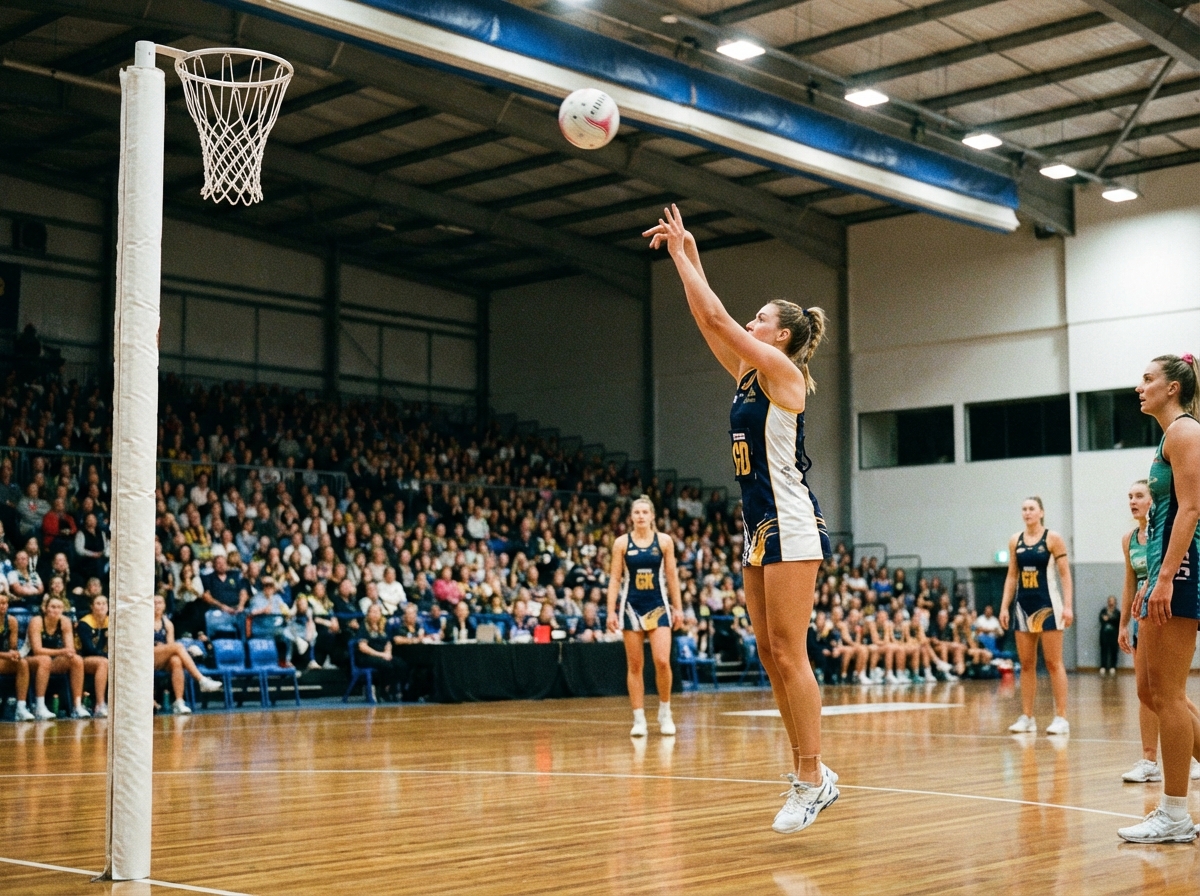
The early 'shoot from anywhere' era is over. Smart teams now use data-driven decision models to decide when the two-pointer is worth it.
Coaches from around the world look to Sportplan for coaching confidence.
I have thoroughly enjoyed using your site to help me with my coaching plans for my under 9's netball team.

I found this service to be excellent and it was of great help when planning my netball training sessions.

Sportplan is fantastic with all the various drills for every area of netball. My confidence as a coach has improved because I have Sportplan to support me.

Wow what a great website, I have found sportplan an important tool for me when planning my netball sessions with my netball team. There are alot of very helpful tips/ideas/skills that I can learn and teach to my team. Thank you sportplan I hope to continue to use your helpful tips and to learn more about improving my teams netball skills. Thanks again....keep it up....

I have been using Sportplan now for 3 years and can honestly say that I have never repeated the same session twice. My girls are always focused and are improving every year. Thanks Sportplan.
What a fantastic tool. The Chalkboard and session tools make an unbelievable difference in making training plans in both time and organization. I will be instructing all of my assistant coaches that this tool must be used for all sessions during the season, so that we may build a club coaching resource library.
I can't get enough of the Sportplan, It has given me back the enthusiasm i was starting to lose. My girls are so keen and are ready at 14 to take the next up in their game. Sportplan will help no end.