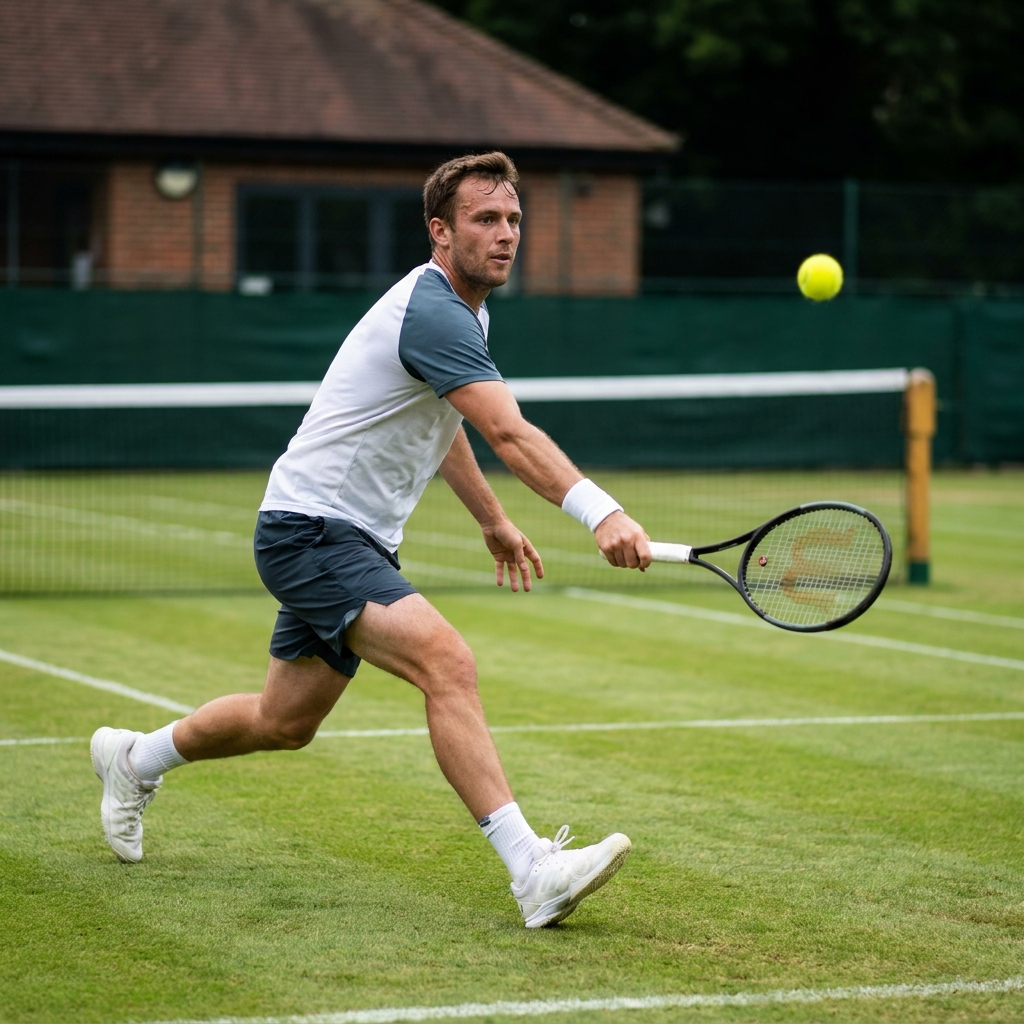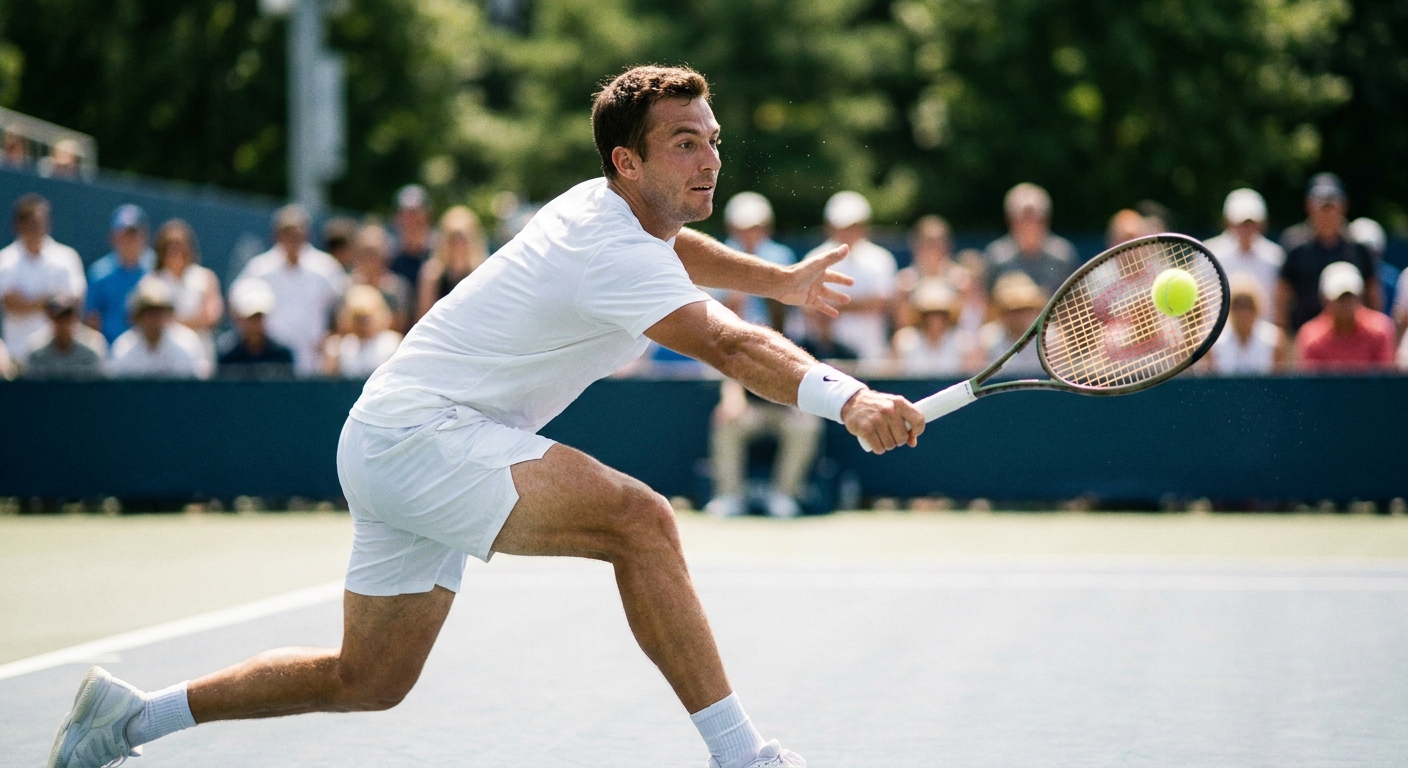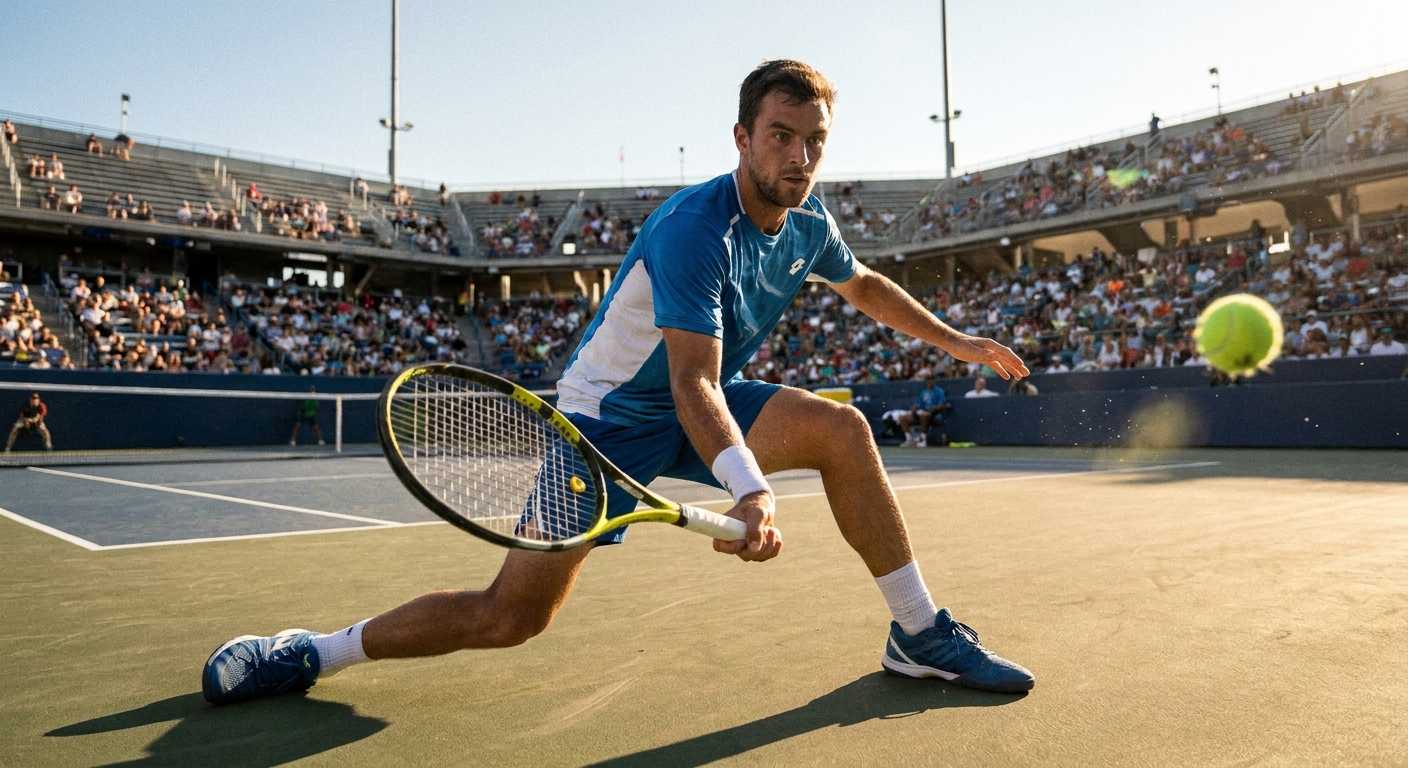
Everybody spends hours grooving the serve. Far fewer players put the same care into the shot that answers it. Yet the return of serve is one of only two shots that happens on every single point, and at every level below the very top it is where matches are quietly won and lost. A player who can neutralise a big first serve and punish a soft second serve is a nightmare to hold serve against.
The summer hard and grass swing is the perfect moment to work on it. Post-Wimbledon, juniors are inspired and the LTA Youth programmes are in full flow, so there is real appetite for practice that feels like the tennis they have just watched. This month we look at how to turn the return from a defensive reflex into a genuine attacking weapon.
The Coaching Problem
Watch a club-level return and you usually see one of two errors. Either the player stands flat-footed and swings too big, arriving late and spraying the ball long, or they get so worried about the serve that they bunt it back short and hand the server an easy first ball to attack. Both come from the same root cause: no clear intention before the serve is struck.
The attacking return is not about hitting harder. It is about being ready earlier, reading the toss and body shape sooner, and having a plan for where the ball is going before it arrives. Power is a by-product of good position, not the goal itself.
Why This Happens
Most players treat the return as a reaction, and reaction alone is too slow against a decent serve. The ball is only in the air for a few tenths of a second, so a player who starts thinking at the bounce has already lost. The good returners are not faster - they are earlier.
The second issue is footwork. A static player cannot generate a compact, balanced strike. Without a well-timed split-step the feet are heavy, the body is late, and the swing has to do all the work. That is when the big backswing creeps in and errors multiply.
The third issue is mindset. Many players see the return as damage limitation - just get it back and hope. That passive frame invites the server to dictate. The fix is to give the player a job on every return, so their attention is on execution rather than fear.
How to Fix It: The Ready, Read, React Framework
The LTA teaches a simple three-part model for the return, and it is a brilliant coaching scaffold because a player can self-check each stage. Build your practice around these three words.
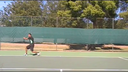
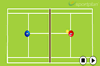
Step One: Ready. Set a strong athletic base a step behind where the player thinks they need to be. Racket out in front, weight on the balls of the feet, knees soft, eyes level. Against a first serve, stand deeper to buy time; against a second serve, step in to take time away. The starting position is a decision, not a default.
Step Two: Read. Teach players to watch the server's ball toss and shoulder line, not the racket. A toss out to the side hints at a slice wide; a toss over the head hints at a kicker. Even reading one serve in three earlier than before transforms the return.
Step Three: React with a split-step. The split-step lands as the server strikes the ball, not before and not after. This tiny hop loads the legs so the first step explodes in the right direction. Get the timing right and the swing can stay short and clean.
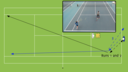
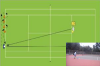
Step Four: Commit to a target. Every return needs a destination. Cross-court and deep is the safe, high-percentage default - it gives the biggest margin and pushes the server back. Only go down the line when the ball and the balance genuinely invite it.
Key Coaching Points
- Split-step timing is the single biggest lever - drill it until it is automatic
- Deep starting position for first serves, a step inside the baseline for seconds
- Read the toss and shoulders early rather than waiting for the bounce
- Keep the backswing compact and let the legs and body supply the power
- Cross-court and deep is the default target; down the line is the exception
- Give the player a specific job on every return so intention replaces anxiety
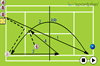
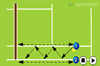
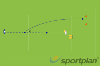
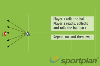
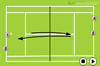
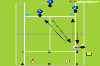
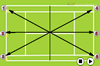
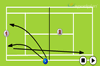
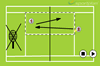
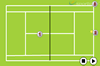
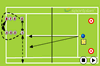
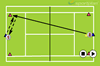
Recommended Drills

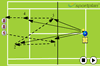
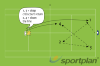
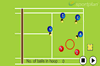
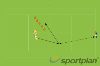
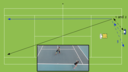
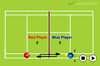
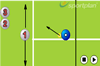
VIEW ALL SERVE & RETURN DRILLS
Frequently Asked Questions
Should players stand further back to return a big serve?
Against a heavy first serve, yes - stepping back buys precious reaction time and lets the ball drop into a comfortable strike zone. For second serves, do the opposite and step inside the baseline to take time away from the server and apply pressure.
What is the most common return of serve mistake?
Too big a backswing. Players try to muscle the return and arrive late. Coach a compact take-back with the racket already out in front, and let a well-timed split-step and body rotation supply the pace instead.
Where should the return be aimed?
Deep and cross-court is the reliable default. It offers the largest margin over the lowest part of the net and pushes the server back behind the baseline, taking away their chance to attack the next ball. Save the down-the-line return for when your balance and the incoming ball genuinely allow it.