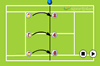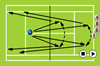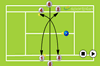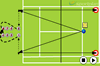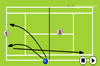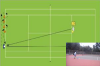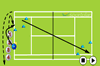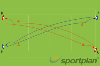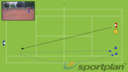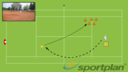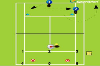
Tennis: forehand

The 50:22 law, introduced as a trial and now a permanent fixture, has fundamentally changed how teams approach tactical kicking. A kick from your own half that bounces in-field, crosses the 22, and finds touch rewards the kicking team with the lineout throw-in. This single law change has altered both attacking and defensive strategies across the game.

Understanding the Law

The requirements:

  • Kick must originate from behind your own 10-metre line
  • Ball must bounce in the field of play (not direct to touch)
  • Ball must cross the opposition's 22-metre line
  • Ball must then go into touch
  • Kicking team retains the throw at the lineout

These requirements create specific technical demands. The kick must be long enough to reach the 22, accurate enough to hit the corner, and struck correctly to bounce in-field first.

Why 50:22 Matters

Before the 50:22, kicking from your own half that went to touch gave the throw to the opposition. The only benefit was territorial gain. Now, an accurate 50:22 delivers both territory AND possession - a game-changing combination.

The tactical impact:

  • Lineout attacking platform in the opposition 22
  • Defensive scramble if full-back fails to cover
  • Forces back three to position wider, creating space elsewhere
  • Punishes lazy defensive positioning

Executing the 50:22

The Grubber Option

A well-struck grubber can beat the full-back to the corner. The low trajectory keeps the ball in play, and end-over-end rotation makes the bounce predictable.

Grubber technique:

  • Strike through the middle of the ball, toe down
  • Generate end-over-end spin for predictable bounce
  • Aim for the gap between full-back and touchline
  • Follow up - if it doesn't reach touch, contest the chase

The Chip and Chase

A chip kick over the defensive line that bounces in the 22 and reaches touch. Higher risk - defenders can field it before it reaches touch - but effective against narrow defences.

Chip technique:

  • Get under the ball with angled foot
  • Enough height to clear defenders, not so much that chase time is lost
  • Backspin for controlled bounce toward touchline

The Cross-Field Kick

Against a defence shifted to one side, the cross-field kick to the far corner can find space. This is a longer kick requiring more accuracy but exploits defensive imbalance.

Defensive Adjustments

The 50:22 has forced defensive positioning changes. Full-backs can no longer sit narrow - they must cover the width. Wings must be aware of their touchline responsibilities.

Defending against 50:22:

  • Full-back positions wider to cover both corners
  • Wings drop deeper to provide secondary cover
  • Communication about kick threats: "Watch grubber!"
  • Quick identification and reaction to kicks

These defensive adjustments create space elsewhere. If the full-back is wide, the central channel opens. If wings drop deep, the defensive line loses numbers.

When to Attempt 50:22

Good opportunities:

  • Full-back positioned narrow or deep
  • Wide channel space visible
  • Defence rushed up, leaving back field exposed
  • Slow ball where running attack is risky

Poor opportunities:

  • Full-back already covering the corner
  • Quick ball with attacking momentum
  • Wind against making accurate kicking difficult
  • Kicker not in optimal position

Training 50:22 Execution

Individual kicking practice:

  • Set targets at the corner - grubber to specific zones
  • Practice both feet (advantage when on either side)
  • Vary distances - not every 50:22 opportunity is from the same position

Team practice:

  • Live scenarios with defence - read the full-back position
  • Decision-making: kick, run, or pass?
  • Chase organisation when the kick doesn't reach touch

Alternative Outcomes

Not every 50:22 attempt succeeds. But the threat creates secondary benefits:

If fielded before touch: You've still gained territory and forced the opposition to start from deep. Apply chase pressure and compete for their exit kick.
If it bounces out before 22: Opposition throw, but you've gained significant ground. Reset defensive line.

If full-back covers: Your threat has pulled them wide. Subsequent attacks may find more space centrally.

The Mental Game

The 50:22 threat changes how oppositions defend, even when you don't kick. Simply having players capable of executing the kick forces wider positioning and changes defensive dynamics.
Make sure your opposition knows you have this weapon. Execute it successfully early in matches, and they'll respect the threat throughout.

Key Coaching Points

  • The 50:22 rewards accurate kicking with possession AND territory
  • Grubbers are highest percentage - practise them
  • Read the full-back position before deciding
  • Even unsuccessful attempts gain territory
  • The threat changes defensive positioning

Drills to Master the 50:22

VIEW ALL KICKING DRILLS

JOIN SPORTPLAN FOR FREE

  • search our library of 1200+ tennis drills
  • create your own professional coaching plans
  • or access our tried and tested plans
forehand DRILLS
View All
Unfortunately there were no results for your search! Please try again
forehand SESSIONS
View All
forehand ANSWERS
View All

what drills do you use to teach contact point skills to mini reds

Ask a question and have it answered by Coaches from around the world and Sportplan's team of Experts.

liz Sharman Coach, England

how can i correct a slapping forehand

one of my student is playing is forehand , with slapping. pls let me know how to correct it. gana.

Coach, United States of America

Hi Guys, How best to teach a return of serve

Hi Guys, Just wondering if anyone has a suggestion on how to teach a block return from serve and a slice return from serve to 13y.o juniors who are playing against big servers Cheers

Ciaran Cahill Coach, Ireland

Forehand groundstroke. contact point?

Forehand groundstroke. Coach A teaches a classic FH with the C loop and says that the modern FH (western Grip) contact point is at the side. I understood that the Eastern FH was hit at the side but the Semi western was hit 6 to 8" in front when the racket face is vertical to the ground. Which is correct?

Norman Frey Coach, United States of America

forehand

On my forehand I like to play a multi segmented forehand and have a extreeme westrn grip. ,Hitting a multi segment forehand with a semi-western grip particularly off serve does not feel natural for me. What can I do? With thanks, Stephen

stephen Coach, Australia

How to run try-outs, getting 50 students down to 32?

There are 50 students, and I need to select 32 of them. How will you plan your try-out? Test for accuracy? Fitness?

Farhad Roshanaie Coach, United States of America

Catapult serve is a good learning point?

I coach 4-7 year olds, and when I'm teaching serves I usually start with the throwing technique without a racket, before introducing the ball toss. Someone has suggested I teach a catapult serve as a part of the learning process. I personally think this would teach bad habits as there is no toss up. Any opinions on this? Thx

Mike Childs Coach, England

Passing shot drill for four or five players.

Is there a drill to involve four or five players to teach a passing shot? Situation would be opponent at or approaching the net and plays a poor approach.

Keith Brown Coach, England

Fun technique drills for 4-5 year-olds?

I could use some relatively easy technique drills that are fun to keep the kids I train interested. They have played for 4 months (beginners) and are aged 4-5. If you know some fun drills involving forehand and backhand I would very much appreciate if you'd answer this question! Thanks in advance!

Mari Milos Coach, Sweden

What is the best way to share playing vocab at this site...

...where it will list and describe playing terminology such as shave, tackle-back, steal, forehand.

Ejaz Syed Coach, United States of America

How to correct the bad habit of under-slicing a forehand strokes?

Hi Many times you find new beginners, especially kids, tend to do the easier way of forehand shots by under-spinning/slicing the balls to get over the nets. I've tried a few ways but it's not to easy to change a habit. Please help. Thanks a lot. KT.

KT Teo Coach, Singapore

when is good to start teaching a forehand?

when is good to start teaching a forehand?

Anusha Coach, England

What is the most efficient way to plan a training

I know some coaches use ; Monday - Serve Tuesday - Return Wednesday - Forehand Thursday - Backhand Some are using wave planning and some use 3 days Serve 3 days Return 3 days Forehand My Question is what is the most efficient way to plan a training

Berk Coach, Turkey

How to organize favorite drills?

I want to make my own collection of drills that I like but would like to have them organized (warmup, forehand, backhand,...). How can I do that?I can't find a way to add drills to my folders and when adding them to my favorites list, there is no way of organizing them

Marc Siegel Coach, Germany

TopSpin Forehand

How should I put more topspin and depth and height on my forehand shots, I want to get it more consistent and practice putting more power on them.

stefo Coach, United States of America

group coaching

I want to design an 8 sessions for 2 beginners players

Asim 0 Coach, Qatar

Forehand groundstroke. contact...

Forehand groundstroke. Coach A teaches a classic FH with the C loop and says that the modern FH (western Grip) contact point is at the side. I understood that the Eastern FH was hit at the side but the Semi western was hit 6 to 8" in front when the racket face is vertical to the ground. Which is correct?

Norman Frey Coach, United States of America

JOIN SPORTPLAN FOR FREE

  • search our library of 1200+ tennis drills
  • create your own professional coaching plans
  • or access our tried and tested plans

Sportplan App

Give it a try - it's better in the app

YOUR SESSION IS STARTING SOON... Join the growing community of tennis coaches plus 1200+ drills and pro tools to make coaching easy.
LET'S DO IT