Rugby: t

May 2026

Kicking from hand is at record levels in elite rugby. Six Nations 2026 was the most kicked-from-hand championship since stats began, and the same trend is showing across the URC, Champions Cup and Super Rugby. Coaches have realised that good kicks force opponents into pressured returns - and pressured returns are the easiest scoring opportunities in the game.

The flip side is just as important. If your side is on the receiving end of all those kicks, your counter-attack is no longer a luxury skill - it is a core part of your attacking game plan. The most exciting tries in 2026 are not coming from set-piece strike moves. They are coming from broken-field returns.

Why the Counter-Attack Has Become Central

When a team kicks, three things happen at once. Their forwards are spread across the field as chasers rather than packed around the ball. Their defensive line is in motion, not set. And the receiving team has the ball with space in front of them. Combined, those three factors mean the defence is at its most vulnerable in the seconds immediately after a kick.

Modern attacking analysts call this the "transition window". It typically lasts six to eight seconds. If the receiving team can move the ball into space inside that window, they create a numerical or positional advantage that no structured attack could engineer in open play.

The Three Decisions Every Receiver Must Make

Catching the ball is the easy part. The decision that follows is what separates good counter-attacking teams from poor ones. Train your back three to run through three questions every time they collect a kick.

Decision 1 - Time and space: How close is the nearest chaser? If a chaser is within five metres and closing fast, the answer is almost always to return the kick. If the nearest chaser is ten metres away or more, the carry is on.

Decision 2 - Width on the field: Where are my support runners? A counter-attack needs at least two players in support. If the wingers are still on their wings and the full-back caught it, there is no point trying to run - the carrier will be isolated. Better to step infield to a phase, then launch the next play.

Decision 3 - The defensive picture: Which side is undermanned? Most chase lines come up flat and even, but there is almost always a weakness - usually on the far side of the field where the original kicker stayed back. Counter to that space, not into the strongest chase channel.

How to Build Counter-Attack Habits

Counter-attacking cannot be taught from a whiteboard. It is a reactive skill and must be trained in environments that look like the game. Here is a progression that works at every level from U16 upward.

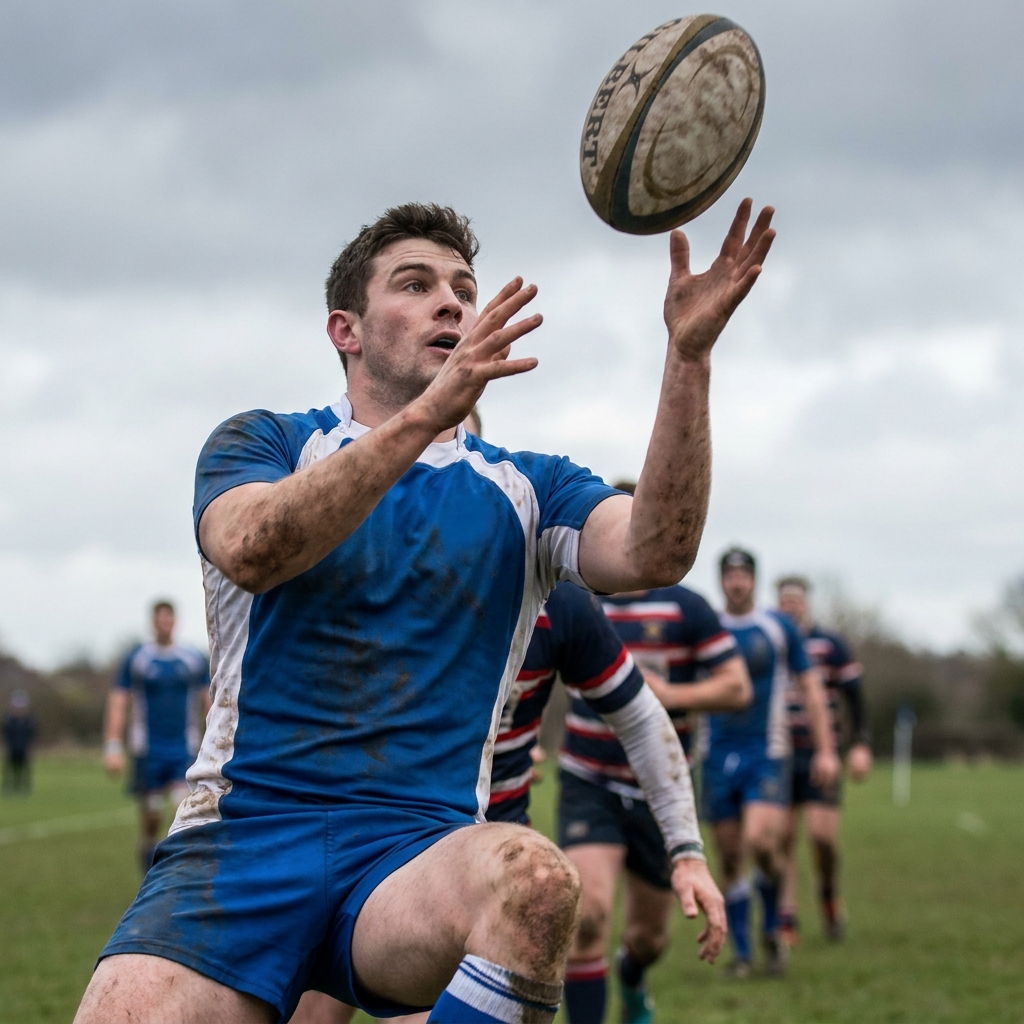
Stage 1 - Catch and scan: Two minutes of high-ball drills where every catcher must shout the position of the nearest chaser before they hit the ground. This trains the pre-catch scan, which is the foundation of every good counter-attack.

Stage 2 - 3v2 from a kick: Coach kicks the ball into a back three. Two chasers come from 20 metres. The back three must keep the ball alive and beat the chasers using one of three responses: switch infield, hit a support runner on the outside, or counter-kick.

Stage 3 - Full-pitch transition game: Conditioned game where every kick must be returned. No mark allowed, no exit kick allowed. Forces players to find solutions and exposes which units have not learned to support the back three quickly.

The Forwards' Role in Counter-Attack

This is where most teams fail. The back three can be brilliant, but if the forwards are still standing where they were before the kick, the counter dies at the first ruck. Coach your forwards to react to opposition kicks like a fire alarm - the closest three drop into the back-field as immediate support, while the rest fan out across the pitch ready to play.

This habit takes weeks to embed. Start by freezing training every time a kick is fielded and asking each forward to show where they should be running. Repetition turns it from a thought into a reflex.

Key Coaching Points

  • The transition window is six to eight seconds - move the ball before it closes
  • Train the pre-catch scan: who is chasing, how close are they, where is the space?
  • Counter to the weak side of the chase, not into the strongest channel
  • Forwards must react to kicks as quickly as the back three
  • Avoid contact in your own 22 - if the counter is not on, return the kick

Recommended Drills

VIEW ALL DECISION-MAKING DRILLS

t DRILLS
View All

Realignment & Depth - 5 v 4

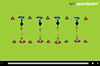
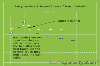
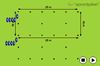
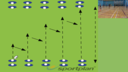
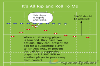
The realignment and depth hands drill is a quick drill to focus the players in sharpening their alignment and depth before a session. You can spend as long or as short on this drill as you need. The aim of the drill is to develop the speed at which players realign themselves, to support their early hand-catch, quick and accurate transfer of the ball to a support player. Set a 5 cones 1.5 meter apart in straight line. This will mark where the players will start the drill from Set 4 cones at a diagonal in line with the starting cones from one edge. This will be the cones that the defending players need to retreat to before coming up to pressure the attacking players. The first attacking player needs to step back 1 meter and will receive the ball from the first defending player who has also stepped back 1 meter to his designated cone Divide the group into 4 attacking player and 5 defending players, there should be a free attacking player The ball starts with the defending player On the coaches call, all defending players need to work back to their designated cone and then come forward in a straight line to their opposite attacking player The attacking players set their own depth to ensure they have time to catch and pass effectively On the coaches call, the first defending player will move back to their cone, once they get to the cone they pass the ball to the first attacking player, and then the first defending player tries to put pressure on the first attacking player The attacking players try to get the ball to the 5th player without being ‘touched’ by a defending player

Decision making

Unfortunately there were no results for your search! Please try again
t SESSIONS
View All
t ANSWERS
View All

what is t bone? - Sportplan

what is t bone?

Archived User Coach

tackling for U12's who don't l...

I've a few players who genuinely do not like tackling but love the game in every other facet. Does anybody have experience indealing with this predicament. We have practiced the basic techniques repeatedly but when it comes to game time these kidsjust won't engage with the shoulder but use outstretched arms in a feeble attempt to tackle.It can be very frustrating ....

Bernard O'Doherty Coach, Ireland

(U11 Rugby) - How to referee t...

I'm coaching and reffing U11 rugby and one of my players is the definitive 'big lad'. His 'strength' is his size and his power, but last weekend he didn't seem to get reffed fairly. The opposition couldn't tackle him down, one on one and when another two joined in to make a mini maul, that didn't slow him down much either. The ref then let other people join in the (one sided) struggle to tackle him down, which seemed very unfair as A) it's outside the laws of U11 rugby,, B) it makes it nigh on impossible for him to offload, C) when he is brought to ground, he has 4-5 players all over him and he got pinged for 'holding on'. He is a recent arrival to rugby and it was our first game for a couple of months, so the situation hadn't reared his head before. We are keen that he learns all of the core skills of rugby and doesn't get used as a battering ram, but after seeing a pack of hyenas trying to pull down the big fella, something just didn't seem right to me.I'd be grateful for any thoughts and opinions.

Archived User Coach

Positional rotation at U9 leve...

Positional rotation at U9 level... I originally posted this as answer to a question about squad rotation, but thought I might get a better response if I posted it as a question in its own right... I have an 8 year old at the age level you are talking about - he isn't the best player at the club by any means, but has his good moments. He loves watching the game, he has a good understanding of the way it is played (to the extent that he has often shouted at the telly over recent weeks at some of our illustrious stars when they're out of position) and he has good handling skills - to be honest he's just not brave enough in the tackle yet, but I know it'll come so I'm not making a big thing of it. However, he and a couple of others are constantly stuck on the wing, and are getting fed up with the fact that they don't get the opportunity to get involved much. The coaches seem to have their "big names" and as you say seem more interested in the short term aims of winning each game rather than trying to keep the lads interested and challenged each week. I know my son's aware that I think they should move them all around, although I have made a point of not criticising the coaches at all - I think he heard me talking about it to someone else. The coaches have talked about moving players to different positions, but haven't done it, and aren't really receptive when they are asked about it. There are two coaches, and the one that seems to have the "casting vote" is pretty autocratic and doesn't seem to accept criticism or suggestions. My son has mentioned about moving to another club, where he may or may not get more of a chance to shine, but I am not sure this is the right move as it may teach him to give up rather than sticking with something. Any thoughts please?
Archived User Coach

My fowards seem afraid to ruck...

My fowards seem afraid to ruck and stand around the ruck while in the way of the scrum half trying to get the ball out to the backs. They also don't support the ball carrier while he is being tackled. Please help me with any suggestions!!!

William Barrett Coach, United States of America

What does the "T Bone" concept...

What does the "T Bone" concept mean when defending?

Olivier Guitart Coach, New Zealand

switch pass in rugby union

switch pass in rugby union

maria Coach, England

I coach Under 11's I have two players that do all the right things in training but when the game starts they will not pass. They do score tries but I think we could score more if they passed. What can I do? Gary SWales

Ask a question and have it answered by Coaches from around the world and Sportplan's team of Experts.

Gary Grant Coach, Wales

How to begin coaching when the sport is not popular?

How to begin coaching when the sport is not popular and many of player candidates are not familiar with rugby ? What is key of initiation ? How to start from white paper ?

Narek Sargsyan Coach, Armenia

Law 12 - the forward pass or throw forward

The law says that a forward pass is one "thrown forward" "in the direction of the opponents' goal line" Does that mean that, if the ball is passed and the receiver catches it NEARER to the opponents goal line than from where the ball was passed that the pass was forward? (Leaving to one side any other touches of the ball that might have taken place.) Maybe an example is better. Player 1 passes the ball sideways - releasing it on the 22 metre line. Player 2 (with no other player having touched the ball), running from well behind the 22 metre line, catches the ball when it has travelled sideways but the ball is now 20 metres from the opponents goal line (2 metres further forward from the place that the ball was passed). Is that a forward pass or throw forward? And if not, why not?

Archived User Coach

Making the full-back position an attractive proposition.

Making the full-back position an attractive proposition. Often over-looked, the full-back position is a vital player in anyones team if he is used and brought into the game. Does anyone have any technical/positional material to coach prospective players in this position?

Archived User Coach

At a recent u12's match, the home ref, who is also?

At a recent u12's match, the home ref, who is also a L2 coach penalized the hooker for foul play. At the end of the match at the debrief, the ref said to the hooker in front of his peers that he would have sent him off if there had been any subs. Is this against the guidelines of the child protection and did he dip out of his duties as a ref. What are your thoughts? Gary SWales

Gary Grant Coach, Wales

Scoring tries - habit?

Why is it important to get players to score the try when completing a handling/running drill?

Archived User Coach

I've started a team in the Cape Verdean Islands, we?

I've started a team in the Cape Verdean Islands, we need help, does anyone know how to find rugby sponsor??  I was able to get enough balls sent from abroad, but these guys don't even have mouthguards.  Anyone ever done this before??

Archived User Coach

First time coaching the U13s next season - any tips greatly appreciated!

I have just started helping our head coach with under12's team. He wants to retire and has put me forward to be head coach next season. I am a little worried on how i should aproach training with the boys, going to a full 15 a side team on a full pitch. Any ideas would be greatly appreciated.

Archived User Coach

I am coaching the U11 this sea...

U11 Rugby I am coaching the U11's this season. There are some significant rule changes from U10. Please can I get some advice on what lessons were learned from coaches who have been through a similar experience.

William OBrien Coach, England

i coach collegiate womens rugb...

i coach collegiate womens rugby...any suggestions for tackling sessions in practice - my girls are very hesitant to "hurt" each other. we have tackle dummies, but that just isn't the same...

Archived User Coach

My U11's are a mixed bunch whe...

My U11's are a mixed bunch when it comes to tackling. Some very good, most OK, some ...hmmmm... enough said. Been through all the drills and when we break things down, go back to basics, everything appears OK, but it doesn't always transfer into the game. Any ideas on small group games that will allow me to combine technique with confidence?

Archived User Coach

Interpretation of the maul - f...

I will be coaching under 10 next season and need some guidance on how to interpret the rules for the maul?

Ezra rushen Coach, England

How can I overcome my son's fe...

How can I overcome my son's fear of tackling. He's 10 and shaping up to be a useful player in other areas but is very reluctant to engage other players in contact. What drills might help overcome this?

Archived User Coach

JOIN SPORTPLAN FOR FREE

  • search our library of 1100+ rugby drills
  • create your own professional coaching plans
  • or access our tried and tested plans

Sportplan App

Give it a try - it's better in the app

YOUR SESSION IS STARTING SOON... Join the growing community of rugby coaches plus 1100+ drills and pro tools to make coaching easy.
LET'S DO IT