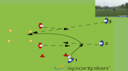
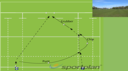
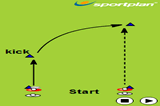
Drill to practice grubber kicking (a kick that bounces along the ground, bouncing no more than 1m away from the kicker) to a team mate to score.
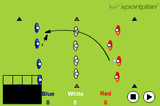
Set up a grid 15m x 10m, with three attackers (blue) and three defenders (red).
The attack are trying to score by getting behind the defenders (red) using a grubber kick.
The first attacker runs out and passes to the second attacker. The second attacker performs a grubber kick for the third attacker to gather and score
PROGRESSION:
Start from the other side
Perform the kick with the players weaker foot
1 can kick to 2 or 3
2 can kick to 3 or back to 1
Any player can perform the grubber kick - coach passes the ball into the drill to select which player performs the kick.
Finding space behind the defenders with a kick.
Grubber kick - players should hold the ball in an upright position and drop it onto the point of the ball from around waist height. Players should kick the ball just before it hits the ground and make sure it bounces within 1m of themselves. The ball should bounce end over end to make it easy for the receiver to gather.
Using the inside/outside of the foot to bend the kick.
Make sure the third attacker is behind the kicker when he kicks the ball.

in more ways than one
 sportplan_netball

in more ways than one
sportplan_rugby
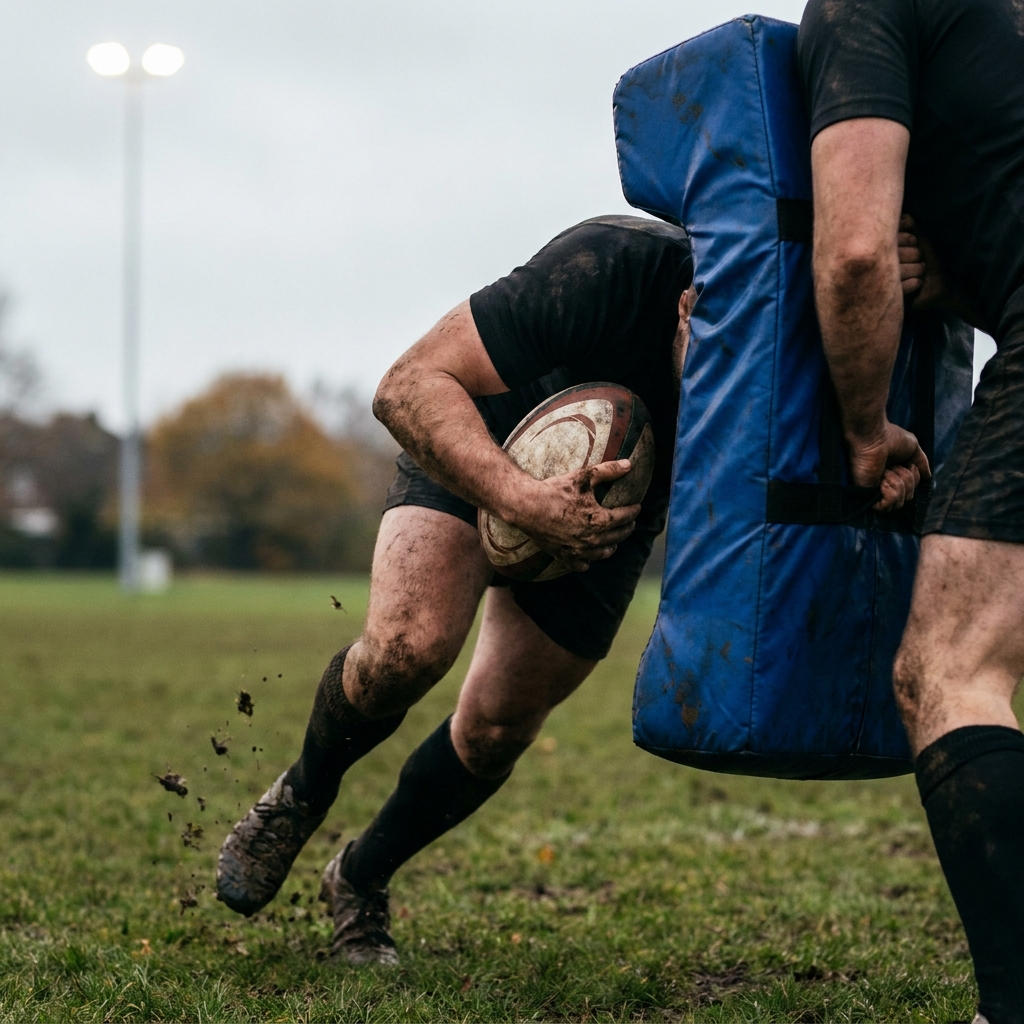
Tacklers are aiming lower, so carriers who dip late put heads at risk. Teach footwork, a strong early body height and leg drive to win the collision safely.
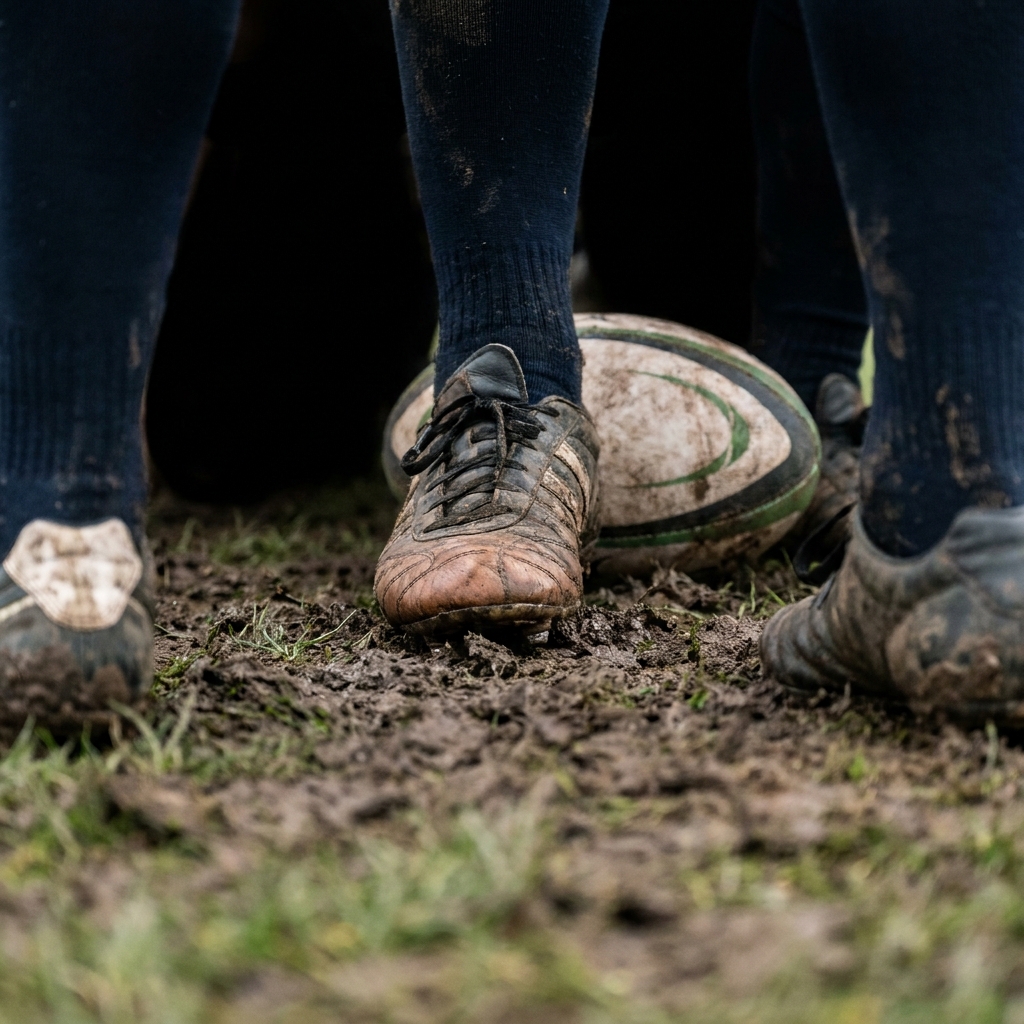
The hooker's brake foot moved from trial into full law in July 2026. Here is how to coach it so your front row stays stable, legal and safe.

Your players can pass beautifully in a warm-up grid. Then a defender closes, their lungs are burning, and the ball goes to ground. Here is how to build catch-pass skills that hold up when it matters.