Drill to warm up/practice different types of kick.
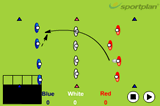
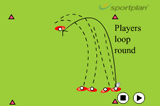
Players form two lines in the 15m channels with all the balls starting on one side.
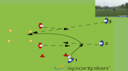
The player with the ball at the front of the line runs out and does a cross-field punt to a partner on the opposite side of the pitch - kick labelled 1.
The partner catches the ball, and does a chip kick which they chase and gather themselves - kick labelled 2.
Once they have gathered their chip kick they perform a grubber kick to their partner who has continued their run. Aiming to kick the ball between the posts for their partner to gather and score - kick labelled 3.
Players jog back to join the back of the opposite line.
Once the first pair have performed the chip kick, the next pair in line can go.
Offside rule - players receiving kicks must be behind the kicker when the ball is kicked. Coach players to be behind the kicker and run on to the ball to catch it.
Punt kick - players should hold the ball upright and drop it straight onto their foot from around waist height. Players should kick the ball on the point of the ball and follow through.
Chip kick - Similar technique to punt kick, but kicking the ball with less power.
Grubber kick - drop the ball onto point and kick it just before it hits the ground. The ball should bounce end over end to make it easy for the receiver to gather.
Progressions - add defenders to put pressure on kicks 1 and 2.
Make kick 2 an up and under kick rather than a chip kick
Change which side starts with the ball.

in more ways than one
 sportplan_netball
in more ways than one
sportplan_rugby

Tacklers are aiming lower, so carriers who dip late put heads at risk. Teach footwork, a strong early body height and leg drive to win the collision safely.
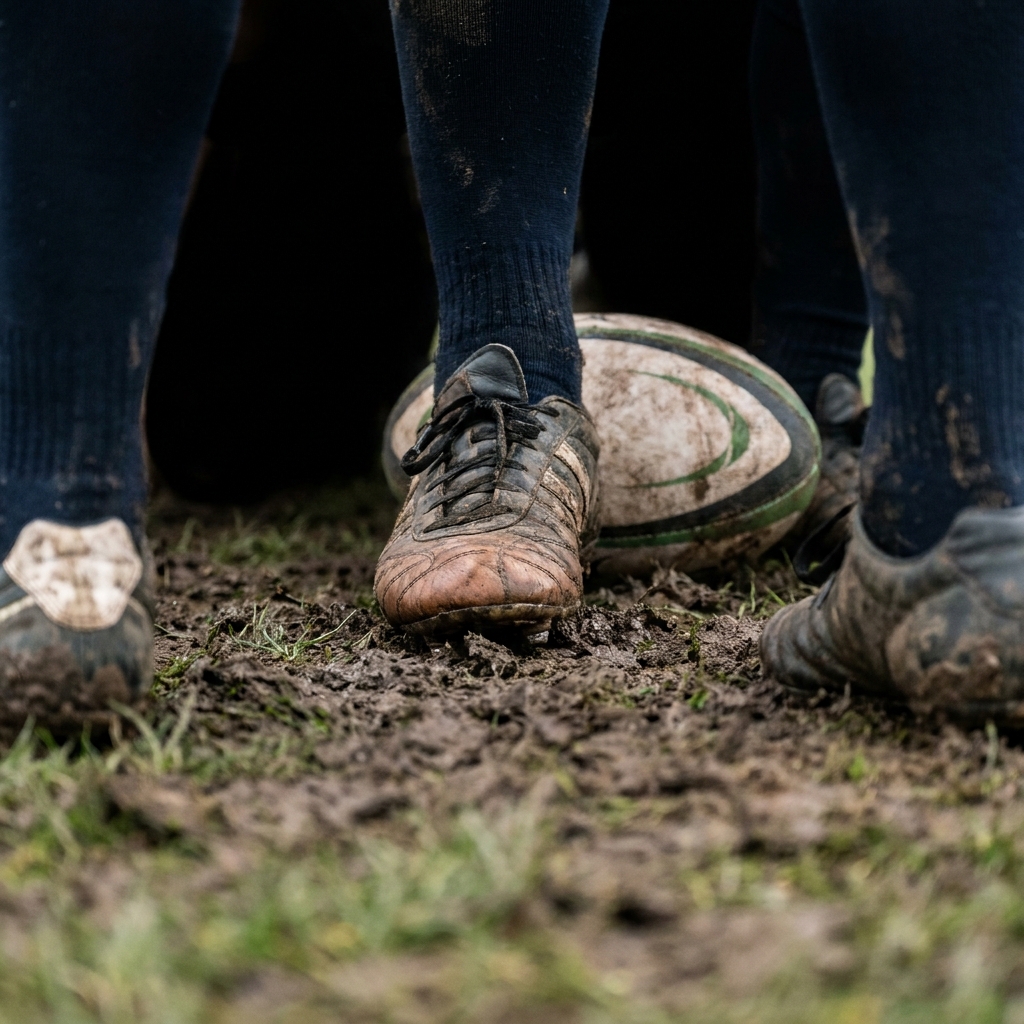
The hooker's brake foot moved from trial into full law in July 2026. Here is how to coach it so your front row stays stable, legal and safe.
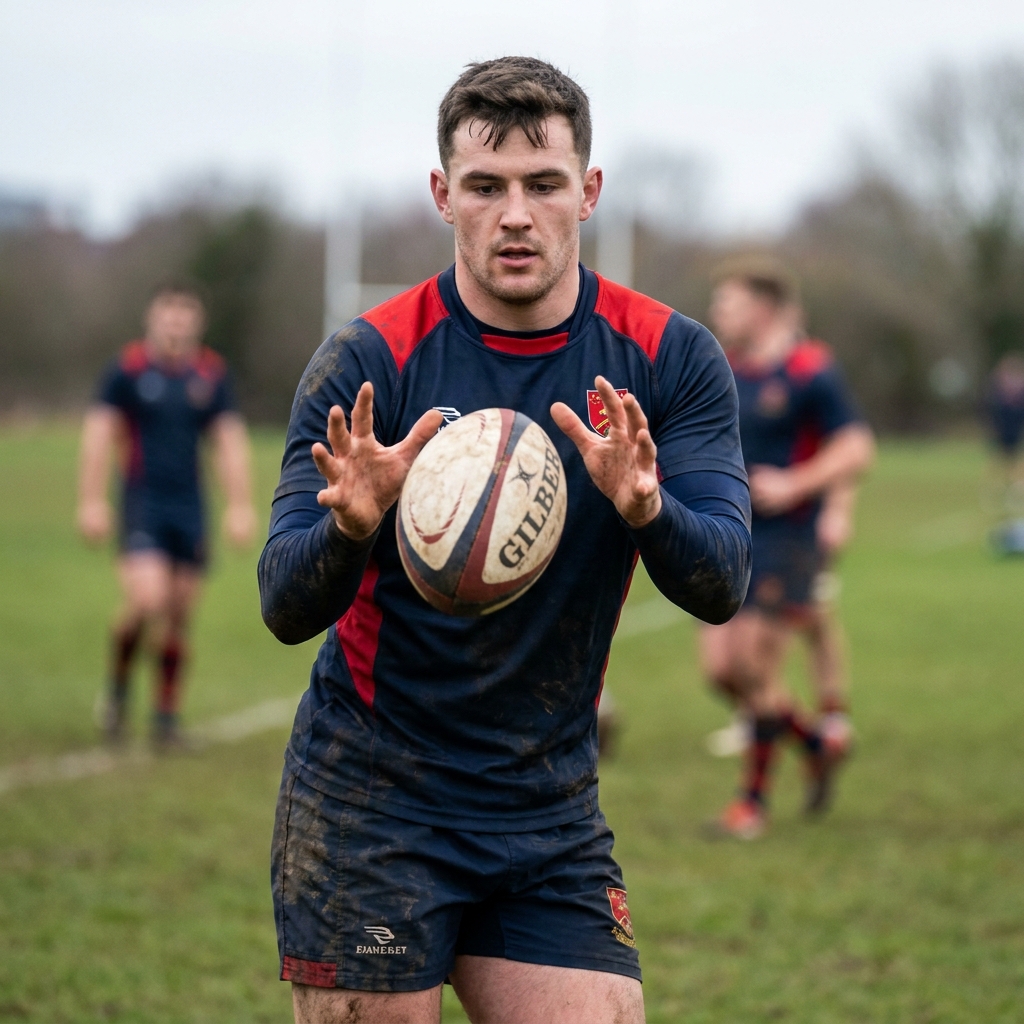
Your players can pass beautifully in a warm-up grid. Then a defender closes, their lungs are burning, and the ball goes to ground. Here is how to build catch-pass skills that hold up when it matters.