Tennis: turn

May 2026

Every May, the tennis world turns to Paris. Roland Garros remains the most physically and tactically demanding of the four majors, and the surface itself is the reason. Clay slows the ball, takes the spin, and lengthens rallies. Power alone is rarely enough. The players who win on clay combine athletic movement, mental patience, and a deep understanding of how to construct points one ball at a time.

For coaches working with juniors or club players in the British spring and summer, clay is also a unique teaching surface. It rewards habits that translate to every other court - footwork, shot tolerance, and tactical discipline. Even if your players will mostly compete on hard courts or grass, a few weeks on clay can transform their development.

The Three Pillars of Clay Court Tennis

Top coaches who specialise in clay development talk about three non-negotiable qualities. Without these, a player cannot compete on the surface for long.

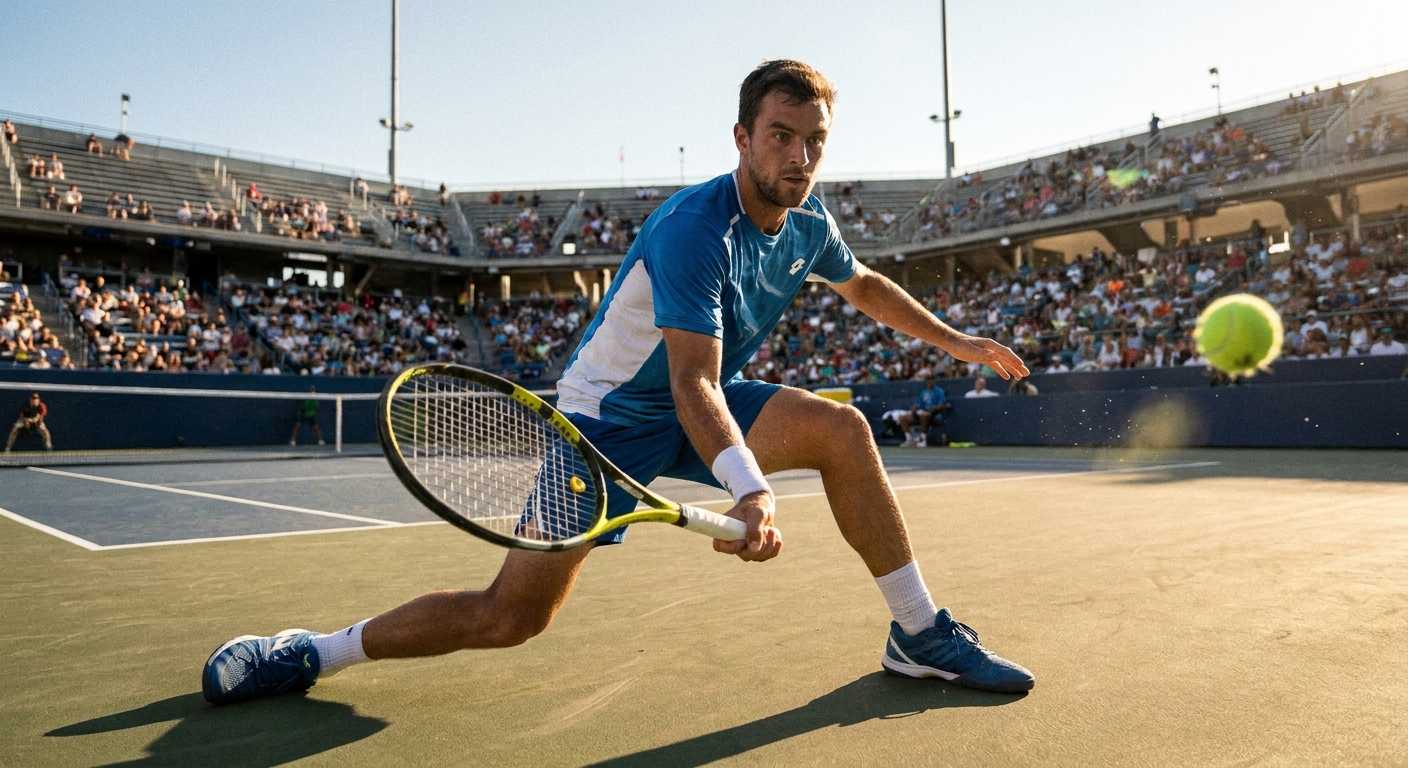
Sliding: Clay players do not stop, they slide. The ability to slide into a shot, plant the inside foot, and recover smoothly is the defining athletic skill of the surface.

Consistency: Average rally length on clay is significantly longer than on hard or grass. Players who go for outright winners early lose to opponents who simply make one more ball.

Endurance: Matches stretch out. Three-set contests can run beyond two hours. Aerobic conditioning, mental stamina, and the ability to recover between points all separate winners from also-rans.

Coaching the Slide

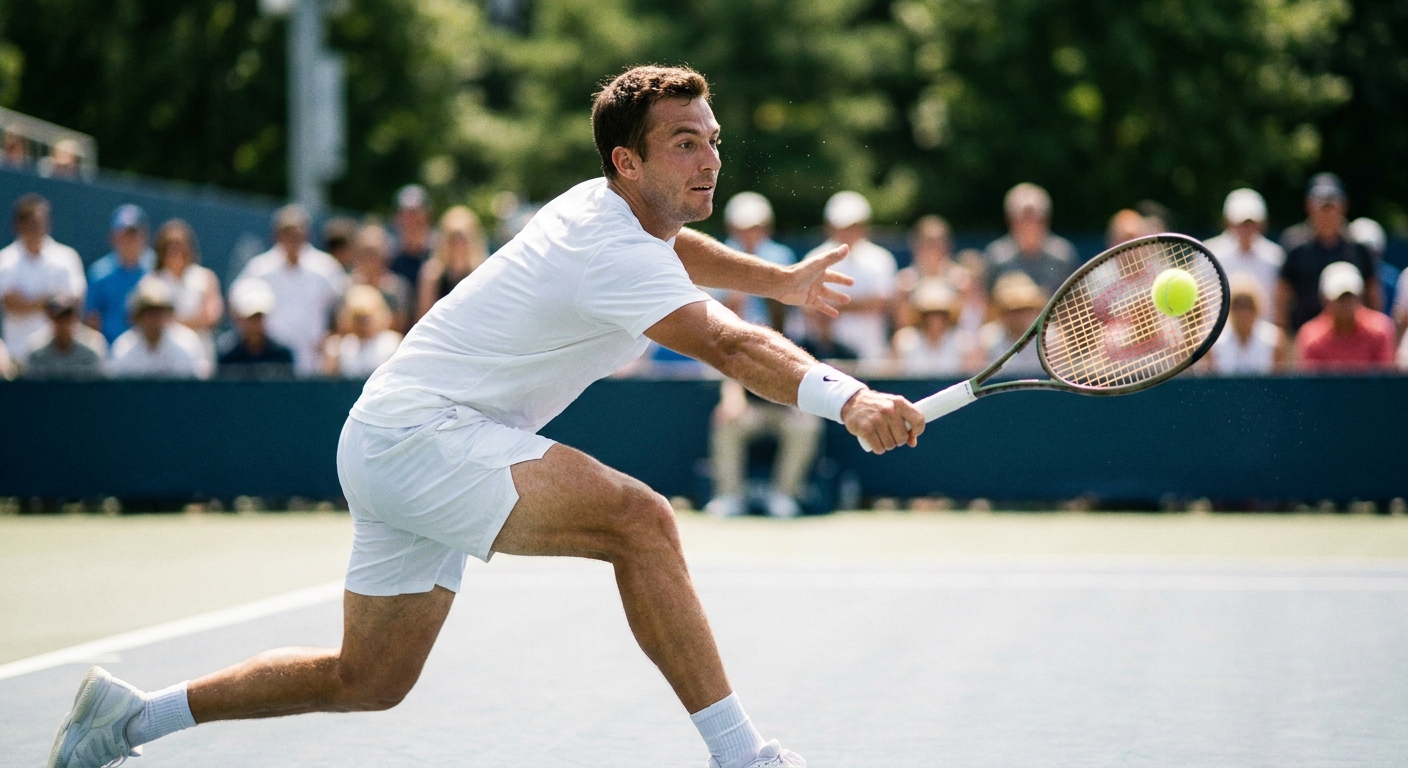
The slide is the single most distinctive technique on clay, and it is one of the few things you genuinely cannot learn well on any other surface. The key coaching point is that players should slide into the shot, not after it. The slide is the recovery footwork, not the celebration.

Stance and shape: Approach the ball with a wide, open stance. The outside leg drives across the body while the inside leg becomes the anchor. The ankle of the inside foot rotates inward, the entire side of the shoe collects clay, and the player stays low through contact.

Inside-foot recovery: Once contact is made, the inside leg pushes off to launch the recovery step. Coaches should drill this rhythm - slide, plant, push, recover - until it becomes automatic.

Don't slide everything: Beginners often try to slide every ball. Teach players that the slide is a tool for wide balls and emergency defence. On a comfortable ball in the middle of the court, a stable open stance is far better.

Patience and Point Construction

Clay punishes impatience. A flat winner attempted from neutral position is intercepted, hung up in the heavy air, and returned with interest. Players need to learn to set up the winning shot before going for it.

Build the rally: Use heavy topspin to push the opponent behind the baseline. Three or four deep, high-bouncing balls force most players into defensive positions before the attacking opportunity appears.

Move the opponent first: Width creates depth on clay. A wide ball that drags the opponent off court opens the entire court for the next shot. Direct attacks rarely succeed; sequential attacks usually do.

Recognise the short ball: The moment to attack is when the opponent's reply lands inside the service line. Drill this recognition: short ball means step in, take the ball on the rise, and finish the point at the net or with a clean drive into the open court.

Surface-Specific Shot Selection

Certain shots gain enormous value on clay, and others lose it.

Heavy topspin: The high-bouncing topspin forehand becomes a true weapon. Balls that would land in the strike zone on hard courts climb above shoulder height on clay, making them very difficult to attack.

Drop shot: Clay is the natural home of the drop shot. The ball dies on the surface and the opponent must cover a long distance to reach it. Teach the drop shot deliberately as part of a clay-court repertoire.

Slice for variation: A low slice that stays beneath the strike zone changes rhythm and forces the opponent to generate their own power. It is also the perfect approach shot on clay.

Flat winners less so: The big flat ball that finishes points on hard courts often becomes just another rally ball on clay. Teach players that aggression on clay looks different - it is about taking time away, not about pure power.

Physical Preparation

Clay tennis is a different physical challenge. Focus your conditioning work on:

Adductor and hip strength: The sliding action loads the inside leg heavily. Side lunges, Copenhagen planks, and lateral band walks build the muscles that protect against injury and produce stable slides.

Core stability: Hitting from extreme positions requires a strong, stable trunk. Anti-rotation work such as Pallof presses transfers directly to court.

Aerobic base: Long rallies and long matches require the engine to match. Two longer aerobic sessions per week underpin everything else.

Key Coaching Points

  • Slide into the shot, not after it - the slide is footwork, not flourish
  • Average rally length on clay is roughly double that on hard court - plan for it
  • Build points with width and depth before attempting the finishing shot
  • Heavy topspin, drop shots, and low slices all gain value on the surface
  • Adductor strength and aerobic conditioning are non-negotiable

Recommended Drills

VIEW ALL MOVEMENT DRILLS

Unfortunately there were no results for your search! Please try again
turn DRILL CATEGORIES
View All
turn SESSIONS
View All
turn ANSWERS
View All

how do you teach topspin? what grip to you use?

how do you teach topspin? what grip to you use?

becky farmer Coach, United States of America

Psychology in tennis HELP! My daughter gets upset...

Psychology in tennis HELP!!! I have a daughter who is an excellent player who only started playing tennis seriously last yr at the age of 13. She is a much better player than all the people she has completed against in matches but always loses due to over hitting and getting upset if the wrong call is made (which happens frequently due to how fast she hits and serves) do we need some sort of psychological help for this. what is the best way to get this... books, councilling ??? any help would be most appreciated thanks

Archived User Coach

What is the best way to teach the backhand volley to?

What is the best way to teach the backhand volley to mini reds age 5-7 years? Do you encourage seperation of nondominant hand on contact 'fly'?

Karen Atkinson Coach, England

how can i correct a slapping forehand

one of my student is playing is forehand , with slapping. pls let me know how to correct it. gana.

Coach, United States of America

Child with finals nerves?

Last weekend my 10 years old daughter participated in a tennis tournament.Although she reached the final and the game was set at 14%3A30 pm, when we got to the court she started complaining about her belly. She said that had a bellyache and she could not play. The doctor didn’t find anything wrong, but he told me that he could not let her play.When we went back she was fine.How do you cope with this situation. I did not say anything to her. I told her that I would like to discuss it with her when she will be ready.Thank you for listening. submitted by email

Sportplan Team Coach, United Kingdom

What is my fault? Difficulty coaching some of the older players - advice?

Helo, my name is Fernando, I am a Spanish tennis teacher who started teaching six months ago. I am working in a public sportcenter and I am having some problems with adults. When I started I realiced that the students were used to playing tennis without any control. Young students told me that the other teacher only used to leave them play - he rarely explained them how to hit the ball. Consequently the do enjoy my clases and they are learning a lot and impoving their level of tennis. So far so good, but the problem is that with the adults I have the impression that they don´t like my clases. In fact some of them left the group at the begining. I try to mix different kinds of drills during the class and I usually finish it with a game like for example 21, winner........ But it seems that they don´t enjoy it. During the exercises most of them don´t try to do what I tell them. As a result, they don´t have a good level of tennis. But as far as I know, the other teacher was a tennis player who uses to play against them during the clases. As this is my first time teaching tennis, I don´t fell confidence and that is the reason whay I do´t like to play against them. Appart from that I think that this is not my role as a teacher. So I would like you to tell me how to deal with that situation. I don´t care if they leave me because this is not going to affect my job, but i wouldn´t like them to leave just because I like tennis and I like teaching tennis. Thank you very much for your help. I am sorry for my English. Best wishes!!!!

Fernando Coach, Spain

Strategy to win senior 70´s tournament singles?

How to win senior 70´s tournament singles? Strategy?

Archived User Coach

Where to begin when coaching the volleying technique?

beginning volley technique

Archived User Coach

How do I coach 14 girls (varying abilities) on just 2 courts?

How do I coach 14 girls, all of varying levels from beginner to advanced on just two courts?

Archived User Coach

I don't have the start new sketch button in my ipad

Why don't have that?I can't draw a drillDon't understand

Archived User Coach

how do i turn off automatic subscription

automatic subscription

Lisa Hickey Coach, Australia

sound

how can I turn the sound on the the videos?

Kimberley Weston Coach, Australia

Clipboard

I have created a clipboard and now need to know how to share with my colleagues at School. Can you assist me with this?Thanks, Nao

Naomi Redhead Coach, England

gymnast with amputated arm

Bar routine for gymnast with amputated arm

Mandi Smith Coach, United Kingdom

emails

How do I turn of email notifications

Joshua woosley Coach, Australia

JOIN SPORTPLAN FOR FREE

  • search our library of 1200+ tennis drills
  • create your own professional coaching plans
  • or access our tried and tested plans

Sportplan App

Give it a try - it's better in the app

YOUR SESSION IS STARTING SOON... Join the growing community of tennis coaches plus 1200+ drills and pro tools to make coaching easy.
LET'S DO IT