Ask most club players about the drop shot and you will get one of two reactions. Either they never play it, because it feels like a risky, low-percentage shot that only "proper" players get away with. Or they play it once a set in a panic, from the wrong position, straight into the net. Neither player is using the shot properly, and both are missing a weapon that is becoming harder to ignore at every level of the game.
At the top of the men's and women's tours, the drop shot has had a genuine comeback. Players who rose through the ranks mixing in disguised, well-selected drop shots proved that it is not a panic shot at all; it is a pattern that can be trained, repeated and relied on. Club coaches do not need their players chasing tour-level touch, but the same principles, disguise, selection and intent, translate straight onto any court.
Why the Drop Shot Fell Out of Favour (and Why It's Back)
For a long time, bigger rackets and stronger strings pushed the game towards power from the baseline, and the drop shot got filed away as old-fashioned or unsafe. Many coaches stopped teaching it at all, which meant players never built the feel or the decision-making to use it well, which in turn made it look even riskier when they tried.
What changed the picture was players proving the drop shot could be a reliable, repeatable pattern rather than a last resort. Used off the right ball, with the same preparation as a normal groundstroke, it forces an opponent who is camped on the baseline into a sprint they did not expect. Many coaches now see it less as a gamble and more as a tool for changing the rhythm of a point on their own terms.
The Four Things That Make a Drop Shot Work
Step One: Disguise. The backswing and body shape should look identical to a normal forehand or backhand drive until the very last moment. If an opponent can read the shot early, they will always get there in time.
Step Two: Selection. Only play it off a ball you are balanced on, ideally inside the baseline, when the opponent is clearly behind their own baseline. A drop shot played from a stretch or deep in your own court is a gift to the other side.
Step Three: Technique. Shorten the follow-through, open the racket face slightly and let the ball die rather than swinging through it. The aim is soft hands and underspin, with the ball clearing the net by the smallest safe margin.
Step Four: Placement. Crosscourt over the lower part of the net is the safest, most repeatable target. Down the line is the higher-reward surprise option, best saved for when the opponent is already leaning the other way.
Step Five: Follow it in. Playing the drop shot and staying on the baseline wastes the advantage it creates. Move forward as you hit, expecting either a weak, short reply to finish or a lob you need to be ready to track down.
How to Train It
Warm-up: short, soft "mini tennis" rallies inside the service boxes to build touch and feel before any full-court work begins.
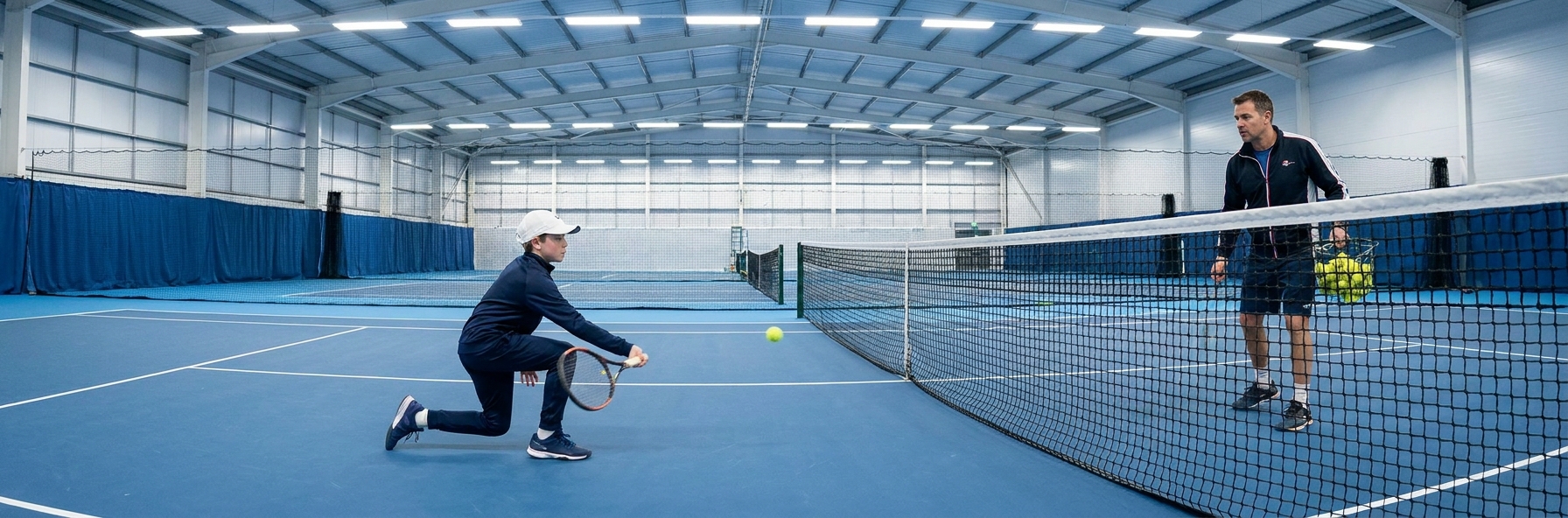
Technical: fed balls from the coach, alternating forehand and backhand, with players grooving the same disguised preparation every time before the late change to a drop shot.
Decision-making: live rallies where the coach calls "deep" or "short" as the feed lands, and the player has to recognise which balls are drop-shot opportunities rather than playing it on demand.
Game: conditioned points where a successfully executed drop shot winner is worth double, rewarding good selection without forcing players to force the shot every point.
Key Coaching Points
- Keep the preparation for the drop shot identical to a normal groundstroke for as long as possible.
- Only select it off a ball you are balanced on, with the opponent clearly deep behind their baseline.
- Use soft hands and underspin rather than a full swing; the ball should die, not bounce away.
- Crosscourt is the reliable target; down the line is the surprise option for the right moment.
- Always follow the shot in towards the net rather than watching it from the baseline.
- Reward good selection in training rather than just the clean winners, so players learn when, not just how.
Recommended Drills


Frequently Asked Questions
Is the drop shot too risky to teach club players?
It is risky only when it is played from the wrong position or without disguise. Taught as a selected pattern, off a ball the player is balanced on and against an opponent who is deep, it is no riskier than any other shot. The coaching job is teaching good selection, not just the stroke.
How do I stop players overusing it once they learn it?
Build the decision-making into training from day one rather than teaching the stroke in isolation. Drills that reward correct selection, not just clean execution, teach players that the shot has a time and place. Most overuse comes from players enjoying the stroke before they have learned when to play it.
How do I coach players to defend against a drop shot?
Start with the split step and a first explosive move forward the moment they read the disguise breaking down. Encourage them to get there early enough to have options, a short angled reply or a lob, rather than arriving late and just getting the ball back. Chasing down drop shots is a movement skill that needs its own repetition, not just a reaction players pick up by accident.