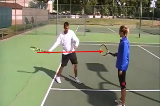
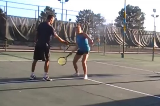
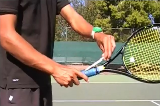
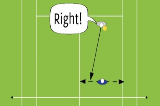
Player imitates forehand stroke, focussing on taking the racquet back with the non-dominant hand.
The forehand is one of the most used strokes in tennis so proper technique is crucial to becoming a successful player. Modern tennis players take tremendous power from the body's turns.
Coaches should implement this action into every stroke; especially into groundstrokes. In this technical exercise, coach teaches player to work as a one unit. It means that turn should be executed using whole upper body. Non-dominant hand plays a primary role to facilitate the shoulder turn and to allow the dominant hand to relax before the swing.
Many players make a mistake by using a dominant hand to take a backswing which results in less power generated by upper body as also in mishitting the ball because of the early opening of the shoulders. After shadows, it is important to go through hand feed and basket drills to see improvements in more difficult situations.
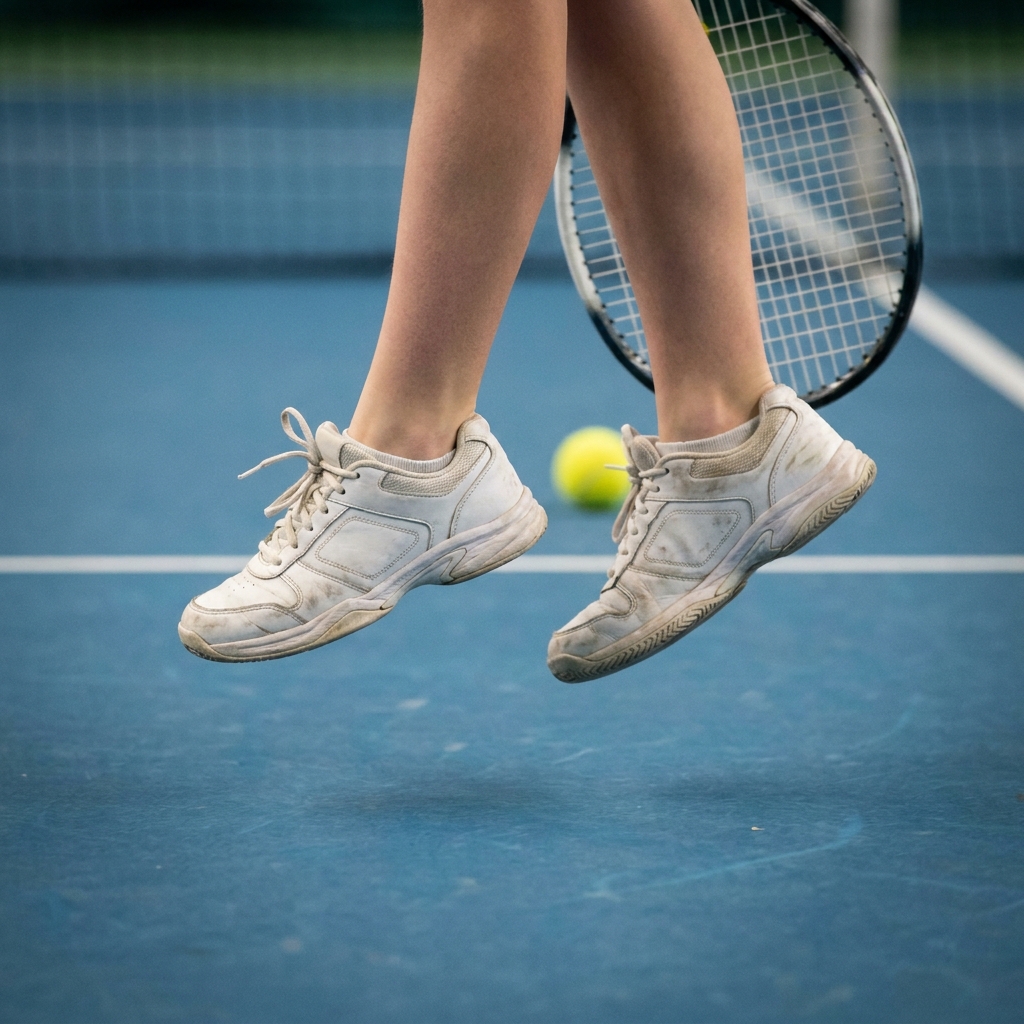
Indoor courts give players less time and less room. Help them sharpen their split step, shorten their swing and stay calm, and winter becomes a season of real progress.
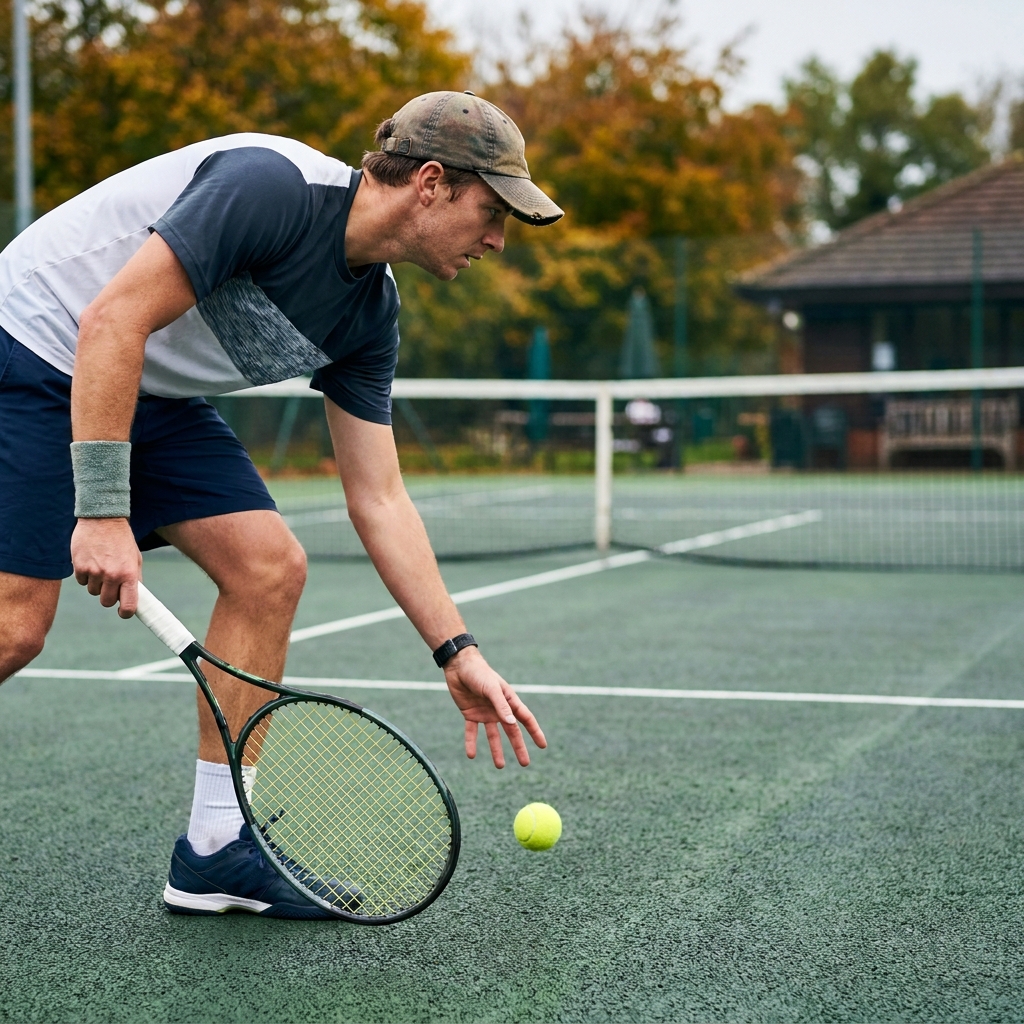
A tiebreak is a short sprint where every point is worth the same as a break of serve. The players who win them are rarely the ones who hit hardest. Here is how to coach the patterns, habits and scoreboard thinking that win the big points.
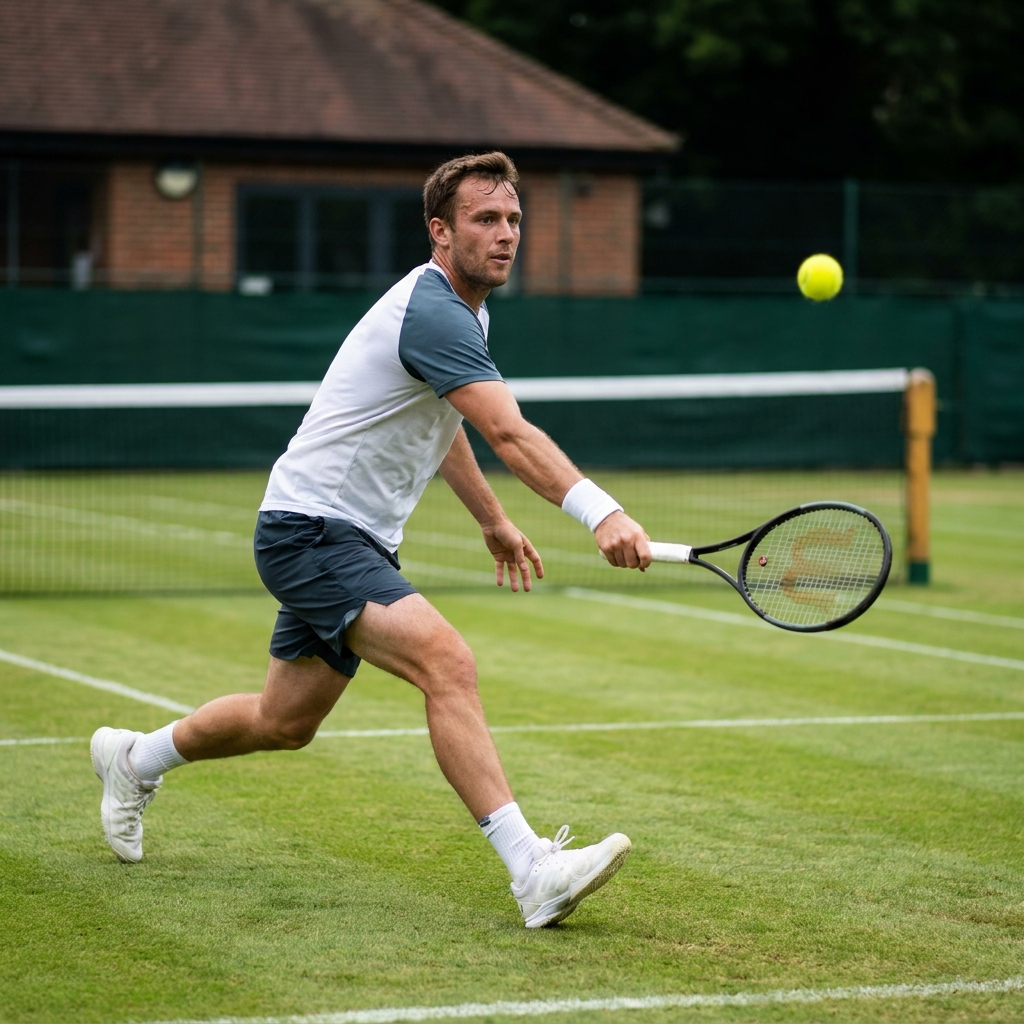
Most club players practise the serve on its own and then have no idea what to do with the ball that comes back. Serve plus one is the pattern that turns a good serve into a won point.


Register for FREE and get coaching tips, top drills, session and more every week!