Rugby: counter

June 2026

If you watch the data, restart kicks happen more often than any other set-piece in a modern rugby match. A Six Nations game produces around twelve to sixteen restarts, more than the average lineout count and far more than scrums. Yet most teams - especially below elite level - still treat them as an afterthought. That is the gap top coaches are now closing.

The phrase "restart is the third set-piece" has become a coaching slogan in 2026 for good reason. The team that wins the restart battle controls field position, momentum and the opening sixty seconds of every passage of play. Conceding a try and then conceding the restart immediately afterwards is one of the most common ways to lose a match.

Why Restarts Are Suddenly Critical

Two things have changed. First, kickers have become more accurate. Restarts now land precisely on the 10-metre line and in the 15-metre channel, contested by tall, athletic chasers who jump for the ball. The days of a 22-metre dollop into the middle of the pitch are gone.

Second, the reward for retention has grown. With modern attacking shapes, a team that retains its own restart is straight into structured phase play in the opposition half. A team that loses the restart is defending in their own 22 with a disorganised line. The swing between those two outcomes is enormous.

Building a Reception Pod

Top teams now train a dedicated restart reception pod, exactly as they train a lineout pod. The pod typically has four roles, and every player must know which role they have before the kick is taken.

The catcher: Usually a lock or back-rower, chosen for height and timing. They call early - "mine" or the channel number - and commit to the catch.

The lifter: A prop or hooker who arrives at the catcher's side, hands ready, to give a lift on the contested ball. Lifting is legal at restarts and dramatically improves your win rate against good chasers.

The protector: A second forward who stands between the catcher and the chase, taking the contact if it comes and forming the first ruck cleanly.

The exit option: A back, usually the fly-half or full-back, in position to receive the next pass and either kick to touch or launch a counter.

How to Coach Restart Reception

Restart skills are perishable. Train them every week, even if only for ten minutes. Build the session in three blocks.

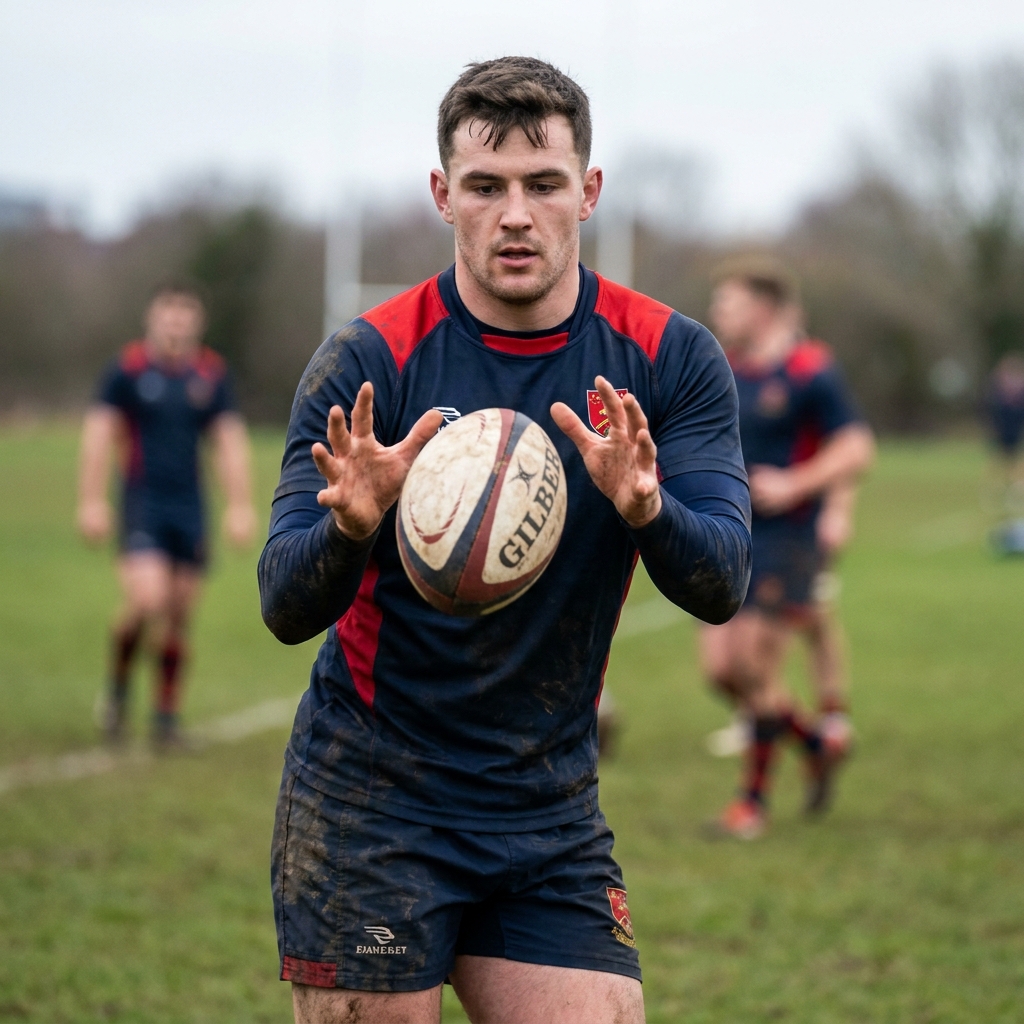
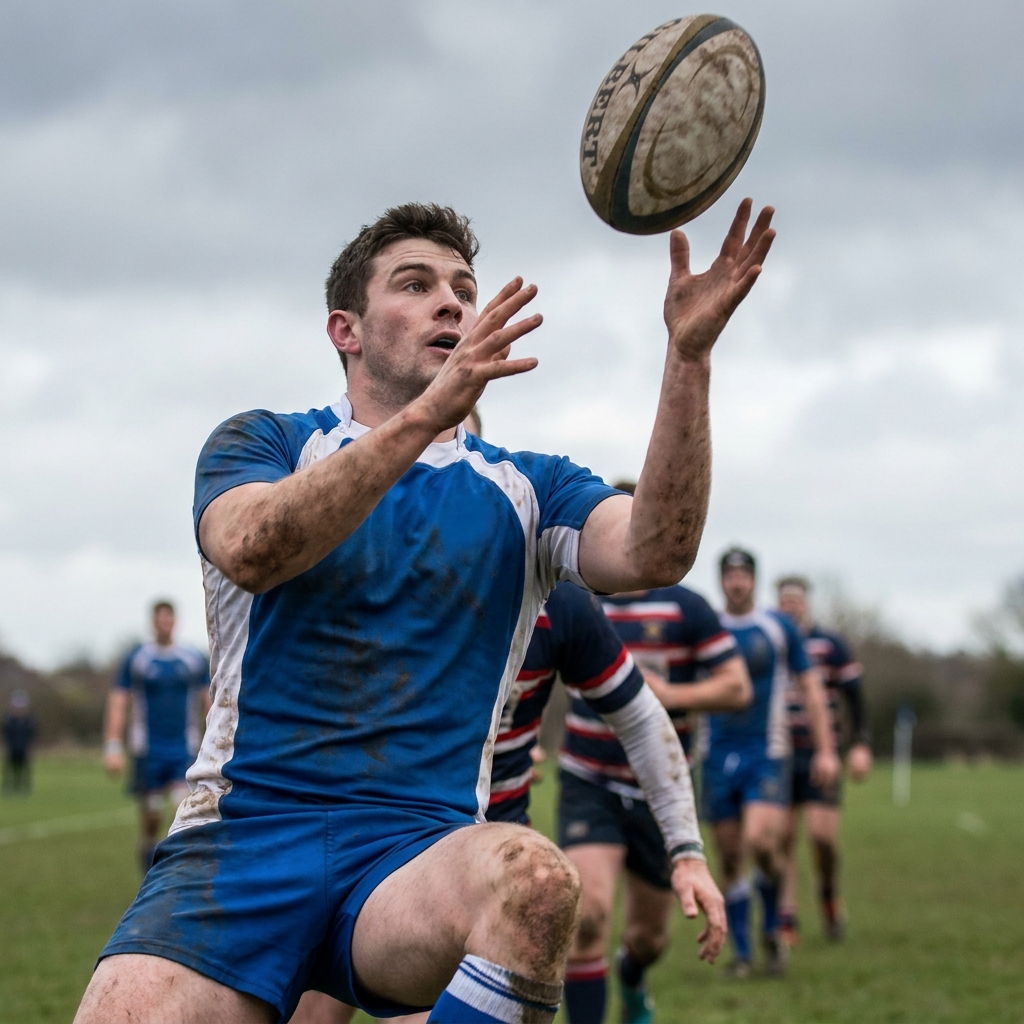
Block 1 - Catching under contest (5 minutes): One coach kicks high balls from the halfway line. Your designated catchers work in pairs - one catches, one acts as a chaser jumping to contest. Rotate every two reps. The focus is timing the jump, not winning every ball.

Block 2 - Receiving as a unit (10 minutes): Full pod of four sets up. Coach kicks restarts. Pod must catch, secure, ruck and recycle clean ball to a back. Add an opposition chase line of three after five reps.

Block 3 - Restart-to-exit scenarios (10 minutes): 12v12 or 10v10 game starting from a restart. After receiving, the team in possession has one rule: get out of their own half within three phases. This trains the link between reception and territorial exit.

Attacking Restarts - The Other Half

Receiving is half the picture. The other half is recovering your own restart. Modern restart kicks are aimed at one of three landing zones: short on the 10 (5-7 metres beyond the kick mark), mid-deep at the 15-metre line, or long into the far corner. Each option requires a different chase pattern.

The short restart is the highest-percentage recovery option but the hardest to execute accurately. Reserve it for moments when you genuinely need the ball back - after conceding a try, with time running out, or to disrupt a stronger opponent. Drill the kicker until they can land a restart in a one-metre window on demand.

Key Coaching Points

  • Restarts are the most frequent set-piece - train them weekly
  • Build a named reception pod with four clear roles: catcher, lifter, protector, exit
  • Lifting is legal at restarts - use it
  • The exit kick after a clean catch is as important as the catch itself
  • Reserve the short restart for moments when winning it really matters

Recommended Drills

VIEW ALL KICKING DRILLS

counter DRILLS
View All

3 Touch Kick

Split your players into two teams, giving one group of players a set of coloured bibs to set them apart, and quickly tell your players the following laws: We will be playing a rugby league style touch. When touched: set the ball down, stand over the ball, allow the scum-half to move the ball away from the point of contact. The defenders should stay on side following a touch, and should not compete for the ball. Any infringements in defence should result in the defending team conceding 10 Meters or possibly giving 1 or more extra touches to the attacking team. I'll leave this to your judgement depending on your team's age, skill level, and your session target/s. The attacking team can sustain three touches before they have to kick. Their kick should be as it would be in the game: a kick to touch, a kick for territory, or a kick that can be regained e.g. a grubber kick. The defenders should behave as they would in a real game. Quick put in's from the touchlines replace lineouts. Defenders who take the ball from an attacking kick should counter attack. A forth touch results in a turn over. The Scrum Half has a maxium of 5 seconds to move the ball from the point of touch. A ball kicked directly to touch from outside the attacking teams 22, or where the ball has been taken into the 22 by the attacking team and then kicked into touch - will result in a turn over with play starting on the five meter line closest to where the kick was made. The defence should be 10 meters back. A ball kicked from inside the attacking teams 22 can go directly to touch, as long as the attacking team did not carry the ball into their own 22 before the kick. The resulting put in will be to the opposition from where the ball has went into touch. Quick put-in's are enoucraged, if not possible the ball is played from the 5 meter line with the defence 10 meters back. Give points for quick put ins that work. Feel free to play with any of noted laws, let us know the law variations that work for you!

Warm Up

Flip It

Be brief when telling the players the laws of this game, it's important to get them moving quickly. This is not a contact game. Break your players into two teams, giving each team their own colour of bibs if necessary. One team goes to attack, and one to defence. Nominate a Scrum Half for each team. There is no kicking in this game. Normal laws of rugby apply e.g. a forward pass will result in the ball being turned over to the opposition. If an attacking player is touched: they must go to ground, present the ball, two of their teammates ruck over (staying over the ball), and the Scrum Half moves the ball for the next phase of attack. When you start playing this game make sure that the defence is employing your defensive pattern around the ruck. As the game develops consider telling the defenders that they must have one or more players at the back of the ruck, if they are not fast enough to do this - push them back 10 meters. It’s important that defenders are employing their defensive pattern behind the primary defensive line. Have attacking players do what they normally would at the ruck. Depending on your goals decide on the number of touches you wish to allow e.g. unlimited is not a bad option as mistakes will be made! When you feel the time is appropriate, usually during a ruck, blow you whistle and should FLIP IT – kicking in or throwing in a second ball to the back 3/2 defenders on the team currently in defence OR just kick it behind the defenders. The defensive team goes, without hesitation, into attack. The team that was attacking goes into defence and you or an assistant coach remove the other ball from play when you can. Ideally you might have two balls with different markings. Don't hesitate to shape the game to focus on your session goals, and let us and other coaches know what worked for you!

Warm Up

3 Touch Kick Warm Up - Rugby D...

Split your players into two teams, giving one group of players a set of coloured bibs to set them apart, and quickly tell your players the following laws: We will be playing a rugby league style touch. When touched: set the ball down, stand over the ball, allow the scum-half to move the ball away from the point of contact. The defenders should stay on side following a touch, and should not compete for the ball. Any infringements in defence should result in the defending team conceding 10 Meters or possibly giving 1 or more extra touches to the attacking team. I'll leave this to your judgement depending on your team's age, skill level, and your session target/s. The attacking team can sustain three touches before they have to kick. Their kick should be as it would be in the game: a kick to touch, a kick for territory, or a kick that can be regained e.g. a grubber kick. The defenders should behave as they would in a real game. Quick put in's from the touchlines replace lineouts. Defenders who take the ball from an attacking kick should counter attack. A forth touch results in a turn over. The Scrum Half has a maxium of 5 seconds to move the ball from the point of touch. A ball kicked directly to touch from outside the attacking teams 22, or where the ball has been taken into the 22 by the attacking team and then kicked into touch - will result in a turn over with play starting on the five meter line closest to where the kick was made. The defence should be 10 meters back. A ball kicked from inside the attacking teams 22 can go directly to touch, as long as the attacking team did not carry the ball into their own 22 before the kick. The resulting put in will be to the opposition from where the ball has went into touch. Quick put-in's are enoucraged, if not possible the ball is played from the 5 meter line with the defence 10 meters back. Give points for quick put ins that work. Feel free to play with any of noted laws, let us know the law variations that work for you!

General

Unfortunately there were no results for your search! Please try again
counter ANSWERS
View All

Is Bridging Illegal?

Simon My son's PE teacher has told him that Bridging is lieegal for the U13 to U19 group. His Club coach has been encouraging its use in games for two seasons. I can see some of the dangers but also the advantages Who is right is it banned or can it be used? Paul submitted by email

Archived User Coach

How is the best way to counter the opposing full back?

How is the best way to counter the opposing full back entering the line and creating havoc with our man to man defensive pattern?

Archived User Coach

What tactics can be used when chasing a box kick?

What tactics can be used when chasing a box kick? In addition to the blind side wing chasing the kick, what patterns could be used to regain possession or limit counter attacking possibilities?

Archived User Coach

Any view on counter attacking a full back entering?

Any view on counter attacking a full back entering the line against a man to man marking system?

David Coach, England

looking for a counter rucking drill please under 13`s

looking for a counter rucking drill please under 13`s

Archived User Coach

How to coach using counter attack from turnover ball?

I need to coach a progressive session of 20 minutes for how to establish the principles of counter attack from turnover ball in contact coaching the palyers to counter attack. Any ideas please?

Trevor Brice Coach, England

How can my forwards counter a wheeling scrum?

My props (and I ) lack front row experience

Archived User Coach

I'm looking for a couple of drills for counter rucking?

I'm looking for a couple of drills for counter rucking and mauling to suit U11's..... any guidance?

Archived User Coach

Making the full-back position an attractive proposition.

Making the full-back position an attractive proposition. Often over-looked, the full-back position is a vital player in anyones team if he is used and brought into the game. Does anyone have any technical/positional material to coach prospective players in this position?

Archived User Coach

First time coaching U9 and U10s - anyone got any backline coaching tips?

Hi im a first time coach and is still getting the hang of how the technical details of the game works the back line is my department and whould like any help i can get to know what drills to do and anything helpfull in the backline im currently coaching for the under 9 and 10

Archived User Coach

How to coach league players to help transition to union?

Hi, I'm coaching my second team union (as i have injured my knee and cant play for the next few months) and the team consists of mainly league players, so they are rugby minded but will need help getting to grips with union - lineouts scrums when to and not to kick where to kick to etc. Any tips / ideas would be great.

Archived User Coach

Breaking out from the back

Can any coaches help me with exercises for counter attacking from the back?

Coach Sportplan Coach, United Kingdom

Counter Rucking - Sportplan

My team of 10 yr olds are great at rucking whilst in posesion but have not grasped the idea of counter rucking. they seem to make the takle and then stand off and not counter ruck. any suggestions on drills that might encourage them to counter ruck?

graham brown Coach, Australia

Drills and attack moves to cou...

I am looking for some drills and moves to coach a counter offensive against a rushed defence or a blitzing defence. I've had ideas of short kicks over the top.

tom burkett Coach, England

establish principles of counte...

establish principles of counter attack from a turnover all in contact

Archived User Coach

Refereeeing an U10 ruck - Spor...

As well as coaching U10 rugby, I also get to referee U10 games, under the New Rules Of Play. I feel that my refereeing of the ruck isn't as good as it could/should be. Has anyone got an easy to follow system to help them referee U10 rucks ?

Archived User Coach

Sealing not bridging the ruck ...

We play a team that does not contest the ruck very often so we seal the ruck by positioning our first Rucker over the tackled player and holding on to his shirt with Wright on feet and butt down. Second guy comes in a no connects with first and seal the ball until it is removed. We have been blown up for bridging when we have no hands on ground or weight forward. Anyone have any ideas On how to explain to the ref we are sealing not bridging?? Asked using Sportplan Mobile App

gary jones Coach, United States of America

Rucking Problems - Sportplan

My team is having trouble going past the ball when rucking. We are working on body heights and hitting past the ball but any suggested drills would be a great help.

Ian Stenson Coach, England

Is anchoring at the breakdown ...

At the breakdown is blue ball carrier gets tackled going to ground. The next blue player arrives and crouches over the ball and anchors onto the tackled player. Is this legal? It is assumed that he's not off his feet etc which is a separate offence

Archived User Coach

JOIN SPORTPLAN FOR FREE

  • search our library of 1100+ rugby drills
  • create your own professional coaching plans
  • or access our tried and tested plans

Sportplan App

Give it a try - it's better in the app

YOUR SESSION IS STARTING SOON... Join the growing community of rugby coaches plus 1100+ drills and pro tools to make coaching easy.
LET'S DO IT