

Netball: netball court diagram

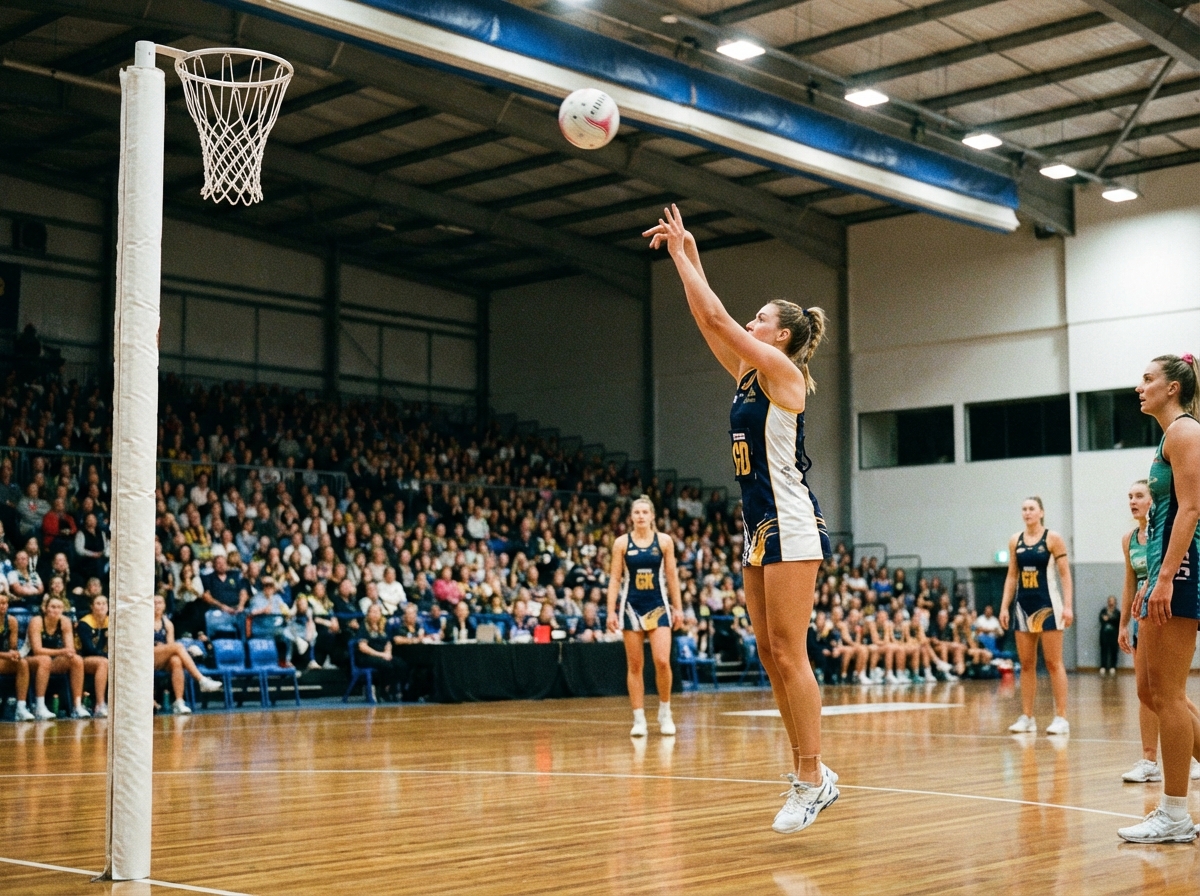
The 2025 Netball Super League season has introduced a rule that will change close games forever: no match can end in a draw. If scores are level after 60 minutes, two 5-minute periods of extra time will be played, with a one-minute break between them. If still tied, play continues until one team establishes a two-goal lead.

This is high-stakes netball. Are your players ready for it?

Understanding the Rules

The structure is straightforward:

  • Regulation: 60 minutes (4 x 15-minute quarters)
  • Extra time (if tied): Two 5-minute periods with 1-minute half-time
  • Extended extra time (if still tied): Play continues until a team leads by 2 goals

The Super Shot rule applies during extra time, adding another layer of tactical complexity. Centre passes alternate as normal. The team that wins gets 3 points; the loser gets 0.

The New Points System

The NSL has also changed the points allocation:

  • Win: 3 points
  • Loss by 5 goals or fewer: 1 point
  • Loss by more than 5 goals: 0 points

This means extra time carries enormous weight. A draw that would have given both teams 1 point now produces a winner with 3 points and a loser with 0 (unless it was already close). The stakes are higher than ever.

Physical Preparation

Extra time demands fitness. Players must maintain execution quality in potentially the 70th or 75th minute of play. Traditional 60-minute conditioning isn't enough.

Extend training games. Run scrimmages that go beyond normal match length. Players need to experience decision-making and skill execution when genuinely fatigued.

Interval conditioning. Extra time is high-intensity bursts separated by brief recovery. Design fitness work that replicates this pattern - repeated efforts with incomplete rest.

Simulation sessions. Occasionally simulate extra time scenarios in training. After a full scrimmage, announce "scores are level" and play on. This normalises the experience.

Related Drills: Build your team's endurance with our Fitness Drills for extended play conditioning.

Tactical Preparation

Substitution Strategy

You can't save substitutions for extra time if you haven't won regulation. The balance is keeping your best players fresh enough to perform in extra time while not losing the game in the fourth quarter.

Consider which players are best suited to high-pressure, fatigued conditions. Mental resilience and composure may matter more than pure skill in extra time.

Super Shot Strategy

The Super Shot applies in extra time. A single two-goal conversion can swing a game. Have a clear plan for Super Shot usage during these periods - and ensure your best long-range shooter is on court.

Extended Extra Time Awareness

If the game reaches "next two goals wins" territory, tactics simplify. Every possession is sudden death. Turnovers become catastrophic. Train your team to play with maximum care and composure in these moments.

Psychological Preparation

Extra time is as much mental as physical. Players who've never experienced it can freeze. Players who've practiced it perform.

Visualisation. Have players mentally rehearse extra time scenarios. What does it feel like to take a shot with the game on the line? To defend knowing one mistake could end it?

Positive framing. Extra time isn't a crisis - it's an opportunity. You've earned the chance to win a game that was on the edge. The team that sees extra time as exciting rather than terrifying has an advantage.

Process focus. In pressure moments, outcome focus ("we must score") creates tension. Process focus ("see the target, trust the technique") creates flow. Train your players to narrow attention to the next action, not the consequences.

Managing the One-Minute Break

Between extra time periods, you have one minute. This isn't long enough for complex tactical changes. Use it wisely:

  • Hydration and physical recovery
  • One or two key messages maximum
  • Energy and encouragement
  • Reminder of process focus

What you don't want is panicked tactical reinvention. Keep it simple, keep it positive, keep it short.

Learning from Experience

As the season progresses, some teams will accumulate extra time experience. Each situation is a learning opportunity:

  • What worked? What didn't?
  • Which players performed under pressure?
  • What would you do differently?

Document these lessons. They'll inform future preparation and give your team an edge in subsequent close games.

The Competitive Advantage

Many teams will neglect extra time preparation, focusing only on 60-minute netball. The teams that practice extra time scenarios, condition for extended play, and psychologically prepare their players will win more close games.

In a competition where points are precious, turning potential draws into wins could be the difference between finals and missing out. Prepare accordingly.

Where to Go Next

Prepare your team for the demands of extra time with these resources:

JOIN SPORTPLAN FOR FREE

  • search our library of 700+ netball drills
  • create your own professional coaching plans
  • or access our tried and tested plans
netball court diagram DRILLS
View All
Unfortunately there were no results for your search! Please try again
netball court diagram ANSWERS
View All

Best way to teach netball positions?

What is the best way to teach the positions to 8 year old first time players?

Archived User Coach

I'm a 1st time coach, with a b...

Hi everyone. I am a first time coach and my team knows nothing! where should I start and what drills would you recommend?

Lia McNab Coach, Australia

Splitting the court into zones...

I coach a group of 10 girls (8 yrs old) in the grade above netta (we call it Sub-minis but same rules as netta) I rotate them 4 def 2 c 4 attack (eg 3/4 each or 1/2 if they are center) I am having problems teaching them spaceing and who to lead into which spot etc. After our game on the weekend I thought I'ld try a different tack (was a bit loathed to do this as they may take it too literal) but I am wanting to split the court into "zones" for each position as a guide for them eg Center gets the middle "track" right down the court WA one side GA the other etc. has anyone tried this, will it make it worse any further suggestions......?????

Archived User Coach

Increasing enthusiasm for 5-8y...

I am coaching a little net set go team (set tier) with ages 5-8. Usually I coach high school girls. A mum of one of the 7 yr olds just messaged me with this: "i was just wondering If you have any tips to help us get Miss S enthused about netball, she isn't enjoying it but wants to "give it more time" (her words)." We only have a half hour training session before we play as no one else will coach but this is the only time I can do training and there are players from another town so this is the best option for everyone. We play a couple of warm up drills/games and practice 1 skill ready for our game. I have covered the basics of passing and footwork so far. None of my team have ever played before, but 4 of them did the net set go - net tier last year. The girl has only played 2 games so far as we have had a bye. So far she has had a go at positions GK, GD, GS, GA, and WA. She is the tallest girl in the team and so tends to get a fair amount of the ball. Any ideas on what to suggest to this mum?

Heidi Hawley Coach, Australia

how to protect yourself as gs/...

I was playing GS today and marked by a very tall GK. As I was watching the ball come forward, I moved to the top of the D but she didn't stay with me and remained behind me. I couldn't see her and was unsure if I should stay close to her to be aware of where I could move, or to just move where I wanted. My back was turned to her as I was facing where the ball was, should I be side on to see her in my peripheral vision but not stay with her, or should I keep marking her to hold her then come forward when appropriate? I would be grateful for any advice, thank you,

netballcrazy Coach, England

How do you stop crowding | Spo...

My friend coaches an under 13s team and when someone has the ball they all run for it like seagulls going for bread. The coach has told them many times to spread out and for not everyone to run to the ball at once but the girls keep doing it and they can't get the ball down the court.
Laura Henshaw Coach, Australia

Intimidation?! | Sportplan

My GD was do face marking in a game and doing a fantastic job at blocking the GA entering the circle and not being able to shake her off, the umpire for the other team repeatedly called her for intimidation.To me it did not appear to be intimidation and the player herself umpires and sees this in many of the high level games. She is not pushing, no arms are used in fact it is the other players pushing into her. Is this intimidation I thought that was a pretty tough call. What constitutes as intimidation?

Archived User Coach

Netball positions. For beginne...

Is it hard to learn the positions in netball? Asked using Sportplan Mobile App

Maddie Taylor Coach, Australia

Defending the Throw In | Sport...

Defending the Throw In. On the weekend, the opposition had a set play (on some occasions but not all the time). GK was throwing in. The GD, WD & C all gathered between the centre and the 1/3rd line, closer to the 1/3rd line. Each of them broke at different times. 1st GD leading left, then WD leding right and C down the middle. This week if they do that again, I think I will not have my GA/WA/C next to the girls, but 4-6 ft in front of them waiting for the leads on the angle to watch the leads and the throw in. Any other suggestions? we play that team again this week!!   

Archived User Coach

JOIN SPORTPLAN FOR FREE

  • search our library of 700+ netball drills
  • create your own professional coaching plans
  • or access our tried and tested plans

Sportplan App

Give it a try - it's better in the app

YOUR SESSION IS STARTING SOON... Join the worlds largest netball coaching resource for 700+ drills and pro tools to make coaching easy.
LET'S DO IT