






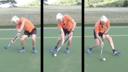

Excellent drills, very detailed videos. Useful site for my U15 boys team.

When playing 1 2 3 5 formation, the opposition choose to play 2 fwds high, how do you defend against it...

Can you tell me the correct technique for a penalty flick? How you would put it into a training exercise?
My team's players don't haveãstrong pass. So our pass is hard to arrive for FW. Please tell me way to pass (push, sweep, hit) strong.
What are the best things to get your players to do when you come up against a full press / 3/4 press, anything that's putting a lot of pressure on high up the pitch?

They just started with the pass and receive of the ball but i would like them to practice it even more. Most of the players are new to hockey and i don't want to give them a drill that is to hard for them to understand.
Dear colleagues, I am coaching a 1st women team (Argentina) and the system that is working for us very well is 3-1-3-3. Given the quality players we've got in the midfield and attack we try to emphasize our offensive game all the time. The problem I am struggling to resolve is that the forwards do not get involved in chances to score inside the circle very often. The few chances the forwards have they are able to score but it is our midfielders who most of the time get to the circle in possession with the ball. I would like to see a quick transfer of the ball from the midfielders to the forwards who need to be in touch with the ball more often during the game and have the midfielders supporting the attack rather than being the leaders of the attack.Is there any drill or way to improve this aspect of the game? Thanks for your time. Martin
I am a high school coach in the USA. We played a team this past weekend who had a defender who lifted on a free hit 30-40 yards. That was pretty much their only offense. All of their forwards were ready to receive the long balls. How do we defend that? Should I have almost everyone drop back 30-40 yards?
overlapping outside halves ? or drop Midfield in hole?
Have a team of older group of ladies who need to learn to pass the ball back, any good drills for this?
Can someone give me advice on the best was to teach ladies 3d skills while entering the D? I am open to any suggestions. I have tried to get them lifting the ball over sticks but it doesn't seem to transfer to matches.
Hi,I need to play 4 linked hockey sessions to a specific theme I don't know which one to chose such as I can't say attack because there can be so much to cover . So any help?
Hi all, I have to do a 30 minute presentation about the attacking principles of the self pass. Will appreciate any help.Thank you
Suggestions on how to play this system. I have very young 1st team so feel i must play defensive hockey. Thanks
What would the best structure to teach High School learners? there are too many to choose from

drills using the push and demo
tomohako skills videos and drills

Dear colleagues, I am coaching a 1st women team (Argentina) and the system that is working for us very well is 3-1-3-3. Given the quality players we've got in the midfield and attack we try to emphasize our offensive game all the time. The problem I am struggling to resolve is that the forwards do not get involved in chances to score inside the circle very often. The few chances the forwards have they are able to score but it is our midfielders who most of the time get to the circle in possession with the ball. I would like to see a quick transfer of the ball from the midfielders to the forwards who need to be in touch with the ball more often during the game and have the midfielders supporting the attack rather than being the leaders of the attack.Is there any drill or way to improve this aspect of the game? Thanks for your time. Martin
Please could someone tell me the principles of transferring the ball. I can use the drills on here and some I have already used. However I would like my players to be "able to create own" if they know the princimples

in more ways than one
 sportplan_hockey




A few weeks into the league season, poor first touches are costing teams the ball. Coach body shape, scanning and receiving on the move to keep possession.

Pre-season fitness fades fast once the league starts. Build conditioning into ball work and use rolling subs well to keep your squad sharp all season.

The first weeks of the season decide whether a junior or new player sticks with adult hockey. Here is how to keep them safe, give them a clear job and build their confidence from the very first bully.
Coaches from around the world look to Sportplan for coaching confidence.
Excellent drills, very detailed videos. Useful site for my U15 boys team.

I love using Sportplan. It's been a great help for co-ordinating hockey practice and being able to help tweak skills and getting the most out of my players!

Great site. An absolute must for coaches who are willing to change and learn new drills. Superb, simply superb.

Wow what a great website, I have found sportplan an important tool for me when planning my netball sessions with my netball team. There are alot of very helpful tips/ideas/skills that I can learn and teach to my team. Thank you sportplan I hope to continue to use your helpful tips and to learn more about improving my teams netball skills. Thanks again....keep it up....

I have been using Sportplan now for 3 years and can honestly say that I have never repeated the same session twice. My girls are always focused and are improving every year. Thanks Sportplan.
What a fantastic tool. The Chalkboard and session tools make an unbelievable difference in making training plans in both time and organization. I will be instructing all of my assistant coaches that this tool must be used for all sessions during the season, so that we may build a club coaching resource library.
I can't get enough of the Sportplan, It has given me back the enthusiasm i was starting to lose. My girls are so keen and are ready at 14 to take the next up in their game. Sportplan will help no end.



