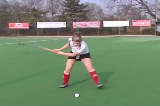
- Striking the ball at right angles off of the right foot
- Useful when changing the point of the attack
- Allows the strike to be gotten off quicker
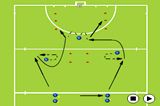
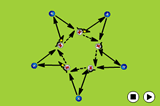
- Dribble towards a cone, performing a hit off the right foot once the player has moved past it
- Focus should be on weight transfer to the right foot
- The goal is the perform the hitting technique on the move, and therefore the initial pace should be slow
- The head should be lifted up during the dribble, so the player does not rush the hitting technique
- Players may find it easier to use the clip hit, as this requires them to get lower, and will remove the feeling off falling over due to a lower centre of gravity
- Increase the pace of the initial dribble
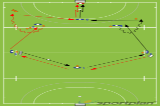
- Place gates down for the ball to be struck through, with the closest gate being the lowest score, and the furthest gate being the highest. The competitive edge will keep players engaged
- Move from right to left, requiring the player to 'skip' past the ball
- Input pressure on the player by having a defender close them down

in more ways than one
 sportplan_netball



in more ways than one
sportplan_hockey

A few weeks into the league season, poor first touches are costing teams the ball. Coach body shape, scanning and receiving on the move to keep possession.

Pre-season fitness fades fast once the league starts. Build conditioning into ball work and use rolling subs well to keep your squad sharp all season.

The first weeks of the season decide whether a junior or new player sticks with adult hockey. Here is how to keep them safe, give them a clear job and build their confidence from the very first bully.