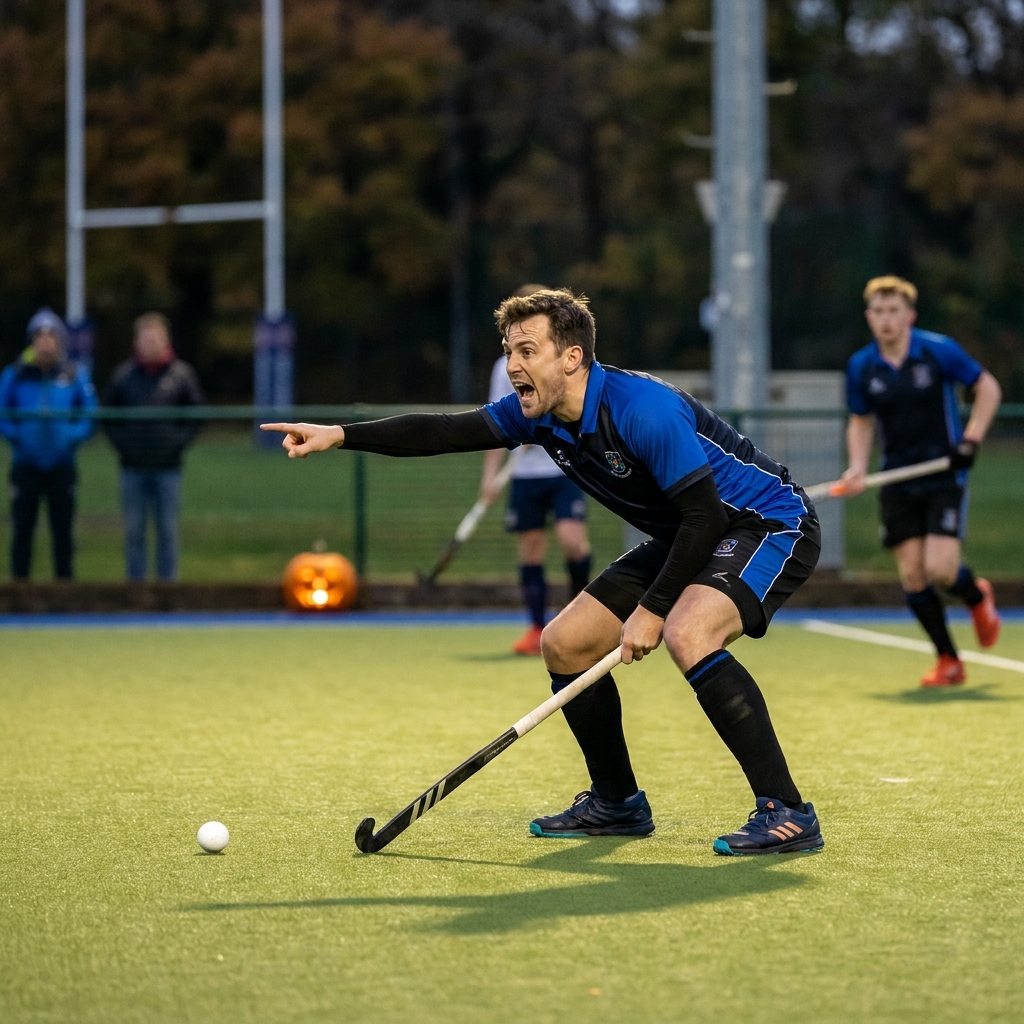
It is late October, your team is several weeks into the league season, and a familiar nightmare keeps repeating. The ball switches play, two defenders converge on the same attacker out of habit, and the runner they have both forgotten about is standing free at the back post. The keeper has no chance. Nobody dived in, nobody got beaten in a 1v1, and yet the goalboard says otherwise.
This is not a skills problem. Individually, your defenders can tackle, channel and block just fine. It matters now because the early-season excuse of "we're still finding our shape" has run out, and these soft concedes are starting to cost points. The good news is that this particular nightmare has a cheap and repeatable fix: better cover, and a lot more talking.
Why the Mix-Up Keeps Happening
Watch the goal back and the pattern is almost always the same. Every defender's eyes are on the ball, not on the runners around them, so a player arriving late and unmarked goes completely unnoticed until it is too late. At the same time, nobody has actually agreed whose job it is to cover behind the player closest to the ball. Without that cover, one well-timed pass or dribble exposes the whole structure.
Add in a change of session, a tired fourth quarter or a new formation and the gaps widen further. Defenders revert to marking whoever is nearest to them rather than reading the picture, and two players end up ball-watching the same attacker while a third strolls into space behind them.
The Five-Step Treat for the Breakdown
Step One: Name the cover role, not the cover player. Whoever is goal-side of the ball when a teammate is challenging is "cover" for that phase, regardless of their normal position. Make this a team rule, not a one-off instruction, so it travels with the ball rather than staying fixed to one shirt number.
Step Two: Make the call out loud. Simple, agreed words such as "cover", "mark" or "switch" take half a second to shout and remove almost all the guesswork. Silence is the real villain here, not a lack of pace or stick skill.
Step Three: Delay, do not double up. The covering defender's job is to show the ball-carrier inside and buy time, never to dive in alongside the first defender. Two players committed to one attacker is exactly how the free runner gets forgotten.
Step Four: Pick up the runner, not the space. When play switches sides, defenders should scan for the nearest unmarked attacker and take responsibility for them immediately, rather than ball-watching until it is obvious someone is spare.
Step Five: Review every concede. After any goal in training, pause for thirty seconds and ask who was covering and who called it. Players fix habits far faster when the mix-up is named straight away, while it is still fresh.
How to Train It: A Session to Ward Off Mix-Ups
Warm-up: pairs passing where the player without the ball must call their partner's name before every pass is received, building the habit of talking before it matters.
Technical: work on cover defence and defending in pairs in a channel, so one player channels the dribbler while the other holds a covering angle behind and slightly inside.
Decision-making: small-sided overloads such as 3v2 or coloured marking games, where defenders must organise on the move, agree who covers and who marks, and communicate every switch of play.
Game: a conditioned small-sided game where any goal from an unmarked runner costs the defending team a point, win or lose on the scoreboard. It sharpens focus on cover fast, without needing a lecture.
Key Coaching Points
- Cover is a role that moves with the ball, not a job that belongs to one position.
- Insist on verbal calls; a loud "cover" or "mark" prevents most mix-ups before they happen.
- The second defender delays and shows inside, they do not join the tackle.
- Scan for the spare attacker every time play switches sides, not just when the ball arrives.
- Review concedes immediately in training, while the picture is still clear in players' minds.
- Reward organised defending in small-sided games, not just clean tackles and blocks.
Recommended Drills


VIEW ALL DEFENDING SKILLS DRILLS
Frequently Asked Questions
How do we decide who should be the covering defender?
It is whoever is goal-side of the ball when a teammate challenges, not a fixed position or player. Make the rule simple and consistent, so any defender can step into the cover role depending on where the ball is.
Is this really a communication problem, not a fitness or skill one?
Usually, yes. Most clubs find their defenders can tackle and channel well individually, but concede soft goals because nobody called the switch or agreed who was covering. Fix the talking first, before you add extra fitness or technical work.
How much training time does this need each week?
Fifteen to twenty minutes is enough if it is focused. A short warm-up with calling, a pairs defending exercise, and one conditioned small-sided game that rewards good cover will embed the habit within two or three sessions.