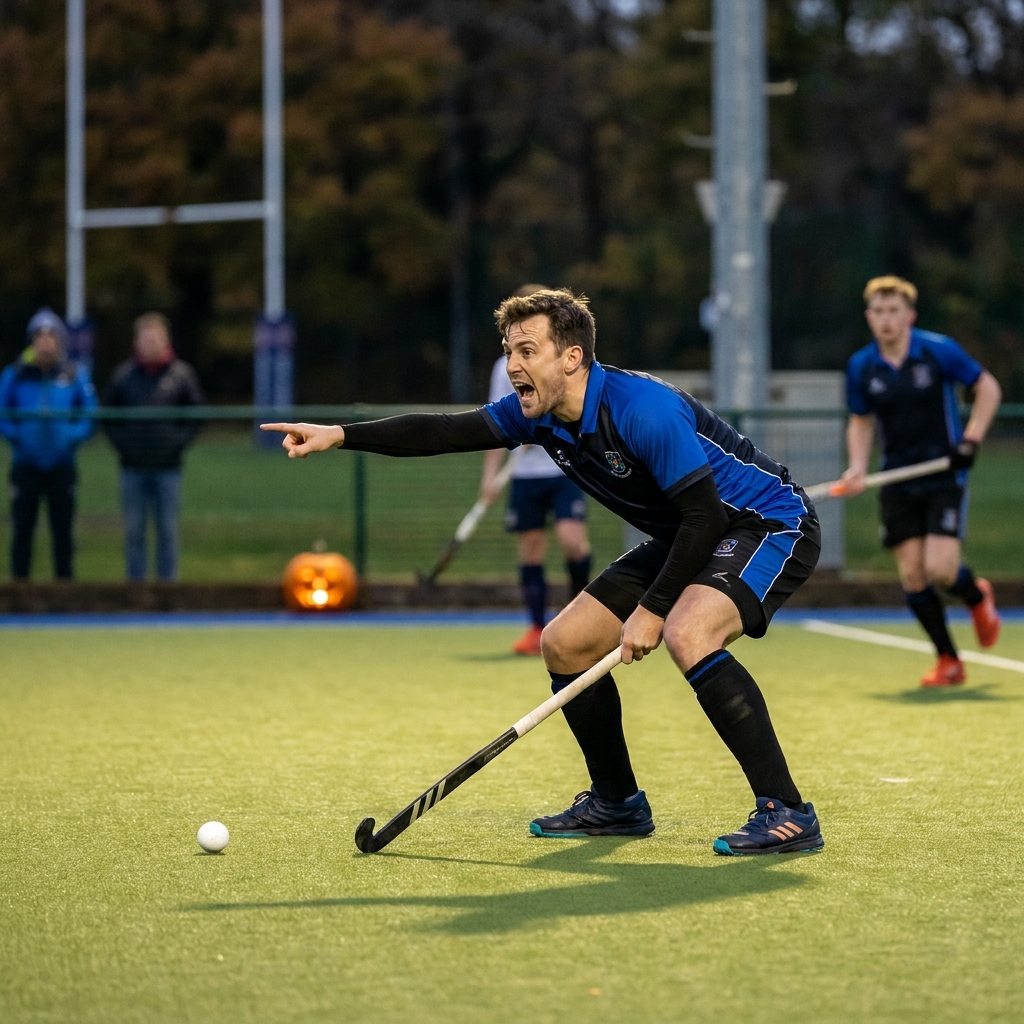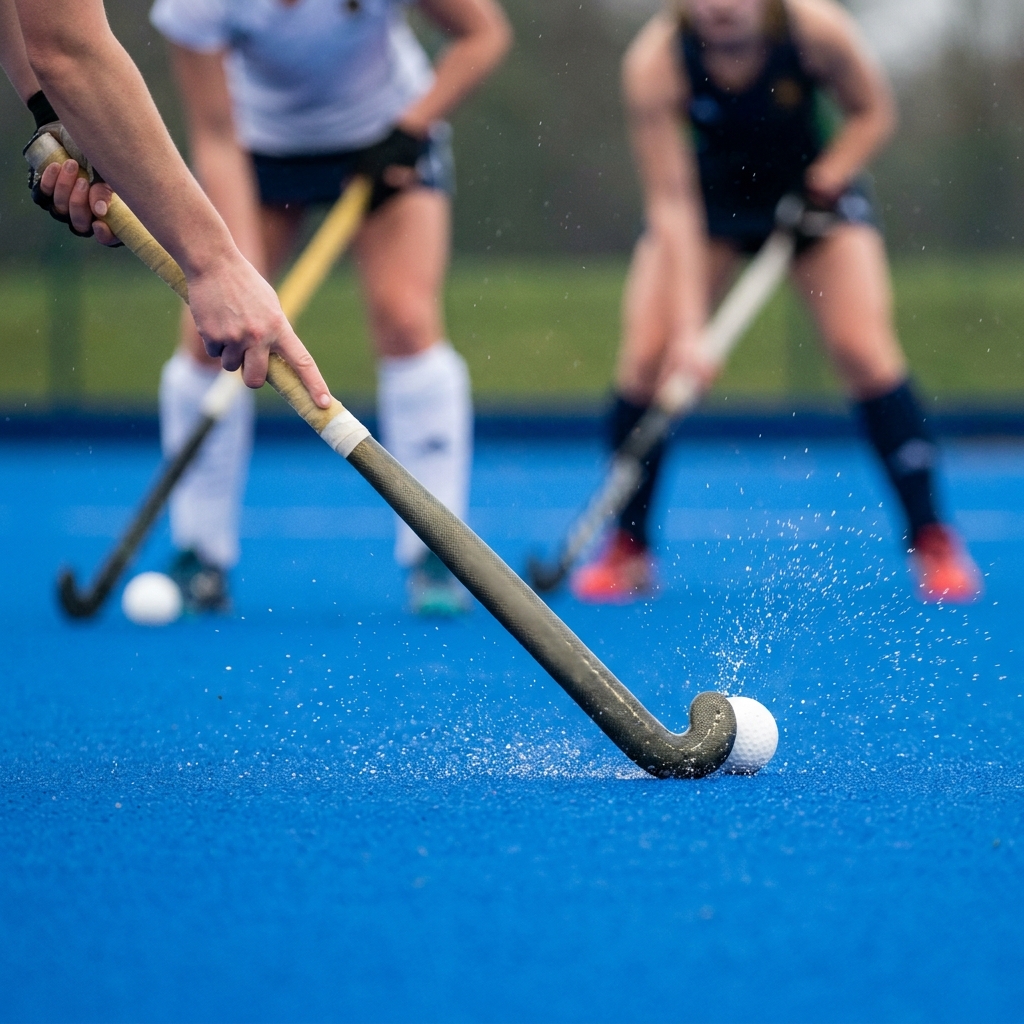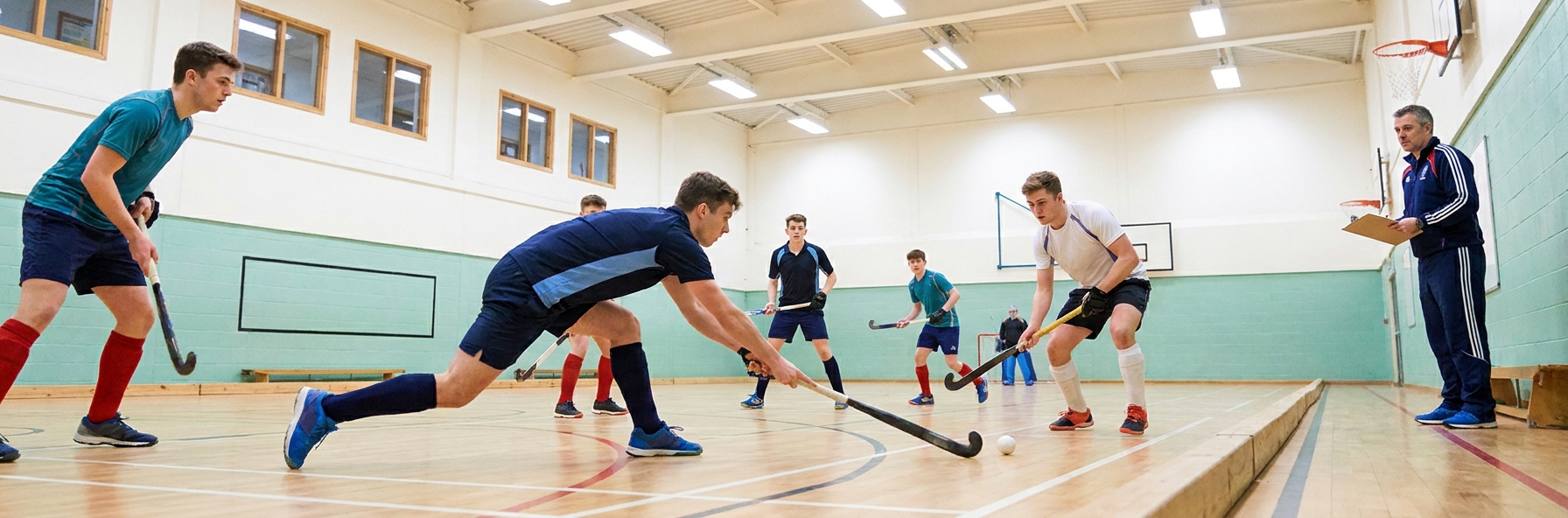
Mid-November is when a lot of clubs start running two games at once. The outdoor league is still going, but the indoor sixes and leagues are starting up too, and the same squad is often playing both. The first indoor session of the winter usually looks the same everywhere: someone hits the ball flat across the D, someone else lifts it outside the circle, and the whistle goes twice in the first five minutes.
None of that is a discipline problem. It is an outdoor habit meeting a different set of rules. Indoor hockey rewards quick, controlled ball movement and smart use of the boards rather than power, and the players who adapt fastest tend to come back onto the outdoor pitch sharper too, with better first touch and faster decision-making under less space.
Why Outdoor Habits Fail Indoors
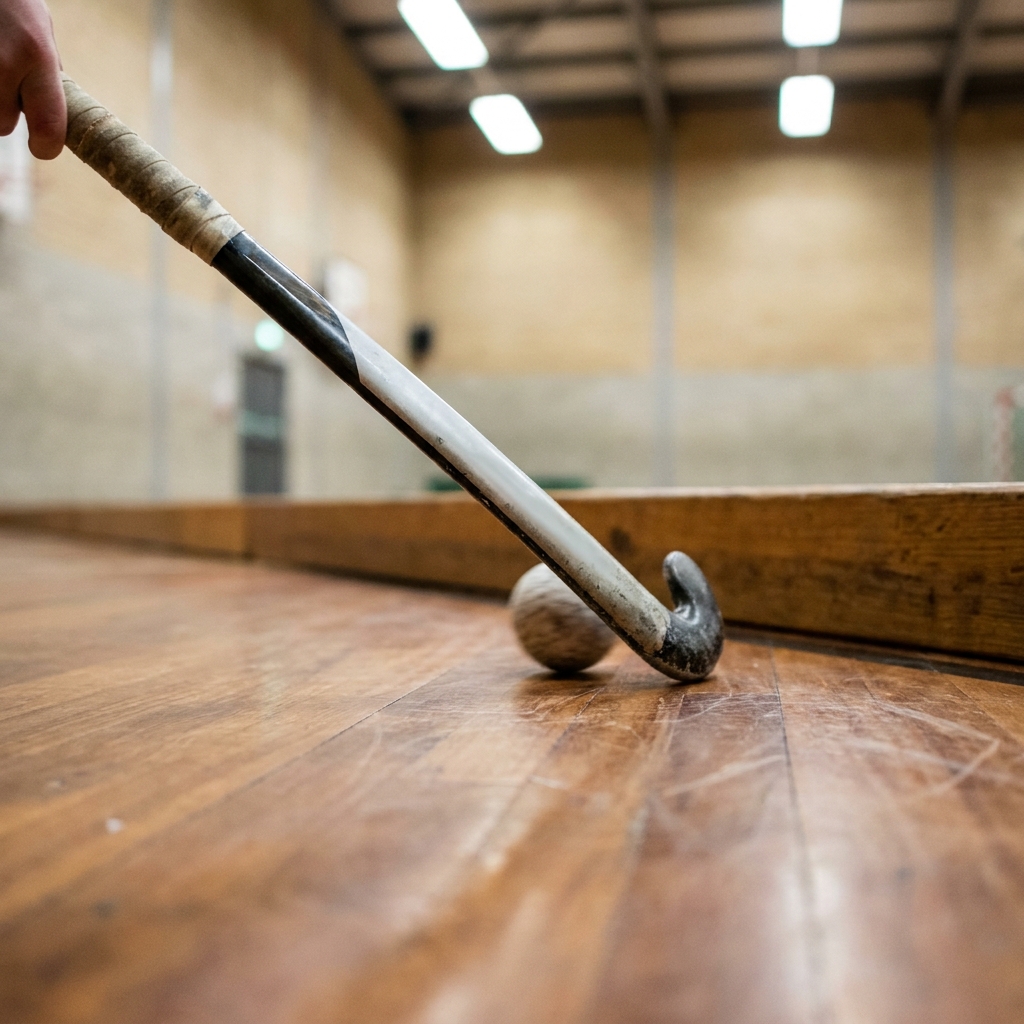
The two biggest rule differences catch players out every winter. The ball cannot be hit, only pushed or deflected, so any outdoor-style slap or drive is a free hit against. And the ball cannot be lifted off the stick except inside the shooting circle, so an outdoor clearance out of defence is also a free hit, usually in a dangerous area.
Add solid boards around the pitch instead of sidelines, and the game changes shape completely. The ball stays alive off the boards, space is tight, and a player who stands flat-footed waiting for a loose outdoor-style pass will be dispossessed before the ball arrives.
Retraining the Key Skills
Step One: Sharpen the push pass. Every pass indoors is a push or a deflection, so accuracy and pace off the stick matter far more than a big swing ever did outdoors. Drill crisp, flat push passes along the ground as the base skill of every session.
Step Two: Control the deflection. One-touch deflections off a push are how goals and quick combinations happen indoors. Work on receiving at an angle and redirecting first time, rather than always stopping the ball dead.
Step Three: Use the boards on purpose. Encourage players to play the ball into the boards to beat a defender or recycle possession, instead of treating the boards as a lucky bounce. A pass played off the board at the right angle is often safer than a pass straight down the line.
Step Four: Stay light on the feet. With less space and no long outlet ball, players need to be constantly adjusting body position to stay available for the next pass. Reward players who keep moving into space rather than standing still and calling for it.
Step Five: Make the circle the only place to lift. Reinforce early that the stick stays low everywhere except in the shooting circle. Players who train this habit stop giving away cheap free hits in their own half.
How to Train It
Start the session with a tight possession warm-up, four or five players in a small square, push pass only, one-touch where possible. This forces good habits before the first whistle.
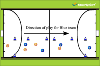
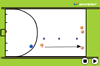
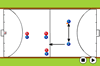
Move into technical work with push pass and deflection lines, then add the boards: a simple 2v1 where the attackers must use the board at least once to break through. From there, build to a decision-making game such as a 3v3 in a marked-out area with goals at both ends, scoring only after a deflection or a pass off the board.
Finish with a small-sided game under full indoor rules. Referee the lifting rule strictly for the first few minutes; players adjust quickly once a couple of free hits go against them for lifting outside the circle.
Key Coaching Points
- No hitting indoors; every pass is a push or a deflection, so technique under pace matters more than power.
- The ball may only be lifted inside the shooting circle; coach this rule hard in the first session of the winter.
- Treat the boards as a tool for beating defenders and keeping possession, not an accident.
- Keep players moving into space constantly; standing still gets you cut off in a tight area.
- Reward one-touch deflections and combination play in training, since they are what breaks indoor defences down.
- Expect a short adjustment period and referee the key rules strictly early on, rather than letting bad habits bed in.
Recommended Drills
Frequently Asked Questions
Can outdoor players just turn up to indoor hockey with no preparation?
They can, but it usually means a frustrating first session of free hits for hitting and lifting. A short block of push pass, deflection and boards work before the first fixture pays off quickly once the whistle starts going against bad habits.
What is the one rule players forget most often?
Lifting the ball outside the shooting circle. Outdoor players are used to clearing the ball off the stick under pressure, and that instinct gives away a cheap free hit in exactly the area you do not want to concede one.
Does playing indoor hockey actually help the outdoor game?
Many coaches find it does. The tighter space and quicker ball movement push players to improve their first touch and decision-making under pressure, which tends to show up as sharper, calmer play once the outdoor season resumes.

 sportplan_hockey