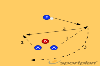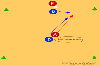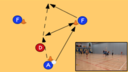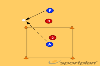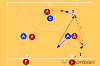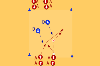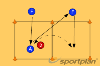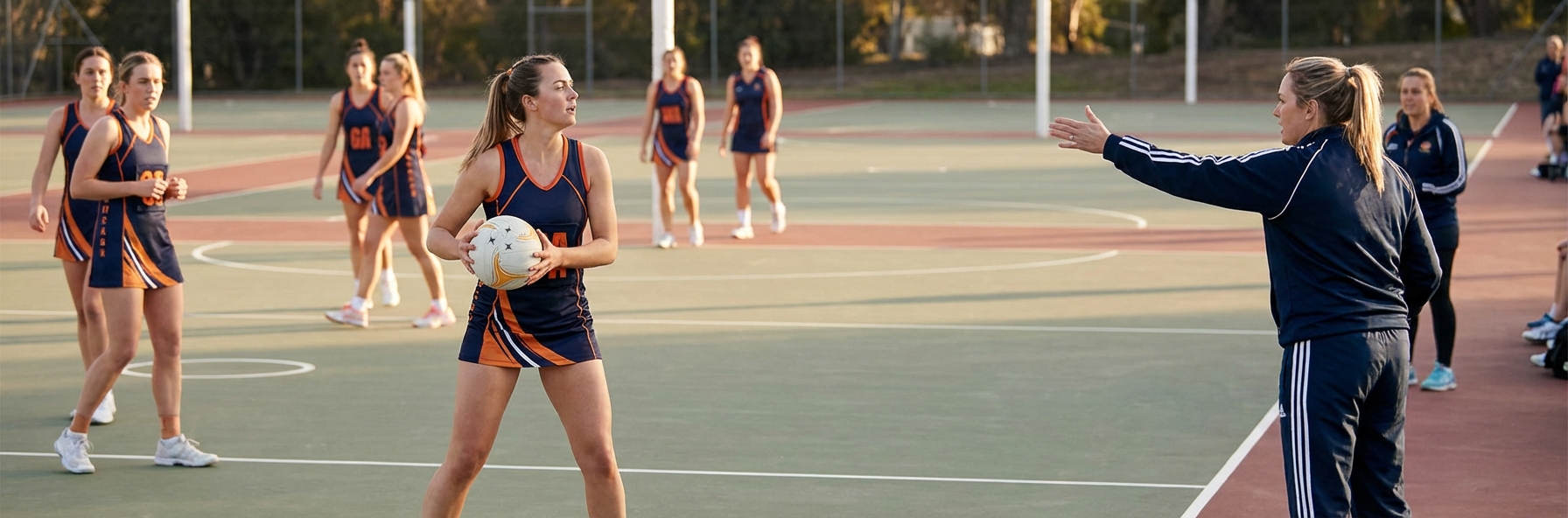
Netball: getting in front of attacker

The Super Shot has created a strategic dilemma that every shooter faces multiple times per quarter: take the two-goal attempt from range, or work the ball closer for a higher-percentage standard shot?

The answer isn't always obvious. The wrong decision - in either direction - costs goals. The best shooters develop a framework for making this choice under pressure, quickly and consistently.

The Expected Value Calculation

At its simplest, shot selection is a maths problem. Expected value equals probability of success multiplied by reward.

Super Shot example: A 50% shooter from the Super Shot zone has an expected value of 1.0 goals per attempt (0.5 x 2).

Standard shot example: An 85% shooter from under the post has an expected value of 0.85 goals per attempt (0.85 x 1).

In this scenario, the Super Shot is mathematically superior despite the lower percentage. The threshold varies by shooter, but generally: if your Super Shot percentage exceeds 42.5% of your standard percentage, the Super Shot has higher expected value.

Beyond the Maths

Pure expected value ignores important context. Several factors should influence shot selection:

Game State

Down by 6 with 2 minutes left? Aggressive Super Shot hunting is necessary - you need multiple two-goal swings to catch up. Up by 4 with 90 seconds remaining? Conservative standard shots protect the lead without gifting turnovers.

Time on the Clock

Early in Power 5, there's time to work the ball and create better opportunities. With 30 seconds left, a clean Super Shot look might be your last chance to score twice.

Defender Position

A Super Shot with no defender pressure is different from one with hands in your face. Read the defence before committing to range.

Rebounding Setup

If your GA is well-positioned for an offensive rebound, a Super Shot miss has a safety net. If not, the turnover risk increases.

The Decision Framework

Train your shooters to ask three questions before every shot during Power 5:

1. Am I balanced? A rushed or off-balance Super Shot rarely goes in. If you're not set, work closer or reset the attack.

2. What's the defence giving me? Tight defence at the edge suggests working inside. A defender who sags offers a cleaner Super Shot look.

3. What does the game need? Does the scoreboard demand risk, or reward patience? Make the decision that serves the team, not your stats.

Recognising Good vs Bad Super Shot Opportunities

Good Super Shot opportunity:

  • Clean catch in the zone with time to set
  • Defender more than arm's length away
  • Balanced stance, comfortable body position
  • Support positioned for potential rebound

Bad Super Shot opportunity:

  • Catching on the move or off-balance
  • Tight defensive pressure on the release
  • Rushed attempt with defender closing
  • No rebound support, high turnover risk

Training Shot Selection

Decision drills. Coach feeds ball to shooter in Super Shot zone with varied defensive pressure. Shooter must call "shot" or "work" instantly. Rewards for correct decisions based on pre-defined criteria.

Game state scenarios. Set up specific situations - down 4 with 1 minute left, up 2 with 3 minutes remaining - and let shooters practice decision-making in context.

Video review. Analyse Super Shot attempts from training and matches. Was the decision correct? Was the execution the problem, or the choice?

Team-Level Strategy

Shot selection shouldn't be purely individual. Teams should develop guidelines:

  • Which shooter has the best Super Shot percentage? She gets priority on long-range attempts.
  • At what score margin do we become aggressive/conservative with Super Shots?
  • When do we deliberately work for Super Shot opportunities vs standard shots?

These guidelines reduce decision burden on individuals and create consistency across the team.

The Discipline to Pass Up Shots

Perhaps the hardest skill is passing up a Super Shot opportunity that looks tempting but isn't optimal. Shooters are trained to shoot - resisting that instinct requires discipline.

Frame it positively: passing up a 35% Super Shot for an 80% standard shot isn't weakness - it's smart netball. The best shooters have the confidence to decline bad opportunities.

Evolving Your Approach

Track your shooters' conversion rates from different zones. The data should inform decision-making. If a shooter converts 60% from range, she should be hunting Super Shots. If she's at 30%, she should be more selective.

This data also helps opponents scout you. Vary your approach to remain unpredictable while staying within expected value guidelines.

Shot selection in the Super Shot era is a skill that separates good shooters from great ones. Train it deliberately, review it constantly, and trust the framework when the pressure is on.

Where to Go Next

Ready to improve your shooters' technique and decision-making? Explore our shooting drills and session plans:

JOIN SPORTPLAN FOR FREE

  • search our library of 700+ netball drills
  • create your own professional coaching plans
  • or access our tried and tested plans
getting in front of attacker DRILLS
View All
Unfortunately there were no results for your search! Please try again
getting in front of attacker DRILL CATEGORIES
View All
getting in front of attacker ANSWERS
View All

Please help me with attacking and defending strategies in netball
What are attacking strategies and defending strategies??? I need to finish my coursework and I am stuck with those two!

Archived User Coach

Quick feet vs longer strides

Hi There, My Daughter runs in very big steps, I think if she runs in small quick steps, it will be better and quicker to dodge her defender? Any thoughts and or drills to help with this please? Love this page!!!

Lizelle Erasmus Coach, South Africa

Infront for a pass instead of dropping back.

Whats a good drill to help with coming infront of their partners instead of the immediate thought of dropping back for a pass?

Jordan Mills Coach, New Zealand

how to mark the player in netball

i need to know some techniques when marking a player in netball.

Archived User Coach

drill for getting in front

does anyone have a getting in front drill for an U12's team

Archived User Coach

How would you advise your team playing tall players?

i would like to know how i can advise my team to effectively handle taller opponents if them are short.

Bwalya Andrew Coach, Zambia

Caretaker Role and I am so scared my team wont win the trophy

Our School netball coach resigned last night. I am an assistant coach for soccer, coach for volleyball, assistant coach for basketball and now will be a caretaker for our netball team due to play finals tomorrow. What drills and tactics can I use today at training to prepare them for a school tournament finals tomorrow?I need your prompt assistance please

Simeon Coach, Namibia

Tips for new WA players

HI EveryoneI recently switched from GK AND GD, to WA. I'm finding it difficult to feed the ball into the circle and having confidence in my passing accuracy. I'm also having trouble on getting free for centre pass, especially when the other team has a really good WD. I've only played WA a couple of times so I'm still learning, but I really don't want to let my team down. Thanks all, for the help!

Ekeesha Rathnayake Coach, Australia

Two hands on Interceptions

How can you get an interception with two hands and deliver the ball safely to goal. If I am getting a tip on the ball when intercepting is that down to basic ball handling skills ? Asked using Sportplan Mobile App

Nicole Ogunlaja Coach, England

drill for getting in front | S...

does anyone have a getting in front drill for an U12's team

Archived User Coach

How do I stop face marking..? ...

Help... I am new to coaching netball albeit have played for years. My experience in playing comes from being an attacker so trying to work with my defence, is proving tricky. The issue I have is that both my GD and GK face mark. I have tried numerous drills in training however as soon as they get in to a match, they revert back to face marking. When the ball is coming down the court, I encourage them to stay on their toes, side marking and moving in front and round the back however when the GA or the GS moves out, the face marking starts. We have had balls bounce of the backs of heads and all sorts. Does anyone have any tips?  Di

Diane Coach, England

how to protect yourself as gs/...

I was playing GS today and marked by a very tall GK. As I was watching the ball come forward, I moved to the top of the D but she didn't stay with me and remained behind me. I couldn't see her and was unsure if I should stay close to her to be aware of where I could move, or to just move where I wanted. My back was turned to her as I was facing where the ball was, should I be side on to see her in my peripheral vision but not stay with her, or should I keep marking her to hold her then come forward when appropriate? I would be grateful for any advice, thank you,

netballcrazy Coach, England

Tips for new WA players | Spor...

HI EveryoneI recently switched from GK AND GD, to WA. I'm finding it difficult to feed the ball into the circle and having confidence in my passing accuracy. I'm also having trouble on getting free for centre pass, especially when the other team has a really good WD. I've only played WA a couple of times so I'm still learning, but I really don't want to let my team down. Thanks all, for the help!

Ekeesha Rathnayake Coach, Australia

GD Staying with GA. Rebounds b...

How do you get the Goal Defence staying with the Goal Attack, especially when the Goal Attack drops down behind the Goal Defence and gets the ball all the time in the Goal Circle?How do you get the Defence in the Goal Circle to rebound and how do you get the Goal Shooters following their shot and rebound?

Jenny Ryan Coach, Australia

Does anyone have a drill to en...

Does anyone have a drill to encourage under 11's to come forward for a pass rather than asking for the overhead pass all the time as they are 'running away' from the ball in their haste to get to the circle?

Jacqui Davis Coach, England

Rules question: Causing contac...

After my opponent release the ball can I use my body but not arms to block in front of her so as to prevent her from going to the front?( In centre third) If the opponent just run ahead and crash on the defender, is it a contact?Or in fact the action of the defender preventing the attacker to run towards goal third is obstruction or a rule called" causing contact"?

Archived User Coach

how to mark the player in netb...

i need to know some techniques when marking a player in netball.

Archived User Coach

should the GK stay behind the ...

should the GK stay behind the GS or in front

Archived User Coach

JOIN SPORTPLAN FOR FREE

  • search our library of 700+ netball drills
  • create your own professional coaching plans
  • or access our tried and tested plans

Sportplan App

Give it a try - it's better in the app

YOUR SESSION IS STARTING SOON... Join the worlds largest netball coaching resource for 700+ drills and pro tools to make coaching easy.
LET'S DO IT