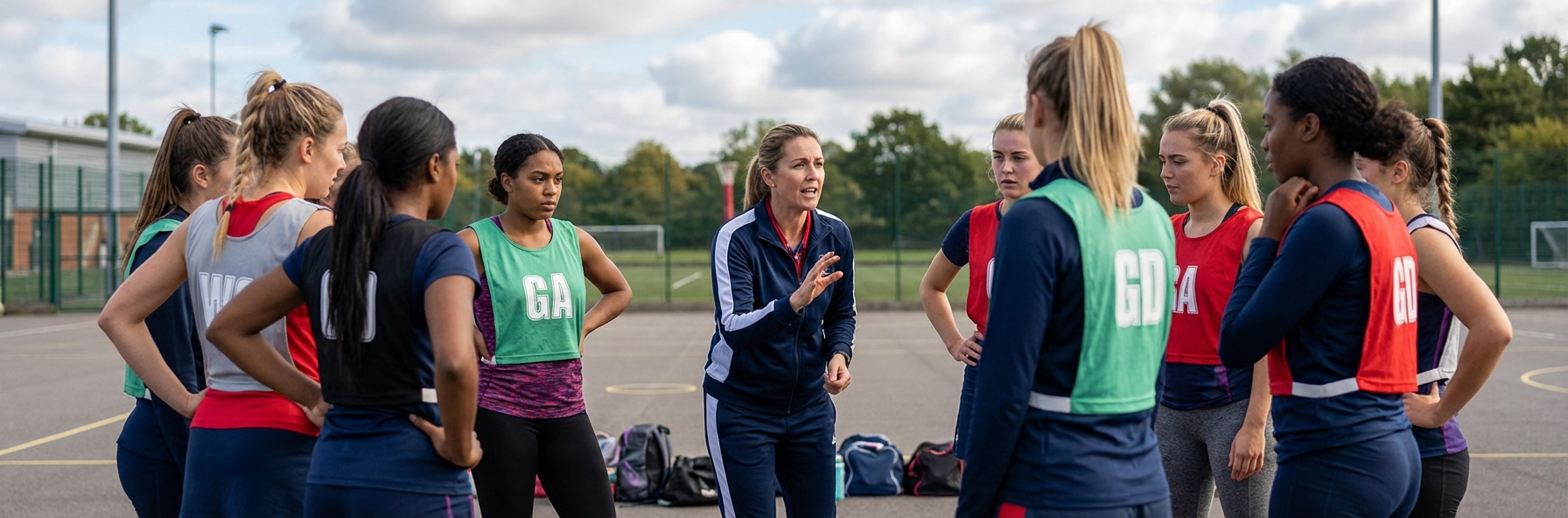
Netball Australia's "Coaching Our Way - Player Centred" programme represents a fundamental shift in coaching philosophy. Rather than the traditional coach-as-expert model, player-centred coaching positions athletes as active participants in their own development. The coach becomes a facilitator, not a dictator.
This isn't soft coaching. It's evidence-based practice that produces better players, better retention, and better long-term outcomes. It's also challenging for coaches trained in traditional methods.
What is Player-Centred Coaching?
At its core, player-centred coaching shifts the focus from what the coach wants to deliver to what the player needs to develop. Key principles:
Athlete ownership. Players take responsibility for their development. They set goals, identify areas for improvement, and drive their own learning. The coach supports rather than directs.
Questioning over telling. Instead of "do it this way," the player-centred coach asks "what do you think went wrong?" and "how could you do it differently?" This develops thinking players who solve problems independently.
Individualisation. Not every player needs the same thing. Player-centred coaching adapts to individual needs, learning styles, and developmental stages rather than applying one-size-fits-all programming.
Holistic focus. Development extends beyond technical skills to include psychological, social, and emotional growth. The goal is developing complete athletes and complete humans.
Why This Matters for Netball
Traditional coaching models often produce players who execute instructions but can't adapt when things go wrong. They wait for the coach to tell them what to do. This creates a ceiling on development.
Player-centred approaches develop athletes who think, adapt, and solve problems under pressure. In the chaos of a game, these skills matter more than perfect technique in a drill.
Research also shows that player-centred environments produce higher retention rates. Athletes stay in the sport longer when they feel ownership over their development and genuine connection with their coaches.
Practical Implementation
Ask More Questions
The simplest shift is moving from statements to questions. After a drill or game:
- Instead of: "Your footwork was wrong."
- Try: "What did you notice about your footwork there?"
- Instead of: "You need to release the ball faster."
- Try: "What options did you see? What made you hold the ball?"
This takes longer initially but develops players who can self-correct without coach intervention.
Involve Players in Goal Setting
Rather than telling players what they need to work on, ask them. What do they want to improve? What would make the biggest difference to their game? Their answers might surprise you - and their investment increases when goals are theirs, not yours.
Create Decision-Rich Environments
Design training that requires decision-making rather than rote execution. Small-sided games, constraint-led drills, and variable practice all force players to think and adapt rather than simply repeat.
Provide Feedback That Develops Independence
The goal of feedback isn't just correcting the current mistake - it's helping the player correct future mistakes themselves. Feedback should teach players what to look for and how to self-assess.
The Challenging Transition
For coaches trained in traditional methods, player-centred coaching feels uncomfortable. It means giving up control. It means accepting that players might find different solutions than you would. It means trusting the process even when it's messier than direct instruction.
The transition takes time. Start small - add more questions to your coaching, involve players in one aspect of planning, resist the urge to provide immediate answers. Gradually, the approach becomes natural.
Creating Safe Environments
Player-centred coaching requires psychological safety. Athletes must feel comfortable making mistakes, asking questions, and expressing opinions. This doesn't happen automatically - it must be deliberately cultivated.
- Celebrate effort and learning, not just outcomes
- Respond to mistakes with curiosity, not criticism
- Model vulnerability by acknowledging your own uncertainties
- Actively invite input and genuinely consider it
The Evidence Base
Player-centred coaching isn't just philosophy - it's supported by research across sports. Studies consistently show that autonomy-supportive coaching environments produce:
- Higher intrinsic motivation
- Better skill retention
- Improved decision-making under pressure
- Greater enjoyment and lower dropout rates
- Better long-term performance outcomes
The methodology has been adopted by leading sports organisations worldwide, including Netball Australia's community coaching programmes.
Looking Ahead
Player-centred coaching is becoming the expected standard, not an alternative approach. Coaching education programmes increasingly emphasise these principles. The coaches who adapt will develop better players and have more fulfilling coaching careers.
The shift isn't easy, but it's worthwhile. At its heart, player-centred coaching is about treating athletes as capable humans who can drive their own development. That respect produces remarkable results.
 sportplan_netball