Rugby: tag rugby

August 2026

Ask a club coach what their defensive system is and the answer is almost always the same: mark your player, work hard, get a hand over. That is a perfectly good default. The problem comes when it is the only thing a team knows, because some opponents are simply better at one-on-one than you are.

A zone changes the question. Instead of asking your defenders to win individual contests they might lose, it asks them to protect space and force the ball into areas you want it to go. Against a team with a dominant attacking pairing, or one that lives on quick front-cut feeds, it can turn a game.

When a Zone Is the Right Call

Use a zone when you are being beaten individually rather than collectively. If your goal defence is losing a physical battle every centre pass, moving to a zone stops that contest from deciding the game.

It also works well against a side that moves the ball fast down one channel, or one that relies on a single feeder. A zone congests the space in front of the circle and forces the ball wide or backwards, which slows everything down.

Equally, know when not to. Against a patient team with good long passing and a shooter comfortable at distance, a zone can simply hand them time and space. A zone is a tactical choice, not a hiding place.

The Principles That Make It Work

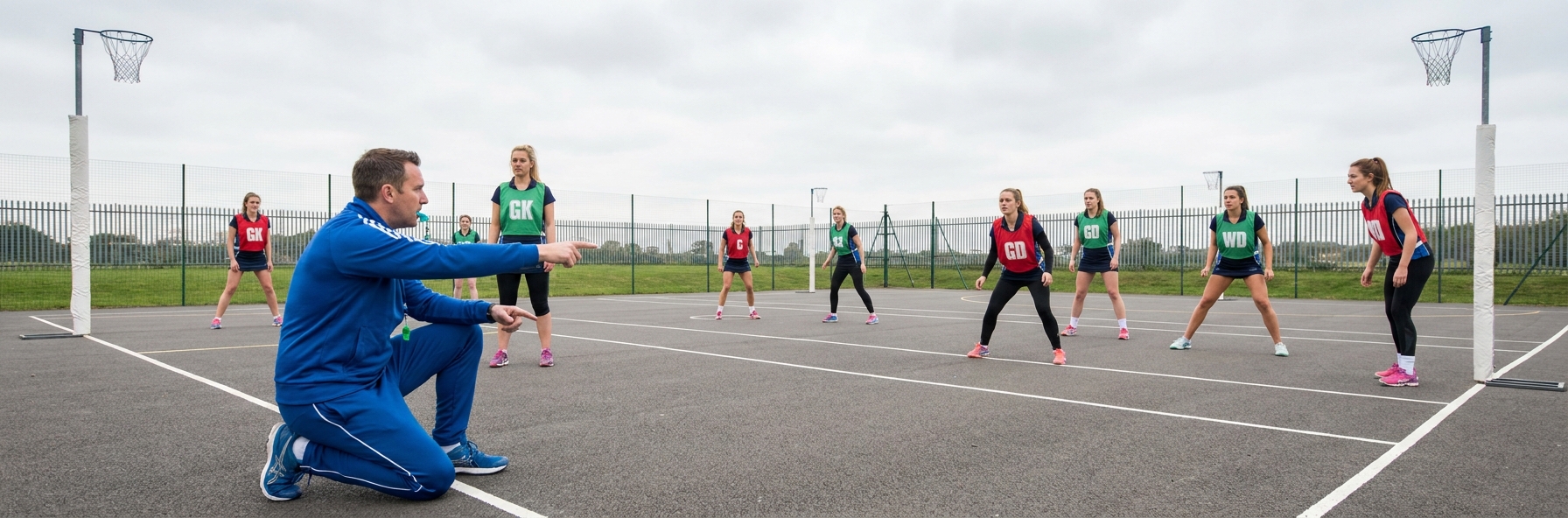
A zone is not standing still. Every player has an area of responsibility, but the whole shape slides together as the ball moves. If one defender chases and the others do not adjust, the zone has a hole in it and the ball goes straight through.

Communication is the difference between a zone and a mess. Players have to call the ball's position, call handovers as an attacker moves from one area to another, and call when the shape needs to compress or expand.

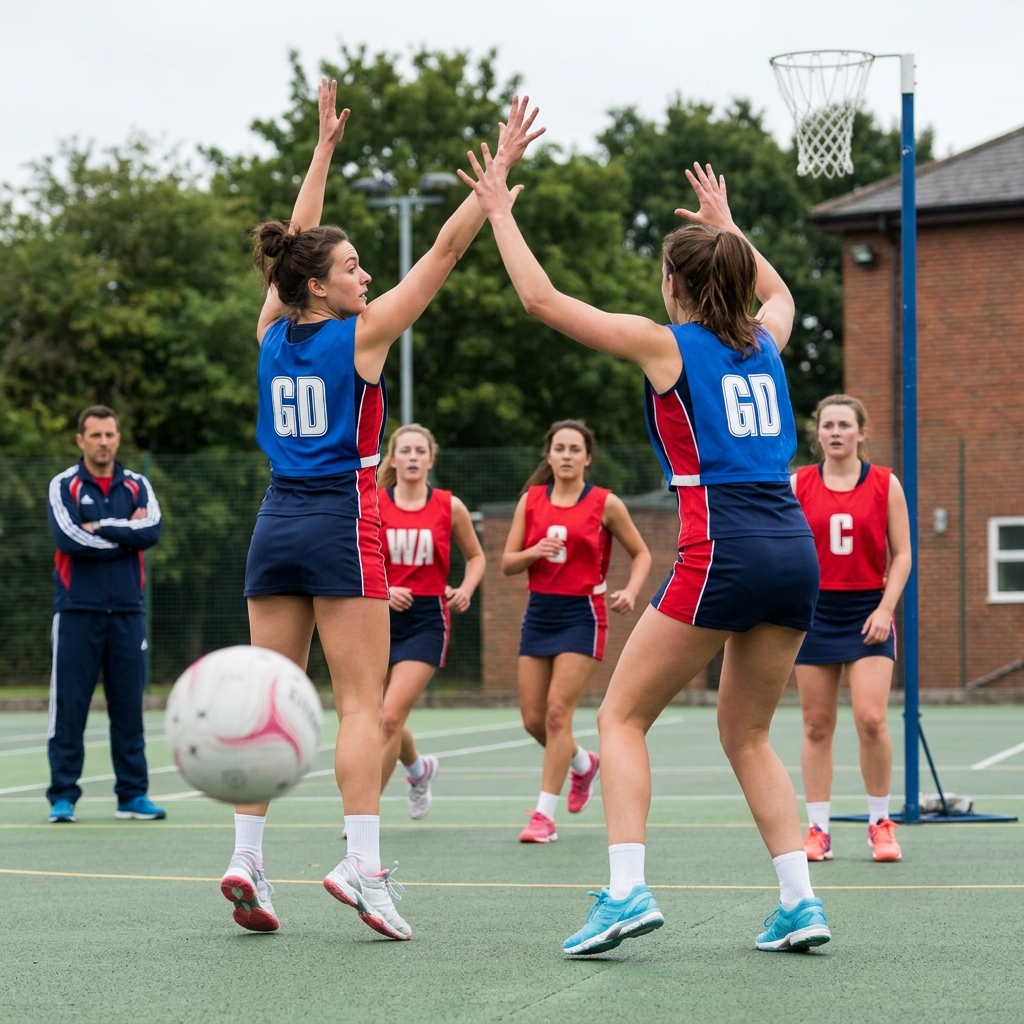
The hands matter more than the feet. In a zone, defenders are often a metre or two off their player rather than tight to them, so pressure has to come from arms over passing lanes rather than from body contact.

Building It in Training

Step One: Start without attackers. Walk the shape through, ball in hand, moving the ball around the court so players feel how far and how fast the whole unit slides.

Step Two: Add passive attackers. Let the attacking side move the ball but not attack the space, so defenders can practise the slide and the handovers without panic.

Step Three: Name the trigger. Decide as a squad when the zone goes on, whether that is from a centre pass, after a goal, or on a call from the captain, and rehearse the switch itself.

Step Four: Coach the handover. The moment an attacker crosses from one defender's area to another is where zones break down. Drill that specific moment on its own.

Step Five: Play it live and lose a few. A zone will leak goals while it is being learned. Give it a full quarter in a practice match rather than abandoning it after two possessions.

Key Coaching Points

  • Use a zone when you are losing individual contests, not as a general default.
  • The whole shape slides together; one player chasing the ball breaks the system.
  • Constant communication about ball position and handovers is non-negotiable.
  • Pressure comes from hands over passing lanes rather than close body contact.
  • Rehearse the switch into the zone as its own skill, with an agreed trigger.
  • Give it time in practice matches, because a new zone always leaks before it holds.

Recommended Drills
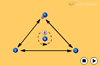
VIEW ALL ZONE DEFENCE DRILLS

Frequently Asked Questions

Is a zone legal in netball given the obstruction rule?

Yes. Defenders in a zone are usually further from their opponent than in one-on-one marking, which if anything makes the three-foot distance easier to respect. The rule to watch is defenders drifting in to contest without re-establishing distance.

What age can players start learning a zone?

Once players reliably understand their own position and can communicate under pressure, which for most is around the upper junior age groups. Below that, one-on-one defending teaches the individual skills a zone later depends on, so there is no rush.

How do we switch out of a zone if it is not working?

Have an agreed call and practise it. Switching systems mid-game is a skill in itself, and a team that has only ever rehearsed going into a zone will get caught halfway between two systems when they try to come out of it.

tag rugby DRILLS
View All

Tabata Touch Tag Rugby - Rugby...
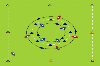
You can play any version of touch you like, I'm going to suggest One Touch Off-Load - but you can change this to suit your training goals for the session ahead. Mark out your training area for the game, but include one or more Tabata training zones for your players (these zones don't have to be very big). If you only have one other person helping you - you might have only one zone, but if you have more assistant coaches or helpers standing around, create more zones - you'll find they will be used. Split your players into two teams, giving them bibs if needed. Keep your law briefing, brief - telling the players the laws of the version of touch you have decided to play. Tell them that as an addition to the normal laws, we now have a sin binning for mistakes e.g. you may decide that all mistakes are sent to the sin bin (The Tabata Zone), you might just focus on forward passes, or penalties. My point is that you can tailor this to suit your coaching goals. Players sent to the sin bin will be there unit sent back by the supervising coach. Don't forget to swap the defense and the attack. Also you can focus the sin binning on the defence for not meeting your defensive goals. Using the Tabata Zones Small areas with one coach/helper. The Tatbata protocol is often 8 periods of intense 20 second activity - with 10 seconds of rest in between (sound simple - try it!). Tell the sin binned player they have 20 seconds to complete as many press-ups as they can, then give them 10 seconds to rest. Repeat 8 times, or reduce to a number of repetitions that work for you and your players. When the player has completed their reps - return them to the game. What you could do in the zones: Press ups, Lunges, Burpees, Sit ups, Etc.

General

Unfortunately there were no results for your search! Please try again
tag rugby ANSWERS
View All

what are the rules of tag rugb...

what are the rules of tag rugby?

Chris Mason Coach, England

im coaching the under 6's how do i keep them interested?

im coaching the under 6's how do i keep them interested in the game

Archived User Coach

I am currently involved in coaching very young players?

I am currently involved in coaching very young players - Under 7's. What is the best DVD developed specifically for introduction of youngsters to the game? BR

Gerry Crawford Coach, Ireland

Top Tips for Girls U12 Tag Rugby
About to start a Girls U12 Tag Rugby team (hopefully) to run over the Summer months. Has anyone any particular top tips?
Gary D Coach, Northern Ireland

What is the best way to transfer tag rugby to contact?

What is the best way to transfer tag rugby ability to contact rugby in 8-9 year olds? How can one best teach the basics of the breakdown?

Ed Bevan Coach, United Arab Emirates

RFU - proposed Mini's rule changes

RFU - proposed Mini's rule changes%3A All - just a quick straw poll%3A Have any CLUBS that you are aware of officially come out in SUPPORT of these changes? If not, have they come out officially rejecting the proposed changes, or are they adopting a "wait and see" attitude? Regards Stephe

Archived User Coach

High school rugby in the USA

I am teaching a PE class basics of rugby and I was wondering if anyone had any advice on sequencing, I have them for 5 days and only 50 minutes per day. I was going to start with basic rules and ball handling and back lines, then rucking, then scrums, tackling (these kids love full contact), then on the last day hopefully play either sevens or unopposed. I am hoping to eventually start a club or team at this school. Suggestions?

Archived User Coach

Are there any good drills for girls tag rugby?

Do you have any good recomendations for drills for the girls tag game. Our team is aged from 8 - 15 and various abilitys.

simeon dawson Coach, England

Coaching the U6s - any drills or ball games for this age?

i shall be starting coaching later this month, hope fully the under 6s agegroup. does any one have any drills or ball games suitable for this age group? thank you, chris.

christopher jenkins Coach, Wales

drills for basic tag rugby?

what sessions/drills can i use to train a very basic primary school tag rugby team?

Archived User Coach

Can I and should I coach basic tackle skills to U8s?

Does anyone have a definitive answer to this question%3A can I coach basic tackling skills to U8s now, in preparation for next season, without falling foul of any RFU rules or regulations? Hugo

Hugo Norton-Taylor Coach, England

Cool Down Fun for Under 9's

I'm looking for some ideas of how to keep the cool down fun for an Under 9's session, which have been quite intense with the introduction of contact for the first time?

Archived User Coach

Looking for easy tag rugby defence drills (for U7s)

What defence drills exist for tag rugby that are easy enough to explain to a 7 year old?

Archived User Coach

Under 6's rugby warm ups and drills.

Im after warm up and drills for coaching Under 6's Rugby

Leigh Tomlins Coach, Wales

Help - what are the rules of tag rugby?

What are the basic rules of tag rugby? I teach year 3/4

Rachel Rudd Coach, England

tag rugby

What is the best warm up for tag rugby

Garethsmldon Coach, England

JOIN SPORTPLAN FOR FREE

  • search our library of 1100+ rugby drills
  • create your own professional coaching plans
  • or access our tried and tested plans

Sportplan App

Give it a try - it's better in the app

YOUR SESSION IS STARTING SOON... Join the growing community of rugby coaches plus 1100+ drills and pro tools to make coaching easy.
LET'S DO IT