

I have thoroughly enjoyed using your site to help me with my coaching plans for my under 9's netball team.

Team yellowhas centre pass- but ball not touched in centre third but caught by green team in goal third. Is this a penalty as 1st pass not received in centre third or can play go on?

I am looking for some advice on being a better GD. Any advice out there will be greatly appreciated. Also some strategies on the defense side for GK, WD. Question submitted from "Sportplan Netball" on Facebook, by Inge Kruse.

Hi all, I would like some clarification regarding the "advantage" call which appears in the rules as follows%3A3.1.6 (viii) [The umpire] Shall refrain from blowing the whistle to penalise an infringement when by doing so the nonoffending team would be placed at a disadvantage. An umpire shall call âadvantageâ to indicate an infringement has been observed and not penalised. Having blown the whistle for an infringement, the Umpire must award a penalty unless a goal is scored which is to the advantage of the non-offending team. Recently I asked my netball centre why advantage was being called when the non-offending team had not been successful in passing or shooting the ball. The response was that the advantage call is made when the umpire believes that the player should have been able to get the ball away successfully. To my reading, the rule is quite clear that advantage is called only when the non-offending team would be disadvantaged by pulling the ball back to the infringement point. Even supposing both interpretations were valid, I am perplexed as to why a decision based on an objective question (has the player gotten the ball away successfully) is not favoured over a subjective question (does the umpire think the player should have gotten the ball away successfully). For example, suppose a defending player contacts, obstructs or goes offside, and in doing so prevents the attacking player from making a safe pass, instead forcing an unsafe pass that is intercepted or a held ball. If "advantage" is called at the time of the offence, effectively the offending player's team gets an advantage from breaking the rules. I'm sure I've seen the advantage pulled back to a penalty pass or shot at international level, but my YouTube searching has turned up nothing. I would appreciate any clarification of this rule, especially an explanation of why the subjective interpretation might be more fair, or any precedent for this being the correct interpretation. Cheers!
Pulling up contact. My GD was blocking the GA from getting close to the ring today by getting in her way. The WA had the ball on the edge of the circle and had not made the pass but the GA pushed into my GD to get through so I gave a penalty pass to my team where the push happened. The other umpire seemed to think that this was not affecting the movement of the ball. Was I right to give us the ball and award a penalty pass, despite the WA not having passed yet?
My team recently played against a team where the GK would shake the goal post everytime our shooters would take a shot. She was not picked up for this at all, i believe it was an infringment, maybe intimidation or some type of contact. Can someone advise, is this a viable play, or is it an infringment. It was very obvious, she would only shake the goal post once the shooters had released the ball for a shot, not before so she wasnt leaning on it for support and she kept doing it and was never picked up
Are shooters still allowed to take a step in (grounding both feet) when a penalty pass or shot is awarded or has this rule been superseded?
Hi, Wondering if any one can clarify the ruling for shooting partners screening in the goal circle? Our GA has screened effectively so far this season but was pulled by the umpire today when screening the GS? She hadn't contacted either defender, and was at 90cm distance, so we were left a little confused?? Is there a set distance they need to be away from their shooting partner?? She was told she was too close and a penalty pass given to the defender. Advice greatly appreciated %3A)
I keep coming across situations of umpires reversing play for "pass not set". Typically where we want to take the pass speedily the ball is laid off, it is then being reversed as the offending player has not been standing by our side and ball given back to the offender. Surely this can not be the correct use of the rule? Some who contacts but then chooses not to set the penalty in time is then given the ball back? I understand it being reversed if the pass is not set from the correct position, but surely not for not waiting for the offender to be by our side!
When two players on the same team catch the ball simultaneously, and one player releases the ball, what should the umpires decision be? Should it be "Held ball", or should play continue?

Is it right that an umpire can award a penalty and a shot for goal after the hooter for time has blown, and that goal counts?
Can a shooter step forward closer to the post with both feet after a penalty pass or shot has been given against the defending team, or would this be footwork?
Where should the penalty be taken if the Centre obstructs the GA who is inside the D?
This happened numerous times in a recent game where the GD was blocking the GA up the court and the GA left the court and tried to return from the back line under the post. The GA was insisting that the GD was "marking off court" and on a couple of occasions the umpire called this and awarded a penalty to GA under the post? The GD was on court at all time whilst marking.
In the last quarter a contact penalty was reversed as 'not set'. Why was the centre who did not take the penalty from the correct place made to stand down?
What do you get pulled up for when you lean for support on the goalpost when the ball is in hand, and what happens Asked using Sportplan on Mobile
What is the rule and penalties for when a player crosses into the wrong area?
Are shooters still allowed to take a step in (grounding both feet) when a penalty pass or shot is awarded or has this rule been superseded?
Can a shooter step forward closer to the post with both feet after a penalty pass or shot has been given against the defending team, or would this be footwork?
Where should the penalty be taken if the Centre obstructs the GA who is inside the D?
Is it right that an umpire can award a penalty and a shot for goal after the hooter for time has blown, and that goal counts?
in more ways than one
 sportplan_netball
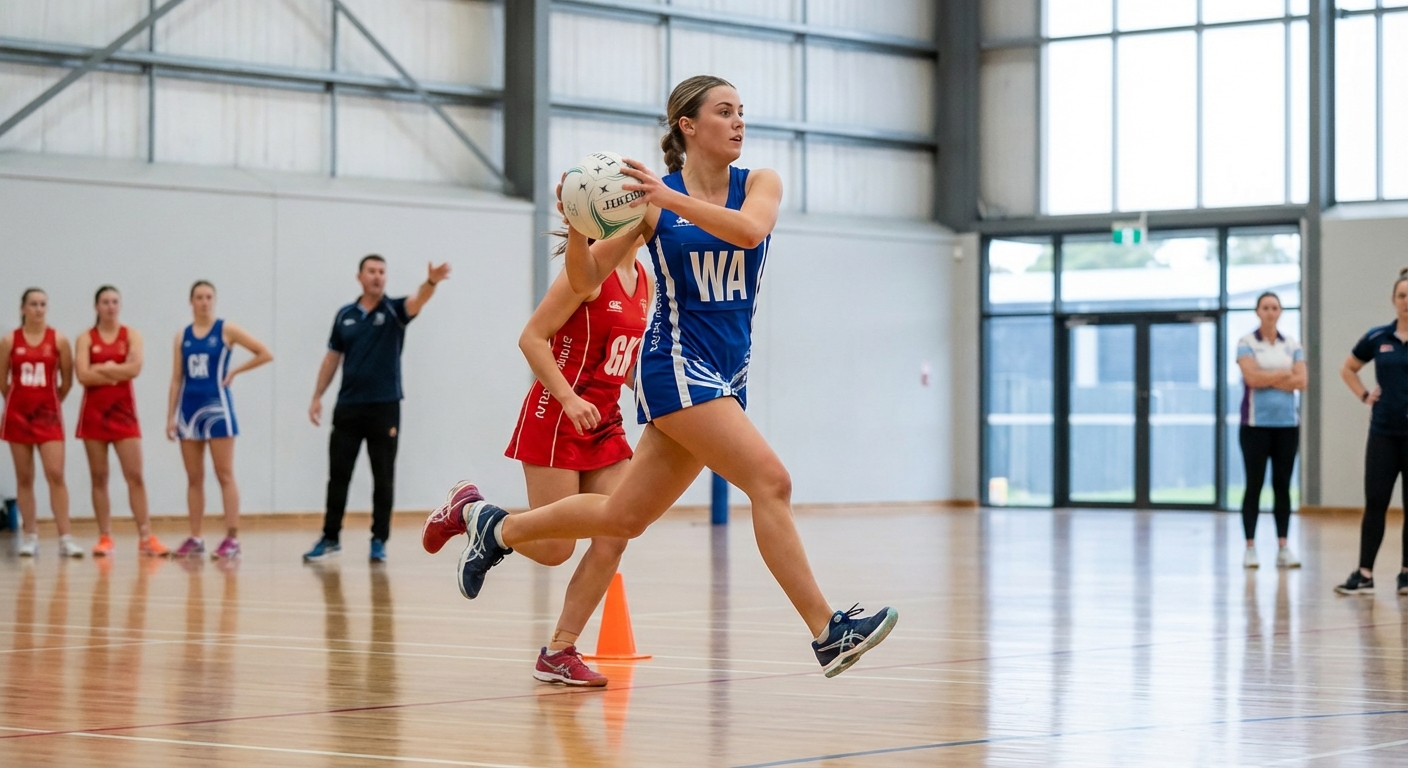
The Wing Attack is the critical link between midcourt possession and circle feeding. This masterclass breaks down the movement patterns, timing, and spatial awareness that separate elite WAs from the rest, with practical drills to develop these skills at every level.
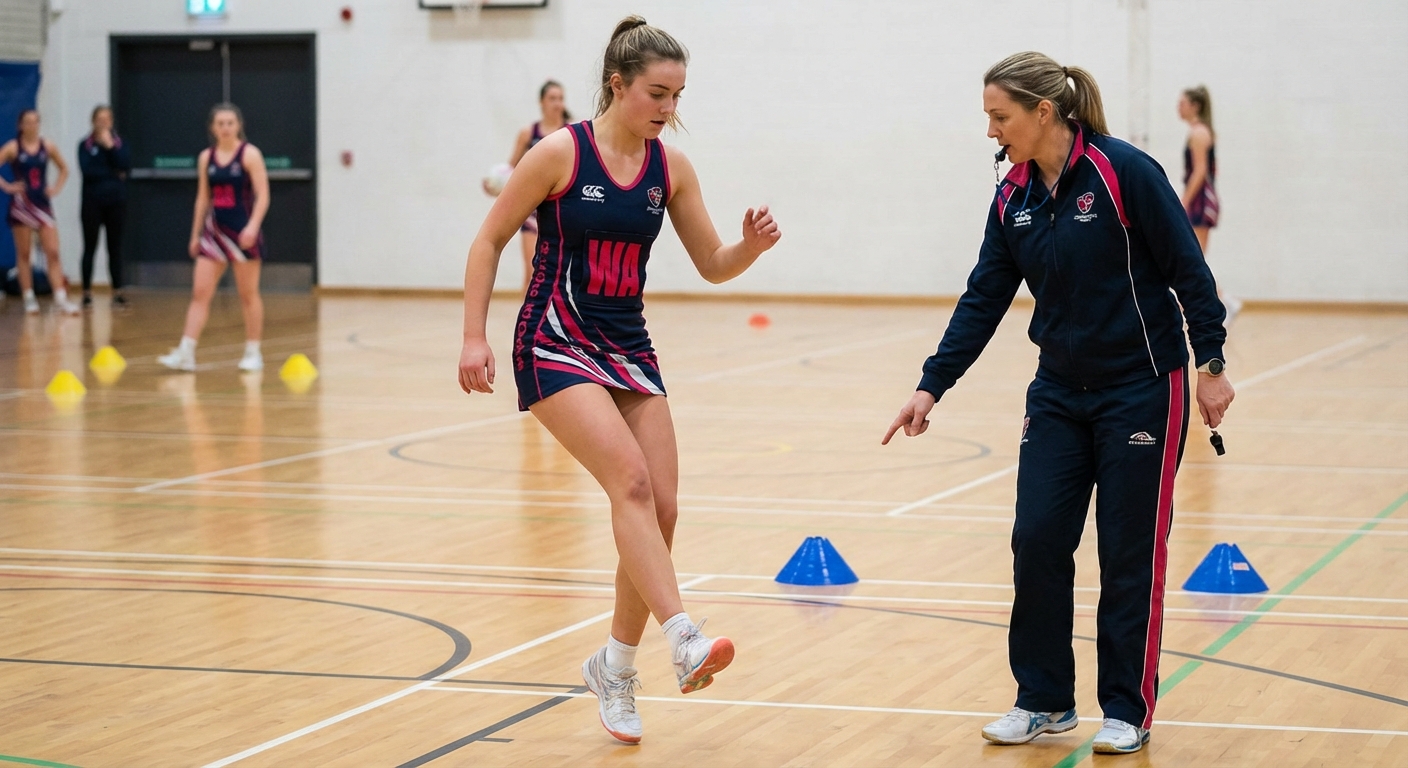
Footwork is the foundation of every skill in netball. This guide provides a clear explanation of the stepping rule, the mechanics of one-foot and two-foot landings, pivoting technique, and progressive drills to build footwork confidence from junior level upward.
The early 'shoot from anywhere' era is over. Smart teams now use data-driven decision models to decide when the two-pointer is worth it.
Coaches from around the world look to Sportplan for coaching confidence.
I have thoroughly enjoyed using your site to help me with my coaching plans for my under 9's netball team.

I found this service to be excellent and it was of great help when planning my netball training sessions.

Sportplan is fantastic with all the various drills for every area of netball. My confidence as a coach has improved because I have Sportplan to support me.

Wow what a great website, I have found sportplan an important tool for me when planning my netball sessions with my netball team. There are alot of very helpful tips/ideas/skills that I can learn and teach to my team. Thank you sportplan I hope to continue to use your helpful tips and to learn more about improving my teams netball skills. Thanks again....keep it up....

I have been using Sportplan now for 3 years and can honestly say that I have never repeated the same session twice. My girls are always focused and are improving every year. Thanks Sportplan.
What a fantastic tool. The Chalkboard and session tools make an unbelievable difference in making training plans in both time and organization. I will be instructing all of my assistant coaches that this tool must be used for all sessions during the season, so that we may build a club coaching resource library.
I can't get enough of the Sportplan, It has given me back the enthusiasm i was starting to lose. My girls are so keen and are ready at 14 to take the next up in their game. Sportplan will help no end.