














Excellent drills, very detailed videos. Useful site for my U15 boys team.

My team have asked for drills to help them at 16s, can anyone help me

drills to switch sides of field
I'm doing an expo project on hockey goalkeepers and I want to know if there is a need for a basic training guide for beginers eg. goalies for dummies
Hi, last season after asking here, we played the 4-3-3 formation. We took the field in this formation and played the whole game this way. This worked really well for us last season, we got promoted and finished 3rd in our new grade. However we came unstuck in the semi finals where the team we were playing identified what we were doing and played the same formation against us in the second half, leaving us unable to make any inroads for the remainder of the game.Our team is from a small school, made up of year 7-13 boys playing against larger schools of year 9-13 boys, though i would guess we played against teams at the older end of the range. We can't match others teams in age & size or depth of experience yet, so we must play smarter.What are possible alternative formations and how would the team identify the need to switch between formations?David Smith
My club has a 5s team which is predominantly young lad (15 upwards) but as of next season the juniors team will have 13 year olds who will be joining the mens league. as an older player (Compared to them anyway) myself and another player are going to start a kind of mentoring program to get the youngsters ready for the mens league. what is the best way and any tips what we should be taking note of etc?
is there a drill where i can allow the team to learn about leads and running of the ball and that switching is vital for wings as well as bursting speed to receive the ball
After the free joining fee, how much is the monthly fee for sportplan?RegardsJM
How do I change the credit card being charged?
School rugby season has finished. Can I switch my membership to football for this term (then cricket for the summer)? Asked using Sportplan Mobile App
If I look to purchase one individual sport, can I then swap it for another sport as many times as i want?
Hi, I have a complicated set of questions which shows my limited understanding of field hockey. Iâm coaching a U13 team of 22 girls in the U.S., and each player has at least one year of experience. Iâve played FH only with my kids though I have a basic understanding of the game and its concepts from playing soccer and basketball, and watching games for many years. I've coached kids in other sports, this is my first year coaching field hockey. (If youâre wondering why Iâm coaching, no parent in my community with playing experience would step up and my daughter loves the game.)A warming: This is a long set of interrelated questions but your taking the time will be greatly appreciated. Problem: The core problem is responsibility conflicts on defense. My players understand concepts of zone and marking separately. I donât know enough to explain how they should manage the two responsibilities in field hockey. I âget itâ by playing other sports for so long and therefore am able to see how they arenât âgetting it.â For clarity, I have in mind two kinds of offense players: OP1 (has the ball); OP2 (doesnât). The girls understand that zone means each has a certain area to protect; and marking, how to position themselves in relation to offensive player without the ball (OP2), and when to mark tight vs. loose, and to what it means to follow her mark. Situation 1 (Off-ball play): if one OP2 (OP2-A) enter zone of Left Midfield (LM), for example, how LM apply marking principles (a) when OP2-A enters zone; (b) a second OP2 (OP-B) enters zone; (c) if OP2-A leaves zone, LM should (i) release OP2-A and stay on OP2-B or (ii) follow OP1-A and leave OP2-B. How resolve these zone/marking conflicts for other positions: CM/RM? For RD/LD/CD? (We play a basic 3-3-1-3.)Situation 2 (Support teammate pressuring ball (D1). The girls understand basics of channeling, approaching OP1 to tackle, and how D2 should support D1 (e.g., D2 is cover for D2). Weâve done drills (1v2), but transferring into game situations is difficult. How explain D2 maintain zone responsibilities (a) if supporting D1 means D2 (a) vacates assigned zone and/or (b) or OP2 in zone). Situation 3 (Forwards). They are having trouble with changing defensive responsibilities from within the opposing teamâs quarter of the field, the middle quarters, and our quarter of the field nearest to our goal. Iâve thought about just making the defense solely marking but that creates its own chaos and tires out the girls. Without these basic concepts, the result is a joyless scrum: players are bunched up on defense, so if thereâs a turnover, the players are too close together for a counterattack. This is unfortunate because the speed of field hockey games should appeal to kids in the U.S. Thanks
how to play half press and full press
how do I change to a different sport which I added to my profile?
Hi allOver the weekend I coached my U18s and we did well but I wanted to find out, is there any tactics, coaching sessions for indoor hockey to help defend in different structures or heck even stop attackers from getting their angles right0
I would like to pay for the field hockey membership right now and pause the basketball.

can I switch my membership to rugby league

I'm doing an expo project on hockey goalkeepers and I want to know if there is a need for a basic training guide for beginers eg. goalies for dummies
2323 formation can it work?
What's the best way to break ball hogging habits

in more ways than one
 sportplan_hockey




A few weeks into the league season, poor first touches are costing teams the ball. Coach body shape, scanning and receiving on the move to keep possession.

Pre-season fitness fades fast once the league starts. Build conditioning into ball work and use rolling subs well to keep your squad sharp all season.

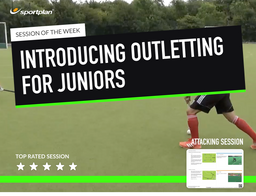
The first weeks of the season decide whether a junior or new player sticks with adult hockey. Here is how to keep them safe, give them a clear job and build their confidence from the very first bully.
Coaches from around the world look to Sportplan for coaching confidence.
Excellent drills, very detailed videos. Useful site for my U15 boys team.

I love using Sportplan. It's been a great help for co-ordinating hockey practice and being able to help tweak skills and getting the most out of my players!

Great site. An absolute must for coaches who are willing to change and learn new drills. Superb, simply superb.

Wow what a great website, I have found sportplan an important tool for me when planning my netball sessions with my netball team. There are alot of very helpful tips/ideas/skills that I can learn and teach to my team. Thank you sportplan I hope to continue to use your helpful tips and to learn more about improving my teams netball skills. Thanks again....keep it up....

I have been using Sportplan now for 3 years and can honestly say that I have never repeated the same session twice. My girls are always focused and are improving every year. Thanks Sportplan.
What a fantastic tool. The Chalkboard and session tools make an unbelievable difference in making training plans in both time and organization. I will be instructing all of my assistant coaches that this tool must be used for all sessions during the season, so that we may build a club coaching resource library.
I can't get enough of the Sportplan, It has given me back the enthusiasm i was starting to lose. My girls are so keen and are ready at 14 to take the next up in their game. Sportplan will help no end.



