Netball: calling

The Super Shot has created a strategic dilemma that every shooter faces multiple times per quarter: take the two-goal attempt from range, or work the ball closer for a higher-percentage standard shot?

The answer isn't always obvious. The wrong decision - in either direction - costs goals. The best shooters develop a framework for making this choice under pressure, quickly and consistently.

The Expected Value Calculation

At its simplest, shot selection is a maths problem. Expected value equals probability of success multiplied by reward.

Super Shot example: A 50% shooter from the Super Shot zone has an expected value of 1.0 goals per attempt (0.5 x 2).

Standard shot example: An 85% shooter from under the post has an expected value of 0.85 goals per attempt (0.85 x 1).

In this scenario, the Super Shot is mathematically superior despite the lower percentage. The threshold varies by shooter, but generally: if your Super Shot percentage exceeds 42.5% of your standard percentage, the Super Shot has higher expected value.

Beyond the Maths

Pure expected value ignores important context. Several factors should influence shot selection:

Game State

Down by 6 with 2 minutes left? Aggressive Super Shot hunting is necessary - you need multiple two-goal swings to catch up. Up by 4 with 90 seconds remaining? Conservative standard shots protect the lead without gifting turnovers.

Time on the Clock

Early in Power 5, there's time to work the ball and create better opportunities. With 30 seconds left, a clean Super Shot look might be your last chance to score twice.

Defender Position

A Super Shot with no defender pressure is different from one with hands in your face. Read the defence before committing to range.

Rebounding Setup

If your GA is well-positioned for an offensive rebound, a Super Shot miss has a safety net. If not, the turnover risk increases.

The Decision Framework

Train your shooters to ask three questions before every shot during Power 5:

1. Am I balanced? A rushed or off-balance Super Shot rarely goes in. If you're not set, work closer or reset the attack.

2. What's the defence giving me? Tight defence at the edge suggests working inside. A defender who sags offers a cleaner Super Shot look.

3. What does the game need? Does the scoreboard demand risk, or reward patience? Make the decision that serves the team, not your stats.

Recognising Good vs Bad Super Shot Opportunities

Good Super Shot opportunity:

  • Clean catch in the zone with time to set
  • Defender more than arm's length away
  • Balanced stance, comfortable body position
  • Support positioned for potential rebound

Bad Super Shot opportunity:

  • Catching on the move or off-balance
  • Tight defensive pressure on the release
  • Rushed attempt with defender closing
  • No rebound support, high turnover risk

Training Shot Selection

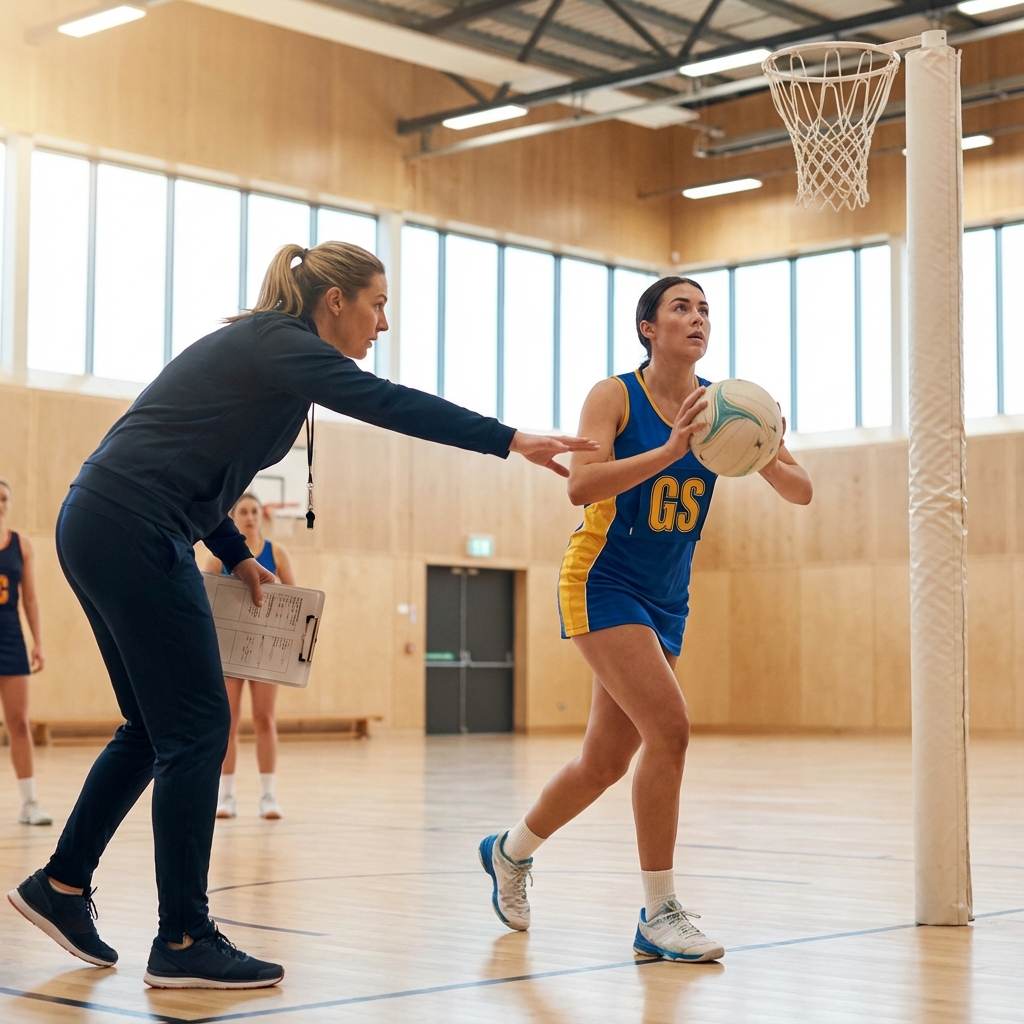
Decision drills. Coach feeds ball to shooter in Super Shot zone with varied defensive pressure. Shooter must call "shot" or "work" instantly. Rewards for correct decisions based on pre-defined criteria.

Game state scenarios. Set up specific situations - down 4 with 1 minute left, up 2 with 3 minutes remaining - and let shooters practice decision-making in context.

Video review. Analyse Super Shot attempts from training and matches. Was the decision correct? Was the execution the problem, or the choice?

Team-Level Strategy

Shot selection shouldn't be purely individual. Teams should develop guidelines:

  • Which shooter has the best Super Shot percentage? She gets priority on long-range attempts.
  • At what score margin do we become aggressive/conservative with Super Shots?
  • When do we deliberately work for Super Shot opportunities vs standard shots?

These guidelines reduce decision burden on individuals and create consistency across the team.

The Discipline to Pass Up Shots

Perhaps the hardest skill is passing up a Super Shot opportunity that looks tempting but isn't optimal. Shooters are trained to shoot - resisting that instinct requires discipline.

Frame it positively: passing up a 35% Super Shot for an 80% standard shot isn't weakness - it's smart netball. The best shooters have the confidence to decline bad opportunities.

Evolving Your Approach

Track your shooters' conversion rates from different zones. The data should inform decision-making. If a shooter converts 60% from range, she should be hunting Super Shots. If she's at 30%, she should be more selective.

This data also helps opponents scout you. Vary your approach to remain unpredictable while staying within expected value guidelines.

Shot selection in the Super Shot era is a skill that separates good shooters from great ones. Train it deliberately, review it constantly, and trust the framework when the pressure is on.

Where to Go Next

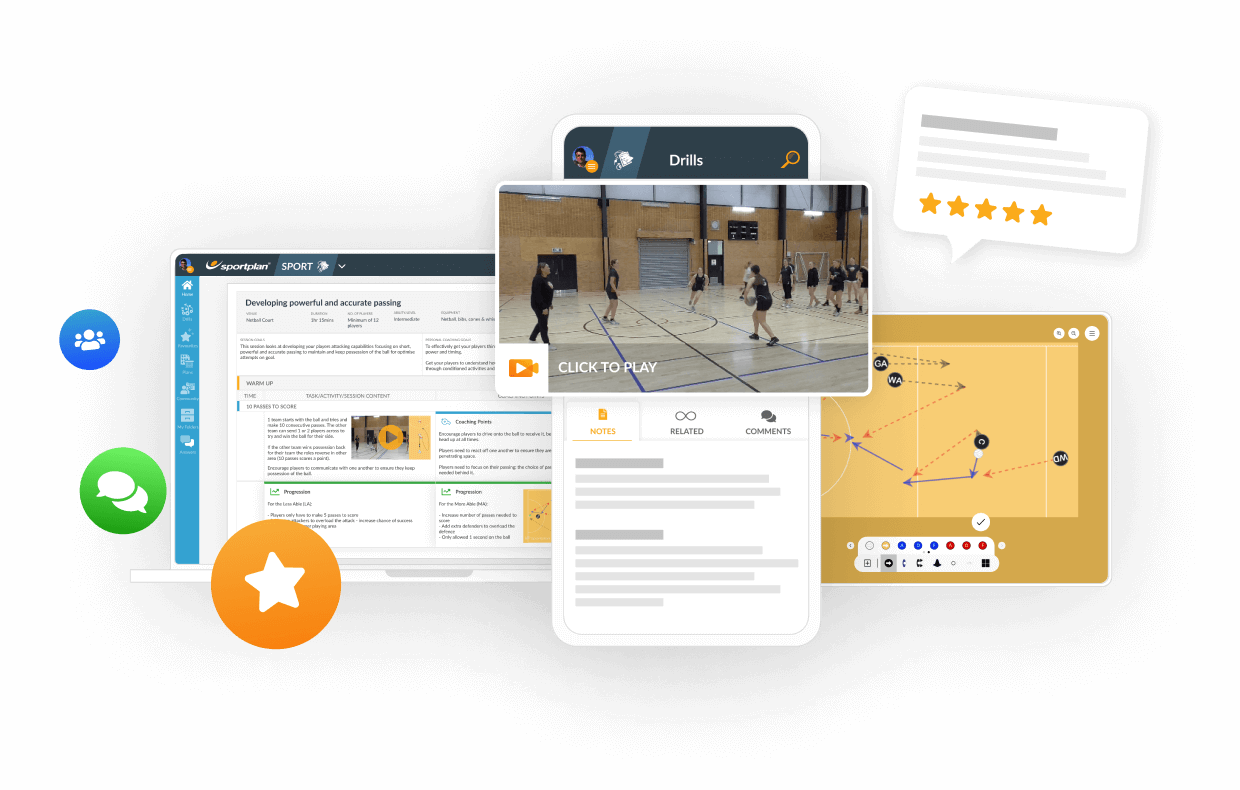
Ready to improve your shooters' technique and decision-making? Explore our shooting drills and session plans:

JOIN SPORTPLAN FOR FREE

  • search our library of 700+ netball drills
  • create your own professional coaching plans
  • or access our tried and tested plans
calling DRILLS
View All
Unfortunately there were no results for your search! Please try again
calling ANSWERS
View All

Coming forward and getting free?

I have a player who tends to hang back behind her partner in games, and then tries to move into position to receive a pass. She signals that she is free but doesn't move quickly enough into position so often loses the ball.No matter how many times we work on this at training, when it comes to the actual games she reverts to her standard play but then gets upset when nobody passes to her. She is fast losing confidence as the other players on the team are all moving beyond her level and she is aware of this. Any ideas?

Archived User Coach

Short WA - tall defence

I have a very short WA who really struggles with her pass when she has a tall defence. Does anyone have any tips on how to get around this or have her improve her pass off?

deborah love Coach, Australia

Basic attacking strategy for 11 year olds

Help, dad thrown in the deep end - what basic attacking strategies do you use for 11 years olds? They have great skill and have played since they were 5 years old, but still run around like headless chickens, everyone calling for the ball and getting in each other's way. Is there a method to this madness I can teach? Some teams look like they know who is going to pass to who and the ball gets from one end to the other fluidly. Impart your netball wisdom on me, oh great netball coaches! Asked using Sportplan Mobile App

Kiwi Coach, New Zealand

Passing pace, using the 3 seconds

What drills are best to help slow down the pass, in other words use the 3 seconds allowed. To help players reposition for the next pass. Training is too fast a pace. Asked using Sportplan Mobile App

Lauren Kiddell Coach, England

bringing out aggression

how do i bring out aggression in my players?

Emily dodd Coach, Australia

Leading forward to the ball

The best way to teach young girls to run forward to the ball rather than standing there waiting for it and calling for it

Jacinta Cuddeford Coach, Australia

Defensive Issue

I'm a GK/GD and I have REALLY long arms so even if I am 3 feet away from my opponent, I always get called for obstructions because it looks like I'm way too close (even though I'm not) Any tips?

Kathleen Coach, New Zealand

payments

how do I change my credit card details for payment

allan Orient Coach, England

Getting in front

I coach b grade senior netball, we range from 19 years old to 40. our biggest problem on game day is not getting in front for ball. they are continually running away from ball calling for it over top. for last 5plus weeks we have done every drill I can think of, involving change of direction, cut backs, holding space. they end up acing the drills. but when it gets to the game, all is forgotten again and running away from ball again. Any suggestions would be greatly appreciated.

Casey Mcgillivray Coach, Australia

Getting in front

I coach b grade senior netball, we range from 19 years old to 40. our biggest problem on game day is not getting in front for ball. they are continually running away from ball calling for it over top. for last 5plus weeks we have done every drill I can think of, involving change of direction, cut backs, holding space. they end up acing the drills. but when it gets to the game, all is forgotten again and running away from ball again. Any suggestions would be greatly appreciated.

Casey Mcgillivray Coach, Australia

Calling out and communication

How can I get my team to call for the ball more and louder? I keep on pointing out the importance to them but it doesn't seem to make a difference.

Billie Coach, Australia

Defence

what is best defence strategies to use to block all the way for opponent and intercept or still the ball?

victor nesphory Coach, United Kingdom

Little Feet and Circle Work

My U11s team have lost all progress moving around the circle and using "little feet" in defence and shooting during the break. I need some recommendations for new drills to try or any advice to help them get back to where they were.Thanks in advance

Chelsea Chilcott Coach, Australia

Intimidation?! | Sportplan

My GD was do face marking in a game and doing a fantastic job at blocking the GA entering the circle and not being able to shake her off, the umpire for the other team repeatedly called her for intimidation.To me it did not appear to be intimidation and the player herself umpires and sees this in many of the high level games. She is not pushing, no arms are used in fact it is the other players pushing into her. Is this intimidation I thought that was a pretty tough call. What constitutes as intimidation?

Archived User Coach

Court spacing, the theory behi...

Hi all I am desperately seeking knowledge of court spacing. I am the coach of a team of 11 year olds and I don't have much playing history to speak of. The girls are still at that point where they all seem to lead for the ball and crowd the space around the ball. My problem is that I don't know the theory around who should be leading and who shouldn't be. I want to gain an understanding of the fundamentals of team play myself - who should be hanging back and who should be going for the next pass. I have done the Australian foundation coaching course but it didn't seem to cover this area. I would love to see a video of a coach teaching young players this concept. Does anyone know of any books, blogs, youtube videos that may come in handy? Thanks to all, love reading all the informative questions and answers.

Betty Nelson Coach, Australia

Playing advantage then no adva...

If advantage is called by the umpire and then no advantage gained by the non offending team due to the ball being lost/intercepted,should play be brought back for a free/penalty pass depending on the infringement that advantage was called for?

Archived User Coach

How to improve team communicat...

i have begun to coach an under 11's team and they don't talk to each other or work as a team and i was wondering if there was any good tips to get them to do so?

Courtney Wright Coach, Australia

Helping shy timid players | Sp...

How do I bring the best out in a shy timid girl. To speed up her passing and to call names would help to start with any suggestions. Under 11s.

Ray Coach, Australia

helping the WD around the circ...

My WD asked me how she defend better around the circle does anyone have any ideas that may help with this...thanks

melissa Coach, Australia

Contact on the Ball by GD? | S...

My GD is tall and has a very good stretch when marking the shoot. She anticipates well, and when she sees the shoot about to release the ball, times her action and from her stretch, flicks her hand to try to deflect the ball from its path. In a recent game, she was continually pulled for contact when doing this. She felt either the shoot had raised the ball up into her hands (and it should have been the GD's possession), or the shoot had actually released the ball before she then deflected it, rather than her knocking the ball from the shoots possession. The umpire after the game was happy to discuss and said the GD had been penalised for knocking the ball out of the shoots hands, and should have stuck with the stretch and not added the flick. Any advice?

Susan Donald Coach, England

JOIN SPORTPLAN FOR FREE

  • search our library of 700+ netball drills
  • create your own professional coaching plans
  • or access our tried and tested plans

Sportplan App

Give it a try - it's better in the app

YOUR SESSION IS STARTING SOON... Join the worlds largest netball coaching resource for 700+ drills and pro tools to make coaching easy.
LET'S DO IT