

I have thoroughly enjoyed using your site to help me with my coaching plans for my under 9's netball team.

what are the different types of dodging in netball

What are the different types of dodges in netball?
what are the different types of dodging in netball
I play school and state netball as a GK/GD, when my other player is defending the GS or GA, I hold on to her defenders leg/hand for an extra lean. Because I'm quite larger and taller than most girls and already have a pretty good lean, when I ask my defender to hold me so that i am closer to deflecting the shot, she uses two of her hands and her body strength to hold me. My coach told me not to do this because she believed I wasn't allowing myself nor my other player to get an intercept or rebound, even though we had gotten most rebounds and had gotten a few intercepts with this technique. Is this an disadvantage or advantage to us?
My teams are getting a bit older now and watching ANZ challenge and Aus NZ games the way the defenders defend or block has certainly changed. The defenders now have their backs to the attackers arms out wide what we used to say was airplane arms which would be picked up as obstrution. In the circle the defender is between goal and player at the edge still with back to the player and side shuffles with arms out wide blocking the shooter moving into the circle. Is this not obstruction or are they doing something that does not constitute an obstruction call. Netball is certainly changing quickly in the way it is played
My U11's are playing an agressive team in our Grand Final. They physically hurt my team who come off, upset and even crying during the match. They make use of elbows, stepping on toes, bumping etc. How do I help my team find the confidence in playing such a team??

I have a player who tends to hang back behind her partner in games, and then tries to move into position to receive a pass. She signals that she is free but doesn't move quickly enough into position so often loses the ball.No matter how many times we work on this at training, when it comes to the actual games she reverts to her standard play but then gets upset when nobody passes to her. She is fast losing confidence as the other players on the team are all moving beyond her level and she is aware of this. Any ideas?
I am coaching a little net set go team (set tier) with ages 5-8. Usually I coach high school girls. A mum of one of the 7 yr olds just messaged me with this: "i was just wondering If you have any tips to help us get Miss S enthused about netball, she isn't enjoying it but wants to "give it more time" (her words)." We only have a half hour training session before we play as no one else will coach but this is the only time I can do training and there are players from another town so this is the best option for everyone. We play a couple of warm up drills/games and practice 1 skill ready for our game. I have covered the basics of passing and footwork so far. None of my team have ever played before, but 4 of them did the net set go - net tier last year. The girl has only played 2 games so far as we have had a bye. So far she has had a go at positions GK, GD, GS, GA, and WA. She is the tallest girl in the team and so tends to get a fair amount of the ball. Any ideas on what to suggest to this mum?
hello are there any types of catches in netball?If so please list them and fully explain.. It's for my P.E project

I am coaching 10 & 11yr old girls for the 2nd year purely because no one else wanted to do it - I've never even played netball and this site helps me every week, invaluable and we see tangible results. 1st year we won comp and championship, this year came 2nd in comp, champ starts this Sat. Two of the girls have told me their mums are changing them from this school team to another club (the one that won) next year 'cause "the coaching's not good enough for their child". All this teaches their child is that if your team isn't winning, go to another - forget about loyalty. Sometimes it difficult to take this on the chin. Any advice?
i need to know some techniques when marking a player in netball.
What are some good things to say to a team who are losing by a fair amount at halftime.?? They are 12 years old. How can i get them to keep motivated & not give up??
I have taken over coaching a 15/un open team about 8 months ago. The focus for improvement was to work on fitness. They are much fitter than when we started and now can finish off a game. There are 4 very good players and 4 average players. I need help with the attitude of one of the girls. She half-hearted takes direction, doesn't play well unless she plays in the position she wants to, constantly whispers negatives to others at training and is constantly giving us intolerable looks if she doesn't like what she hears. I could go on and on. And yes she is one of the average players. We have 3 coaches in the team and we have never come across such a rude girl. In my day you would get a ball in head if you weren't looking and listening to the coach! Please help with how we can engage this girl.
I'm an accredited coach doing some research on blocking as I had never had a player called for 'interference'. Is it within the rules to block your opponent from leading down court whilst facing her? The example is with my WD going out for centre pass, then blocking her WA (whilst facing her) to delay WA's lead down court. Of course my WD has her arms down and isn't contacting.Thank you Asked using Sportplan on Mobile

I have a team of 12 girls; 3 goalers, 2 defenders and the rest centre court. We will make it into the finals series and as a result i have talked to the girls in an open discussion about what kind of stratergies they would like to use come finals. This included a vote on how we should field the team, even court time for all or play to win, fielding our best team based on training attendance and behavior at training, commitment, sportsmanship and how they are generally playing on the night. Only 2 of the 12 voted even court time and we had further discussion and clarification or question and everyone was sent home happy. However i have one Mother who i cannot please no matter how hard i try who is fighting this decision, her daughter complained yet voted play to win> I don;t know what i should do, i like the girls to learn to make decisions in a team setting by themselves and learn about the outcomes of such decisions but at the same time i don't want angry parent(s)! HELP!!
Do you have any tactics for a goal keeper? just so that they can improve. So far they cant quite intercept all balls & judge where the ball is heading. any ideas for improvements?
In my first training session what should i start off with as i dont know the level of ability?
In the drills GK dancing & Prevent the Middle Pass..is the defence Open Marking(angled toward the passer)? If they are closed marking is this a progression? Is it harder? I prefer closed marking but for a beginner is this going to be harder? Thanks. I am new to coaching & loving Sportplan:)
in more ways than one
 sportplan_netball
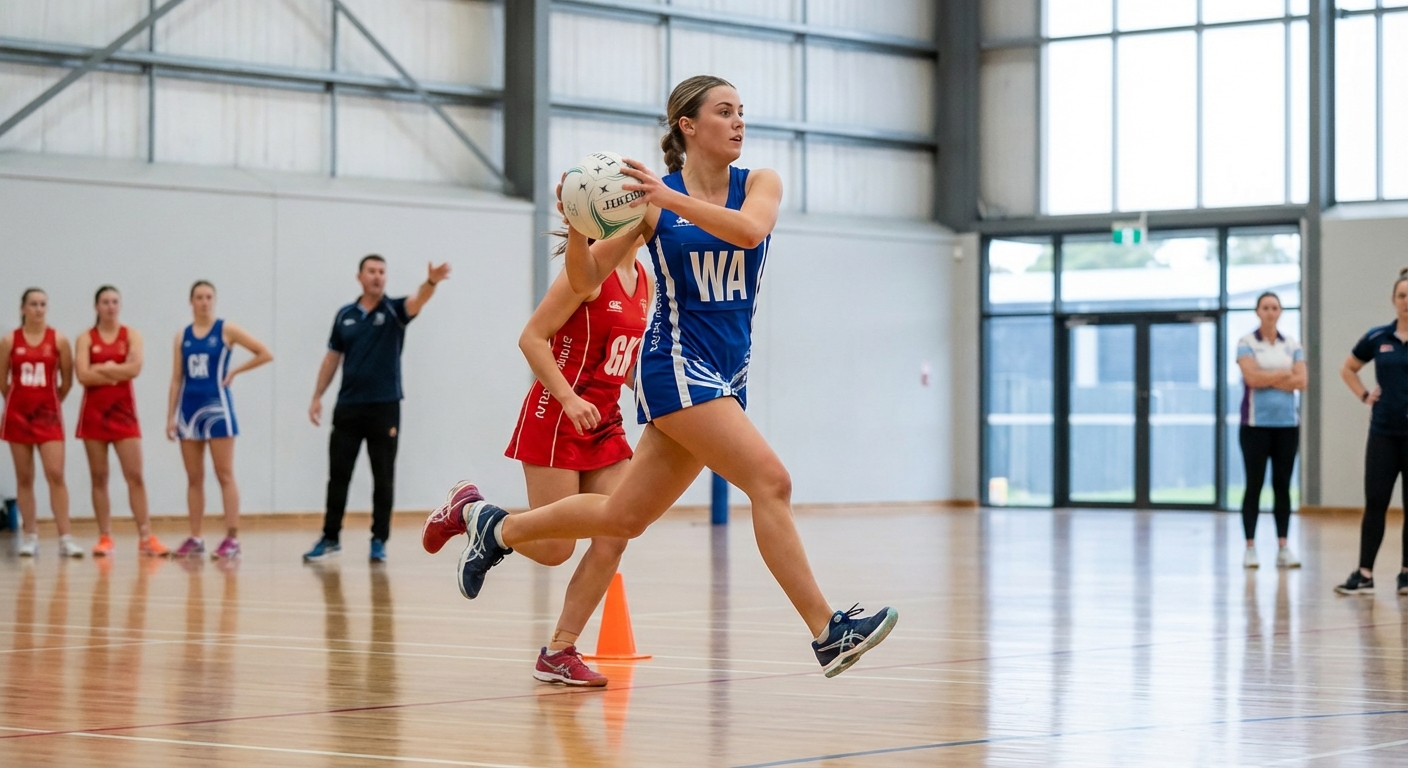
The Wing Attack is the critical link between midcourt possession and circle feeding. This masterclass breaks down the movement patterns, timing, and spatial awareness that separate elite WAs from the rest, with practical drills to develop these skills at every level.
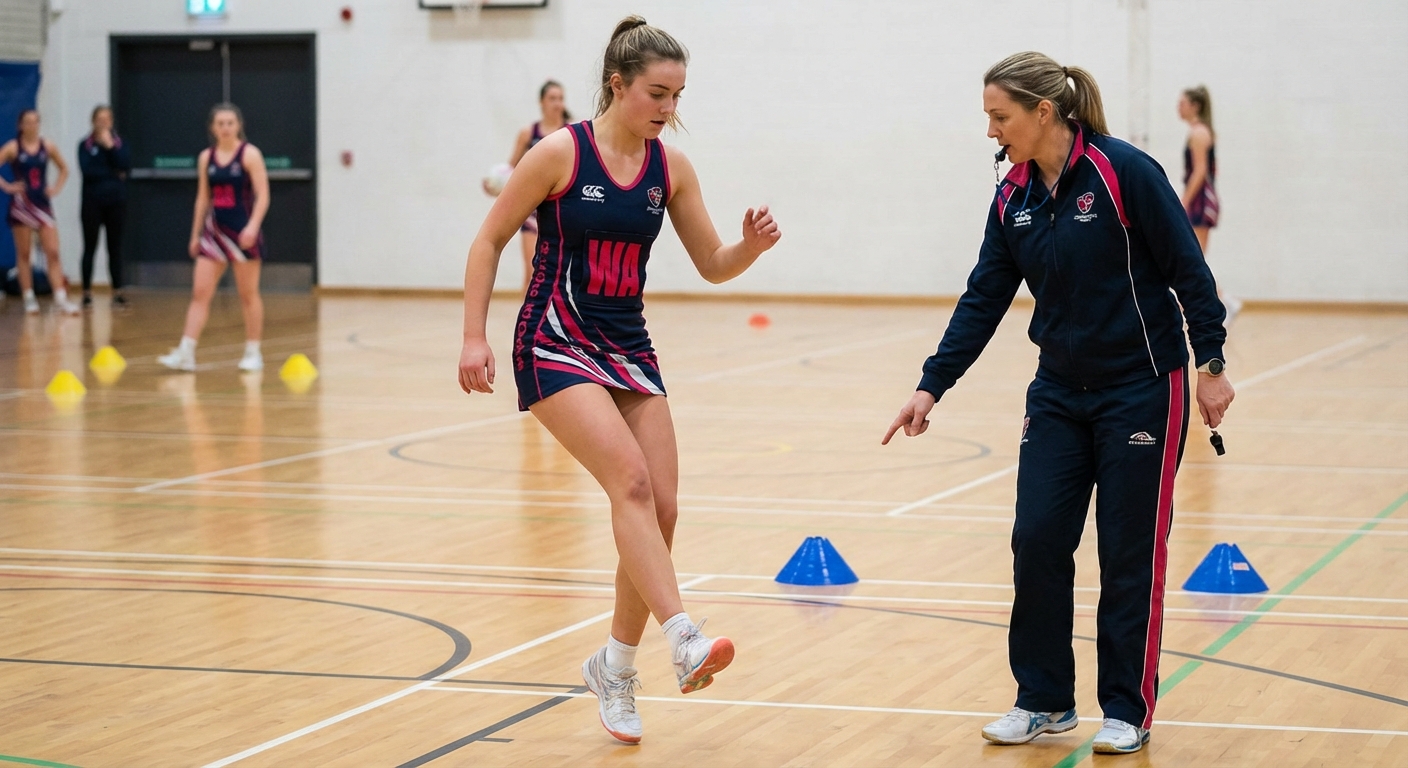
Footwork is the foundation of every skill in netball. This guide provides a clear explanation of the stepping rule, the mechanics of one-foot and two-foot landings, pivoting technique, and progressive drills to build footwork confidence from junior level upward.
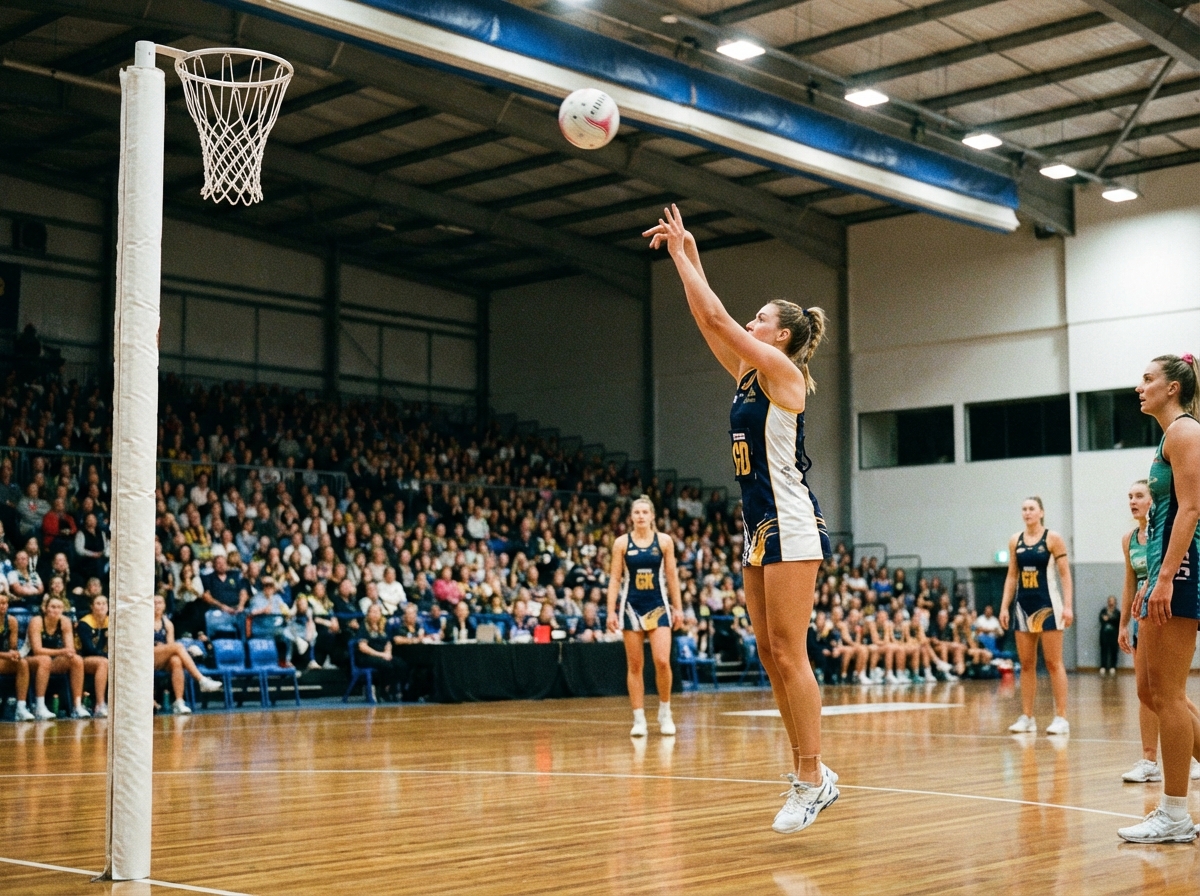
The early 'shoot from anywhere' era is over. Smart teams now use data-driven decision models to decide when the two-pointer is worth it.
Coaches from around the world look to Sportplan for coaching confidence.
I have thoroughly enjoyed using your site to help me with my coaching plans for my under 9's netball team.

I found this service to be excellent and it was of great help when planning my netball training sessions.

Sportplan is fantastic with all the various drills for every area of netball. My confidence as a coach has improved because I have Sportplan to support me.

Wow what a great website, I have found sportplan an important tool for me when planning my netball sessions with my netball team. There are alot of very helpful tips/ideas/skills that I can learn and teach to my team. Thank you sportplan I hope to continue to use your helpful tips and to learn more about improving my teams netball skills. Thanks again....keep it up....

I have been using Sportplan now for 3 years and can honestly say that I have never repeated the same session twice. My girls are always focused and are improving every year. Thanks Sportplan.
What a fantastic tool. The Chalkboard and session tools make an unbelievable difference in making training plans in both time and organization. I will be instructing all of my assistant coaches that this tool must be used for all sessions during the season, so that we may build a club coaching resource library.
I can't get enough of the Sportplan, It has given me back the enthusiasm i was starting to lose. My girls are so keen and are ready at 14 to take the next up in their game. Sportplan will help no end.