Netball: feeding circle

September 2026

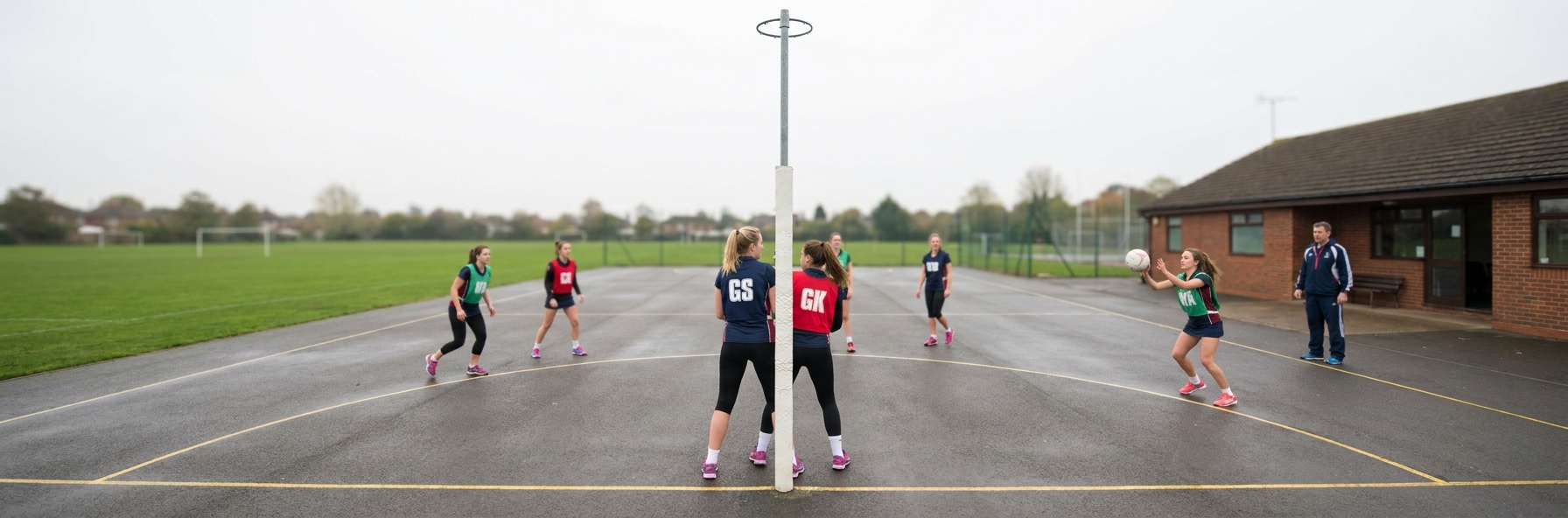
Watch a composed shooter at any level and you will notice how little they seem to run. They take a spot, keep it, and the ball arrives. That is not laziness. It is a skill called holding space, and it is one of the most under-coached parts of circle play in club and school netball.

Younger shooters tend to do the opposite. They sprint out, sprint back in and end up receiving on the circle edge with a keeper draped over them. Teaching them to hold, protect and then release into space gives your feeders a clear target and gives your shooters far easier shots.

What Holding Space Really Means

Holding space is using your body to claim an area of the circle, usually the space between your defender and the post, and keeping it until the pass is on. The shooter is not trying to get away from the defender. They are trying to keep the defender on the wrong side.

It works because netball is a game of angles. If your goal keeper is stuck behind you, they have to go over or around to reach the ball. A high, well-placed pass into the space in front of the shooter becomes almost impossible to defend.

Staying Legal: Contact and Obstruction

This is where many shooters get penalised, so be clear with your players. Holding space is about body position, not pushing. Under the rules, a player within 0.9 metres of an opponent may not use movements that take the arms away from the body to stop that opponent moving, beyond what a natural body stance needs. That applies to attackers just as much as defenders.

Leaning back into the keeper, sticking an elbow out or using hands to feel where the defender is will all be pulled up. The legal hold comes from a wide base, a low centre of gravity and arms kept close, used to signal for the ball rather than to fence off the defender. If you are unsure, ask a qualified umpire to watch a session and talk your shooters through what they would call.

A Four-Step Framework

Step One: Read the defender first. Before taking a position, the shooter needs to know where the keeper is standing. Front, side or behind decides which space is available. A quick glance on entering the circle saves a wasted lead.

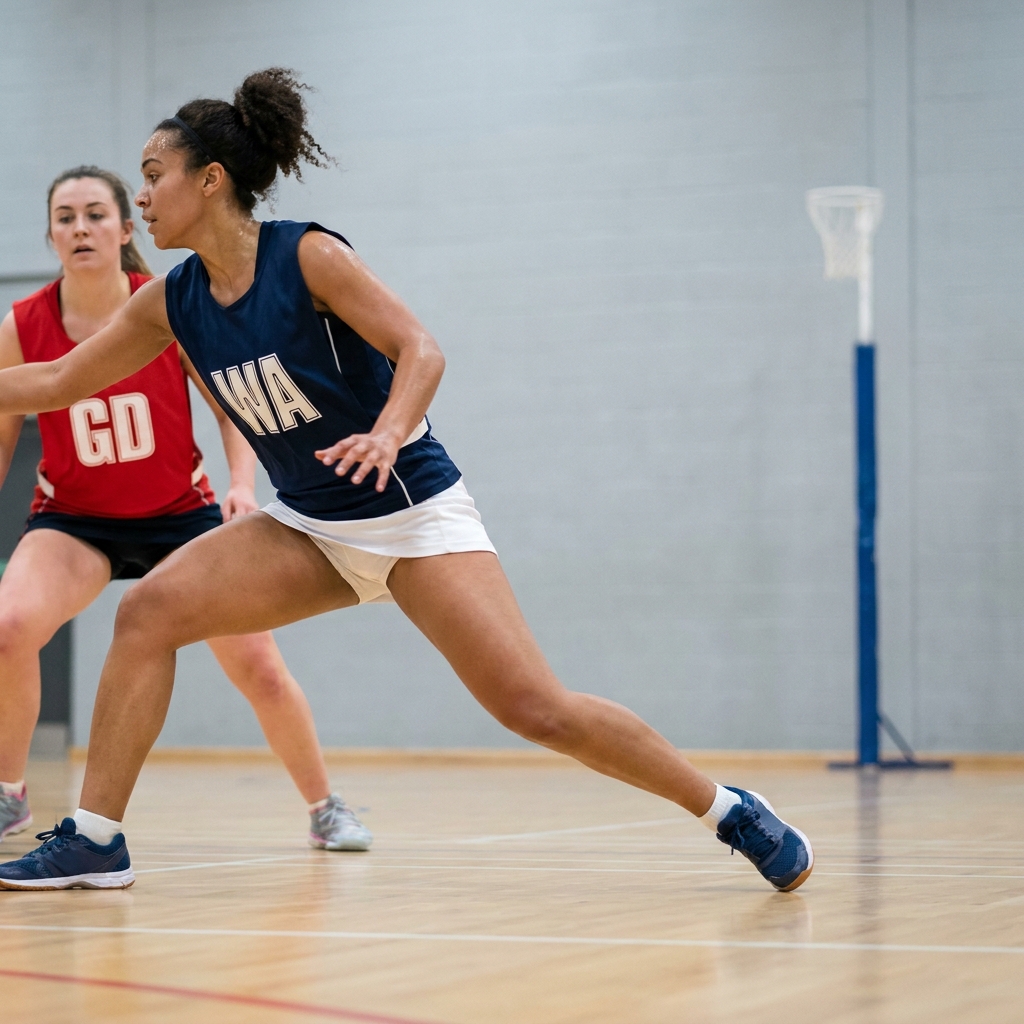
Step Two: Build a strong base. Feet a little wider than shoulder width, knees bent, weight balanced and slightly forward. A shooter standing tall with feet together will be moved off their spot by the first bit of pressure.

Step Three: Protect the space with body shape, not arms. Position the body between the defender and the space you want, keep arms close and use one hand to show the feeder where the ball should go. The target hand is a signal to your own team, not a barrier to the opposition.

Step Four: Release on the pass. The hold is only half of it. As the ball is released, the shooter steps or drives into the space they have protected and takes the ball with a strong two-handed catch. Go too early and the defender follows. Go too late and the ball is intercepted.

How Feeders Use a Held Shooter

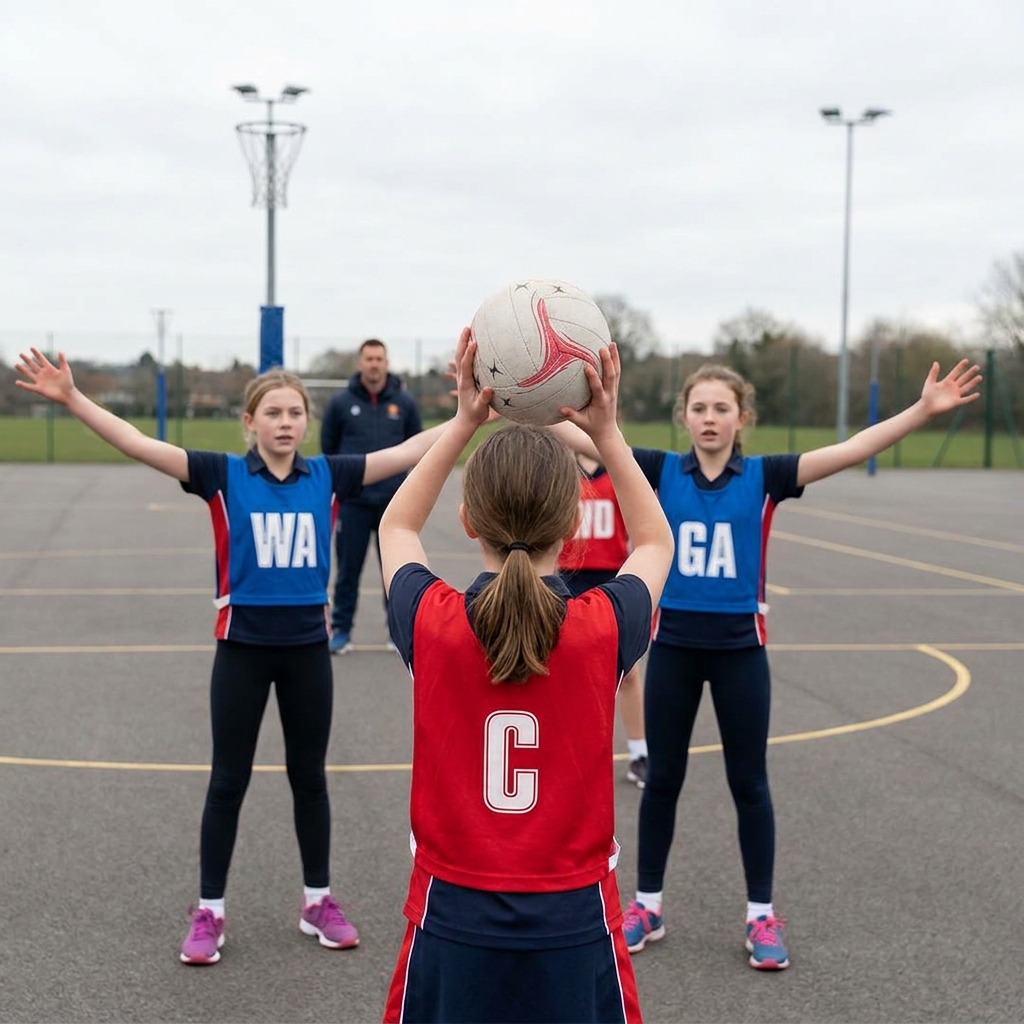
A shooter holding space is asking for a specific pass. If they are holding in front of the keeper, a flat bullet pass into their hands is fine. If they are holding the keeper behind them near the post, the feeder needs a lob or high ball placed into the space ahead of the shooter, not to where the shooter is standing.

Agree simple signals between shooters and feeders. Where the target hand goes is where the ball goes. Encourage your wing attack and goal attack to hold the ball for a moment and look, rather than forcing a feed before the shooter has established the hold.

How to Train It

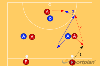
Start without defenders. Shooters take up a spot in the circle, adopt the base and practise catching high and low balls placed into space. Add a passive defender who simply leans a little and tries to step around, so shooters feel what a legal hold is like under pressure.

Then build to live work in small groups: a shooter and keeper in the circle with two feeders outside. The shooter must hold for a count before they can receive. Rotate roles often so your defenders learn how to beat a hold too, which is its own valuable lesson.

Key Coaching Points

  • Read where the defender is before choosing which space to hold.
  • Use a wide base, bent knees and balanced weight so pressure does not move you.
  • Keep arms close to the body; use the target hand to signal, never to push or block.
  • Time the release with the pass so the defender cannot recover.
  • Feeders pass to the space the shooter is protecting, not to where they are standing.
  • Agree simple signals so shooters and feeders read the same picture.

Recommended Drills
VIEW ALL GETTING FREE DRILLS

Frequently Asked Questions

My shooter keeps getting penalised for contact when holding. What are they doing wrong?

Usually it is the arms or leaning. Shooters who feel pressure often push back with an elbow or lean their weight into the keeper. Get them lower with a wider base so they can stay balanced without needing to push, and keep arms close to the body.

How long should a shooter hold before moving?

Only as long as the feeder needs. The hold is there to create a clear option when the ball arrives in the attacking third. If the feeder cannot see the pass, the shooter should reset with a fresh movement rather than standing still and inviting the keeper to get round.

Is holding space only for goal shooters?

No. Goal attacks use it too, and so do wing attacks and centres on the circle edge when they want to receive before feeding. It is a core getting free skill for any attacker, but it matters most in the circle where the space is tight.
feeding circle DRILLS
View All
Unfortunately there were no results for your search! Please try again
feeding circle ANSWERS
View All

id love some advice on any sytems for shooters in the ring?

id love some advice on any sytems for shooters in the ring. thanks %3A)

Archived User Coach

are there any good "feeding the circle" drills?

are there any good "feeding the circle" drills out there? prefer something with the use of "triangles" and shooter rotation. thanks.

Archived User Coach

Quick feeding into circle

Quick feeding into circle

Celina Turner Coach, New Zealand

Ideas to defend an over head pass?

My WD has worked hard on getting her placement so when the ball is feeding into the circle, she is keeping her WA away and to the side, generally the WA is fed an overhead ball heading towards the the back corner. The WD knows what pass is coming, and it's placement, she feels confident she could challenge more, so need some drills to practise holding her player, but then moving round her opponent at the last moment to try and go for the ball as well as holding.

Susan Donald Coach, England

how can i become better at WD

to know what i should do and what type of training should i do

kathryn purser Coach, New Zealand

Netball Tips For Positions C/Wa

Hi there,Anyone got any good tips for someone who plays C or Wa? Anything will be good, anything that will help me!!

Gabriella M Coach, Australia

How to make someone into a WD?

I have a new player and we don't have a WD so I was thinking to put her into a WD.

Libby Williams Coach, New Zealand

Failure after a netball game

How do you deal with failure after a netball game or a really hard training session? How would you approach your coach-team players and most importantly yourself? How do you move forward?Nicole Asked using Sportplan Mobile App

Nicole Ogunlaja Coach, England

Tips for new centres

Hi Everyone I've been playing defence for a long time now, and only last Saturday did I start to play centre. It was during our warm up on that day, (before our game) when my coach told me that I would be playing centre. I agreed to do it, but the problem was that the other team was a really good and very fit team. I struggled a lot durig the game, and i felt like i was dying the whole time! Also because I had never played centre before I didn't know how to feed the ball into the goal circle. I also don't know how to defend on the goal circle. Also what is the centres main job?Thanks so much for all the help! Asked using Sportplan Mobile App

Ekeesha Rathnayake Coach, Australia

How do people plan for the season?

Our new season starts in September. When planning do coaches plan for the entire season? The first four sessions? The first three months? Also do you start with maybe four sessions on defence then four on attack? Or do you mix it up?

Kelly Skiller Coach, England

Tips for new WA players

HI EveryoneI recently switched from GK AND GD, to WA. I'm finding it difficult to feed the ball into the circle and having confidence in my passing accuracy. I'm also having trouble on getting free for centre pass, especially when the other team has a really good WD. I've only played WA a couple of times so I'm still learning, but I really don't want to let my team down. Thanks all, for the help!

Ekeesha Rathnayake Coach, Australia

My twins are the teams goal shooters.

How can i help them improve their goal shooting

Angelique Coach, Namibia

Goaling drills that simulate game pressure

Goalies are practicing but game day percentage are lower due to increase in pressure. Also need to penetrate ring deeper for higher percentage shots. Need feeders working harder to help goalies get better position Any drills would be helpful 👍😊 Asked using Sportplan Mobile App

Trish Martin Coach, Australia

WING DEFENCE SKILLS NEEDED

What makes a good wing defence? And what are the main skills any defender should have? Asked using Sportplan Mobile App

Nicole Ogunlaja Coach, England

technical netball words

please can someone list some technical netball terms?

Amelia Kc Coach, England

position roles

what are the roles of each position

Kathryn Byrnes Coach, Australia

Ideas to defend an over head p...

My WD has worked hard on getting her placement so when the ball is feeding into the circle, she is keeping her WA away and to the side, generally the WA is fed an overhead ball heading towards the the back corner. The WD knows what pass is coming, and it's placement, she feels confident she could challenge more, so need some drills to practise holding her player, but then moving round her opponent at the last moment to try and go for the ball as well as holding.

Susan Donald Coach, England

Quick feeding into circle | Sp...

Quick feeding into circle

Celina Turner Coach, New Zealand

Tips for new centres - Sportpl...

Hi Everyone I've been playing defence for a long time now, and only last Saturday did I start to play centre. It was during our warm up on that day, (before our game) when my coach told me that I would be playing centre. I agreed to do it, but the problem was that the other team was a really good and very fit team. I struggled a lot durig the game, and i felt like i was dying the whole time! Also because I had never played centre before I didn't know how to feed the ball into the goal circle. I also don't know how to defend on the goal circle. Also what is the centres main job?Thanks so much for all the help! Asked using Sportplan Mobile App

Ekeesha Rathnayake Coach, Australia

Tips for new WA players | Spor...

HI EveryoneI recently switched from GK AND GD, to WA. I'm finding it difficult to feed the ball into the circle and having confidence in my passing accuracy. I'm also having trouble on getting free for centre pass, especially when the other team has a really good WD. I've only played WA a couple of times so I'm still learning, but I really don't want to let my team down. Thanks all, for the help!

Ekeesha Rathnayake Coach, Australia

JOIN SPORTPLAN FOR FREE

  • search our library of 700+ netball drills
  • create your own professional coaching plans
  • or access our tried and tested plans

Sportplan App

Give it a try - it's better in the app

YOUR SESSION IS STARTING SOON... Join the worlds largest netball coaching resource for 700+ drills and pro tools to make coaching easy.
LET'S DO IT