Seven Positions, Three Thirds, Two Circles
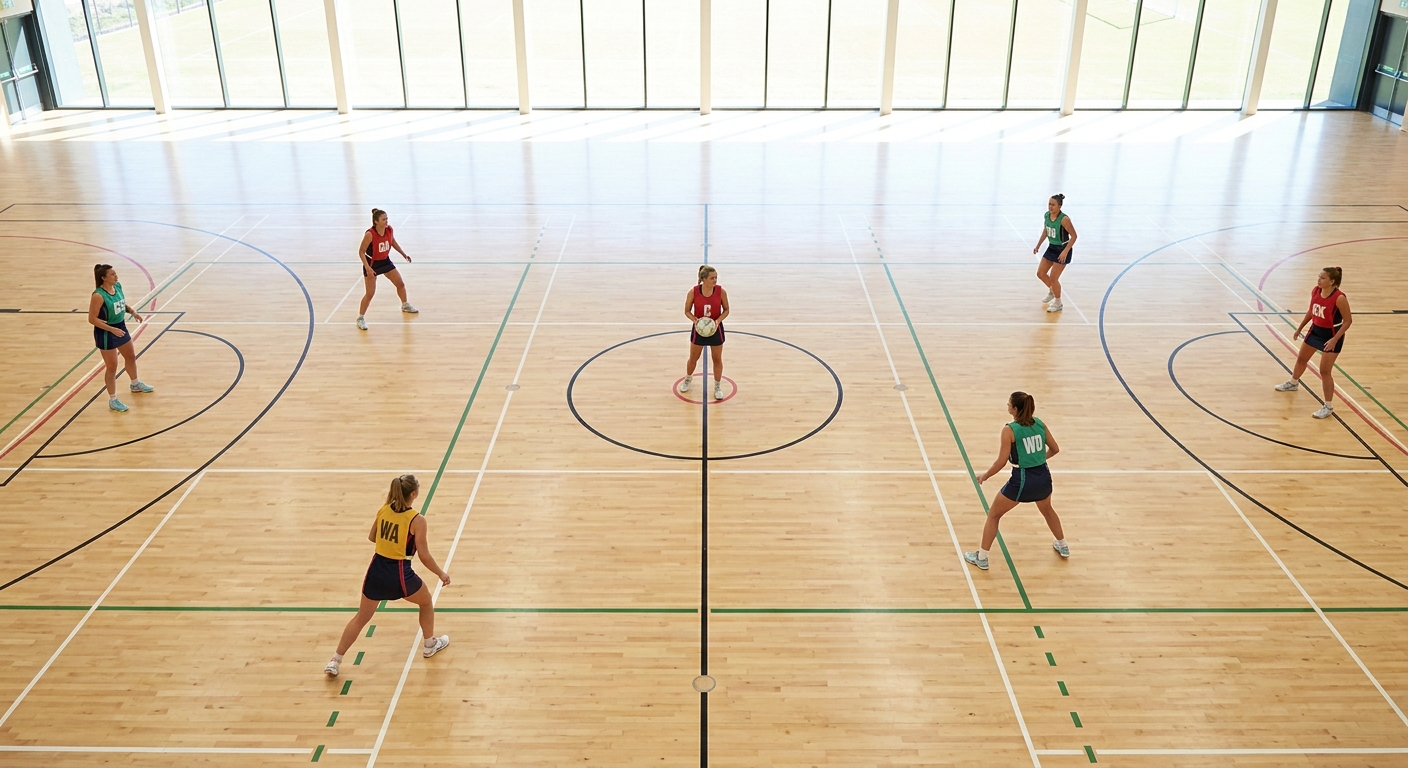
Netball looks chaotic from the sideline until you understand one thing: every player is locked into a specific area of the court. Unlike football or hockey, you cannot simply run wherever the ball goes. The court is split into three thirds, with a shooting circle at each end, and each of the seven positions is allowed in some areas and banned from others. Once you understand the zones, the whole game makes sense.
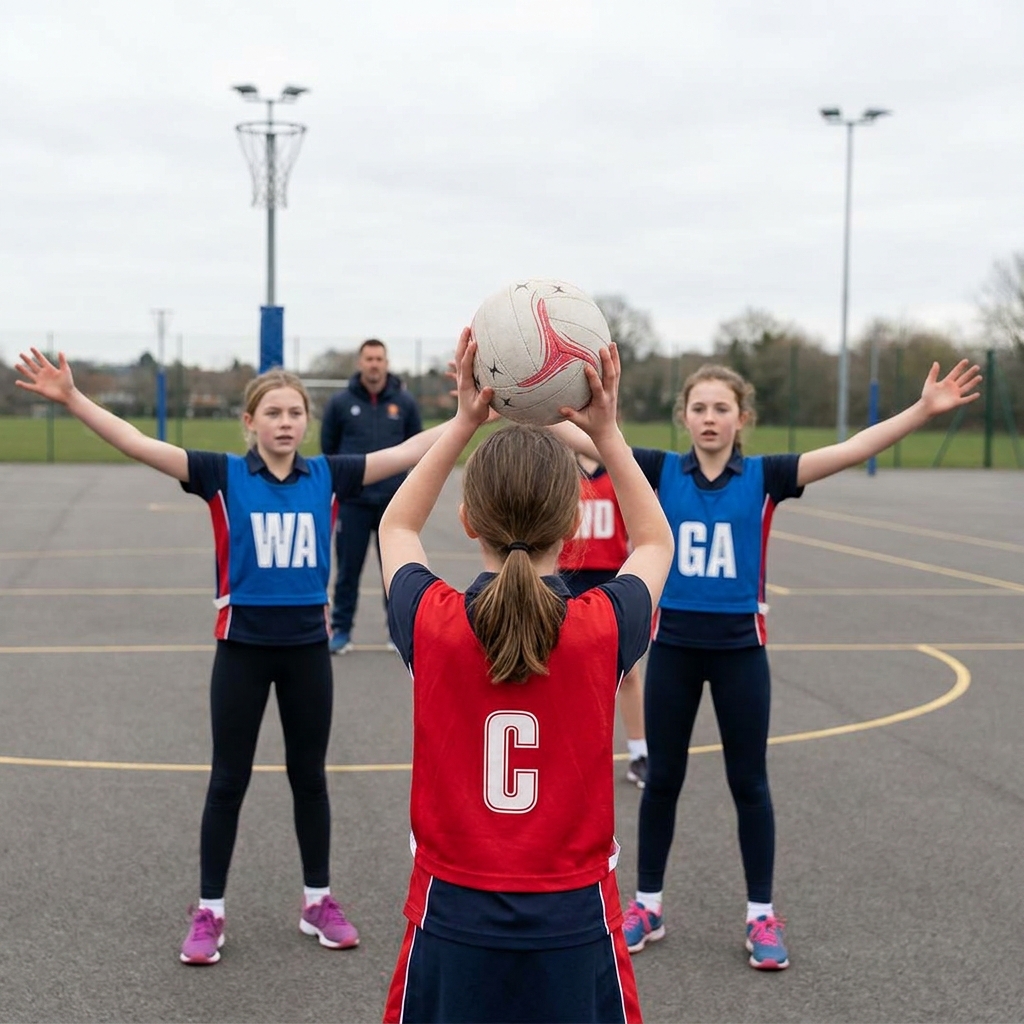
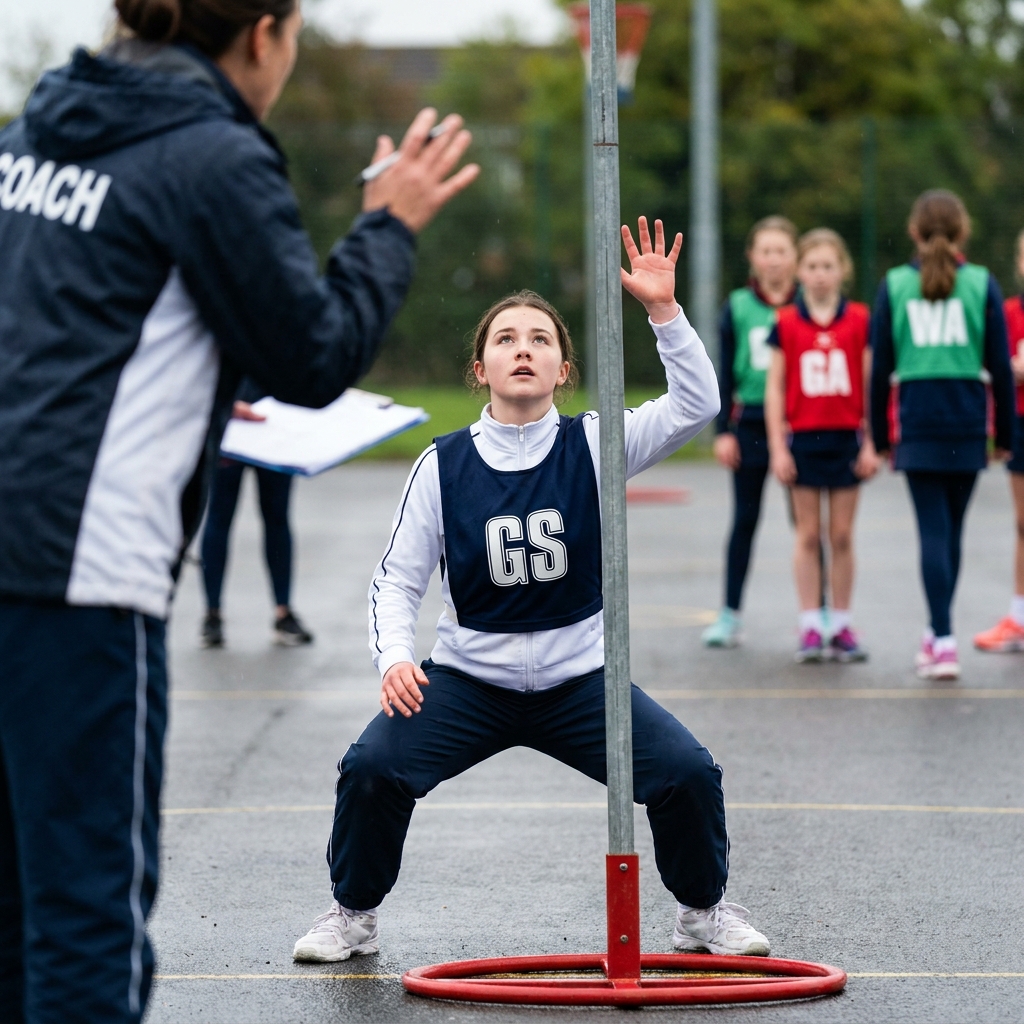
The seven positions are shown by the letters on each player's bib: GS, GA, WA, C, WD, GD and GK. Three are mainly attacking, one is the link in the middle, and three are mainly defensive. Below we explain exactly what each player does and where they are allowed to go, then finish with a court diagram and a few drills to practise the movement each role demands.
The Court: Thirds and Circles
The court is divided across its length into three equal thirds - an attacking goal third, the centre third, and a defending goal third. At each end, in the goal third, there is a semicircular shooting circle. A goal only counts if it is shot from inside that circle by a shooter. Three lines therefore govern everything: the two transverse lines that separate the thirds, and the arcs of the two shooting circles.
Every position is defined by which of these areas a player may enter. Step into an area you are not allowed in - even with one foot - and the umpire calls "offside", handing possession to the other team. Learning your zone is the very first job for any new player.
The Attacking Positions
Goal Shooter (GS)
The Goal Shooter is the team's primary scorer and lives in the attacking goal third and shooting circle only. A good GS is tall, strong and calm under the post, able to hold position against a defender, take a pass cleanly and convert the shot. The GS rarely roams - the skill is in finding half a metre of space inside a crowded circle and finishing with a high, soft shot. Rebounding a missed shot is a huge part of the job.
Goal Attack (GA)
The Goal Attack is the most versatile attacker. The GA is allowed in the attacking goal third, the shooting circle and the centre third, so they both create chances and finish them. A strong GA links with the Wing Attack and Centre to drive the ball into the circle, then becomes a second shooter alongside the GS. The GA also takes a share of the centre passes. Mobility, a good shot and clever movement are the hallmarks of the role.
Wing Attack (WA)
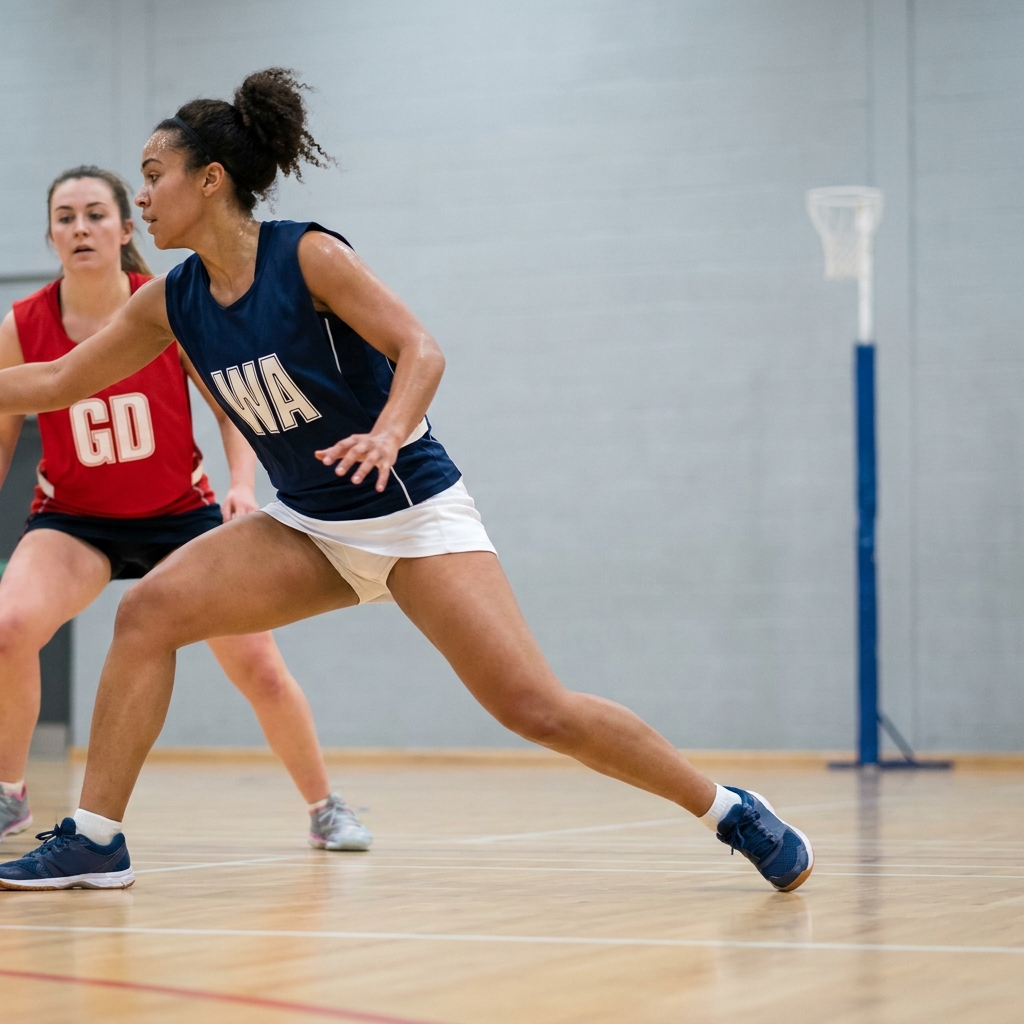
The Wing Attack is the supply line. Allowed in the attacking goal third (but not the circle) and the centre third, the WA's job is to feed the shooters. The best Wing Attacks are quick, elusive and brilliant at timing a pass to the edge of the circle. They do not score, but no team scores well without a sharp WA delivering the ball. Footwork and the dummy-and-drive are everything here.
The Link: Centre (C)
The Centre is the engine of the team. The C is allowed in all three thirds - but not in either shooting circle - which means they cover more ground than anyone else and connect defence to attack. The Centre takes the centre pass to restart play after every goal, so composure and timing matter enormously. A great Centre reads the whole court, supports in defence, then sprints forward to feed the attack. It is the fittest, busiest role on the court.
The Defensive Positions
Wing Defence (WD)
The Wing Defence mirrors the Wing Attack at the other end. Allowed in the defending goal third (but not the circle) and the centre third, the WD's main task is to shut down the opposition's Wing Attack and cut off the feed into the circle. A good WD wins interceptions in the midcourt and turns defence into attack. Reading the passing lanes is the key skill.
Goal Defence (GD)
The Goal Defence is the versatile defender - the mirror of the Goal Attack. Allowed in the defending goal third, the shooting circle and the centre third, the GD marks the opposition Goal Attack, contests shots and drives the ball back out of defence. Intercepting, defending the circle and starting the counter all fall to the GD. It demands timing, anticipation and a cool head under the clean-contest rules.
Goal Keeper (GK)
The Goal Keeper is the last line of defence and the mirror of the Goal Shooter. Allowed only in the defending goal third and shooting circle, the GK marks the opposition's main shooter, contests every shot with arms over, and rebounds anything that misses. A strong GK is tall, brave and physically dominant in a small space. Keeping the shooter out of the prime shooting area is the whole job.
Netball Court Diagram: Who Goes Where
The diagram below shows the court at a glance: three thirds running goal to goal, a shooting circle at each end, and the positions allowed in each zone. Read it alongside the table that follows, which lists exactly where each player may go.
C (Centre) is the only position allowed in all three thirds - but never inside either shooting circle.
And here is the same information as a quick-reference table. Read across each row to see exactly where that position is allowed. The two shooting circles are inside the goal thirds, and only four players in total - GS, GA, GD and GK - may ever enter them.
Position Zones at a Glance
- GS - Goal Shooter: Attacking goal third + attacking shooting circle. Scores goals.
- GA - Goal Attack: Attacking goal third + attacking circle + centre third. Creates and scores.
- WA - Wing Attack: Attacking goal third (not the circle) + centre third. Feeds the shooters.
- C - Centre: All three thirds, but neither shooting circle. Links defence to attack, takes the centre pass.
- WD - Wing Defence: Defending goal third (not the circle) + centre third. Marks the WA.
- GD - Goal Defence: Defending goal third + defending circle + centre third. Marks the GA, starts the counter.
- GK - Goal Keeper: Defending goal third + defending shooting circle. Marks the GS, contests the shot.
A simple way to remember it: the two Wings (WA, WD) can never enter a circle; the Centre roams everywhere but no circle; and only the four Goal positions (GS, GA, GD, GK) are allowed in a circle. Spend ten minutes walking new players through their zone on the court itself and it sticks far faster than any diagram.
How to Use Positions in Training
Knowing the zones is the start. The next step is teaching players to read and own their area rather than ball-watch. Rotate juniors through every position early in their development - it builds court awareness, stops players being pigeon-holed too soon, and helps you spot where each child's strengths really lie. Our guide to team selection and fair rotation shows how to keep that balance across a season, and the 15 junior drills guide gives you ready-made practices for each role.
When you are ready to build a full session around a position - say, working the Wing Attack's feeding or the Goal Keeper's circle defence - drop the relevant drills into the structure in our free session plan template. Browse the full Netball drills library for hundreds more practices sorted by skill and position.
Frequently Asked Questions
What are the 7 netball positions and their abbreviations?
The seven positions are Goal Shooter (GS), Goal Attack (GA), Wing Attack (WA), Centre (C), Wing Defence (WD), Goal Defence (GD) and Goal Keeper (GK). Each player wears a bib showing their position code and is only allowed in certain areas of the court. GS and GK are the only positions allowed inside the shooting circles to score or defend the shot.
Which netball positions can shoot?
Only two positions can score goals: the Goal Shooter (GS) and the Goal Attack (GA). They are the only players allowed inside the attacking shooting circle. Every other position can move the ball towards the circle, but the shot itself must be taken by the GS or GA from inside the circle.
What is the hardest position in netball?
Most coaches point to Centre as the most demanding position because the Centre covers the most court, links defence to attack, takes the centre pass and needs the highest work rate. Wing Attack and Wing Defence are also physically relentless. The shooting and keeping roles are less about distance covered and more about strength, timing and nerve in a small, contested space.
Which netball position is best for a beginner?
Centre is a great learning position because it touches the ball often and teaches court awareness, but it can be overwhelming for a nervous beginner. Many coaches start newcomers at Goal Defence or Wing Defence, where the job is clearer - mark a player, contest the ball - before moving them into the busier attacking and central roles.
Can the Centre go in the shooting circle?
No. The Centre can move through all three thirds of the court but is not allowed inside either shooting circle. The Centre feeds the ball to the edge of the circle for the shooters, then must stay outside the line.
 sportplan_netball