Why "Keep Them Moving" Is the Whole Job
Ask any experienced junior coach what kills a session and they will give you the same answer: the queue. A line of eight children waiting for one turn at a drill is eight children who are cold, bored and likely to start chatting or messing about. The child who gets four touches an hour will not improve and, far more importantly, will not come back. The one who gets four hundred will fall in love with the game.
Everything in junior coaching flows from that single idea. Maximise touches. Maximise repetitions. Maximise the time each child spends actually doing the thing you want them to get better at. If a drill has more players watching than working, it is the wrong drill - or it needs splitting into smaller groups with more balls.
The 15 drills below are chosen with that in mind. Every one keeps juniors active, every one uses kit you almost certainly have, and every one can be scaled up or down for U9 right through to U14. They are grouped into five blocks so you can build a balanced session: a lively warm-up, passing and movement, getting free, shooting and rebounding, and finally small-sided games to tie it all together.
Five Coaching Principles for U9-U14
Before the drills, a quick reminder of what makes them work with young players:
Junior Coaching Ground Rules
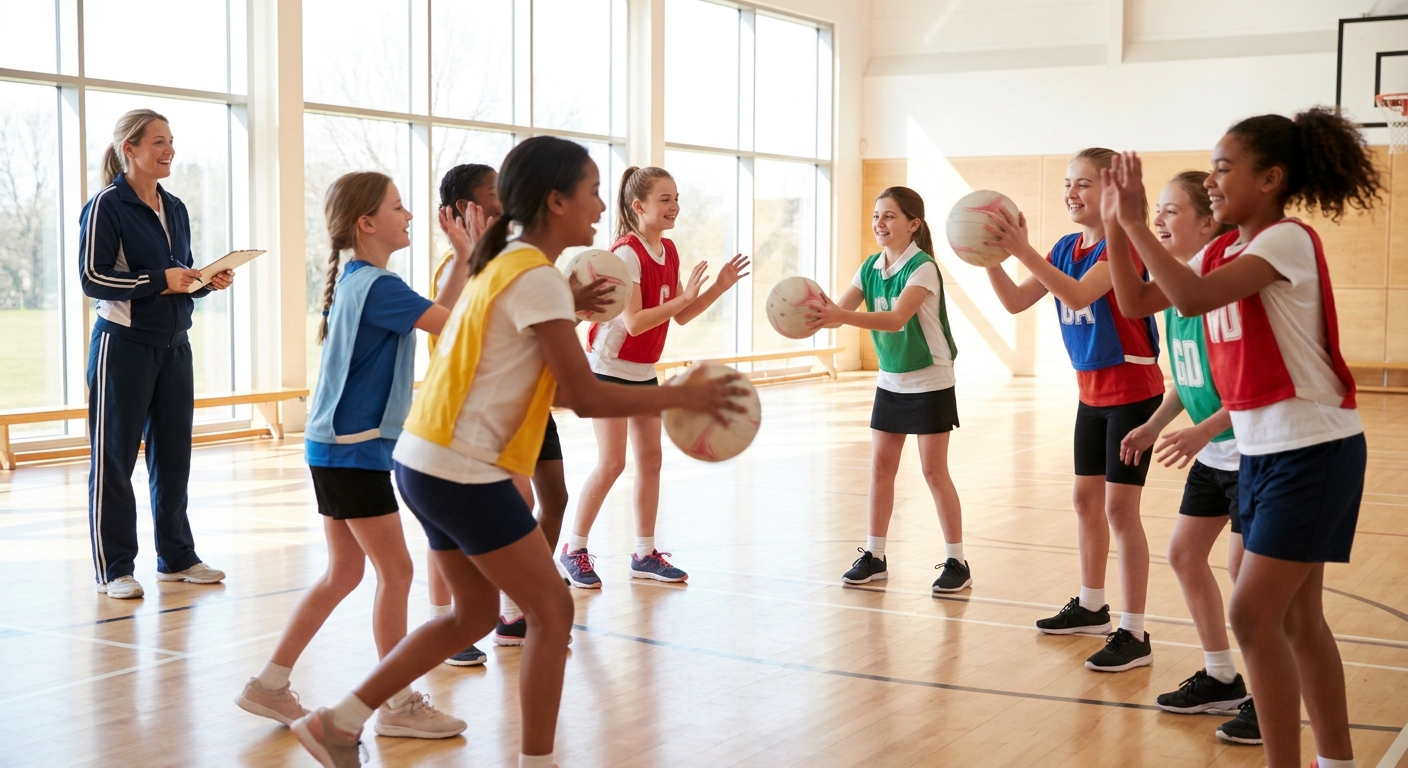
- Small groups, more balls: Never run one big drill with a long line. Split twelve players into three or four groups, each with a ball, so everyone is busy.
- One or two coaching points, no more: Young brains cannot hold a checklist. Pick the single most important thing - "land on a stable base", "look before you throw" - and let the rest go for now.
- Fun first: Add a score, a challenge or a beat-your-best target to almost everything. A drill with a game wrapped round it is a drill they will ask to do again.
- Demonstrate, don't lecture: Show it quickly, get them doing it, then coach in short bursts while they play. Long talks lose the room.
- Rotate before boredom hits: Change the activity while they still want more, not after they have switched off. Energy is the thing you are protecting.
1. Ball Skills & Warm-Up
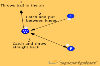
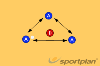
Start every session by getting hands on the ball and bodies warm at the same time. These drills wake players up, sharpen the catch-and-grip that everything else depends on, and get blood flowing without a single dull lap of the court. Keep them fast and playful - a warm-up should feel like the best part of the session, not a chore to get through.

2. Passing & Movement
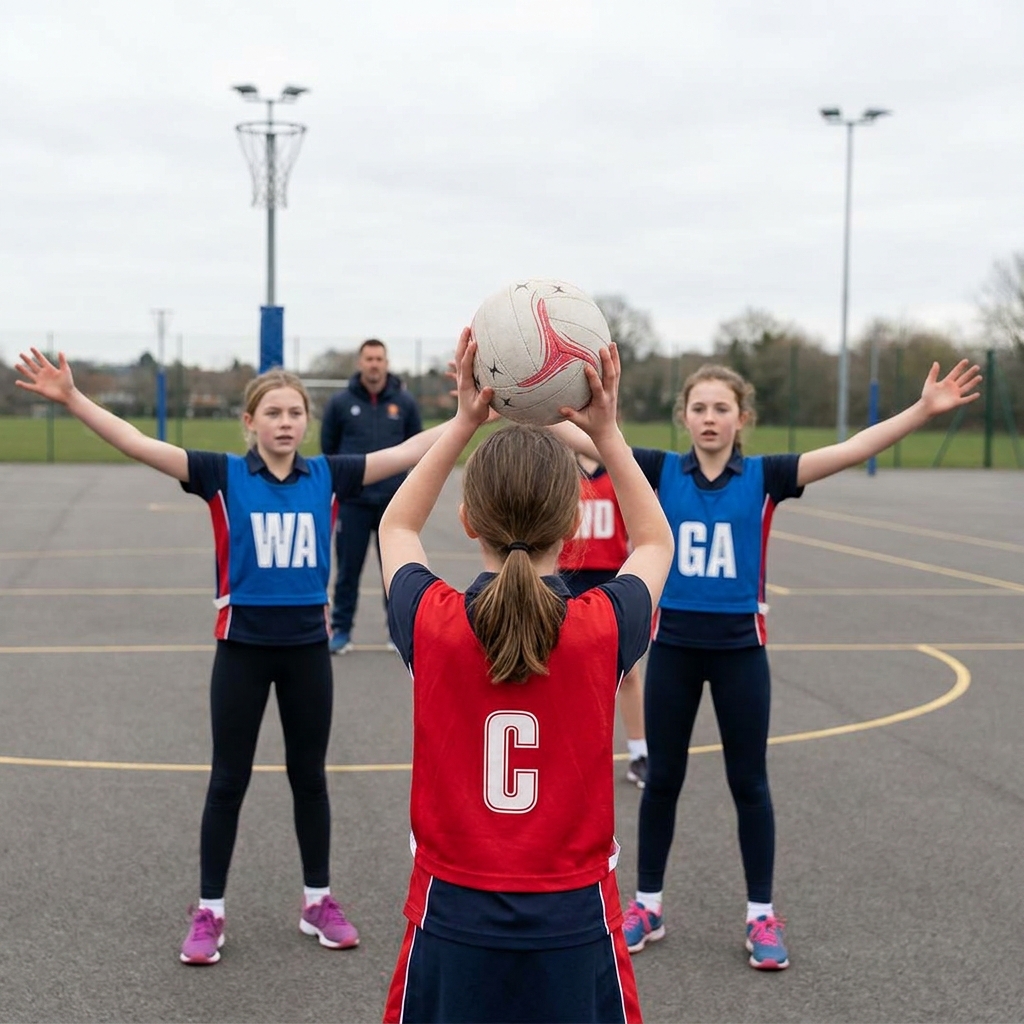
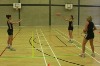
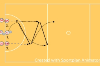
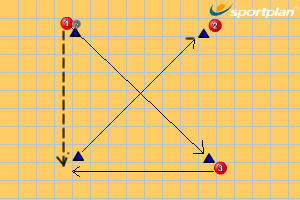
Netball is a passing game - the ball cannot be dribbled or carried, so every attack is built from accurate throws and clever movement off the ball. These drills get juniors passing and moving in the same breath, teaching them never to stand still after they release. Insist on a strong landing and a quick look before each throw, and keep the groups small so the ball is always in flight.

3. Getting Free
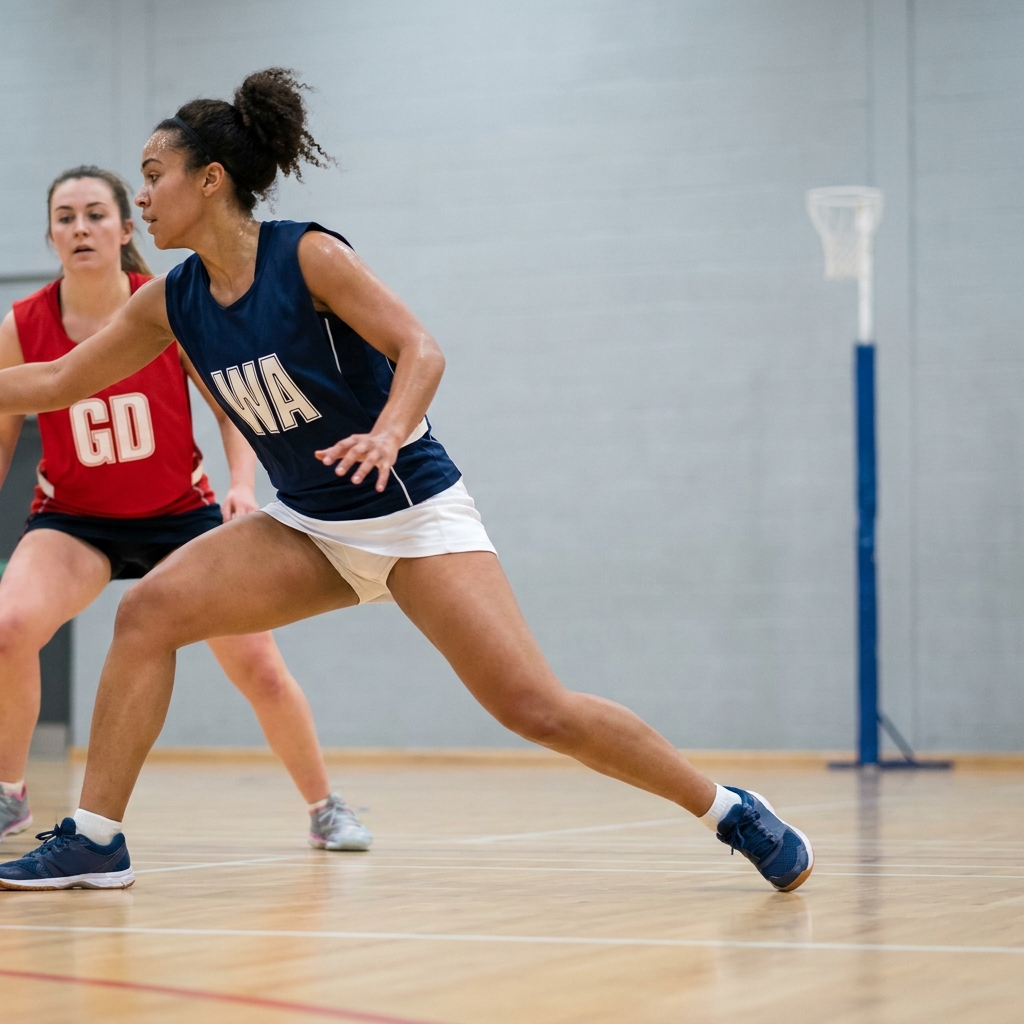
The hardest thing for a young player to learn is how to lose a defender and offer for the ball. Beginners tend to stand and reach; good players dodge, change pace and drive onto the pass. These two drills teach juniors to create their own space, the single skill that unlocks attacking netball. Encourage a sharp change of direction and a strong, balanced landing every time.
4. Shooting & Rebounding
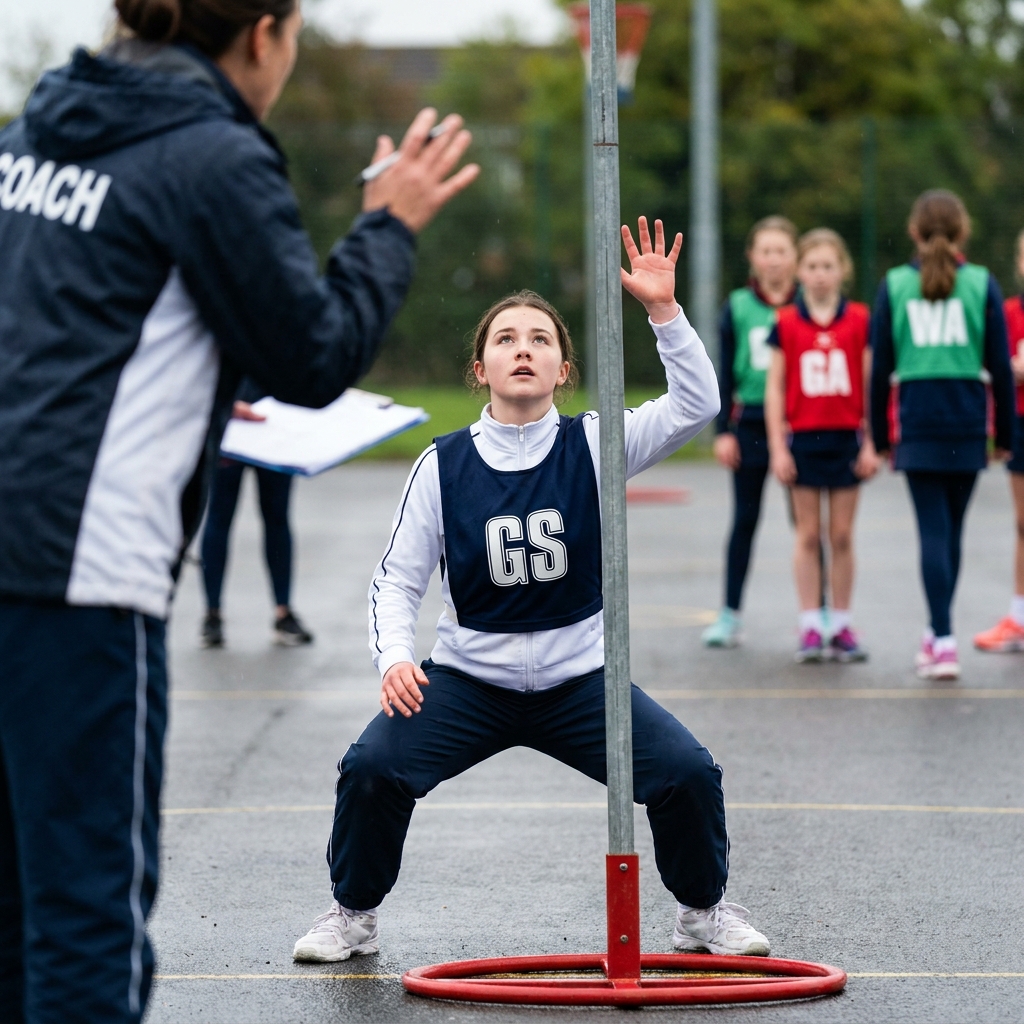
Every child loves to shoot, so use that. These drills turn the most popular part of training into a high-rep skill block, working balance, technique and the never-give-up habit of following your own shot. Lower the posts for younger juniors if you can, and reward good technique over the result - a balanced, high shot that misses is closer to a goal than a flat one that scrapes in.
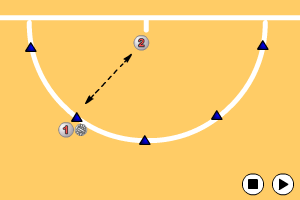
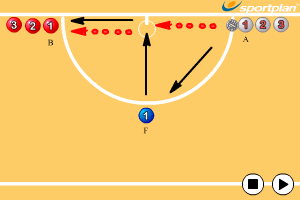
5. Small-Sided Games
Finish every session with a game. Small-sided games put all the day's skills under real pressure, with decisions, opponents and a score - and they are the part juniors remember on the drive home. Fewer players on a smaller area means more touches, more involvement and nowhere to hide, which is exactly what you want. Keep the rules light, the teams even and the energy high.
How to Run a High-Energy Junior Session
You now have 15 drills across five themes - more than enough for any single night. The trick is not to use them all at once. Pick one or two from each block, keep the transitions fast, and string them together so the energy never drops. Here is a one-hour shape that works for almost any U9-U14 group.
A 60-Minute Junior Session (U9-U14)
- Warm-Up (10 min): One ball-skills drill such as Around the Body, straight into Ball Handling and Coordination. Everyone with a ball, no lines, plenty of laughter.
- Skill Focus 1 - Passing (12 min): Run 123 Pass and Move, then 2 Lead Drive in small groups. One coaching point: move the moment you have passed.
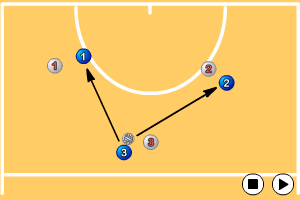
- Skill Focus 2 - Getting Free (12 min): 1 vs 1 Centre Pass against a live defender. Reward sharp dodges and strong landings, not just clean catches.
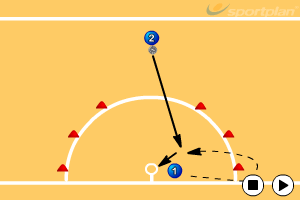
- Shooting Block (11 min): Cones Run Balance Shoot followed by Follow Your Shot. High reps, lowered posts for younger players, praise good technique.
- Game Time (12 min): Finish with 5 Passes to Score or 2 vs 2. Light rules, even teams, let them play. This is the bit they came for.
- Cool-Down & Chat (3 min): A gentle stretch and one positive thing about each child as they leave. They go home wanting to come back.
The beauty of this shape is its flexibility. Swap in the 3 Man Weave or 3 Pass Routine when you want more passing volume, add Circle Shots and 3 Passes and Shoot when you have an extra post free, or build a whole evening around getting free with the evasion work. To keep your planning tidy, drop your chosen drills straight into our free netball session plan template and you have a ready-to-run programme in minutes.
As your juniors grow, start introducing the seven roles so they understand where they fit on court - our guide to netball positions explains all of them with a simple court diagram you can share with players and parents alike. And when you want even more variety, the full Netball drills library holds hundreds more practices sorted by skill, position and age, so you will never run the same session twice.
Frequently Asked Questions
How long should a junior netball session be?
For U9 to U11, keep sessions to 45-60 minutes. For U12 to U14, 60-75 minutes works well. The exact length matters less than the pace - what tires young players is standing still, not running about. A well-paced hour with constant touches will leave juniors buzzing, while a poorly-run 90 minutes full of queues will leave them bored and cold. Build in a short drink break roughly every 20 minutes and always finish on a game.
How many players should be in each netball drill?
Aim for groups of two to four for skill work. The golden rule is that no child should ever wait in a long line. If you have 12 players and only one ball drill running, you have a problem - split into three or four small groups, each with a ball, so everyone is active. If you are short on coaches, set up stations the players can run themselves and rotate the whole group every few minutes.
What age can children start playing netball?
Children can begin the fundamentals of netball from around five or six through programmes like England Netball's Bee Netball, which uses a smaller ball, lower posts and simplified rules. Competitive seven-a-side netball on a full court usually starts from about nine years old (U9). Before that, the focus should be entirely on movement, catching, throwing and having fun rather than on positions or tactics.
How do I keep beginner netballers engaged?
Keep them moving and keep it simple. Cut your instructions to one or two coaching points per drill, give every child a ball wherever possible, and turn practices into games with a score as soon as you can. Praise effort loudly and often, rotate activities before anyone gets bored, and always end the session with a small-sided match - it is the part they will remember and the reason they come back next week.
What equipment do I need to coach junior netball?
You can run a brilliant junior session with very little: a set of bibs, a dozen cones or markers, and as many netballs as you can get hold of - ideally one between two. Size 4 balls suit U9 to U11 and size 5 suit older juniors. A couple of adjustable posts help, but plenty of the drills here need only a ball and some space, so a lack of kit is never an excuse to leave players standing about.
 sportplan_netball