Every time the opposition scores, you get a free, uncontested possession from the backline. Most club teams treat it as an administrative task: pick the ball up, find someone, get on with it. The better sides treat it as an attacking opportunity, because for a couple of seconds the defence is disorganised and moving in the wrong direction.
The backline pass is also one of the few moments in netball where you have complete control. Nobody is pressuring the thrower, the timing is yours, and the play can be entirely rehearsed. That combination makes it one of the highest-return things you can coach in pre-season.
Why Teams Waste It
The first problem is speed, or rather a lack of it. A slow backline pass gives the defence time to set, which throws away the only advantage the restart offers. Teams that take four seconds to restart are playing against a fully organised defence every time.
The second problem is predictability. If the ball goes to the same player in the same place after every goal, the opposition will work it out by the second quarter and start intercepting.
The third is that nobody has decided who takes it. Two players hesitating over the ball is a gift to a pressing defence and a common sight at club level.
What a Good Restart Looks Like
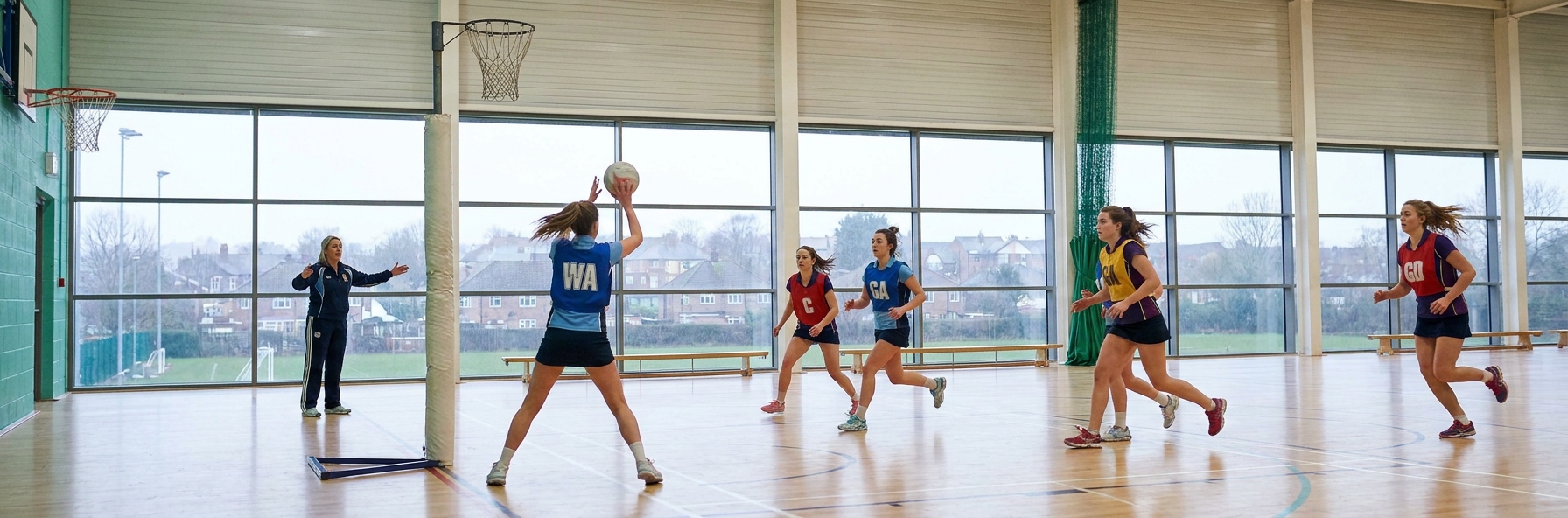
A good backline pass has three components: a designated thrower who takes it every time without discussion, at least two rehearsed options so the defence cannot cover one and be right, and movement that begins before the thrower has the ball, not after.
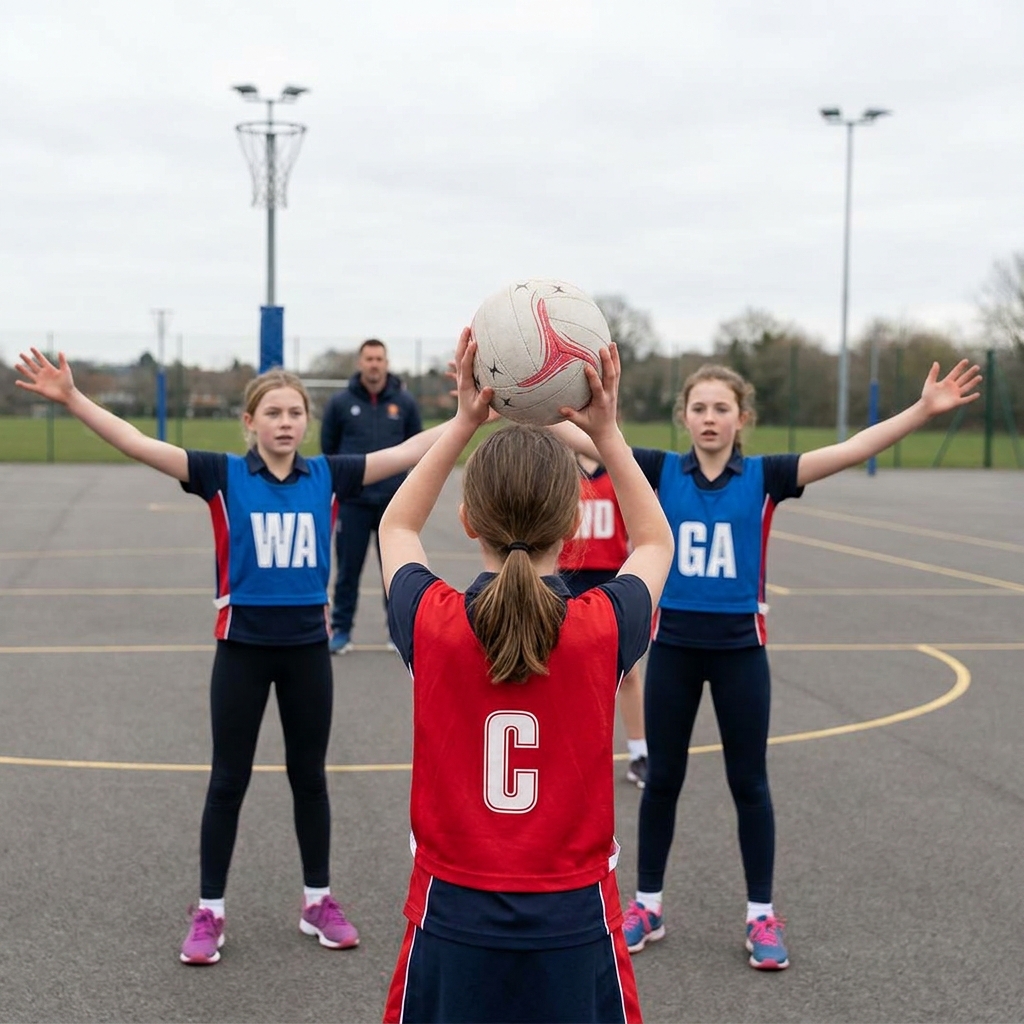
The most effective structures use a stack or a split, where players start close together and separate sharply in different directions. The defence has to choose which to follow, and whichever they choose, someone is free.
Depth matters too. One option should always come towards the ball and one should go away from it, so the defence is stretched vertically as well as horizontally.
Coaching the Restart
Step One: Name your thrower. One player, every time, so there is never a moment of hesitation over who collects the ball.
Step Two: Build two or three set plays, not ten. Players execute a small number of well-rehearsed options far better than a large playbook they half-remember.
Step Three: Start the movement early. Attackers should be moving as the ball goes through the net, not as the thrower steps behind the line.
Step Four: Rehearse it at match speed under fatigue. A restart play that only works in a fresh, walked-through rehearsal is not a restart play.
Step Five: Add a call. A single word from the thrower tells everyone which option is on, and it takes seconds to teach.
Making It Match-Realistic
Practise restarts immediately after shooting practice, so players are taking them in the same sequence as a real game, straight after a goal. Isolated practice teaches the pattern; sequenced practice teaches the habit.
Add a scoreboard element. Give the attacking team a point for getting the ball into the attacking third within a set number of passes or seconds. The clock creates the urgency that a walked-through rehearsal never will.
Key Coaching Points
- The restart is uncontested possession against a disorganised defence; treat it as an opportunity.
- Designate one thrower so there is never hesitation over who takes it.
- Build two or three rehearsed options rather than a large playbook.
- Movement must begin as the ball goes through the net, not afterwards.
- Use stacks and splits so the defence has to choose, and is wrong either way.
- Practise restarts in sequence after shooting, and against a clock.
Recommended Drills
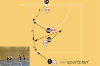
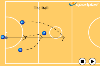
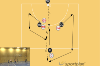
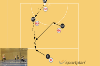
Frequently Asked Questions
Who should take the backline pass?
Usually the goal keeper, because they are closest to the ball after a goal and it keeps the goal defence free to move up court as an option. What matters most is that it is the same player every time, so nobody hesitates.
How quickly should we restart?
As quickly as your players can do it accurately. Speed is only an advantage if the pass finds someone; a rushed throw into a crowd hands the ball straight back. Build accuracy first, then compress the time.
What if the opposition press our backline pass?
That is when your second and third options earn their place. A pressing defence commits players high up the court, which means there is space behind them. Have one long option rehearsed specifically for this, and the press becomes a liability for them.
 sportplan_netball