Rugby: stepping

May 2026

Kicking from hand is at record levels in elite rugby. Six Nations 2026 was the most kicked-from-hand championship since stats began, and the same trend is showing across the URC, Champions Cup and Super Rugby. Coaches have realised that good kicks force opponents into pressured returns - and pressured returns are the easiest scoring opportunities in the game.

The flip side is just as important. If your side is on the receiving end of all those kicks, your counter-attack is no longer a luxury skill - it is a core part of your attacking game plan. The most exciting tries in 2026 are not coming from set-piece strike moves. They are coming from broken-field returns.

Why the Counter-Attack Has Become Central

When a team kicks, three things happen at once. Their forwards are spread across the field as chasers rather than packed around the ball. Their defensive line is in motion, not set. And the receiving team has the ball with space in front of them. Combined, those three factors mean the defence is at its most vulnerable in the seconds immediately after a kick.

Modern attacking analysts call this the "transition window". It typically lasts six to eight seconds. If the receiving team can move the ball into space inside that window, they create a numerical or positional advantage that no structured attack could engineer in open play.

The Three Decisions Every Receiver Must Make

Catching the ball is the easy part. The decision that follows is what separates good counter-attacking teams from poor ones. Train your back three to run through three questions every time they collect a kick.

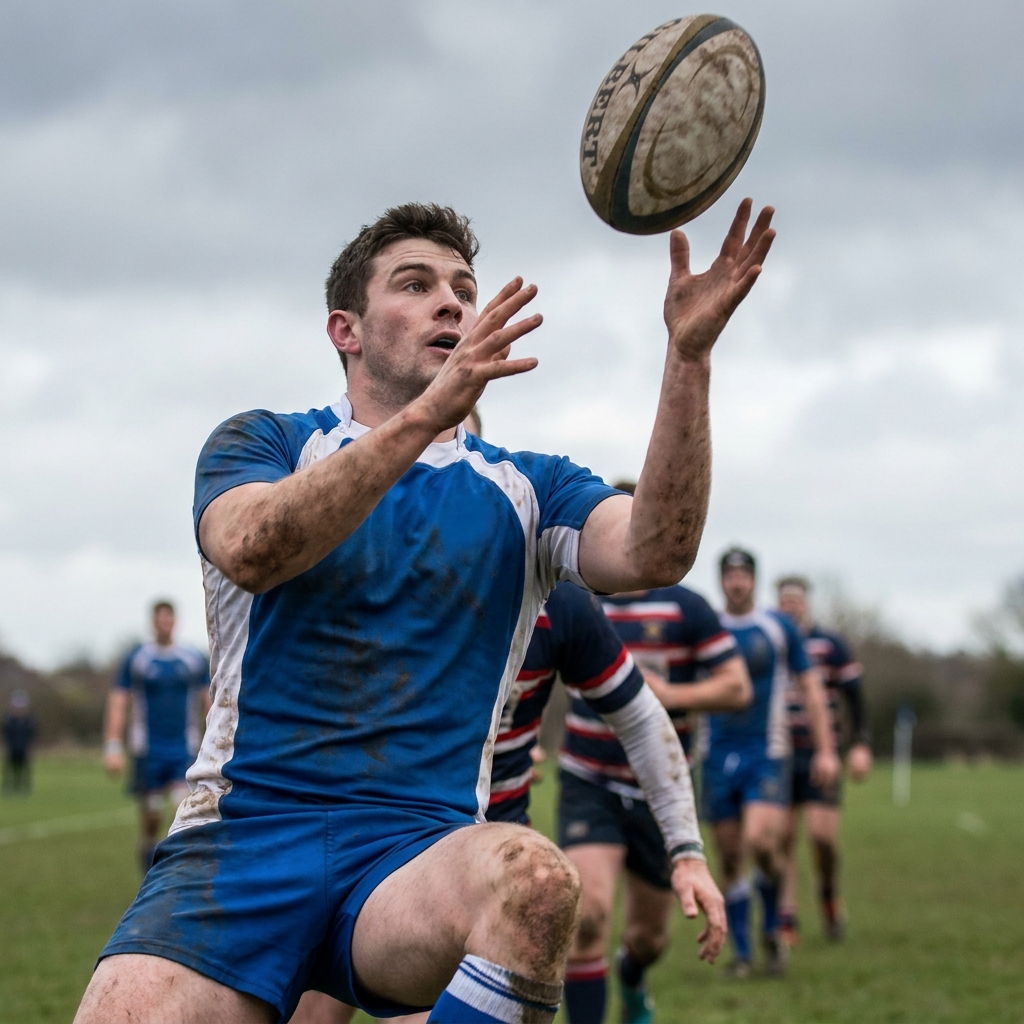
Decision 1 - Time and space: How close is the nearest chaser? If a chaser is within five metres and closing fast, the answer is almost always to return the kick. If the nearest chaser is ten metres away or more, the carry is on.

Decision 2 - Width on the field: Where are my support runners? A counter-attack needs at least two players in support. If the wingers are still on their wings and the full-back caught it, there is no point trying to run - the carrier will be isolated. Better to step infield to a phase, then launch the next play.

Decision 3 - The defensive picture: Which side is undermanned? Most chase lines come up flat and even, but there is almost always a weakness - usually on the far side of the field where the original kicker stayed back. Counter to that space, not into the strongest chase channel.

How to Build Counter-Attack Habits

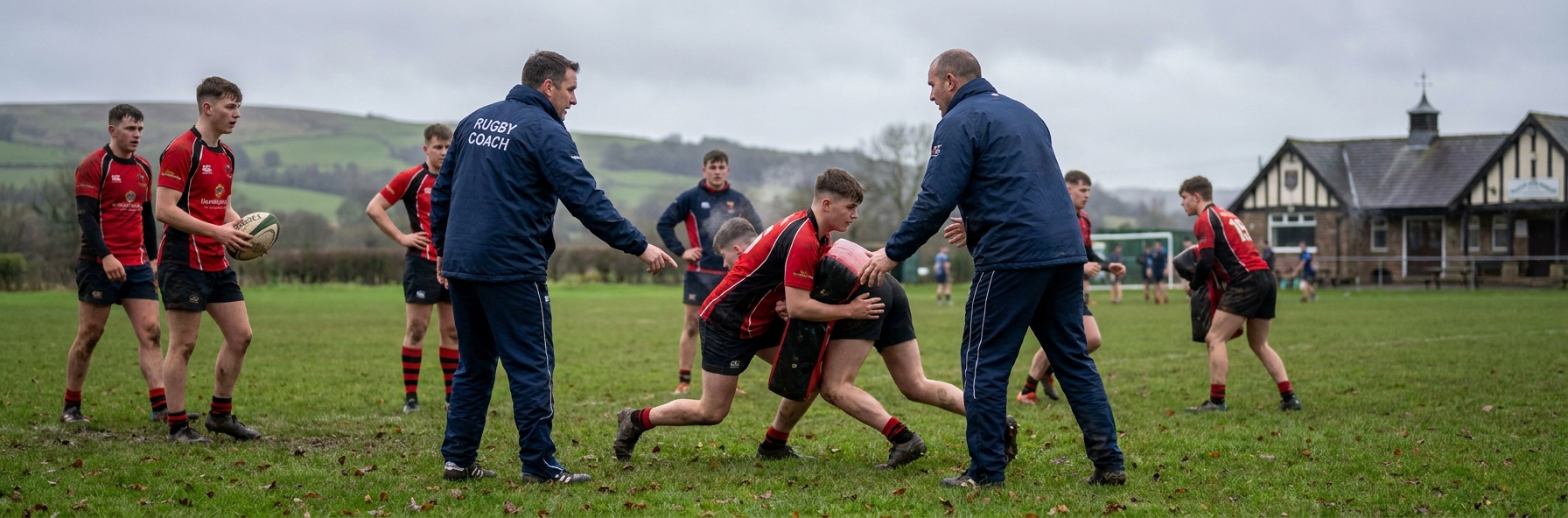
Counter-attacking cannot be taught from a whiteboard. It is a reactive skill and must be trained in environments that look like the game. Here is a progression that works at every level from U16 upward.

Stage 1 - Catch and scan: Two minutes of high-ball drills where every catcher must shout the position of the nearest chaser before they hit the ground. This trains the pre-catch scan, which is the foundation of every good counter-attack.

Stage 2 - 3v2 from a kick: Coach kicks the ball into a back three. Two chasers come from 20 metres. The back three must keep the ball alive and beat the chasers using one of three responses: switch infield, hit a support runner on the outside, or counter-kick.

Stage 3 - Full-pitch transition game: Conditioned game where every kick must be returned. No mark allowed, no exit kick allowed. Forces players to find solutions and exposes which units have not learned to support the back three quickly.

The Forwards' Role in Counter-Attack

This is where most teams fail. The back three can be brilliant, but if the forwards are still standing where they were before the kick, the counter dies at the first ruck. Coach your forwards to react to opposition kicks like a fire alarm - the closest three drop into the back-field as immediate support, while the rest fan out across the pitch ready to play.

This habit takes weeks to embed. Start by freezing training every time a kick is fielded and asking each forward to show where they should be running. Repetition turns it from a thought into a reflex.

Key Coaching Points

  • The transition window is six to eight seconds - move the ball before it closes
  • Train the pre-catch scan: who is chasing, how close are they, where is the space?
  • Counter to the weak side of the chase, not into the strongest channel
  • Forwards must react to kicks as quickly as the back three
  • Avoid contact in your own 22 - if the counter is not on, return the kick

Recommended Drills

VIEW ALL DECISION-MAKING DRILLS

stepping DRILLS
View All

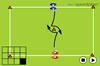
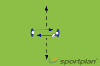
1 vs 1 colour cones Agility & ...

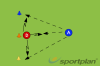
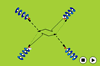
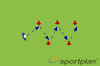
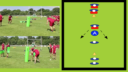
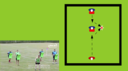
<span id=&quot;docs-internal-guid-0bcf75a9-9414-f74b-43eb-51b4947c502d&quot;> <ul style=&quot;margin-top: 0pt; margin-bottom: 0pt;&quot;> <li style=&quot;list-style-type: disc; font-size: 7.5pt; font-family: Verdana; color: #000000; background-color: transparent; font-weight: 400; font-style: normal; font-variant: normal; text-decoration: none; vertical-align: baseline; white-space: pre;&quot; dir=&quot;ltr&quot;> <p style=&quot;line-height: 1.38; margin-top: 0pt; margin-bottom: 0pt;&quot; dir=&quot;ltr&quot;><span style=&quot;font-size: 7.5pt; font-family: Verdana; color: #000000; background-color: transparent; font-weight: 400; font-style: normal; font-variant: normal; text-decoration: none; vertical-align: baseline; white-space: pre-wrap;&quot;>4 players are required for this drill; 1 attacker, 2 defenders and 1 scrum half. <li style=&quot;list-style-type: disc; font-size: 7.5pt; font-family: Verdana; color: #000000; background-color: transparent; font-weight: 400; font-style: normal; font-variant: normal; text-decoration: none; vertical-align: baseline; white-space: pre;&quot; dir=&quot;ltr&quot;> <p style=&quot;line-height: 1.38; margin-top: 0pt; margin-bottom: 0pt;&quot; dir=&quot;ltr&quot;><span style=&quot;font-size: 7.5pt; font-family: Verdana; color: #000000; background-color: transparent; font-weight: 400; font-style: normal; font-variant: normal; text-decoration: none; vertical-align: baseline; white-space: pre-wrap;&quot;>Once the defenders are set up in either corner of the try line they are assigned a coloured ball. <li style=&quot;list-style-type: disc; font-size: 7.5pt; font-family: Verdana; color: #000000; background-color: transparent; font-weight: 400; font-style: normal; font-variant: normal; text-decoration: none; vertical-align: baseline; white-space: pre;&quot; dir=&quot;ltr&quot;> <p style=&quot;line-height: 1.38; margin-top: 0pt; margin-bottom: 0pt;&quot; dir=&quot;ltr&quot;><span style=&quot;font-size: 7.5pt; font-family: Verdana; color: #000000; background-color: transparent; font-weight: 400; font-style: normal; font-variant: normal; text-decoration: none; vertical-align: baseline; white-space: pre-wrap;&quot;>The attacker is to start in one corner of the baseline. <li style=&quot;list-style-type: disc; font-size: 7.5pt; font-family: Verdana; color: #000000; background-color: transparent; font-weight: 400; font-style: normal; font-variant: normal; text-decoration: none; vertical-align: baseline; white-space: pre;&quot; dir=&quot;ltr&quot;> <p style=&quot;line-height: 1.38; margin-top: 0pt; margin-bottom: 0pt;&quot; dir=&quot;ltr&quot;><span style=&quot;font-size: 7.5pt; font-family: Verdana; color: #000000; background-color: transparent; font-weight: 400; font-style: normal; font-variant: normal; text-decoration: none; vertical-align: baseline; white-space: pre-wrap;&quot;>The drill begins when the attacking player is fed a coloured ball by the scrum half. <li style=&quot;list-style-type: disc; font-size: 7.5pt; font-family: Verdana; color: #000000; background-color: transparent; font-weight: 400; font-style: normal; font-variant: normal; text-decoration: none; vertical-align: baseline; white-space: pre;&quot; dir=&quot;ltr&quot;> <p style=&quot;line-height: 1.38; margin-top: 0pt; margin-bottom: 0pt;&quot; dir=&quot;ltr&quot;><span style=&quot;font-size: 7.5pt; font-family: Verdana; color: #000000; background-color: transparent; font-weight: 400; font-style: normal; font-variant: normal; text-decoration: none; vertical-align: baseline; white-space: pre-wrap;&quot;>The defender associated with that coloured ball will then come out to defend the try line from their corner. <li style=&quot;list-style-type: disc; font-size: 7.5pt; font-family: Verdana; color: #000000; background-color: transparent; font-weight: 400; font-style: normal; font-variant: normal; text-decoration: none; vertical-align: baseline; white-space: pre;&quot; dir=&quot;ltr&quot;> <p style=&quot;line-height: 1.38; margin-top: 0pt; margin-bottom: 0pt;&quot; dir=&quot;ltr&quot;><span style=&quot;font-size: 7.5pt; font-family: Verdana; color: #000000; background-color: transparent; font-weight: 400; font-style: normal; font-variant: normal; text-decoration: none; vertical-align: baseline; white-space: pre-wrap;&quot;>This drill relies on both the reaction speeds of the defenders noticing which ball is in play and also that of the attacker noticing which defender is in play and consequently where there is space to attack.

General

Unfortunately there were no results for your search! Please try again
stepping ANSWERS
View All

How can I improve my tackling?

How can I improve my tackling? I'm new to the game this year, and I had a couple of injuries to my shoulder and ribs early on which held me back somewhat. I was diving in and making good hits before- now as I approach being fully fit again I have found if I hit a player running at me with my shoulder around hip-height, I make good contact, but fail to get the wrap with the arms, and often don't bring the man down. On bigger lads I've tried hitting as low as possible, but often end up with one leg, sometimes two, and very low, still not getting the desired effect.... So, depending on the size of the opponent, where should I be hitting with the shoulder? Hips, knees, or other? And any tips on getting the wrap right? Thanks

Archived User Coach

where can I get an under 8 year program of training?

where can I get an under 8 year program of training or activities to introduce them to the game of Rugby?

Archived User Coach

Where can i find a detail description of the abillities?

Where can i find a detail description of the abillities and duties for the different positions in the backline?

Archived User Coach

IS there any way i can learn the rugby side step??

IS there any way i can learn the rugby side step??
senushka Coach, Sri Lanka

My son has played all season U9's on the wing and has?

My son has played all season U9's on the wing and has now be brought into a inside centre role. What are the key differences he needs to make to be successful in his new position

Archived User Coach

Kids Drills

Hi I am looking for rugby drills for 7 year olds
Henco Smit Coach, South Africa

what are the key attributes of a left winger?

what are the key attributes of a left winger?

Archived User Coach

How can my forwards counter a wheeling scrum?

My props (and I ) lack front row experience

Archived User Coach

please how do idefine the players in the pitchie. who?

please how do idefine the players in the pitchie. who is the flanker, hooker, fly half etc

Archived User Coach

Hi, I'm required to coach the tight 5 to right wheel?

Hi, I'm required to coach the tight 5 to right wheel a scrum - yes, it's for an exam. I have researched it - including talking to forwards - and all of the sparse info out there describes unlawful techniques. I can make a stab at almost anything apart from this 'black art' as I have no references to use. Help!

Archived User Coach

Can players throw ball forward to themselves then catch it?

if i throw the ball forward and catch it before it touches any opponent or the ground is that a forward pass

Archived User Coach

How do I get the back line running straight and fast?

Our back line is very sluggish and drift ,any ideas for simple plan to get them moving straight and fast?

Michael Strain Coach, Wales

Sealing not bridging the ruck

We play a team that does not contest the ruck very often so we seal the ruck by positioning our first Rucker over the tackled player and holding on to his shirt with Wright on feet and butt down. Second guy comes in a no connects with first and seal the ball until it is removed. We have been blown up for bridging when we have no hands on ground or weight forward. Anyone have any ideas On how to explain to the ref we are sealing not bridging?? Asked using Sportplan Mobile App
gary jones Coach, United States of America

need to get back into sport

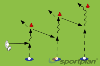
im currently injured and have been for the past 10\11 months and I will be for the next 7 months would be great to get some drills working on my stepping for when I get back to playing

ben leach Coach, England

Team building activities u12s

u12 boys team.. looking to do 90 min team building session in a hall.. large group of 30. kids and coaches.. any recommendations for activities and games that don't need buying equipment or investment.. that like promote cross friendships..bonding..Communications..fun

Sean bohan Coach, Scotland

Law 19 Scrum law - Sportplan

Hi, I need help with this multiple-choice question from the world rugby laws test. When is the non-throwing scrum half offside when the ball is in a scrum?;1. When stepping ahead of the ball with either foot at the side the ball is thrown in2. When stepping ahead of the tunnel, but not the ball, at the side the ball is thrown in3. When stepping ahead of the hindmost foot at the side the ball is not thrown in4. When moving away from the scrum and not retreating 5m behind the scrum5. When moving away from the scrum and remaining ahead of the hindmost foot in the scrum

Erin Moore Coach, Australia

Is Bridging Illegal? - Sportpl...

Simon My son's PE teacher has told him that Bridging is lieegal for the U13 to U19 group. His Club coach has been encouraging its use in games for two seasons. I can see some of the dangers but also the advantages Who is right is it banned or can it be used? Paul submitted by email

Archived User Coach

JOIN SPORTPLAN FOR FREE

  • search our library of 1100+ rugby drills
  • create your own professional coaching plans
  • or access our tried and tested plans

Sportplan App

Give it a try - it's better in the app

YOUR SESSION IS STARTING SOON... Join the growing community of rugby coaches plus 1100+ drills and pro tools to make coaching easy.
LET'S DO IT