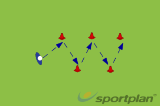
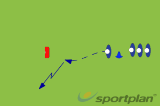
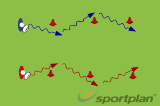
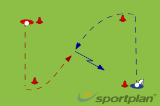
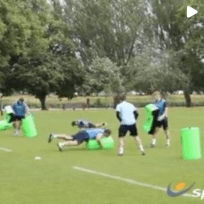
Players line up and approach the pole which the coach is now moving side to side.
Once the player gets reasonably close, drop the pole to one side, the player must then react and sidestep in the other direction, working away from the defender.
Using shorter strides when they get close, they step to one side with the POWER STRIDE, and off that leg they change direction in the other direction, anything from 30-90 degree angle changes is sufficient.
If possible stand behind the pole so that you can see the technique in full. Basically you want to ensure players are running at the pole from a distance away, then slow down as they approach to step, short feet and then BANG off the stepping leg.
Look for good weight distribution, movement of the ball in both hands, not tucked.
No player should be looking towards the ground or his feet, instead they should hold their head up and engage with the defender.

in more ways than one
 sportplan_netball

in more ways than one
sportplan_rugby

Tacklers are aiming lower, so carriers who dip late put heads at risk. Teach footwork, a strong early body height and leg drive to win the collision safely.

The hooker's brake foot moved from trial into full law in July 2026. Here is how to coach it so your front row stays stable, legal and safe.
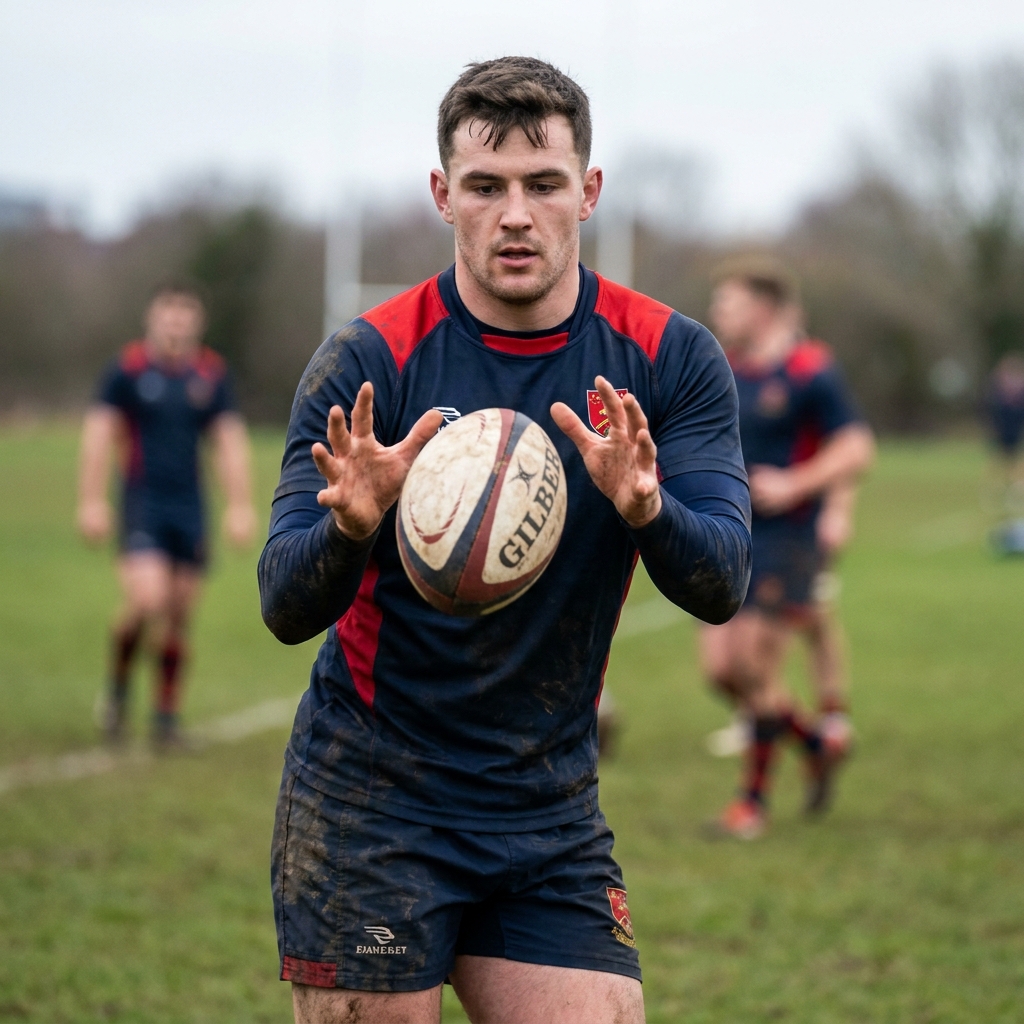
Your players can pass beautifully in a warm-up grid. Then a defender closes, their lungs are burning, and the ball goes to ground. Here is how to build catch-pass skills that hold up when it matters.