Why Watch Elite Rugby Tactically?
The Six Nations showcases the best tactical minds in northern hemisphere rugby. While amateur teams can't replicate the athleticism, the principles behind elite tactics apply at every level. This year's tournament offers clear lessons coaches can adapt for their own teams.
France and Ireland kick off the 2026 championship in Paris on February 5th, with each team bringing distinct approaches that have evolved over the past seasons. Let's break down what you can steal for your own coaching.

France: The Collision Dominance Model
What They Do
France prioritise winning the collision. Their ball carriers attack defenders rather than avoiding them, creating front-foot momentum that generates quick ball. The forwards punch holes; the backs exploit space created by defenders sucked into tackles.
What You Can Adapt
- Carry into contact: Train players to accelerate into contact rather than slow down. Even at amateur level, a committed carry beats a tentative one.
- Support lines: Develop automatic support positions so quick ball leads to numbers advantages.
- Aggressive clean-out: The French ruck technique focuses on driving past the ball. Train your forwards to hit through, not at, the breakdown.
Training Application
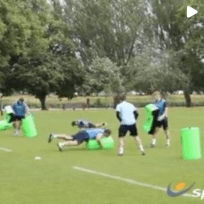
Run contact drills where ball carriers are rewarded for going forward through the tackle. Award points for dominant carries where the defender goes backwards. This shifts mindset from "survive contact" to "win contact".

England: The Folding Defence
What They Do
England's defensive system involves defenders "folding" around behind the tackle to create numbers on the far side. Instead of static man-on-man marking, players drift across the pitch after each phase, constantly reorganising to outnumber the attack.
What You Can Adapt
- Line speed with drift: The initial press forces the attack wide; the fold ensures cover when they get there.
- Communication: The fold only works with constant talking. Every player must call their assignment.
- Trust the system: Defenders must trust that teammates will cover their responsibility. Individual heroics break the fold.
Training Application
Practice defensive sets where players must cover multiple attackers across phases. Use touch rugby with the rule that defenders must touch their far goalpost between each phase - this forces the work rate the fold demands.
Ireland: Structured Phase Play
What They Do
Under Andy Farrell, Ireland build phases with relentless precision. Nothing is left to chance. Every player knows exactly where to be on each phase of a planned sequence. The structure creates consistency and reduces errors.
What You Can Adapt
- Planned sequences: Even amateur teams can have 3-5 phase combinations that everyone knows by heart.
- Shape recognition: Train players to see when they're in the "shape" for a set move and execute automatically.
- Reset discipline: If a move breaks down, players know exactly where to go for the next phase.
Training Application
Install one simple 3-phase move and practise it until everyone can execute blindfolded. The confidence this builds transfers to all other aspects of play.

The Scrumhalf Box Kick Battle
One tactical trend across all teams: the box kick is no longer just territory management. Teams use it to regain possession through contestable kicks, with chasing wings becoming aerial specialists.
What You Can Adapt
- Train your 9 to vary box kick height and trajectory
- Designate chase roles before every kick
- Practice contesting high balls under pressure
Recommended Drills


How to Watch Rugby Tactically
- Watch the defence, not the ball: How do they organise? Where are the numbers?
- Count phases: How many phases before teams kick or try to strike?
- Track one player: Follow a single player for 10 minutes to see their work rate and positioning.
- Pause on set pieces: What shapes are teams using at lineout and scrum?
Frequently Asked Questions
Can amateur teams really play like France?
You won't match their power, but you can match their intent. Train players to carry with aggression and seek front-foot ball. The mindset transfers even if the physical impact doesn't.
What's the simplest elite principle to implement?
Ireland's discipline around shape. Pick one 3-phase attack sequence and drill it until everyone knows their role. Consistent execution beats complex plays every time.
How much Six Nations content should I show my players?
Keep clips short - 2-3 minutes maximum focusing on one specific element. Long match footage loses attention. Use clips to illustrate a point you're already coaching.
Why are teams box kicking so much?
Field position matters more than ever, and contestable kicks offer a chance to regain possession. It's lower risk than running into set defences and higher reward than traditional touch-finding.

 sportplan_rugby