










Excellent drills, very detailed videos. Useful site for my U15 boys team.

Ask a question and have it answered by Coaches from around the world and Sportplan's team of Experts.

what are good penalty corner plays?
autopass from tip off
I have done numerous exercises on goalscoring but my girls cant seem to finish. Any suggestions?
Hi all just wondering if there are any coach's that have any good tip for a new coach like me. I am coaching under 6/8yr olds and find they get bored very easy. How do you keep them from getting bored and what fun drills do you use? Cheer James first time coach

I have been given my first team ever!! They are 11 year old girls and I wanted guide/ recommendation on how I should structure my one hour sessions? E.g. how long should I spend on a warm up, drill etc. .Cheers,Freya
Hi, Have to deliver a coaching session for my university task with 2 other people (20min long) to a group of school kids (under 8's) with no experience or very little. Need some advice as to what is best to start with (drills etc). here are some guidelines: 1. What skill are you focusing on? 1 skill only 2. What are your 2 coaching points? 3. How will you structure the warm-up, skill practice (plus progression) and conditioned game (what is this???)
does anyone know where to get the rebound boards featured on here?
Hi all, after "volunteering" at the last minute to coach last season, I'm looking forward to coaching again this season but would like to be a bit more organised starting the season. Last season I used drills from here (thank you contributors) and put together a practice plan each week addressing what I thought were our weakness from the game just played. This got us through the season, we were promoted after grading and finished the season in the top 4 playoffs for our grade.I wonder if there is some kind of guide to putting a more coherent training plan together for the season.I'm coaching a boys secondary school team, aged 12-18. What kind of skills should they have mastered?What should they be attempting, working towards mastering (individually and as a team)?I last played as a collage boy on grass fields, the change to turf pitches has obviously obsoleted (along with age) much of what I knew as a player.Any pointers appreciated.David
Can anyone recommend a drill to get my players talking more during the game as I trying to teach them how important it is to do things off the ball?

My players never seem to be able to execute a successful reverse stick shot when in the D. What are the key coaching points/technique for this skill that I should be highlighting to them?
Can I please have drills to help with shooting goals? We actually play on grass fields (u/13A girls)
I've got some girls aged 11-14, basically made up from two different clubs. We're playing 7 a side and have a squad of 12. One club dominates in terms of numbers (75% of the squad) and although they are not doing anything 'wrong' at all, the 9 players are accustomed to their own company and there's a bit of a divide that has emerged. I can't understand why the players aren't just getting on with things but I'm getting some reactionary behaviour from some players, because of this 2 camp scenario. Any tips?Thanks.

Hi allI'm running a session on friday night (21 April 2017) and was hoping to move beyond stuff like deflection goals only, to compensate for not having any goalkeepers.Session theme is unfortunately on goalscoring too.Any tips/suggestions?I have some rebound nets (crazy catch), which might actually work brilliantly to simulate saves but any other ideas would be welcomed.Regards,Gary
Hi all just wondering if there are any coach's that have any good tip for a new coach like me. I am coaching under 6/8yr olds and find they get bored very easy. How do you keep them from getting bored and what fun drills do you use? Cheer James first time coach
How do you present to defenders how they must defend the baseline from the right
hi allI'm currently coaching 12 and 13 yr olds and the team has a massive problem with shape and being disciplined positionally.Any tips, ideas, drills etc for helping with / teaching this?many thanks,Gary
My daughter plays U13 hockey in the position of right wing.She gets different advice from her school coach and her club coach.I want to make sure that she is getting the right advice as she is passionate about her hockey. Firstly, exactly what is the full function of a right wing at this level of hockey (she will be going to U15 club hockey and U14 school hockey next season) She has a good understanding of the game and appears to me to read it well (I only played school level many years ago and things change) When her team is in the offensive position in the âDâ she mostly waits at goal post to deflect ball into goal. She appears to not be involved. Comments from spectators have been made as to why she just stands there. There is a very skilled player in her team who hits the ball EXTREMELY hard. I believe that at this level of hockey these extremely hard hits/passes do not achieve anything, they just keep going out. However, please can you advise on how to stop and control these very hard passes (that is if one can get to them) in order to move on with the game. Lastly, can you send some drills/exercises to get her eye in as well as positioning her body correctly for goal shooting. The âhard hitterâ and my daughter seem to be the main goal shooters of the team. Many thanks Lynne
HI, I'm an inexperienced hockey coach about to coach 9-10 year old kids at school. It's been 20 years since I played myself, so not always familiar with the drills I read here. Anyone has some tips for basic drills for kids to learn the basics? Thanks!
im twelve, i play for my school team and i am going for a trial at southgate hockey. I play up front, and i can shoot pretty well but i cant lift it over the keeper. any tips would be much appreiciated

in more ways than one
 sportplan_hockey




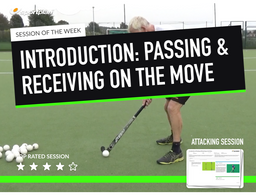
A few weeks into the league season, poor first touches are costing teams the ball. Coach body shape, scanning and receiving on the move to keep possession.

Pre-season fitness fades fast once the league starts. Build conditioning into ball work and use rolling subs well to keep your squad sharp all season.

The first weeks of the season decide whether a junior or new player sticks with adult hockey. Here is how to keep them safe, give them a clear job and build their confidence from the very first bully.
Coaches from around the world look to Sportplan for coaching confidence.
Excellent drills, very detailed videos. Useful site for my U15 boys team.

I love using Sportplan. It's been a great help for co-ordinating hockey practice and being able to help tweak skills and getting the most out of my players!

Great site. An absolute must for coaches who are willing to change and learn new drills. Superb, simply superb.

Wow what a great website, I have found sportplan an important tool for me when planning my netball sessions with my netball team. There are alot of very helpful tips/ideas/skills that I can learn and teach to my team. Thank you sportplan I hope to continue to use your helpful tips and to learn more about improving my teams netball skills. Thanks again....keep it up....

I have been using Sportplan now for 3 years and can honestly say that I have never repeated the same session twice. My girls are always focused and are improving every year. Thanks Sportplan.
What a fantastic tool. The Chalkboard and session tools make an unbelievable difference in making training plans in both time and organization. I will be instructing all of my assistant coaches that this tool must be used for all sessions during the season, so that we may build a club coaching resource library.
I can't get enough of the Sportplan, It has given me back the enthusiasm i was starting to lose. My girls are so keen and are ready at 14 to take the next up in their game. Sportplan will help no end.



