













Excellent drills, very detailed videos. Useful site for my U15 boys team.

I am preparing a team of boys for a six-a-side outdoor tournament. Any advice on a good training programme and the core skills to be worked on? Suggestions on set pieces and team formation would be helpful indeed.

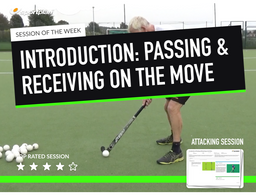
They just started with the pass and receive of the ball but i would like them to practice it even more. Most of the players are new to hockey and i don't want to give them a drill that is to hard for them to understand.
So my team (all 12/13 year olds) are in the unfortunate situation of having to train on grass, but will be playing all of their games on turf. I was wondering what are some good drills to be able to do in training (it's only a short training session, between 30 - 50 minutes). Any help would be great! Cheers!
My daughter plays U13 hockey in the position of right wing.She gets different advice from her school coach and her club coach.I want to make sure that she is getting the right advice as she is passionate about her hockey. Firstly, exactly what is the full function of a right wing at this level of hockey (she will be going to U15 club hockey and U14 school hockey next season) She has a good understanding of the game and appears to me to read it well (I only played school level many years ago and things change) When her team is in the offensive position in the âDâ she mostly waits at goal post to deflect ball into goal. She appears to not be involved. Comments from spectators have been made as to why she just stands there. There is a very skilled player in her team who hits the ball EXTREMELY hard. I believe that at this level of hockey these extremely hard hits/passes do not achieve anything, they just keep going out. However, please can you advise on how to stop and control these very hard passes (that is if one can get to them) in order to move on with the game. Lastly, can you send some drills/exercises to get her eye in as well as positioning her body correctly for goal shooting. The âhard hitterâ and my daughter seem to be the main goal shooters of the team. Many thanks Lynne
I am looking for 6 a side hockey formations. We have been playing 3-1-1-1. Worked very well, however sweeper was so good, goalie never touched the ball. I want to move sweeper to goalie/ sweeper but our mid field player is too good to just play right. What to do? 2-2-1-1 or 1-3-1-1?
Why wont this session open for me when i log in its not there ??

Hey guys how long should you spend on warm ups, dyamic stretches and specific hockey drills. First time coach of XI girls. I have played before at Prem level snd Representative 17 years ago back then 10-15m warm up etc . Your thoughts anyone Thanks Ann Asked using Sportplan Mobile App
I'm in the U.S., coaching a team of 11-12 year olds, with 1-2 years of experience. Defending the circle, when the ball is loose, my players are not getting control of the ball to hit out of the circle. It's congested with opponent and my team's players. If my players get control, they lose it quickly. If the opponent has control, my players aren't very good at taking the ball or stopping the opponent from taking a shot. Luckily we have a good goalie but she can only do so much. (Full disclosure: I didn't play FH but have a decent understanding of the game. No one else in my community would step up to coach so it's fallen to me.)
Have any other coaches got tips, advice or drill ideas on how i can improve my team's ability to counter attack?

Hi there. I'm looking for fun exciting resources for 7-year olds and below. Any assistance would be greatly appreciated.

15 minutes of dynamic field hocky warmup, with goal to improve hockey skill under pressure

in more ways than one
 sportplan_hockey




A few weeks into the league season, poor first touches are costing teams the ball. Coach body shape, scanning and receiving on the move to keep possession.

Pre-season fitness fades fast once the league starts. Build conditioning into ball work and use rolling subs well to keep your squad sharp all season.

The first weeks of the season decide whether a junior or new player sticks with adult hockey. Here is how to keep them safe, give them a clear job and build their confidence from the very first bully.
Coaches from around the world look to Sportplan for coaching confidence.
Excellent drills, very detailed videos. Useful site for my U15 boys team.

I love using Sportplan. It's been a great help for co-ordinating hockey practice and being able to help tweak skills and getting the most out of my players!

Great site. An absolute must for coaches who are willing to change and learn new drills. Superb, simply superb.

Wow what a great website, I have found sportplan an important tool for me when planning my netball sessions with my netball team. There are alot of very helpful tips/ideas/skills that I can learn and teach to my team. Thank you sportplan I hope to continue to use your helpful tips and to learn more about improving my teams netball skills. Thanks again....keep it up....

I have been using Sportplan now for 3 years and can honestly say that I have never repeated the same session twice. My girls are always focused and are improving every year. Thanks Sportplan.
What a fantastic tool. The Chalkboard and session tools make an unbelievable difference in making training plans in both time and organization. I will be instructing all of my assistant coaches that this tool must be used for all sessions during the season, so that we may build a club coaching resource library.
I can't get enough of the Sportplan, It has given me back the enthusiasm i was starting to lose. My girls are so keen and are ready at 14 to take the next up in their game. Sportplan will help no end.



