







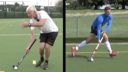
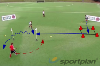
Excellent drills, very detailed videos. Useful site for my U15 boys team.

What are good practices to get players to hit a flat ball, instead of bobbling around

Whenever i have the ball, and i'm moving up the field, everytime a defender comes and tries to take the ball, they always succed. This is a big problem of mine, i almost always lose the ball to a defender when i'm moving, and i usually can't recover (not that i literallyy CAN'T, the defender is just to far past me to be able for me to get the ball back)and get back the ball, and i feel really dumb because i'm a very talented player, but i'm alwayse afraid to take the ball mainly just because when i move fast and a defender comes, i try to lift the ball and it just doesn't work, and i normally can't pull the ball far enough either cause the grass is thik. PLEASSEEE help me adn give me some advice on recovering and better techniques on how to get by a defender while moving very quickly.
When teaching the self-pass rule to my team, are there any tips in terms of when to hit and when to carry, depending on the situation?
Im looking for demonstration video clip for correct technic for a spin turn. Also where and when to use it description.
Are there any drills to help them stay low?
how do i do a really good reverse hit?!

What are the best conditioning skills to practice with a junior high team? (12-14 yrs) We are limited the first few days to indoor practices in a small space. They are not in shape, so we are starting from scratch. Our first game is in 3 1/2 weeks.
we started the season 5-1 and now mid-way it seems we are fading? we have lost our last 3 games - what are some good drills to get them focused again and pumped for the rest of the season and to get them over the hump -to the next level. thanks
Dear colleagues, what are the best ways to defend an attacking team that is playing with a field player with goalkeeping privileges? Te question concerns indoor hockey only.
Can someone give me advice on the best was to teach ladies 3d skills while entering the D? I am open to any suggestions. I have tried to get them lifting the ball over sticks but it doesn't seem to transfer to matches.
Hi,I perhaps naively, expected to have most of our team from last year carry over and only have a few new comers to integrate and get up to speed with the rest. However meeting the team at our first practice last night i find I have five players still at school from last year and the rest all new comers, most of whom had not held a hockey stick at all till practice.This being only my second season coaching (year 9 to year 13 boys) has left me feeling a little blindsided, and feeling quite unsure how to prepare practices that target both groups of boys. Do i lump them both groups together, keep them separate? What drills/exercises to best bring the new comers up to speed.I don't want to neglect either group, keep practice worthwhile for the experienced boys, but also bringing the new comers up to a level were they can mix in with the others and learn organically from them while practicing as a team. David
How to coach fast attackers to control the pace of the ball as they accelerate? At higher speeds, the players' touch on the ball needs to be "softer" but this requires hands and feet to work at varying intensity. I see a lot of speedsters push the ball too far ahead of themselves, the faster they go. The outcome is often a failed shot at goal because the ball runs out of reach or out over the back line.
tomahawk skils drills

im twelve, i play for my school team and i am going for a trial at southgate hockey. I play up front, and i can shoot pretty well but i cant lift it over the keeper. any tips would be much appreiciated
I really have a big problem with my u/15 girls. They just can't play as a team. Any advice please. There's always a fight between someone. Mariette
Whenever i have the ball, and i'm moving up the field, everytime a defender comes and tries to take the ball, they always succed. This is a big problem of mine, i almost always lose the ball to a defender when i'm moving, and i usually can't recover (not that i literallyy CAN'T, the defender is just to far past me to be able for me to get the ball back)and get back the ball, and i feel really dumb because i'm a very talented player, but i'm alwayse afraid to take the ball mainly just because when i move fast and a defender comes, i try to lift the ball and it just doesn't work, and i normally can't pull the ball far enough either cause the grass is thik. PLEASSEEE help me adn give me some advice on recovering and better techniques on how to get by a defender while moving very quickly.

in more ways than one
 sportplan_hockey




A few weeks into the league season, poor first touches are costing teams the ball. Coach body shape, scanning and receiving on the move to keep possession.

Pre-season fitness fades fast once the league starts. Build conditioning into ball work and use rolling subs well to keep your squad sharp all season.

The first weeks of the season decide whether a junior or new player sticks with adult hockey. Here is how to keep them safe, give them a clear job and build their confidence from the very first bully.
Coaches from around the world look to Sportplan for coaching confidence.
Excellent drills, very detailed videos. Useful site for my U15 boys team.

I love using Sportplan. It's been a great help for co-ordinating hockey practice and being able to help tweak skills and getting the most out of my players!

Great site. An absolute must for coaches who are willing to change and learn new drills. Superb, simply superb.

Wow what a great website, I have found sportplan an important tool for me when planning my netball sessions with my netball team. There are alot of very helpful tips/ideas/skills that I can learn and teach to my team. Thank you sportplan I hope to continue to use your helpful tips and to learn more about improving my teams netball skills. Thanks again....keep it up....

I have been using Sportplan now for 3 years and can honestly say that I have never repeated the same session twice. My girls are always focused and are improving every year. Thanks Sportplan.
What a fantastic tool. The Chalkboard and session tools make an unbelievable difference in making training plans in both time and organization. I will be instructing all of my assistant coaches that this tool must be used for all sessions during the season, so that we may build a club coaching resource library.
I can't get enough of the Sportplan, It has given me back the enthusiasm i was starting to lose. My girls are so keen and are ready at 14 to take the next up in their game. Sportplan will help no end.



