







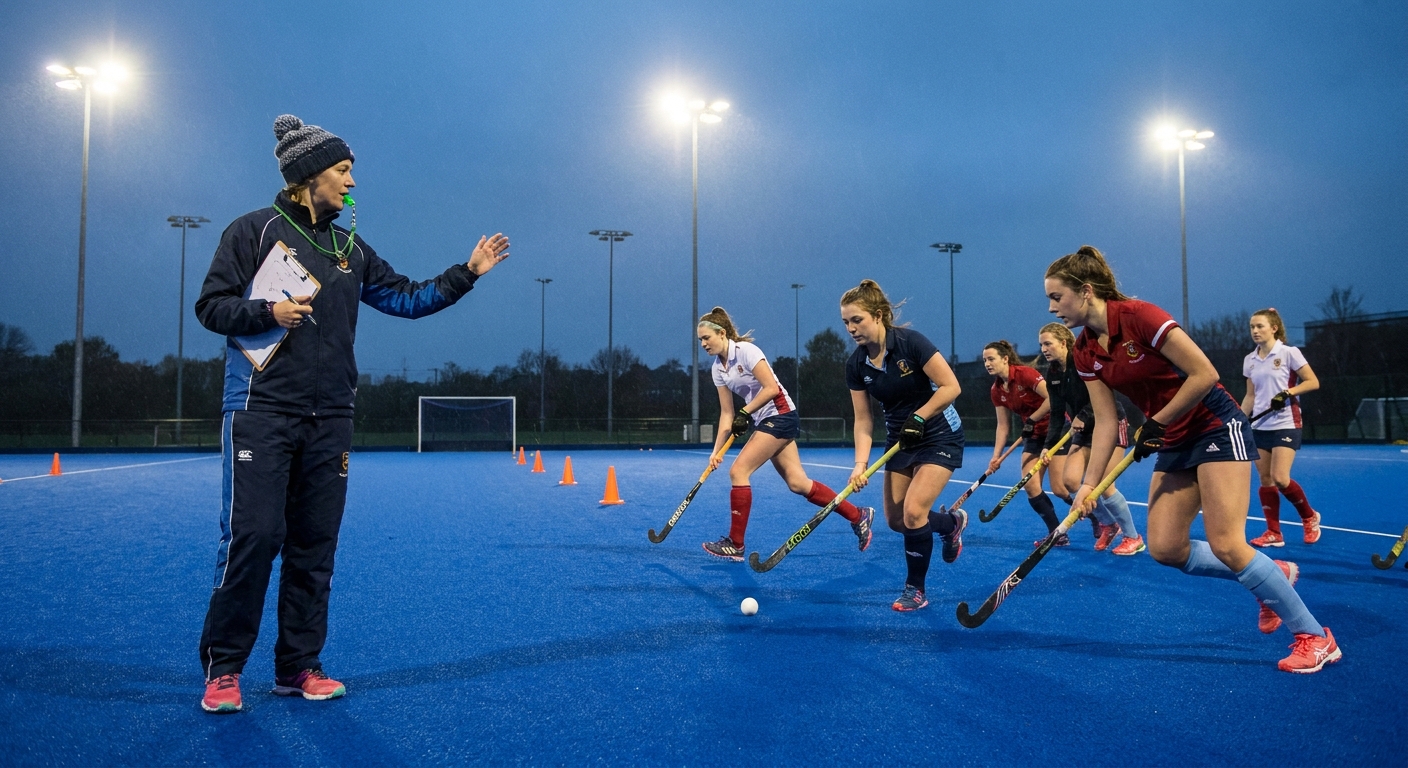
The Problem With Most Club Training Nights
You have booked a 90-minute astro slot, twenty players are lacing up, and the plan in your head is roughly "a warm-up, some passing, then a game". It usually works - just. But a session built on the night tends to drift: the warm-up overruns, one drill swallows half the evening, and the game at the end feels disconnected from everything that came before. Players go home having moved a lot without having got better at anything in particular.
A simple, repeatable structure fixes that. The template below splits a typical 90-minute club night into five phases, each with a clear job. You keep the framework every week and just change the theme and the drills inside it. Once your squad knows the shape of an evening, they settle faster, transitions get quicker, and you spend your energy coaching rather than organising. This guide gives you the skeleton, explains why each phase exists, shows how to flex it for juniors, seniors and a 60-minute slot, and then walks through a complete worked example you can run on Tuesday.
The 90-Minute Club Night, Phase by Phase
Here is the framework. The timings assume a 90-minute slot from the moment players are on the pitch to the final whistle. Treat them as targets, not a stopwatch - the value is in the order and the purpose of the phases, not the exact minute.
The 90-Minute Hockey Session Template
- 1. Warm-up & activation (15 min): Raise the pulse, mobilise hockey-specific joints, and get a ball in every stick early. Mostly ball-based, ideally with a game.
- 2. Skill / technical block (20 min): Teach or sharpen one technique in a controlled, low-pressure setting with lots of repetition. This is where the learning happens.
- 3. Skill under pressure (20 min): Take the same skill and add a defender, a clock or a constraint so players perform it when it is contested - the bridge to the real game.
- 4. Small-sided / game-based decisions (25 min): A conditioned small-sided game that forces players to use the skill while reading the game and choosing options for themselves.
- 5. Game + cool-down (10 min): A short open game to let it flow, then a few minutes of light movement and a brief review of the theme.
Why each phase is there
Warm-up and activation is not a box to tick - it is injury prevention and a head-start on engagement. Hockey is played low, with sharp changes of direction and a lot of asymmetric loading through the stick side, so the warm-up should mobilise ankles, hips and shoulders specifically. Make it ball-based and competitive and you also get players' brains switched on before the first drill, instead of spending the technical block waking them up.
The technical block is your teaching window, and it works because it is deliberately easy. Pressure and fatigue are stripped away so players can repeat a movement enough times to change it. This is where you correct a grip, a body position or a passing weight - things that fall apart the moment a defender arrives, so they have to be grooved first in calm conditions.
Skill under pressure is the phase coaches most often skip, and it is the one that makes the difference. A skill that only works unopposed is not a skill the player owns yet. Adding a passive then active defender, a time limit or a target forces the player to execute when it is uncomfortable - which is the only version that survives a match.
The small-sided, game-based block is where decision-making lives. Drills teach the how; small-sided games teach the when and the why. With fewer players and a condition that nudges them towards the theme, players get far more touches and decisions than in a full-pitch game, and they have to read space and pick options for themselves rather than following a coach's instruction.
The closing game and cool-down lets everything come together with freedom, sends players home having actually played, and - crucially - gives you two minutes to name what they worked on. A short, specific review ("tonight was about getting into the circle on the move") is what helps a session stick.
Adapting the Template
For juniors
Younger players need shorter blocks, more games and less standing. Trim the whole session to 60 to 75 minutes, keep every phase but halve the queues, and lean on game-based formats over lined-up technical drills - juniors learn the skill faster when it is wrapped in a game they enjoy. Keep instructions to one or two coaching points at a time and let them play more than you talk. Our hockey drills for juniors guide is full of practices that fit straight into these phases.
For seniors and adults
Senior and adult squads can handle the full 90 minutes, longer technical repetition and genuinely competitive pressure phases. Push the small-sided block harder, add tactical constraints (number of touches, a press trigger, a transition rule), and use the warm-up to rehearse match-specific patterns. This is also where you can tie the theme to a position - sharpening forwards' circle entries or a defensive unit's pressing - using the positions guide to frame what each role is working on.
For a 60-minute slot
Tight on time? Do not try to compress all five phases - cut one. Keep a shorter 10-minute warm-up, run a single 15-minute technical block, then go straight into the pressure phase (15 min) and a small-sided game (15 min), finishing with a 5-minute game and review. You lose a block of repetition, but you protect the warm-up, the decision-making and the play - the parts that matter most.
A Fully Worked Example: "Sharpening Attacking Circle Entries"
Theme and structure are abstract until you see one filled in, so here is a complete 90-minute session you can run as-is. The theme is attacking circle entries - getting the ball into the shooting circle on the move and finishing - which is where so many matches are won and lost. Each phase below uses a verified Sportplan drill; click through for the full diagrams and coaching points.
Phase 1 — Warm-up & activation (15 min)
Start competitive and ball-based to raise the pulse and switch players on. Run a fast warm-up game, then add two or three minutes of dynamic mobility for ankles, hips and shoulders before moving on.
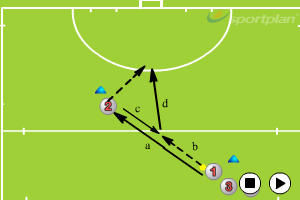
Phase 2 — Skill / technical block (20 min)
Now groove the core technique unopposed: receiving on the move and accelerating towards the circle. Lots of repetitions, light coaching points, no defenders yet.
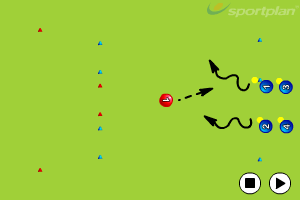
Phase 3 — Skill under pressure (20 min)
Add a defender. The same drive-to-the-circle skill now has to beat an opponent, so players learn to eliminate their marker and protect the ball as they enter the danger zone.
Phase 4 — Small-sided / game-based decisions (25 min)
Open it out into a small-sided game built around getting into the circle and finishing. Players now combine the receiving, the 1v1 and their reading of space to create real chances.
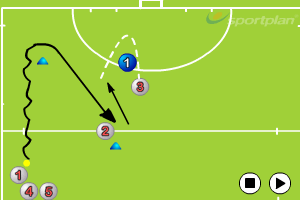
Phase 5 — Game + cool-down (10 min)
Finish with a short, open game so players apply the theme with freedom and a 1v1 edge in front of goal, then a few minutes of light movement and a quick review of what tonight was about.
Make It Your Own
The power of this template is that the skeleton never changes - only the theme and the drills do. Next week the theme might be pressing as a unit, switching the point of attack, or short-corner routines; the five phases stay exactly the same, and you simply swap in drills that feed the new focus. Keep a handful of these plans saved and you will never again walk onto the astro without a clear shape for the night.
When you are ready to build the next one, browse the full Hockey drills library for hundreds of practices sorted by skill - warm-ups, passing, eliminating a player, goalscoring and more - and drop two or three that share your theme into the phases above. A little planning before you arrive turns a busy hour on the pitch into players who genuinely leave better than they came.
Frequently Asked Questions
How long should a hockey training session be?
Most club training nights run on a 60 to 90-minute astro slot, and a 90-minute session is the sweet spot for senior and adult teams. It gives you 15 minutes to warm up properly, two technical blocks, a game-based block and a finishing game without rushing. If your slot is only 60 minutes, drop one of the technical blocks and shorten the warm-up rather than trying to cram everything in - a focused hour beats a frantic 90 minutes. For juniors, keep the total to 60 to 75 minutes; attention and legs both fade beyond that.
What should a hockey warm-up include?
A good hockey warm-up does three things: raises the heart rate, takes the joints through hockey-specific ranges, and gets players touching a ball early. Start with a few minutes of pulse-raising movement - a tag or possession game with sticks works better than laps - then add dynamic mobility for ankles, hips and shoulders, and finish with light ball work such as paired passing or dribbling through gates. Keep it to about 15 minutes, make most of it ball-based so players are switched on for the first drill, and skip long static stretches before activity.
How do I plan a hockey session?
Work backwards from one clear theme - say, attacking circle entries - and build five phases around it: warm-up and activation, a technical block teaching the skill, the same skill under pressure, a small-sided game where players make decisions, and a finishing game with a cool-down. Pick two or three drills that all feed the theme rather than a random mix, write down rough timings, and leave a few minutes of slack for stoppages and questions. Planning the theme first is what turns a set of drills into a coherent session.
How many drills should be in one hockey session?
Three to five drills is plenty for a 90-minute session. Fewer than three and players do not get enough repetition; more than five and you spend the night setting up and explaining instead of letting them play. Aim for one or two technical drills, one pressure or small-sided practice and a game at the end. Drills that share a layout or theme also cut down on the time lost moving cones and re-organising, so the players get more ball time.

 sportplan_hockey









