







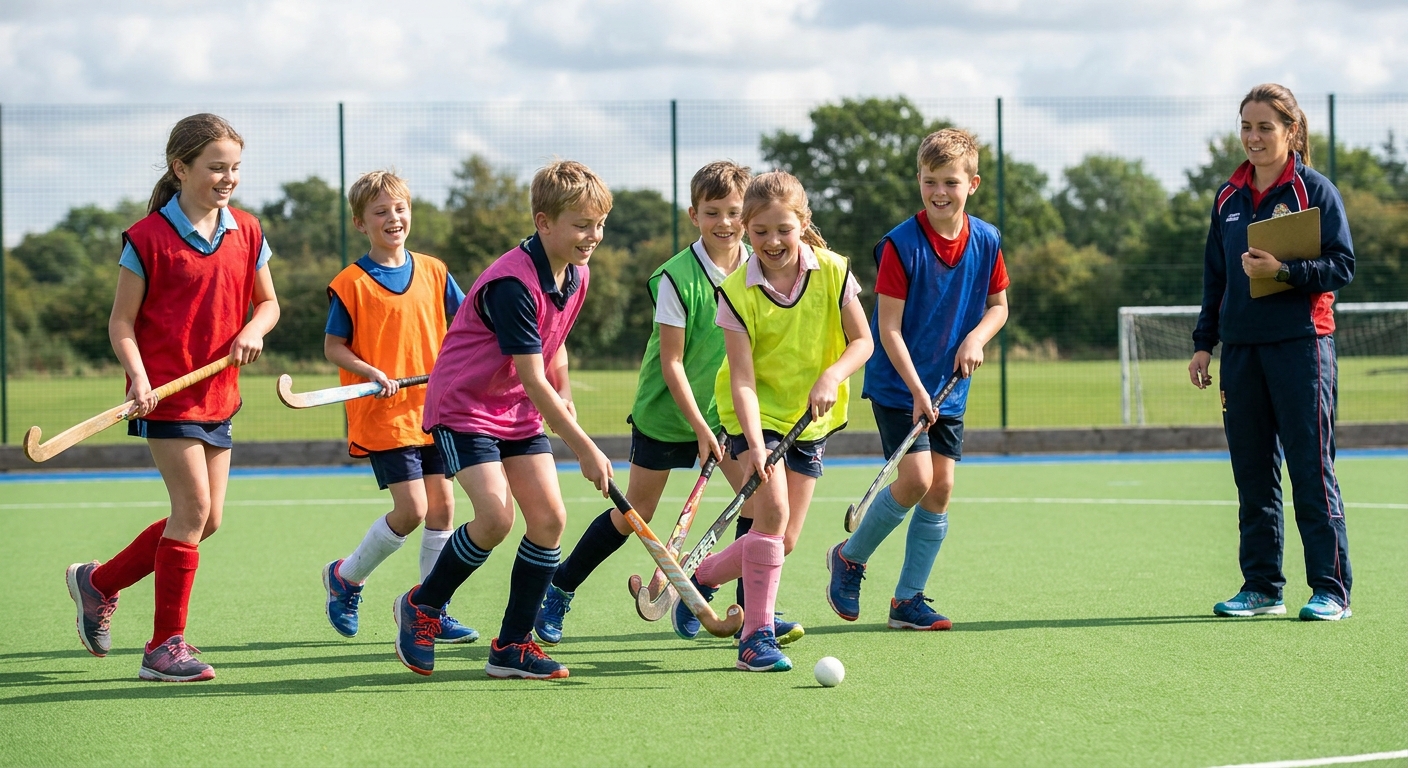
Why High Energy and Max Touches Win With Juniors
Ask any experienced coach what kills a junior hockey session and the answer is always the same: queues. A line of eight children waiting their turn to dribble round a cone is a line of eight children losing interest, going cold and learning almost nothing. The single biggest improvement most volunteer coaches can make is to give every player a ball and design every activity so that nobody stands still for long.
For juniors and beginners, the number of times a child touches the ball in a session matters more than almost anything else. Young players improve through repetition and fun, not through long technical explanations. A busy fifty minutes where each child gets hundreds of touches will always beat a sprawling ninety minutes of standing in lines. So this guide is built around that principle - fifteen drills that keep everyone moving, framed wherever possible as games rather than exercises.
A Quick Word on Astroturf, Kit and Keeping It Safe
A few junior-specific points before the drills. Most clubs train on water-based or sand-based astroturf, where the ball runs fast and true - but young beginners learn perfectly well on grass, a playground or a sports hall, and varying the surface is good for their feel. A slightly softer, larger ball, as used in England Hockey's Quicksticks and In2Hockey, keeps the bounce friendly on rougher ground.
On safe equipment, treat a gum shield as non-negotiable and shin pads as standard for any match play. For short corners in particular, England Hockey strongly recommends a face mask or protective eyewear and gloves for junior players defending the corner - never wave that through casually. And above all, keep it fun: praise effort, keep your instructions short, and let the games do the teaching. Children who enjoy training come back; children who are bored or nervous do not.
1. Warm-up Games
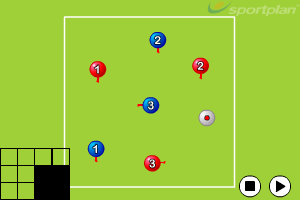
Start with a game, not a lap. A good warm-up gets hearts pumping, sticks moving and grins appearing within the first two minutes. These two are chaos in the best way - lots of running, lots of laughter, and a ball each so the warm-up doubles as touch practice.
2. Stick & Ball: Dribbling
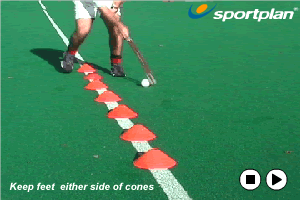
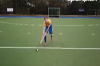
Close control is the foundation of everything in hockey. The aim with juniors is to get the ball glued to the stick while their head comes up to see the pitch. Set each child up with their own ball and channel - never a single line of cones for the whole group - so the repetitions stack up fast.
3. Passing & Receiving
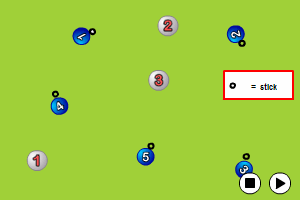
A clean push pass and a cushioned first touch are the skills that make hockey flow. Beginners often slap at the ball or trap it dead on the wrong side - so frame these as moving practices where receiving and passing happen in one motion. Keep the groups small and the ball constantly in play.
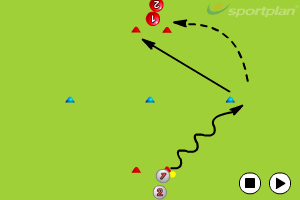
4. Eliminating a Player: 1 v 1
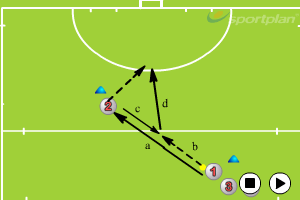
Learning to beat an opponent is where hockey gets exciting for young players. Keep these one-against-one so nobody waits, and encourage bravery - juniors should be allowed to try a dodge and lose the ball without being told off. The confidence to take a player on is worth far more at this age than a tidy turnover count.
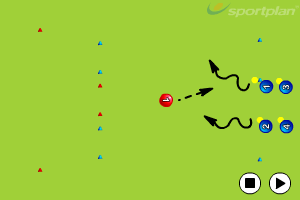
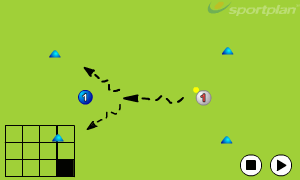
5. Shooting & Goalscoring
Nothing fires up a junior session like a shot at goal, so finish your skill work with shooting whenever you can. The lesson for beginners is to get the shot away quickly and on target rather than to smash it - a calm push into the corner beats a wild swing every time. Make it a challenge with a score to beat and the energy looks after itself.
6. Small-Sided & Possession Games
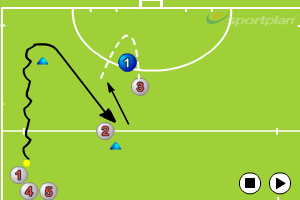
Finish every session with a game. Children learn more about hockey from a busy 3v3 than from any amount of lined-up drilling, because they are forced to find space, make decisions and use their skills under real pressure. Small-sided games guarantee high touches, keep everyone involved, and send the group home buzzing.

Putting It Together: A High-Energy Junior Session
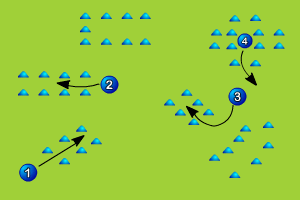
Fifteen drills is more than you need for any single evening - pick a handful and theme the session. A reliable shape is a game-based warm-up, one or two skill blocks, then a small-sided game to finish, keeping every block short and every child busy. Here is a structure you can drop these drills straight into.
Running a High-Energy Junior Hockey Session
- Warm-up game (8-10 mins): Start with Farmers and Foxes or Jailbreak - a ball each, hearts pumping, no standing in lines.
- Skill focus 1 - control (10-12 mins): One dribbling drill (Cone Dribble or Ball Transfer). Every child with their own ball and channel.
- Skill focus 2 - the day's theme (10-12 mins): Passing, beating a player or shooting. Keep groups small so touches stay high.
- Challenge (8-10 mins): Add a score or a target - 1v1 Scoring Challenge or Dribble then Gate Pass turn the skill into a game.
- Small-sided game (12-15 mins): Finish with Street Hockey, 2 v 2 Up and Down or 4 vs 4 Possession so they go home buzzing.
- Cool down and chat (3-5 mins): A gentle jog, a quick "what went well?", and praise the effort - not just the goals.
Build that around a clear theme each week and you have a complete junior programme. If you are not sure which positions your young players suit, our guide to hockey positions explained walks through every role on the pitch. To turn any of these drills into a full plan, drop them into our free hockey session plan template, and browse the full Hockey drills library for hundreds more practices sorted by skill and theme.
Frequently Asked Questions
How long should a junior hockey session be?
For primary-age beginners, 45 to 60 minutes is plenty - any longer and concentration drains away. For under-12s and up you can run a 60 to 75 minute session. Whatever the length, break it into short blocks of 8 to 12 minutes and keep everyone moving with a ball each. A junior session that is mostly queueing feels long and teaches little; a busy 50 minutes with high touches achieves far more than a sprawling 90.
What age can children start hockey?
Children can start playing hockey from around 5 or 6 through England Hockey's Quicksticks and In2Hockey programmes, which use a softer, larger ball and smaller pitches to make the game accessible. Many clubs run mini and junior sections from age 6 or 7. At that age it is all about fun, lots of touches and basic stick skills - not tactics. Formal 11-a-side hockey usually starts around under-12 or under-14 once the basics are in place.
What equipment do junior hockey players need?
The essentials are a hockey stick of the right length, shin pads, a gum shield and astroturf or trainers with grip. A gum shield should be considered non-negotiable. For matches, junior players should wear shin pads at all times, and for short corners England Hockey strongly recommends a face mask or protective eyewear and gloves for anyone defending the corner. Goalkeepers need full protective kit. Beyond that, a water bottle and weather-appropriate layers cover it - hockey is played outdoors year-round.
How do I keep beginners engaged in hockey training?
Give every child a ball, cut the queues, and frame skills as games rather than drills. Beginners stay engaged when they are touching the ball constantly, when there is a clear challenge or score to beat, and when sessions move quickly between short activities. Use small-sided games early and often - children learn more from 3v3 than from standing in lines - and keep the language simple and positive. Variety, energy and plenty of small wins matter far more than technical perfection at this stage.
Do juniors need to play on astroturf?
Competitive hockey is played on water-based or sand-based astroturf, and most clubs train on it, but juniors absolutely can and should learn on grass, playground or a sports hall too. The ball behaves differently on each surface, which is no bad thing for developing players. For young beginners, a flat, safe surface with grip matters more than the type - and using a slightly softer ball on rougher surfaces keeps the bounce predictable and the experience fun.

 sportplan_hockey









