







What Separates Good Players from Great Ones
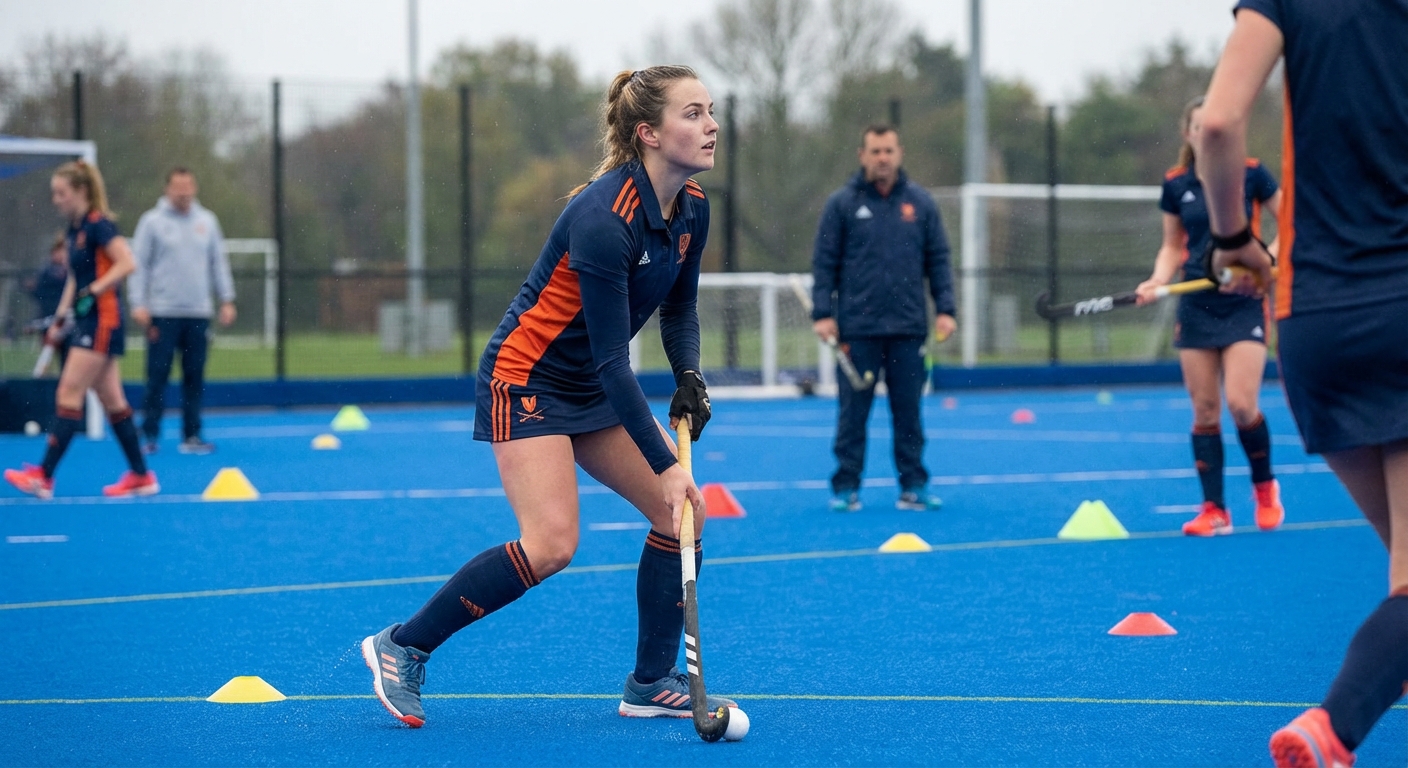
If you watch elite hockey players closely, you will notice they do something that most grassroots players do not: they constantly look away from the ball. Before they receive a pass, they have already checked over both shoulders, identified where defenders are positioned, located teammates in space, and decided what they will do with the ball. This process, known as scanning, happens so quickly that it is almost invisible to the casual observer.
Research from football, which translates directly to hockey, shows that top players scan up to six times in the ten seconds before receiving the ball. Average players scan two or three times. The difference in scanning frequency directly correlates with decision-making quality. Players who scan more make better passes, lose the ball less often, and play forward more frequently.
In hockey, scanning is arguably even more important than in football because the playing surface is smaller, the pace of the game is higher, and the low body position required for stick skills naturally encourages players to look down at the ball. Coaching scanning as a deliberate habit, not just an abstract instruction to "look up," is one of the most impactful things a coach can do.
The Three Phases of Scanning
Effective scanning in hockey can be broken down into three distinct phases, each serving a different purpose. Coaching all three phases gives players a complete framework for reading the game.
Pre-Scan: Before Calling for the Ball
The pre-scan happens before the player is even in a receiving position. They check the space around them, identify passing options, and assess the defensive setup. This scan determines whether they should move to receive or stay where they are. It is the most important scan because it sets up everything that follows.
Mid-Scan: As the Ball Is in Transit
While the ball is travelling towards them, the player takes one or two quick glances to update their picture. A defender may have shifted, a teammate may have made a run, or the space they originally planned to use may have closed. This scan is brief but critical for adjusting the plan in real time.
Post-Receive Scan: After the First Touch
After receiving, the player takes a quick look to confirm their next action. This scan is often missed by players who become fixated on the ball at their feet. The best players take their first touch and immediately lift their head to assess their options before executing the next skill.

Why Players Do Not Scan (And How to Fix It)
Understanding why players fail to scan is essential for fixing the problem. There are three common reasons, and each requires a different coaching response.
Lack of confidence on the ball: Players who are not comfortable with their stick skills feel they must watch the ball constantly to maintain control. The solution is to build technical foundations alongside scanning rather than treating them as separate skills. Encourage players to practise receiving while looking away from the ball, even in simple passing drills.
No understanding of what to look for: Many players scan but do not know how to process what they see. They glance up and see a blur of players rather than useful information. Coach players to look for specific things: where is the nearest defender, where is the biggest space, which teammate is free? Give them a checklist rather than just telling them to look.
Training environment does not demand it: If your drills are predictable and unopposed, players do not need to scan to succeed. They can autopilot through the session without ever lifting their head. Design drills where success is impossible without scanning, and the habit will develop naturally.

Drills That Force Players to Scan
The most effective scanning drills are not dedicated "scanning sessions" but rather games and exercises that make scanning a necessary part of succeeding at the task. Here are some design principles for creating scanning-rich training environments:
Multiple Targets
Any game with more than one goal or scoring zone forces players to scan. If there are four small goals placed around the edges of the playing area, players must constantly check which goal is undefended. The scanning becomes a byproduct of the game design rather than something the coach has to repeatedly instruct.
Colour-Coded Decisions
Use bibs or cones of different colours that the coach changes during the drill. For example, in a passing drill, the coach holds up a coloured bib and the receiver must pass to the teammate wearing that colour. This forces players to scan for visual information before they receive the ball.
Number Calling
Assign numbers to players or zones. The coach calls a number just before the ball is passed, and the receiver must find and play to that number or zone. This creates an urgent need to scan and process information quickly.
Session Structure: Building Scanning Habits
A 70-minute session dedicated to developing scanning and spatial awareness might follow this structure:
Warm-Up: Head-Up Dribbling (10 minutes)
Players dribble freely in a grid. On the coach's whistle, they must immediately point to the nearest teammate. Progress to calling out the number of players in each half of the grid, or identifying which colour bib is closest. This warms up the body while introducing the scanning concept.
Passing with Information (15 minutes)
Groups of four in a diamond shape. Before receiving, the player must call out a colour or number displayed by the coach. If they call it correctly, they receive and play the ball. If they fail to call it, the ball goes to the next player. This creates a direct consequence for not scanning.
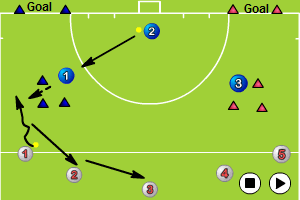
Small-Sided Game: Four Goal Game (20 minutes)
4v4 with four small goals placed on the edges of the playing area. Teams can score in any goal. The game naturally forces scanning because players must identify which goal is undefended. Rotate teams regularly and keep score to maintain intensity.
Conditioned Game (20 minutes)
6v6 or 7v7 with a condition that a team earns a bonus point if they switch play from one side of the pitch to the other before scoring. This rewards wide scanning and the ability to identify space away from the ball. Coach by questioning: "What did you see before you received? Where was the space?"
Cool-Down and Reflection (5 minutes)
Ask players to describe one moment in the session where scanning helped them make a better decision. Reinforce the message that scanning is a habit, not a talent, and that it can be improved through deliberate practice in every training session.


Making Scanning a Team Culture
The ultimate goal is for scanning to become automatic rather than conscious. This takes time and consistent reinforcement. Use verbal cues during training and matches: "Check!" or "Picture!" called by teammates to remind the ball carrier to scan. Praise players publicly when they make a decision that was clearly informed by scanning, even if the execution was imperfect. Over time, the team will develop a culture where heads are always up and information is always being gathered.
Remember that scanning is not separate from technique. It is part of technique. A player who can dribble beautifully but never looks up is incomplete. Integrate scanning into every drill, every session, and every coaching conversation, and watch your team's decision-making transform.
Frequently Asked Questions
How do you measure whether players are scanning more?
The simplest method is to video a game or training session and count the number of head movements each player makes in the ten seconds before they receive the ball. Compare this over several weeks to track improvement. You can also assess scanning indirectly by measuring forward pass completion rate and turnover frequency, both of which improve when scanning increases.
Can you coach scanning to very young players?
Absolutely. Even under-8s can begin developing scanning habits through games that require them to look up. Colour-coded games, traffic light dribbling, and multi-goal games are all age-appropriate ways to introduce the concept. Keep instructions simple and use the game design to create the behaviour rather than relying on verbal coaching. Young players respond to fun challenges that naturally require them to scan.
Is scanning more important for some positions than others?
Scanning is important for every position, but the type of scanning varies. Central midfielders need 360-degree awareness because pressure can come from any direction. Wide players scan primarily infield to identify overlaps and cutback options. Defenders scan to track runners and assess the offside line. Goalkeepers scan to communicate defensive shape. Every player benefits from more frequent and higher quality scanning.
What is the relationship between scanning and hockey-specific stick skills?
There is a direct link. Players who are uncomfortable with the ball on their stick tend to look down more, which reduces scanning. Building stick confidence through ball mastery work allows players to keep their head up while maintaining possession. However, you should not wait until stick skills are perfect before coaching scanning. Develop both simultaneously, as scanning under imperfect technical conditions is a realistic game demand.

 sportplan_hockey









