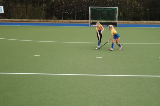
Strong low body position and balanced ready to move.
Left foot forward, right foot back, stick on the ground or hovering slightly above the ground.
Position of feet and stick make a strong triangle shaped base.
Tackle must be positive and strong with feet balanced.
Stick face angled towards the ball.
The tackle should be timed just as the ball momentarily leaves attacker's stick initiated by a jab to put player off or as player loses control.
The defender's stick should not be flat on the ground as this is a safety issue.
The defender could be injured by the attacker if their head is down too low and the attacker could take advantage of this over commitment by using a low lift.
Flat stick only when attacker stationary or moving very slowly

in more ways than one
 sportplan_netball



in more ways than one
sportplan_hockey

A few weeks into the league season, poor first touches are costing teams the ball. Coach body shape, scanning and receiving on the move to keep possession.

Pre-season fitness fades fast once the league starts. Build conditioning into ball work and use rolling subs well to keep your squad sharp all season.

The first weeks of the season decide whether a junior or new player sticks with adult hockey. Here is how to keep them safe, give them a clear job and build their confidence from the very first bully.