


I have thoroughly enjoyed using your site to help me with my coaching plans for my under 9's netball team.

In netball, my team is struggling to bring the ball up to the attackers through the middle third. We are struggling with the turnover from an interception. Can anyone give me any idea's for drills or tactics to help with this? Thanks, Laura Bevans x

I have a new netball team, they range from girls or have never played to ones whom played last year. They are from year 3 to 5. How do you coach such a mixed team easily?
Hi all, I would like some clarification regarding the "advantage" call which appears in the rules as follows%3A3.1.6 (viii) [The umpire] Shall refrain from blowing the whistle to penalise an infringement when by doing so the nonoffending team would be placed at a disadvantage. An umpire shall call âadvantageâ to indicate an infringement has been observed and not penalised. Having blown the whistle for an infringement, the Umpire must award a penalty unless a goal is scored which is to the advantage of the non-offending team. Recently I asked my netball centre why advantage was being called when the non-offending team had not been successful in passing or shooting the ball. The response was that the advantage call is made when the umpire believes that the player should have been able to get the ball away successfully. To my reading, the rule is quite clear that advantage is called only when the non-offending team would be disadvantaged by pulling the ball back to the infringement point. Even supposing both interpretations were valid, I am perplexed as to why a decision based on an objective question (has the player gotten the ball away successfully) is not favoured over a subjective question (does the umpire think the player should have gotten the ball away successfully). For example, suppose a defending player contacts, obstructs or goes offside, and in doing so prevents the attacking player from making a safe pass, instead forcing an unsafe pass that is intercepted or a held ball. If "advantage" is called at the time of the offence, effectively the offending player's team gets an advantage from breaking the rules. I'm sure I've seen the advantage pulled back to a penalty pass or shot at international level, but my YouTube searching has turned up nothing. I would appreciate any clarification of this rule, especially an explanation of why the subjective interpretation might be more fair, or any precedent for this being the correct interpretation. Cheers!
I have a player who tends to hang back behind her partner in games, and then tries to move into position to receive a pass. She signals that she is free but doesn't move quickly enough into position so often loses the ball.No matter how many times we work on this at training, when it comes to the actual games she reverts to her standard play but then gets upset when nobody passes to her. She is fast losing confidence as the other players on the team are all moving beyond her level and she is aware of this. Any ideas?
How to get players to think about position on court and timing
I play school and state netball as a GK/GD, when my other player is defending the GS or GA, I hold on to her defenders leg/hand for an extra lean. Because I'm quite larger and taller than most girls and already have a pretty good lean, when I ask my defender to hold me so that i am closer to deflecting the shot, she uses two of her hands and her body strength to hold me. My coach told me not to do this because she believed I wasn't allowing myself nor my other player to get an intercept or rebound, even though we had gotten most rebounds and had gotten a few intercepts with this technique. Is this an disadvantage or advantage to us?
My centre was penalised for stepping in the centre circle - she took her centre stance and after the whistle was blown she stepped out with one foot. I didnt think a centre had a 'landing foot' at a centre pass, providing both feet are in the circle when the whistle blows, but the umpire said when she returned to the circle she put her left foot in first so that became her landing foot even though play had not been started. I told her just to stay in the circle but I would like to know if the umpire was correct or if she had it wrong
Lately my players have been passing to the other team. Their timing is off and their play is way to fast down court.
Is there a session plan for the above, if not can you make some suggestions
How do you preform a Perfect defensive rebound in netball
Why do interceptions fail, ie. what makes an interception successful and what makes an interception unsuccessful?
I have completed my first weekend of this course and soon to do the second which involves planning and running a 20 min session, I don't know where to start, can anyone help who has done this course please
I'm a 17 year old centre and i have trouble defending as i am short any tricks to help me?
Hello, it will be my first time ever doing something netball related specifically coaching so I was just wondering if I could get help starting and initiating plans. I am experienced in Basketball so I am hoping this will help with drills and excerise.

How can the attackers free themselves to get the center pass easily
so I am a player And my dream is to be a GA so my coach and everyone else who saw me play said that I am a good player I'm not saying I'm the best but just asking for tips I never really got the chance of playing GA in front of my coach but the other coach who saw me playing said I am very good at playing netball but other coaches other players please help find tip for being a good netball player please give me tips really appreciate it thanks again probably also other people problems

Hi Everyone - anyone got any tips for motivational chats before big games and at half time? My team are 2nd on the ladder but can lose their bundle when faced with tough opponents or rain. We're in the last round of the season and going to make the finals,...any tips for motivational chats. Girls are Juniors, between 2 and 4 seasons of experience and of average ability in a middle grade (none of them will play for Australia but they generally try hard and love the game).
I have a team of 12 girls; 3 goalers, 2 defenders and the rest centre court. We will make it into the finals series and as a result i have talked to the girls in an open discussion about what kind of stratergies they would like to use come finals. This included a vote on how we should field the team, even court time for all or play to win, fielding our best team based on training attendance and behavior at training, commitment, sportsmanship and how they are generally playing on the night. Only 2 of the 12 voted even court time and we had further discussion and clarification or question and everyone was sent home happy. However i have one Mother who i cannot please no matter how hard i try who is fighting this decision, her daughter complained yet voted play to win> I don;t know what i should do, i like the girls to learn to make decisions in a team setting by themselves and learn about the outcomes of such decisions but at the same time i don't want angry parent(s)! HELP!!
I have found I tend to repeat myself a lot when it comes to the break times. I actually had a mental block in what to say in one game at 3 quarter time & felt like a real fool. I feel I am letting the girls down. I guess my nerves kicked in.My team is a mixed bag of skills, they are 15, 16 year olds & we haven't won many games due to having to teach half the team basic skills to break bad habits. Yet I can't advance the skilful players. I do work on a positive mind etc as I find some don't have confidence in their ability. I haven't been trained as a coach, I look on sites like this one for help. I use to coach 4 years ago primary age teams & we were very successful but we grew together over the years.With the teenagers & a different school I have found it more challenging & feel I maybe out of my depth & don't want to let the girls down.Does anyone have advice for me. thanks
How to get players to think about position on court and timing
in more ways than one
 sportplan_netball

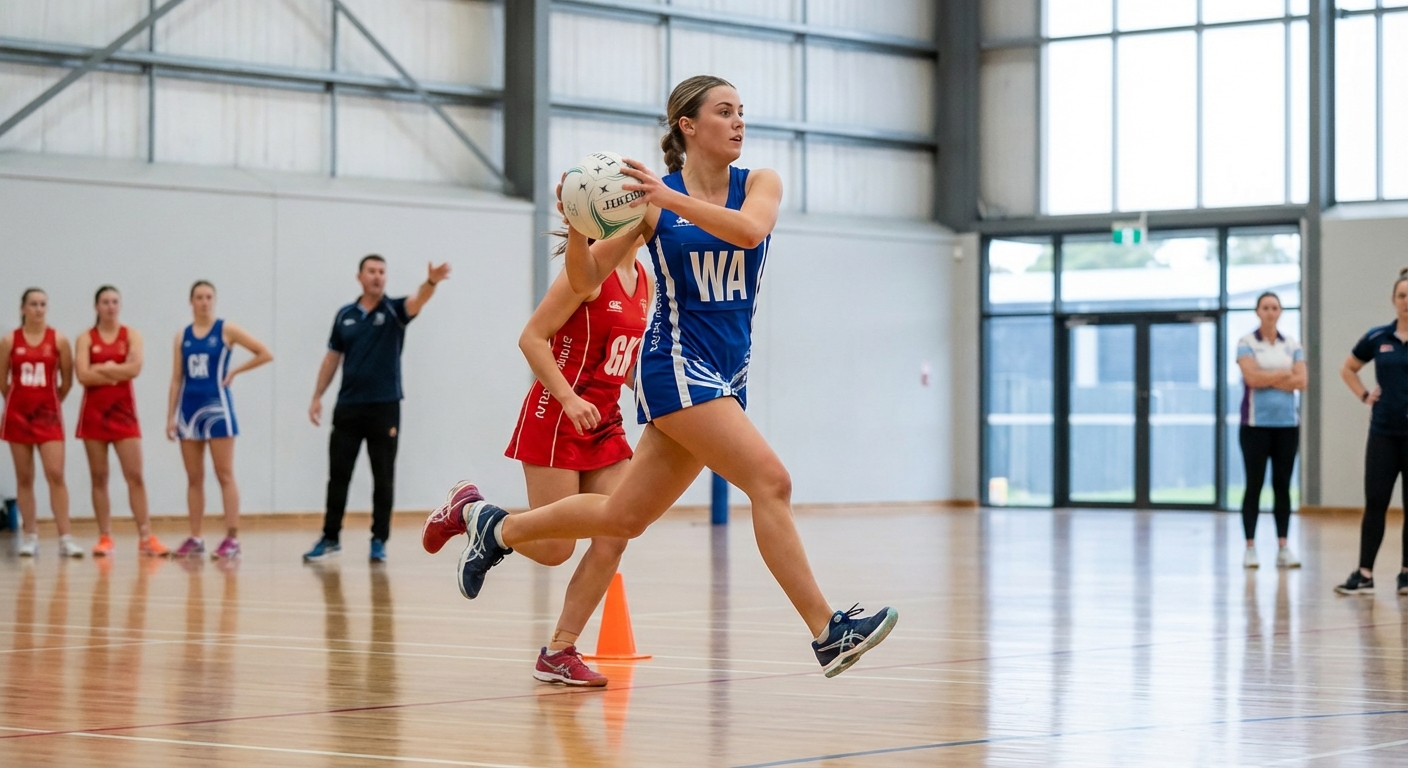
The Wing Attack is the critical link between midcourt possession and circle feeding. This masterclass breaks down the movement patterns, timing, and spatial awareness that separate elite WAs from the rest, with practical drills to develop these skills at every level.
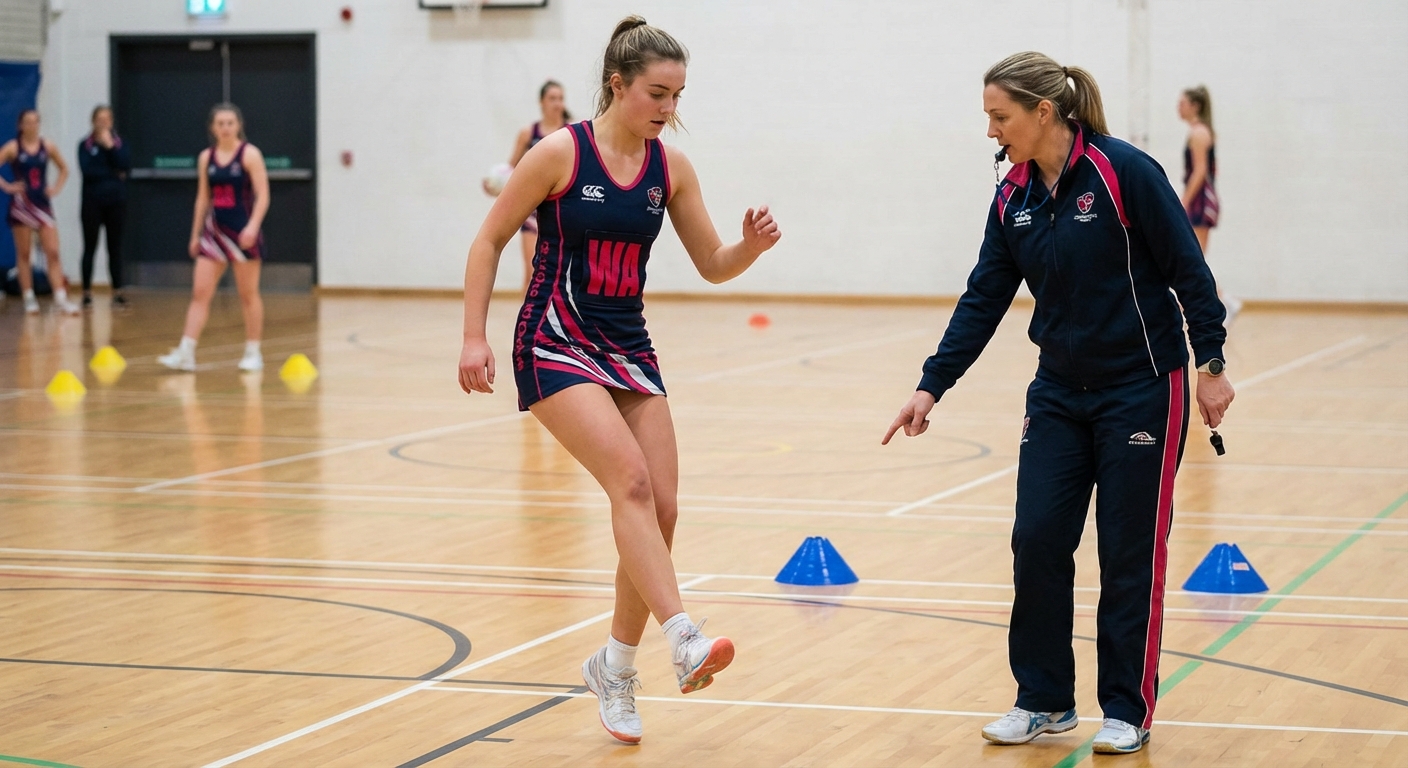
Footwork is the foundation of every skill in netball. This guide provides a clear explanation of the stepping rule, the mechanics of one-foot and two-foot landings, pivoting technique, and progressive drills to build footwork confidence from junior level upward.
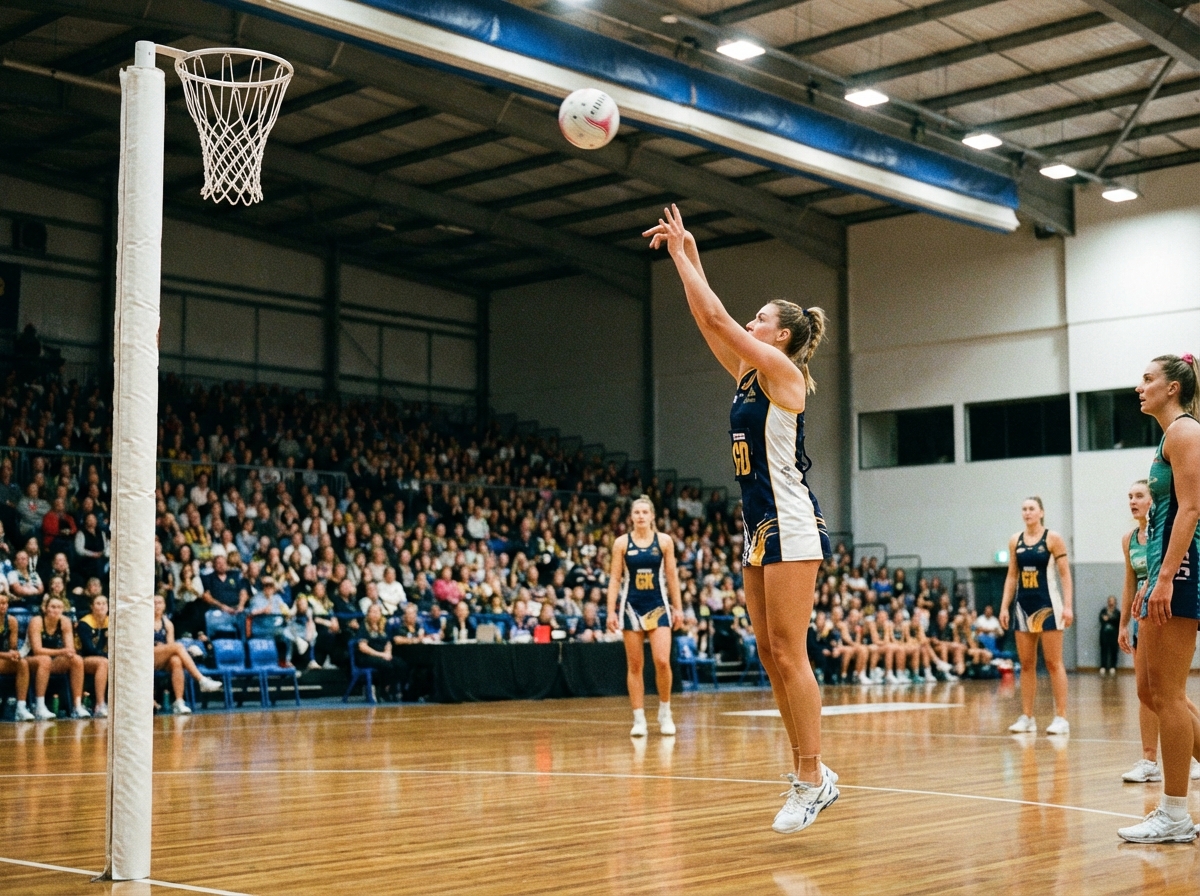
The early 'shoot from anywhere' era is over. Smart teams now use data-driven decision models to decide when the two-pointer is worth it.
Coaches from around the world look to Sportplan for coaching confidence.
I have thoroughly enjoyed using your site to help me with my coaching plans for my under 9's netball team.

I found this service to be excellent and it was of great help when planning my netball training sessions.

Sportplan is fantastic with all the various drills for every area of netball. My confidence as a coach has improved because I have Sportplan to support me.

Wow what a great website, I have found sportplan an important tool for me when planning my netball sessions with my netball team. There are alot of very helpful tips/ideas/skills that I can learn and teach to my team. Thank you sportplan I hope to continue to use your helpful tips and to learn more about improving my teams netball skills. Thanks again....keep it up....

I have been using Sportplan now for 3 years and can honestly say that I have never repeated the same session twice. My girls are always focused and are improving every year. Thanks Sportplan.
What a fantastic tool. The Chalkboard and session tools make an unbelievable difference in making training plans in both time and organization. I will be instructing all of my assistant coaches that this tool must be used for all sessions during the season, so that we may build a club coaching resource library.
I can't get enough of the Sportplan, It has given me back the enthusiasm i was starting to lose. My girls are so keen and are ready at 14 to take the next up in their game. Sportplan will help no end.