

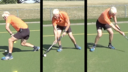


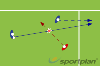

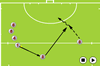
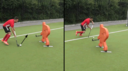






Field Hockey: open receive

July 2026

Every coach knows the feeling of the first pre-season session. Half the squad has spent the summer on the sofa, a few have run themselves into the ground on the road, and almost nobody has held a stick since the last league game. Within twenty minutes the touches are heavy, the decisions are slow, and someone tweaks a hamstring in a sprint that should have been routine. July is the month to fix that before it happens.

The old approach was simple and brutal: lots of laps, lots of shuttles, and the stick left in the bag until the players were "fit enough". Modern conditioning turns that on its head. We now know that hockey fitness is specific, and the fastest way to build it is with the ball in the game, not away from it. This summer, the smartest clubs are treating conditioning as a skill you develop, not a punishment you survive.

Why Running Alone Doesn't Prepare You for Hockey

Hockey is not a steady-state sport. A midfielder rarely jogs at a constant pace; they explode into a press, brake, change direction, hold a low body position over the ball, then repeat it ninety seconds later. Straight-line running builds an engine, but it never trains the stopping, turning and bending that actually break down in the eightieth minute.

Worse, running without a ball teaches the body to move without the demands of stickwork. When you finally add the ball back in September, the extra load on the trunk and shoulders arrives cold. That is exactly when soft-tissue injuries appear. Conditioning with a stick from day one closes that gap.

The principle: if the fitness you build doesn't look like the game, it won't transfer to the game. Build the engine inside hockey shapes wherever you can.

A Four-Week Summer Framework

You don't need a sports science degree to structure a good pre-season. Four progressive weeks, two or three sessions each, will lift the whole squad. The key is to layer intensity gradually so nobody peaks too early or breaks down.

Step One: Rebuild the base (Week 1). Start with continuous, low-intensity work that reintroduces the stick. Long possession games in big grids keep hearts working while hands and eyes wake up. Nothing maximal, plenty of touches, and a deliberate focus on quality of first touch under mild fatigue.

Step Two: Add tempo (Week 2). Introduce interval work using small-sided games with short, sharp bursts and full recoveries. Two or three touch games force quick decisions while the legs are loaded, which is exactly the demand of a real match.

Step Three: Sharpen speed and repeat efforts (Week 3). Now bring in repeated sprint work with the ball, receiving on the move and driving into space. This is where you train the ability to do it again and again, the quality that separates a team in the final quarter.

Step Four: Integrate and taper (Week 4). Pull it together with game-realistic conditioned matches, then ease the volume in the final few days so players arrive for the season fresh, not flat.

Managing the Squad That Turns Up at Different Levels

No two players return in the same shape, and treating them identically is how you injure your keenest athletes. Use conditioned games rather than fixed running targets, because a game self-regulates: the fitter players naturally work harder while those returning can pace themselves without being exposed.

Load monitoring doesn't need to be complicated. A simple session rating out of ten, collected as players leave, will flag who is struggling and who has more to give. If a player reports a nine three sessions running, back them off before the strain becomes an injury.

Key Coaching Points

  • Put the stick in their hands from session one, not week three
  • Progress from continuous work to intervals to repeated sprints across the month
  • Use conditioned games so fitness self-regulates across a mixed squad
  • Protect first touch and decision quality under fatigue, not just heart rate
  • Monitor load simply and back off anyone flagging high strain repeatedly
  • Taper the final few days so players arrive sharp for the opening fixture

Recommended Drills

VIEW ALL FITNESS DRILLS

Frequently Asked Questions

How long should a pre-season fitness block be?

Four to six weeks is ideal for a club side. Four progressive weeks will get an amateur squad match-ready; if you have longer, add an extra base-building week at the front rather than more high-intensity work at the end.

Should players do their own running over the summer?

Some background running helps, but tell them to keep it varied with changes of pace and direction rather than long steady jogs. The most useful thing they can do is get a stick and ball out a couple of times a week to keep their hands alive.

How do I avoid injuries in the first weeks back?

Progress load gradually, always warm up thoroughly, and build conditioning around the ball so the body adapts to real hockey demands. Watch for anyone reporting high fatigue several sessions in a row and give them a lighter day before it becomes a strain.

open receive DRILLS
View All
Unfortunately there were no results for your search! Please try again
open receive ANSWERS
View All

How can I publish a Session?

Archived User Coach

How do I use My Team?

Archived User Coach

Receiving the ball forward facing

Anybody any ideas on a conditioned game to encourage receiving the ball in a forward facing position?

Mark Stuart-Thompson Coach, England

Drills for beginners age 9-10?

HI, I'm an inexperienced hockey coach about to coach 9-10 year old kids at school. It's been 20 years since I played myself, so not always familiar with the drills I read here. Anyone has some tips for basic drills for kids to learn the basics? Thanks!

Judikje Coach, New Zealand

Pass under pressure drill

What drill I wanna give my players for push pass under pressure?

RIYAS MASTER MPM Coach, India

Recent update made it so I cannot open a practice plan in the app and pdf does not build right

see above

Harry Hendon Coach, United States of America

OVercharged

Hello, I have been charged $53.95 on July 15 (AMEX) and January 15 $49.86. I am really not happy with the app as when i receive the emails direct and click on the link from the Netball Coach it NEVER takes me to the advertised Focus. It takes me to my account and then I search for the "Open Up the Court" focus and it is not found.I beleive this overcharge has been occuring from 2018. Please have someone contact me ...link in profile... to discuss where I go from here and why I am being charged twice and for how many years? Regards Michelle

Michelle Coach, Australia

Site keep freezing

at times I receive the emails with links to exercises, but they don't open to show the move my or videos. just now tried to attach pics and it froze again.... any ideas how to resolve,

Mark Eszenyi Coach, Australia

Typical session for Juniors - ...

Why wont this session open for me when i log in its not there ??

Onny Gajadhar Coach, New Zealand

What is the best drill for tea...

My team have asked for drills to help them at 16s, can anyone help me

Jax Pheiffer Coach, England

Anybody have a drill to get pl...

I am coaching a JV team and my girls keep sending the ball back to where the ball came from.  Are there any good drills that would train them redirect?

carla mccarron Coach, United States of America

JOIN SPORTPLAN FOR FREE

  • search our library of 1000+ hockey drills
  • create your own professional coaching plans
  • or access our tried and tested plans

Sportplan App

Give it a try - it's better in the app

YOUR SESSION IS STARTING SOON... Join the worlds largest hockey coaching resource for 1000+ drills and pro tools to make coaching easy.
LET'S DO IT









