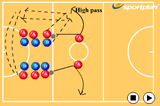
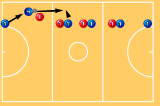
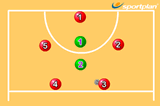
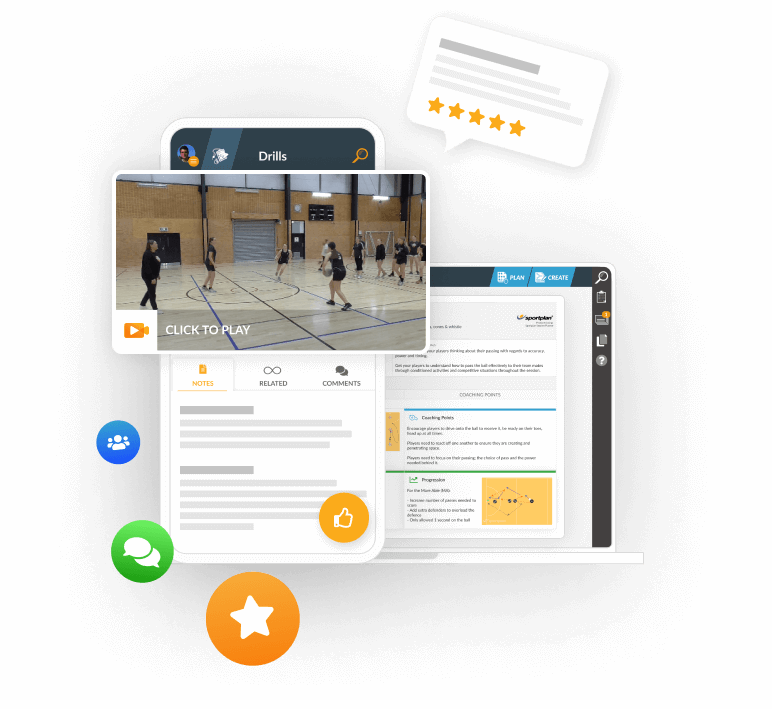
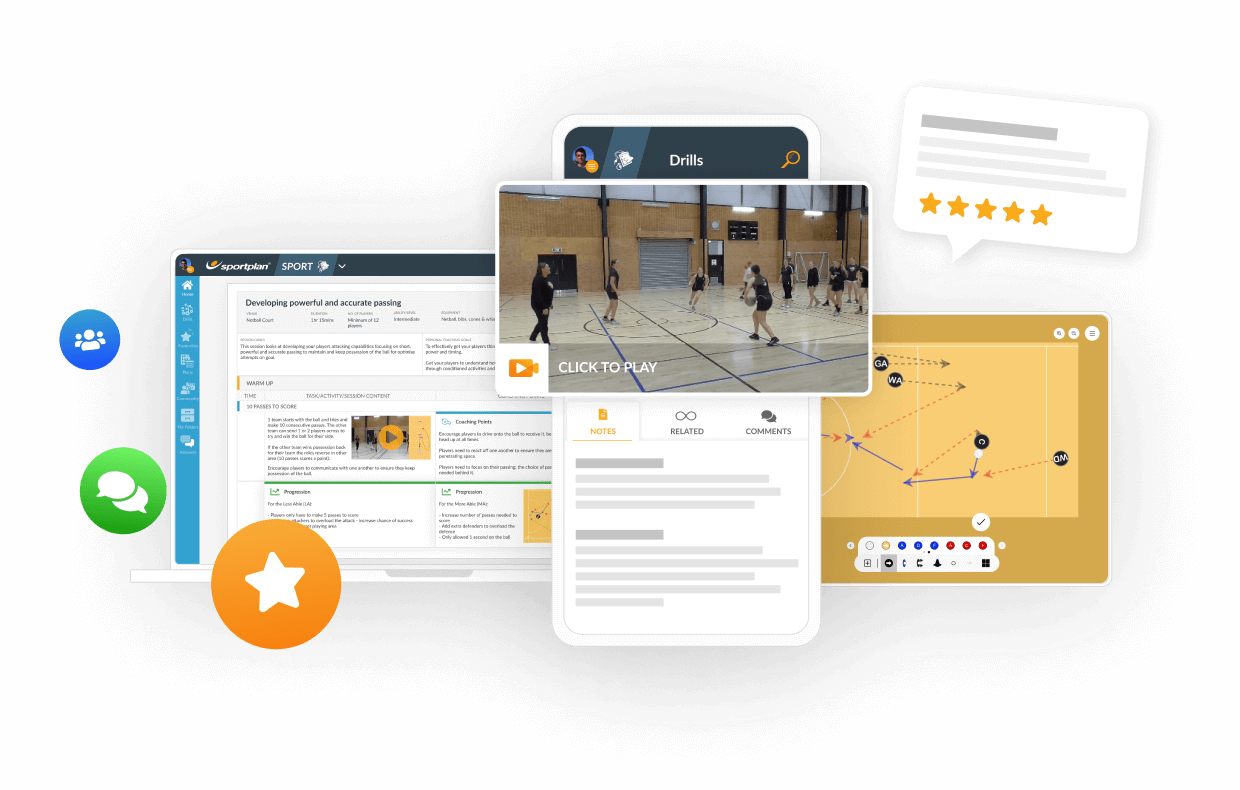
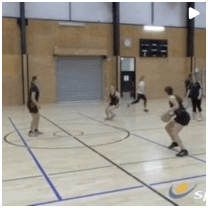
Using cones create two end-zones either side of the middle 3rd on the court and divide your players into 2 equal teams.
One player starts with the ball in their end zone and starts the game with a pass.
The team in possession of the ball has to always keep one player in the oppositon's end zone - This players has to be marked by 2 defenders.
The rest of the players play in the centre, this creates an overload for the team in possession.
The aim of the game is for the team in possession to score as many points as possible before losing possession or within a time limited.
A point is scored with every pass and 5 points are scored for every pass made to the player in the end zone.
Everytime the ball is passed into the zone the game continues but reverses in the other direction (players will need to react quickly to rearrange themselves).
Once your players get used to the game you can allow the defending team to decide how they defend, including if they want to play 2 defenders in the end zone.
in more ways than one
 sportplan_netball

in more ways than one
sportplan_netball
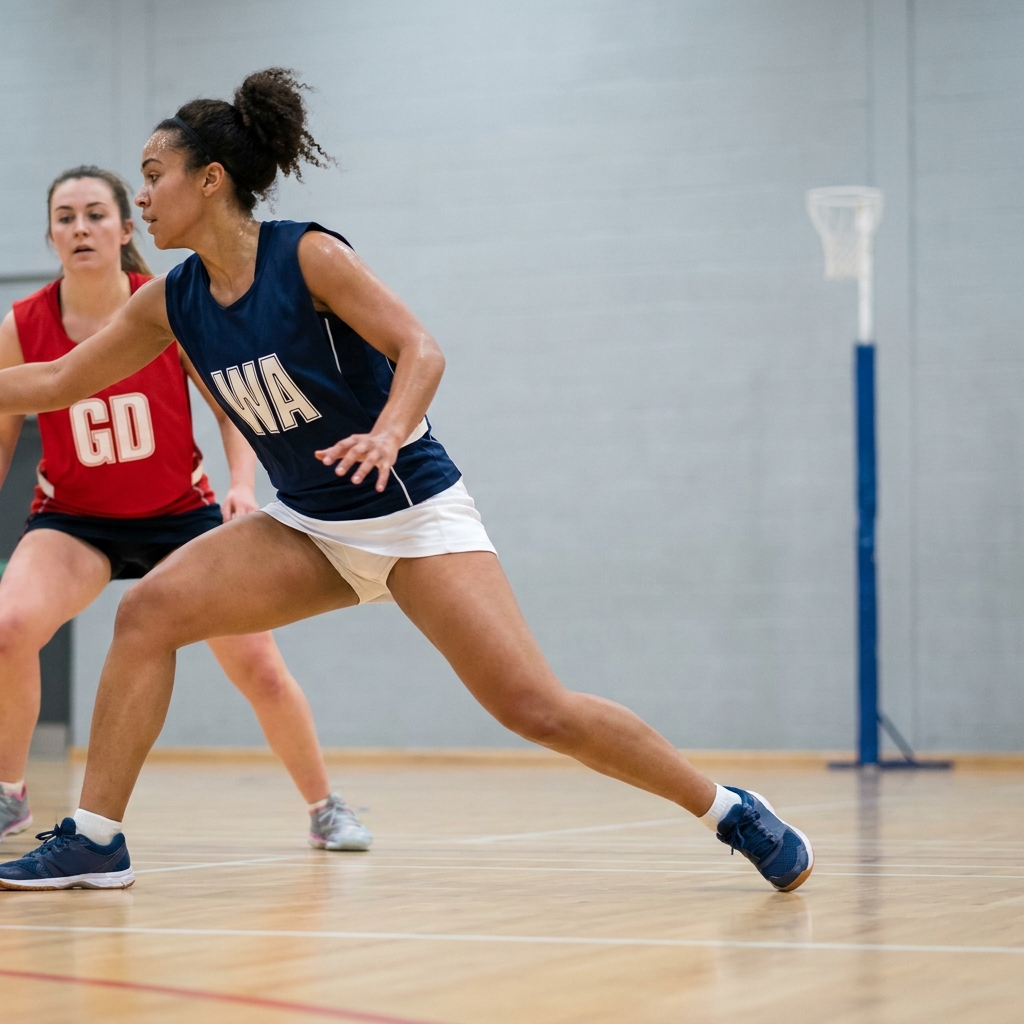
Tight markers win when attackers run in straight lines. Teach your players to dodge, change pace and time their drive so they get free when the ball is ready.
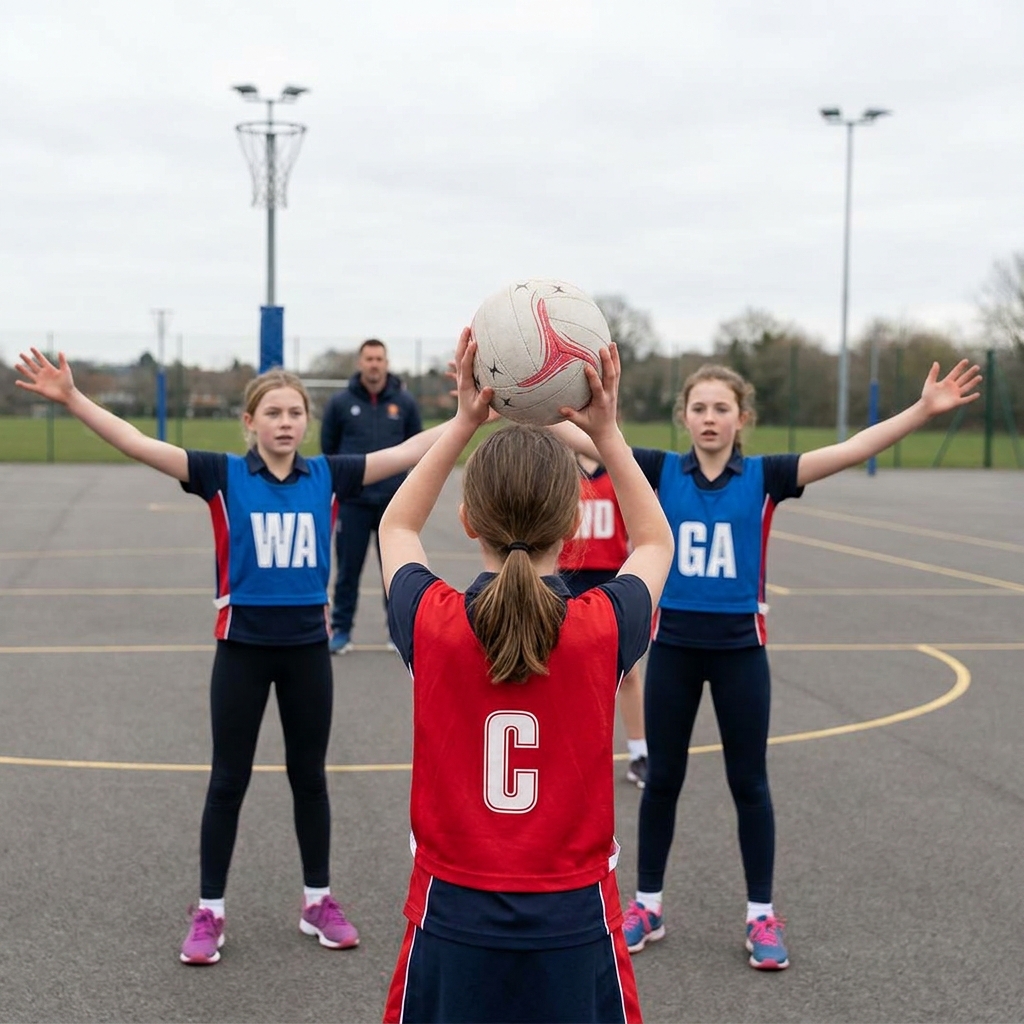
When everyone chases the ball, nobody is free. Teach your team to spread out, offer two options and clear space so the ball moves cleanly down court.
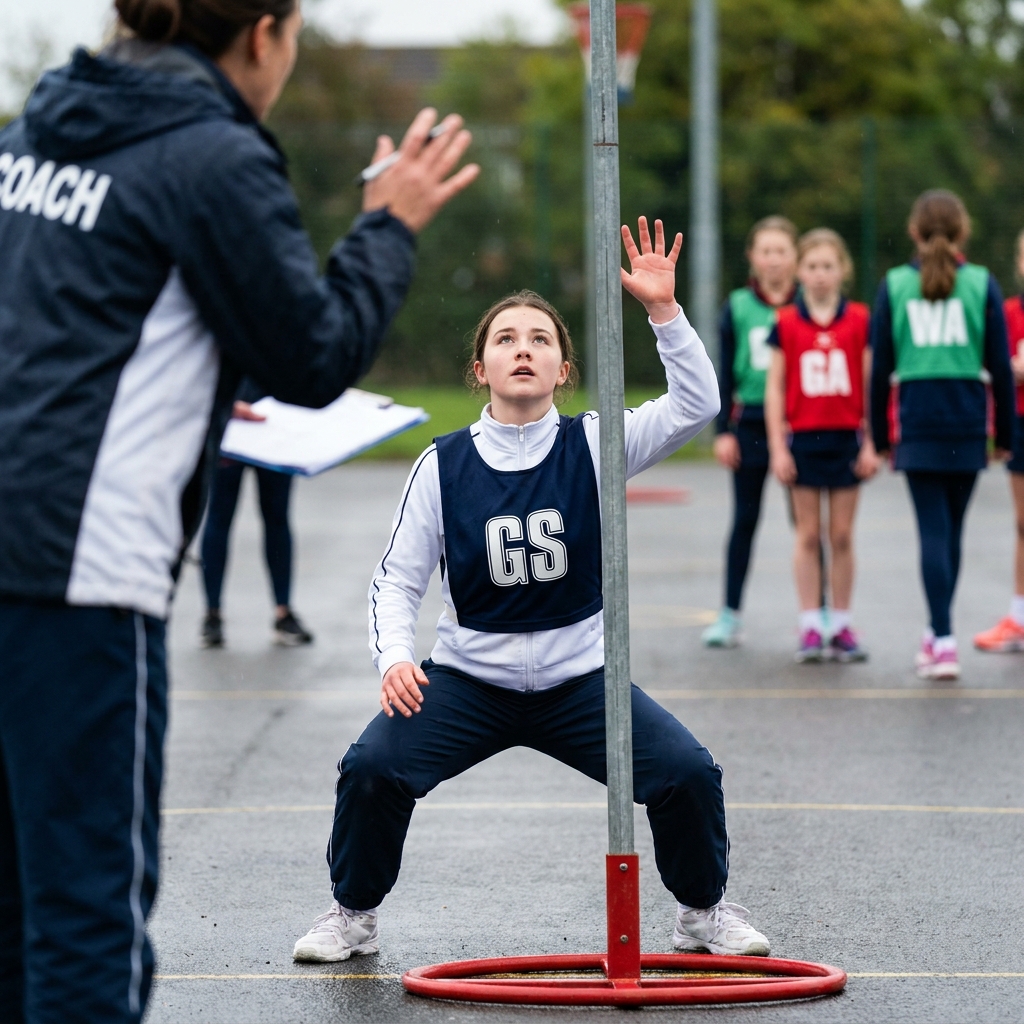
A shooter who can hold a strong position under the post is worth more than one who runs all over the circle. Here is how to coach body shape, a legal hold and a well-timed release, and how feeders make the most of it.