Tennis: forward

May 2026

Every May, the tennis world turns to Paris. Roland Garros remains the most physically and tactically demanding of the four majors, and the surface itself is the reason. Clay slows the ball, takes the spin, and lengthens rallies. Power alone is rarely enough. The players who win on clay combine athletic movement, mental patience, and a deep understanding of how to construct points one ball at a time.

For coaches working with juniors or club players in the British spring and summer, clay is also a unique teaching surface. It rewards habits that translate to every other court - footwork, shot tolerance, and tactical discipline. Even if your players will mostly compete on hard courts or grass, a few weeks on clay can transform their development.

The Three Pillars of Clay Court Tennis

Top coaches who specialise in clay development talk about three non-negotiable qualities. Without these, a player cannot compete on the surface for long.

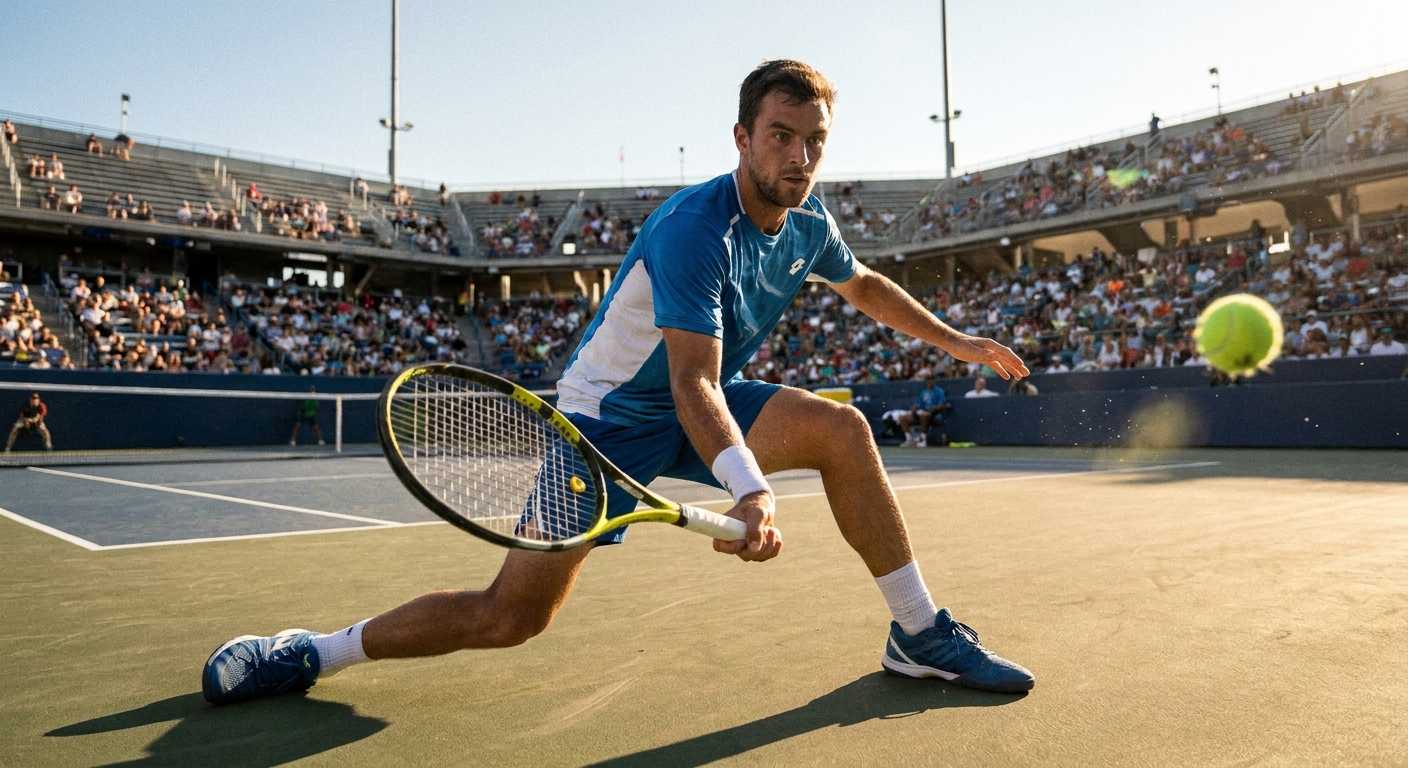
Sliding: Clay players do not stop, they slide. The ability to slide into a shot, plant the inside foot, and recover smoothly is the defining athletic skill of the surface.

Consistency: Average rally length on clay is significantly longer than on hard or grass. Players who go for outright winners early lose to opponents who simply make one more ball.

Endurance: Matches stretch out. Three-set contests can run beyond two hours. Aerobic conditioning, mental stamina, and the ability to recover between points all separate winners from also-rans.

Coaching the Slide

The slide is the single most distinctive technique on clay, and it is one of the few things you genuinely cannot learn well on any other surface. The key coaching point is that players should slide into the shot, not after it. The slide is the recovery footwork, not the celebration.
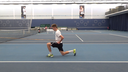
Stance and shape: Approach the ball with a wide, open stance. The outside leg drives across the body while the inside leg becomes the anchor. The ankle of the inside foot rotates inward, the entire side of the shoe collects clay, and the player stays low through contact.

Inside-foot recovery: Once contact is made, the inside leg pushes off to launch the recovery step. Coaches should drill this rhythm - slide, plant, push, recover - until it becomes automatic.

Don't slide everything: Beginners often try to slide every ball. Teach players that the slide is a tool for wide balls and emergency defence. On a comfortable ball in the middle of the court, a stable open stance is far better.

Patience and Point Construction

Clay punishes impatience. A flat winner attempted from neutral position is intercepted, hung up in the heavy air, and returned with interest. Players need to learn to set up the winning shot before going for it.
Build the rally: Use heavy topspin to push the opponent behind the baseline. Three or four deep, high-bouncing balls force most players into defensive positions before the attacking opportunity appears.

Move the opponent first: Width creates depth on clay. A wide ball that drags the opponent off court opens the entire court for the next shot. Direct attacks rarely succeed; sequential attacks usually do.
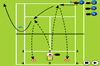
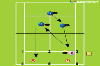
Recognise the short ball: The moment to attack is when the opponent's reply lands inside the service line. Drill this recognition: short ball means step in, take the ball on the rise, and finish the point at the net or with a clean drive into the open court.

Surface-Specific Shot Selection

Certain shots gain enormous value on clay, and others lose it.

Heavy topspin: The high-bouncing topspin forehand becomes a true weapon. Balls that would land in the strike zone on hard courts climb above shoulder height on clay, making them very difficult to attack.

Drop shot: Clay is the natural home of the drop shot. The ball dies on the surface and the opponent must cover a long distance to reach it. Teach the drop shot deliberately as part of a clay-court repertoire.

Slice for variation: A low slice that stays beneath the strike zone changes rhythm and forces the opponent to generate their own power. It is also the perfect approach shot on clay.

Flat winners less so: The big flat ball that finishes points on hard courts often becomes just another rally ball on clay. Teach players that aggression on clay looks different - it is about taking time away, not about pure power.

Physical Preparation

Clay tennis is a different physical challenge. Focus your conditioning work on:

Adductor and hip strength: The sliding action loads the inside leg heavily. Side lunges, Copenhagen planks, and lateral band walks build the muscles that protect against injury and produce stable slides.

Core stability: Hitting from extreme positions requires a strong, stable trunk. Anti-rotation work such as Pallof presses transfers directly to court.

Aerobic base: Long rallies and long matches require the engine to match. Two longer aerobic sessions per week underpin everything else.

Key Coaching Points

  • Slide into the shot, not after it - the slide is footwork, not flourish
  • Average rally length on clay is roughly double that on hard court - plan for it
  • Build points with width and depth before attempting the finishing shot
  • Heavy topspin, drop shots, and low slices all gain value on the surface
  • Adductor strength and aerobic conditioning are non-negotiable

Recommended Drills

VIEW ALL MOVEMENT DRILLS

forward DRILLS
View All
Unfortunately there were no results for your search! Please try again
forward SESSIONS
View All
forward ANSWERS
View All

Psychology in tennis HELP! My ...

Psychology in tennis HELP!!! I have a daughter who is an excellent player who only started playing tennis seriously last yr at the age of 13. She is a much better player than all the people she has completed against in matches but always loses due to over hitting and getting upset if the wrong call is made (which happens frequently due to how fast she hits and serves) do we need some sort of psychological help for this. what is the best way to get this... books, councilling ??? any help would be most appreciated thanks

Archived User Coach

Beginner Group Rally Games/Dri...

Hello, I have a group of 8 players who are orange ball level 1. I need a game or drill that will help them get introduced/comfortable with rallying. Something where they might all get a chance to rotate in and they do not have to sit around? I only have one court. Thank you.Regards, Coach Cory

cory Coach, United States

how do you teach topspin? what grip to you use?

how do you teach topspin? what grip to you use?

becky farmer Coach, United States of America

I'm having trouble teaching the backhand volley. The?

I'm having trouble teaching the backhand volley. The girls don't seem to have enough arm/wrist strength and/or they don't get the correct angle on their racquet. Suggestions?

Archived User Coach

I do not have a credit card. And want to pay. What?

I do not have a credit card. And want to pay. What are the options? Ik heb geen creditcard. En wil direct betalen. Wat zijn de mogelijkheden?

Archived User Coach

Hi Guys, How best to teach a return of serve

Hi Guys, Just wondering if anyone has a suggestion on how to teach a block return from serve and a slice return from serve to 13y.o juniors who are playing against big servers Cheers

Ciaran Cahill Coach, Ireland

Newbie 7th / 8th grade boys tennis coach

My son's 7th and 8th grade tennis team do not have a coach for this season.  I am thinking of voluteering to coach but do not know where to get information and what to do to get started.  Can you give me some suggestions?  Thanks.

Archived User Coach

How do I improve my backhand in tennis?

how do i improve my handback in tennis?

Maria Paola Molteni Coach, Argentina

Have paid for premium content but still locked

I've paid for the premium content but drills are still locked. It acknowledges that I've paid and to restart app. I do but still don't have access to drills. What next? Was looking forward to using these drills but can't get this to work.Thank you for your help.Meredith

Meredith Phillips Coach, United States of America

Tips on serve and volley.

How to stay balanced for first volley

Dilip Coach, India

subscription

I have paid for a subscription and access to drills etc is still locked. I have emailed and still have had no response.Look forward to hearing from you. Leanne

leanne lima Coach, New Zealand

charged for anothe another month!!

please refund me my money of £9.99for this month. i only signed up for a month and that clearly states that in my account. I thinks it disgraceful the ignorance of this company and not acknowledging that we as customers have not subscribed to monthly subscription. please refund me form e scond month and cancel any further outgoings that I haven't agreed too!I look forward to hearing from you asap username ...link in profile...

Miss K Fusi Coach, England

Lost session plan

I've just done a whole session plan and was looking how to forward it on and noticed the "stop editing" option so pressed that and the session disappeared and hasn't even been auto saved. Is that normal?

Gill Walker Coach, England

Cancel subscription

HI Can you please cancel my subscription moving forward for Karen Ellismany thanks

Karen Ellis Coach, New Zealand

TopSpin Forehand

How should I put more topspin and depth and height on my forehand shots, I want to get it more consistent and practice putting more power on them.

stefo Coach, United States of America

high ball

hi what is the best drill to improve high ball contact point and footwork.

samala ashok Coach, India

Double Payment

Hi teamTwo payments have been taken out of my Credit Card in 2 days can you please advise and look forward to the refund?Cheers Sam ...link in profile...

Samantha Scully Coach, Australia

JOIN SPORTPLAN FOR FREE

  • search our library of 1200+ tennis drills
  • create your own professional coaching plans
  • or access our tried and tested plans

Sportplan App

Give it a try - it's better in the app

YOUR SESSION IS STARTING SOON... Join the growing community of tennis coaches plus 1200+ drills and pro tools to make coaching easy.
LET'S DO IT