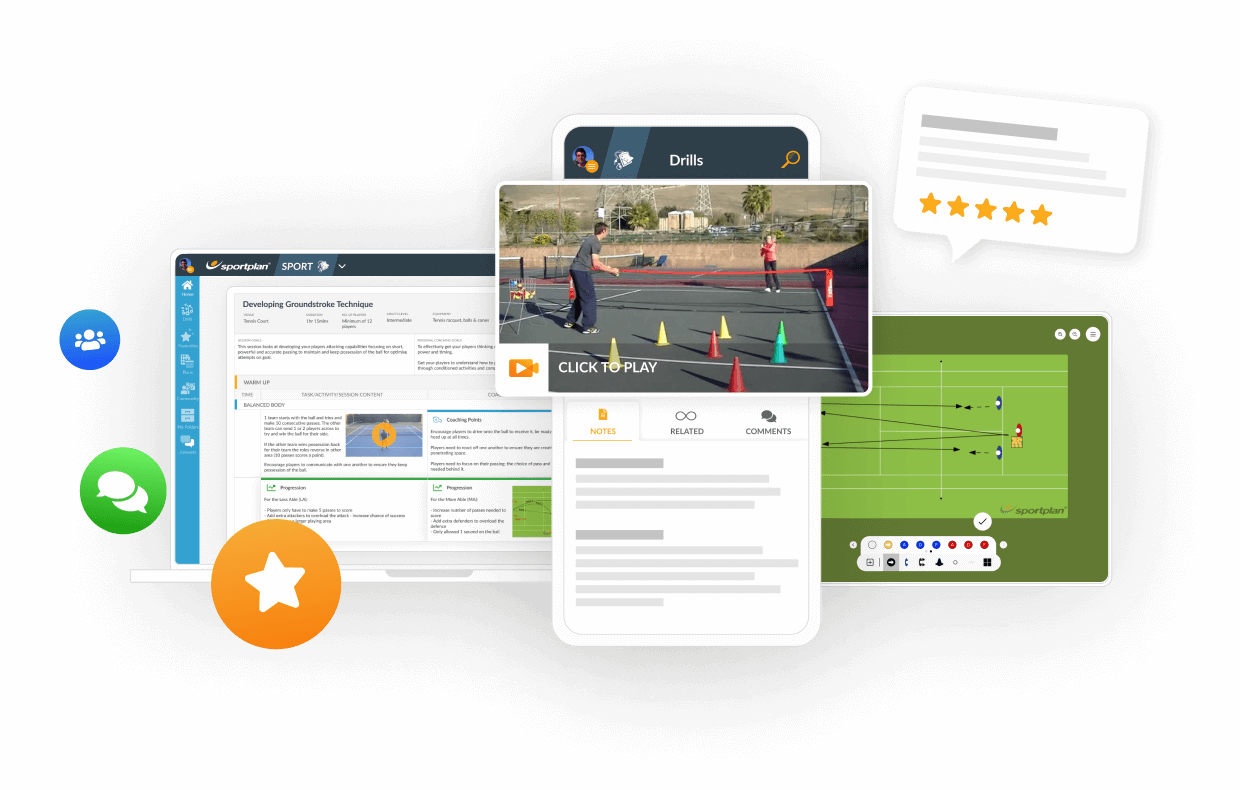
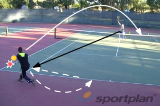
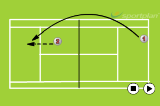
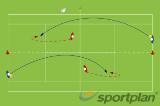
The coach feeds the ball to the backhand side, and the player hits backhand drop shot down the line and moves forward. The coach comes then to the net and feeds the ball to the backhand side. The player finishes with backhand volley lob cross-court.
Using different depths in own shots is a big tactical opportunity to make the opponent work really hard to win the point. Hitting short and deep balls is a basic but effective strategy that top players in the world use on a daily basis. Agnieszka Radwanska is the best example of a tennis star who uses the pattern drop shot-lob to win against players who have much more powerful shots than she has.
In this drill, the player works on drop shot and volley lob. Hitting a drop shot is a good way to bring baseline players to the area that they don't feel as comfortable. We have to remember that drop shot is a good option to take advantage on the court but we also have to learn how to answer the next ball. Moving forward and hitting volley lob cross-court is the most effective strategy because we hit it diagonally (more distance for the ball - less chance for mistake) as also we put it over the opponent's backhand which is really hard to finish even if the lob is not played well. The coach should remind their players that few points with this strategy can expose weak fitness preparation of our opponent and it can produce more unforced errors from the rival's side.
Indoor courts give players less time and less room. Help them sharpen their split step, shorten their swing and stay calm, and winter becomes a season of real progress.

A tiebreak is a short sprint where every point is worth the same as a break of serve. The players who win them are rarely the ones who hit hardest. Here is how to coach the patterns, habits and scoreboard thinking that win the big points.
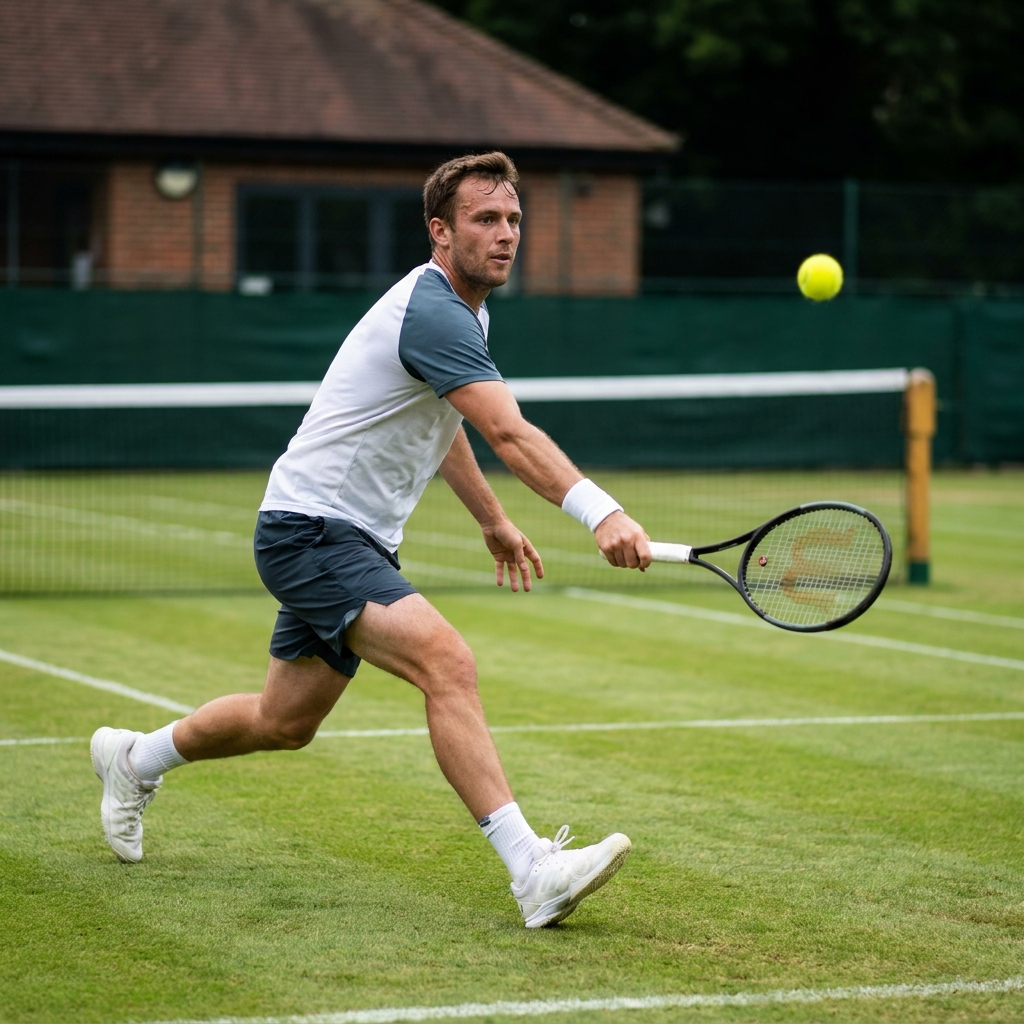
Most club players practise the serve on its own and then have no idea what to do with the ball that comes back. Serve plus one is the pattern that turns a good serve into a won point.


Register for FREE and get coaching tips, top drills, session and more every week!