Netball: the rules of netball

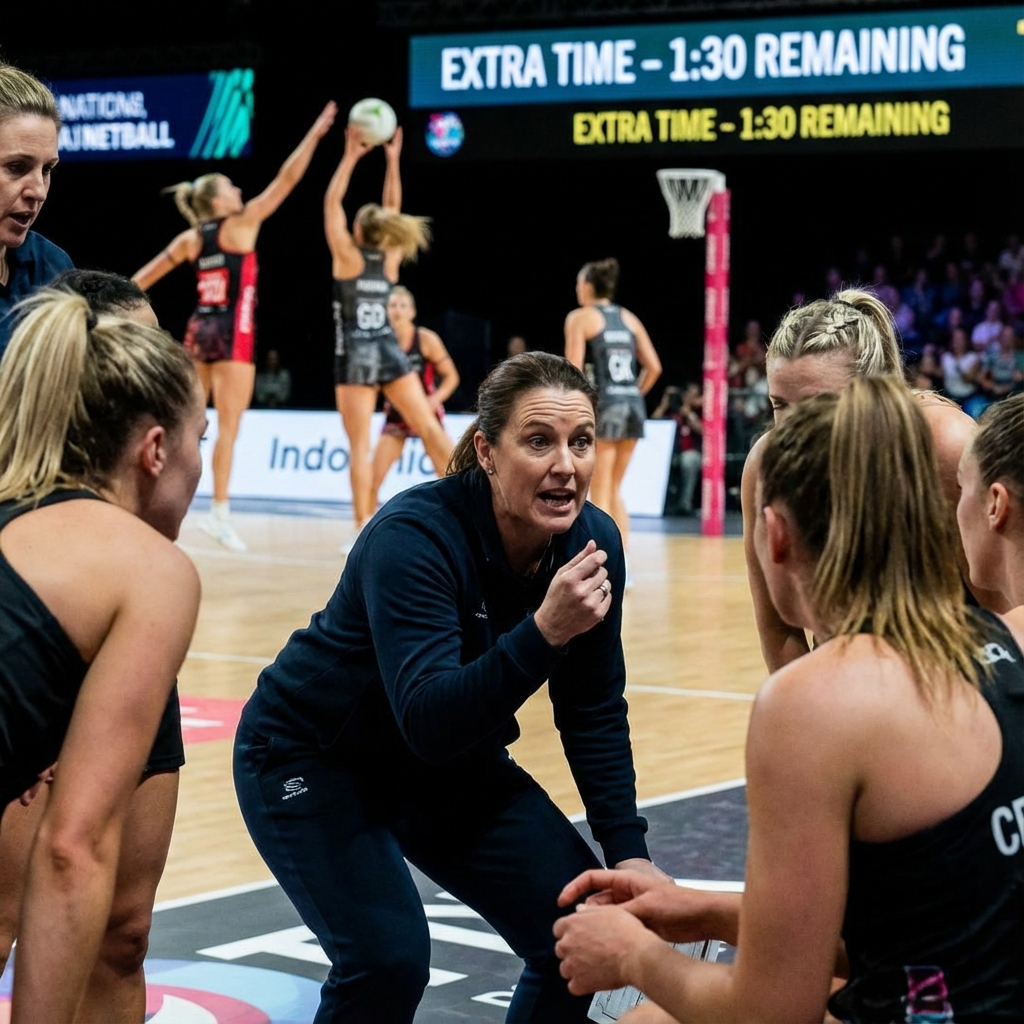
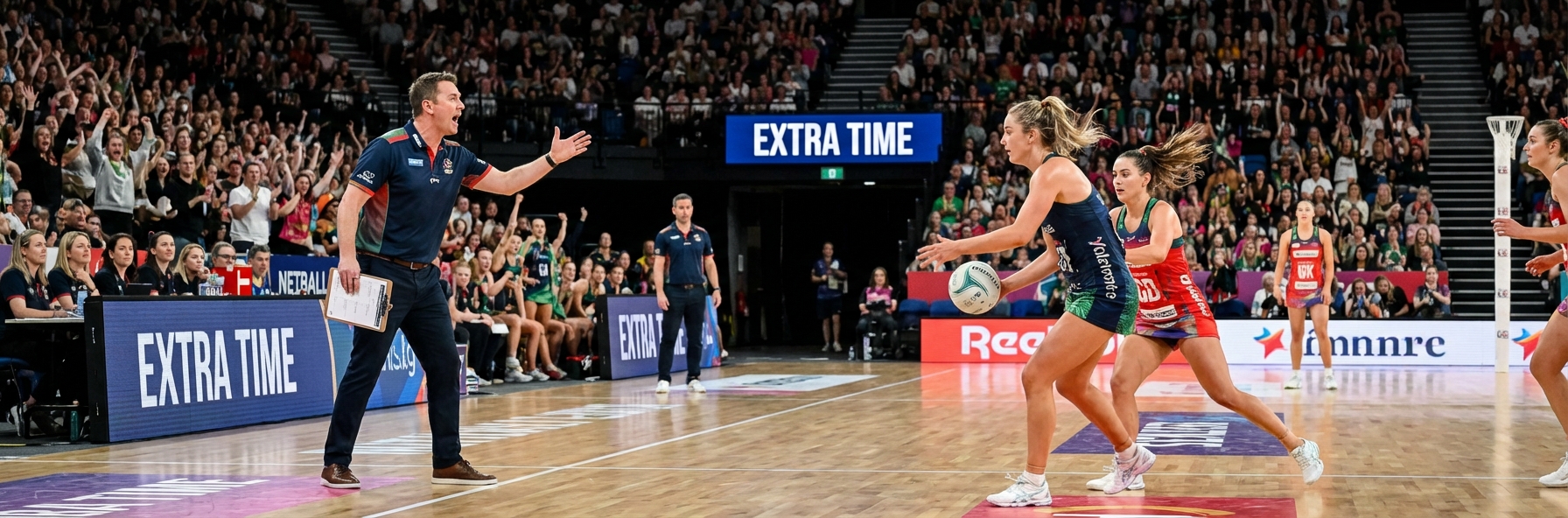
The 2025 Netball Super League season has introduced a rule that will change close games forever: no match can end in a draw. If scores are level after 60 minutes, two 5-minute periods of extra time will be played, with a one-minute break between them. If still tied, play continues until one team establishes a two-goal lead.

This is high-stakes netball. Are your players ready for it?

Understanding the Rules

The structure is straightforward:

  • Regulation: 60 minutes (4 x 15-minute quarters)
  • Extra time (if tied): Two 5-minute periods with 1-minute half-time
  • Extended extra time (if still tied): Play continues until a team leads by 2 goals

The Super Shot rule applies during extra time, adding another layer of tactical complexity. Centre passes alternate as normal. The team that wins gets 3 points; the loser gets 0.

The New Points System

The NSL has also changed the points allocation:

  • Win: 3 points
  • Loss by 5 goals or fewer: 1 point
  • Loss by more than 5 goals: 0 points

This means extra time carries enormous weight. A draw that would have given both teams 1 point now produces a winner with 3 points and a loser with 0 (unless it was already close). The stakes are higher than ever.

Physical Preparation

Extra time demands fitness. Players must maintain execution quality in potentially the 70th or 75th minute of play. Traditional 60-minute conditioning isn't enough.

Extend training games. Run scrimmages that go beyond normal match length. Players need to experience decision-making and skill execution when genuinely fatigued.

Interval conditioning. Extra time is high-intensity bursts separated by brief recovery. Design fitness work that replicates this pattern - repeated efforts with incomplete rest.

Simulation sessions. Occasionally simulate extra time scenarios in training. After a full scrimmage, announce "scores are level" and play on. This normalises the experience.

Related Drills: Build your team's endurance with our Fitness Drills for extended play conditioning.

Tactical Preparation

Substitution Strategy

You can't save substitutions for extra time if you haven't won regulation. The balance is keeping your best players fresh enough to perform in extra time while not losing the game in the fourth quarter.

Consider which players are best suited to high-pressure, fatigued conditions. Mental resilience and composure may matter more than pure skill in extra time.

Super Shot Strategy

The Super Shot applies in extra time. A single two-goal conversion can swing a game. Have a clear plan for Super Shot usage during these periods - and ensure your best long-range shooter is on court.

Extended Extra Time Awareness

If the game reaches "next two goals wins" territory, tactics simplify. Every possession is sudden death. Turnovers become catastrophic. Train your team to play with maximum care and composure in these moments.

Psychological Preparation

Extra time is as much mental as physical. Players who've never experienced it can freeze. Players who've practiced it perform.

Visualisation. Have players mentally rehearse extra time scenarios. What does it feel like to take a shot with the game on the line? To defend knowing one mistake could end it?

Positive framing. Extra time isn't a crisis - it's an opportunity. You've earned the chance to win a game that was on the edge. The team that sees extra time as exciting rather than terrifying has an advantage.

Process focus. In pressure moments, outcome focus ("we must score") creates tension. Process focus ("see the target, trust the technique") creates flow. Train your players to narrow attention to the next action, not the consequences.

Managing the One-Minute Break

Between extra time periods, you have one minute. This isn't long enough for complex tactical changes. Use it wisely:

  • Hydration and physical recovery
  • One or two key messages maximum
  • Energy and encouragement
  • Reminder of process focus

What you don't want is panicked tactical reinvention. Keep it simple, keep it positive, keep it short.

Learning from Experience

As the season progresses, some teams will accumulate extra time experience. Each situation is a learning opportunity:

  • What worked? What didn't?
  • Which players performed under pressure?
  • What would you do differently?

Document these lessons. They'll inform future preparation and give your team an edge in subsequent close games.

The Competitive Advantage

Many teams will neglect extra time preparation, focusing only on 60-minute netball. The teams that practice extra time scenarios, condition for extended play, and psychologically prepare their players will win more close games.

In a competition where points are precious, turning potential draws into wins could be the difference between finals and missing out. Prepare accordingly.

Where to Go Next

Prepare your team for the demands of extra time with these resources:

JOIN SPORTPLAN FOR FREE

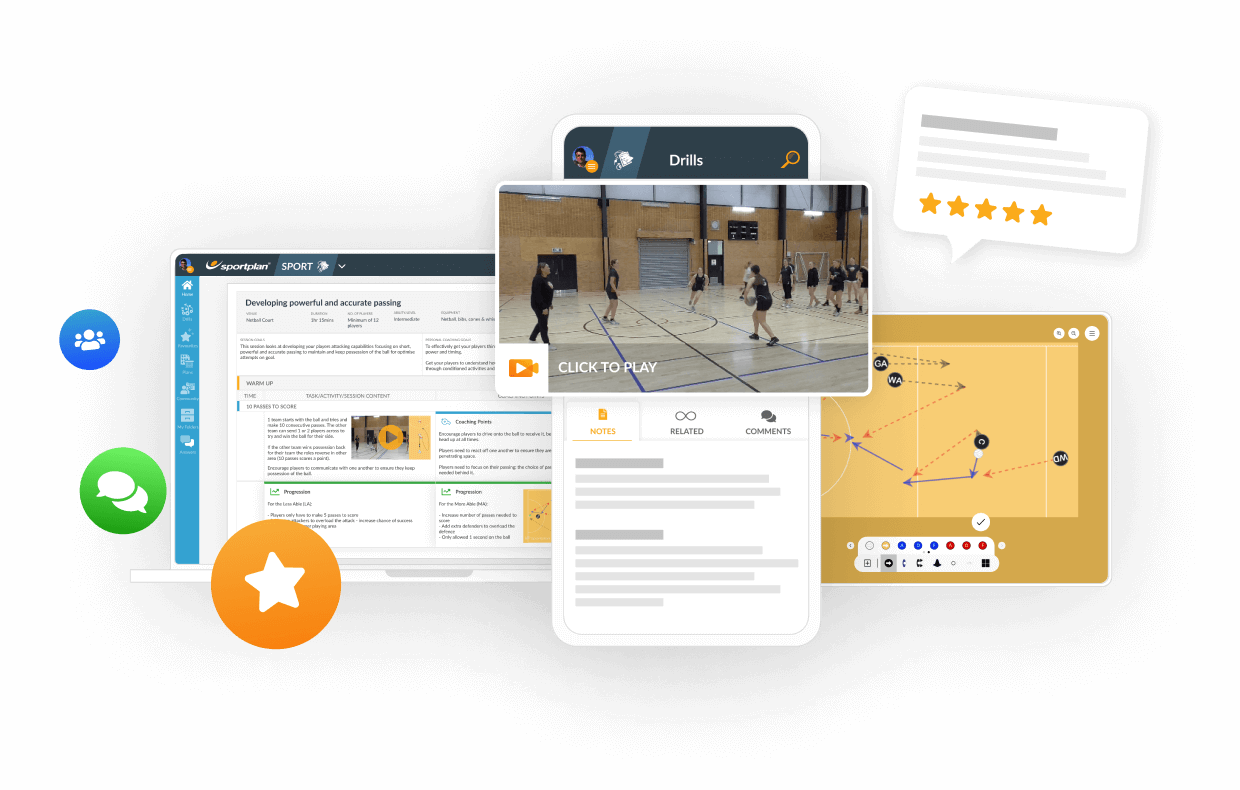
  • search our library of 700+ netball drills
  • create your own professional coaching plans
  • or access our tried and tested plans
the rules of netball DRILLS
View All
Unfortunately there were no results for your search! Please try again
the rules of netball ANSWERS
View All

Does anyone have a drill to encourage U11s to come forward for a pass?

Does anyone have a drill to encourage under 11's to come forward for a pass rather than asking for the overhead pass all the time as they are 'running away' from the ball in their haste to get to the circle?

Jacqui Davis Coach, England

How do you get under 11's to come forward for the ball?

How do you get under 11's to come forward for the ball and not to call for the ball when they have a player on them?

Gemma Blandford Coach, Australia

where to find good netball questionnaires??

where to find good netball questionnaires??

Lois B Coach, England

Can youplay ball off post from backline?

Playing ball off post from back line pass

karen channon Coach, England

Use of the "advantage" call

Hi all, I would like some clarification regarding the "advantage" call which appears in the rules as follows%3A3.1.6 (viii) [The umpire] Shall refrain from blowing the whistle to penalise an infringement when by doing so the nonoffending team would be placed at a disadvantage. An umpire shall  call  â€œadvantage” to indicate an infringement has been observed and not penalised. Having blown the whistle for an infringement, the Umpire must award a penalty unless a goal is scored which is to the advantage of the non-offending team.  Recently I asked my netball centre why advantage was being called when the non-offending team had not been successful in passing or shooting the ball. The response was that the advantage call is made when the umpire believes that the player should have been able to get the ball away successfully. To my reading, the rule is quite clear that advantage is called only when the non-offending team would be disadvantaged by pulling the ball back to the infringement point. Even supposing both interpretations were valid, I am perplexed as to why a decision based on an objective question (has the player gotten the ball away successfully) is not favoured over a subjective question (does the umpire think the player should have gotten the ball away successfully).  For example, suppose a defending player contacts, obstructs or goes offside, and in doing so prevents the attacking player from making a safe pass, instead forcing an unsafe pass that is intercepted or a held ball. If "advantage" is called at the time of the offence, effectively the offending player's team gets an advantage from breaking the rules.  I'm sure I've seen the advantage pulled back to a penalty pass or shot at international level, but my YouTube searching has turned up nothing. I would appreciate any clarification of this rule, especially an explanation of why the subjective interpretation might be more fair, or any precedent for this being the correct interpretation. Cheers!

Archived User Coach

u/14 team with no netbal experience/skils.

I have a u/14 team with no netbal experience. I myself have never played netbal before. How do I start and what is the most important rules and patterns they need to know?

Archived User Coach

Netball Quiz Questions- Help Need More

I have found that my players worked well as a group and also really enjoyed a Quiz about Netball (both rules and history of netball in general)but I have run out of questions, I usually only finish our training sessions with one question for each member of our team and use any the following week that they got wrong so they are learning at the same time. If you have any ideas please let me know as I have searched the web and every other resource I can find, Some of the questions I have used are How many seconds can you hold the ball? How far away do you need to be before arms go up to defend? How is a short pass measured? Where does a ball need to be touched first after a centre pass? Name 2 examples of Good spartsmanship? Name the 7 Positions in a Netball Game How many players on a Netball court during a Game? (trick question, usually andswered with 7, keeps them on their toes) In which Country did netball begin? What is the Name of the Australian Netball Team? What time do we turn up for a Game on Saturdays? If you land on 2 feet while catching the ball, which foot can you pivot on? PLease help, I need more questions, we still have a long year ahead %3A) Thanks

Archived User Coach

Is a defender allowed to lift up another defender so they jump higher?

Can a Defender hold up another defender? appearently one of my under 15's had seen it during a game

Archived User Coach

Intimidation?!

My GD was do face marking in a game and doing a fantastic job at blocking the GA entering the circle and not being able to shake her off, the umpire for the other team repeatedly called her for intimidation.To me it did not appear to be intimidation and the player herself umpires and sees this in many of the high level games. She is not pushing, no arms are used in fact it is the other players pushing into her. Is this intimidation I thought that was a pretty tough call. What constitutes as intimidation?

Archived User Coach

Obstruction or not obstruction

My teams are getting a bit older now and watching ANZ challenge and Aus NZ games the way the defenders defend or block has certainly changed. The defenders now have their backs to the attackers arms out wide what we used to say was airplane arms which would be picked up as obstrution. In the circle the defender is between goal and player at the edge still with back to the player and side shuffles with arms out wide blocking the shooter moving into the circle.  Is this not obstruction or are they doing something that does not constitute an obstruction call. Netball is certainly changing quickly in the way it is played

Archived User Coach

Which tactics should I teach for GCSE Netball?

Which tactics should I teach for GCSE Netball?

Archived User Coach

Stepping in the centre circle

My centre was penalised for stepping in the centre circle - she took her centre stance and after the whistle was blown she stepped out with one foot. I didnt think a centre had a 'landing foot' at a centre pass, providing both feet are in the circle when the whistle blows, but the umpire said when she returned to the circle she put her left foot in first so that became her landing foot even though play had not been started. I told her just to stay in the circle but I would like to know if the umpire was correct or if she had it wrong

Archived User Coach

Need help to get started with school girls.

Hi. I am a welfare worker at a primary school and had a bit of interest with playing netball in our lunch break once a week. We only have one net so we can only play half court and we have about 10 players.I only know netball through my daughter playing every weekend otherwise I've had zero experience.Do you have any suggestions how to get the girls started? Most of them never had played netball or even seen a game!Thank you

Haley Goodwin Coach, Australia

technical netball words

please can someone list some technical netball terms?

Amelia Kc Coach, England

Is foot dragging an offence

When is it an offence to drag the feet?

Richard Coach, England

First time Netball coach

Hello, it will be my first time ever doing something netball related specifically coaching so I was just wondering if I could get help starting and initiating plans. I am experienced in Basketball so I am hoping this will help with drills and excerise.

paradise 0 Coach, Australia

Rule 13: Playing the ball | Sp...

I am currently going through the rule book with my team to improve their understanding but had some queries from a player that has played at quite a high level in Australia. In particular rule 13.1(v) which states: a player may having batted the ball once, either catch or direct the ball to another player and 13.1(vi) having bounced the ball once, either catch or direct the ball to another player. She disputes this rule and says the ball cannot be bounced or batted under control before catching it as umpires have called it replayed ball. Can someone please clarify as I am using England netball official rule book 2011 edition.

Abimbola Smith Coach, Nigeria

Intimidation?! | Sportplan

My GD was do face marking in a game and doing a fantastic job at blocking the GA entering the circle and not being able to shake her off, the umpire for the other team repeatedly called her for intimidation.To me it did not appear to be intimidation and the player herself umpires and sees this in many of the high level games. She is not pushing, no arms are used in fact it is the other players pushing into her. Is this intimidation I thought that was a pretty tough call. What constitutes as intimidation?

Archived User Coach

Obstruction or not obstruction...

My teams are getting a bit older now and watching ANZ challenge and Aus NZ games the way the defenders defend or block has certainly changed. The defenders now have their backs to the attackers arms out wide what we used to say was airplane arms which would be picked up as obstrution. In the circle the defender is between goal and player at the edge still with back to the player and side shuffles with arms out wide blocking the shooter moving into the circle.  Is this not obstruction or are they doing something that does not constitute an obstruction call. Netball is certainly changing quickly in the way it is played

Archived User Coach

Contact ruling and short passe...

Now please correct me if Im wrong, but I played a game of netball today, and there was so much contact and obstruction that was not being picked up. Both teams were complaining about it, and when we asked the umpire why none of it was being picked up, she replied, that its only contact if you have complete possession of the ball. So basically if you do not have the ball you can push your player out the way and that isn't contact (by this state umpire....apparently) we were absolutely floored and were having a huge laugh at this. Is this what netball is coming to? I have never heard this before and would love for some opinions if i have completely got contact and obstruction wrong. Secondly, I have recently taught my U11s shooters to pass around the goal post for a back line throw in. My question is, what constitutes a short pass in this instance, as they apparently (I was on the opposite side of the court) didn't have much between their hands when they passed, but didn't get called and the umpire was right there. GF is this weekend and would hate for them to do it and get called, so just wanted to get some clarification from some of the umpiring gurus on here.

Lee-annes Netball Coach, Australia

JOIN SPORTPLAN FOR FREE

  • search our library of 700+ netball drills
  • create your own professional coaching plans
  • or access our tried and tested plans

Sportplan App

Give it a try - it's better in the app

YOUR SESSION IS STARTING SOON... Join the worlds largest netball coaching resource for 700+ drills and pro tools to make coaching easy.
LET'S DO IT