Rugby: set play

May 2026

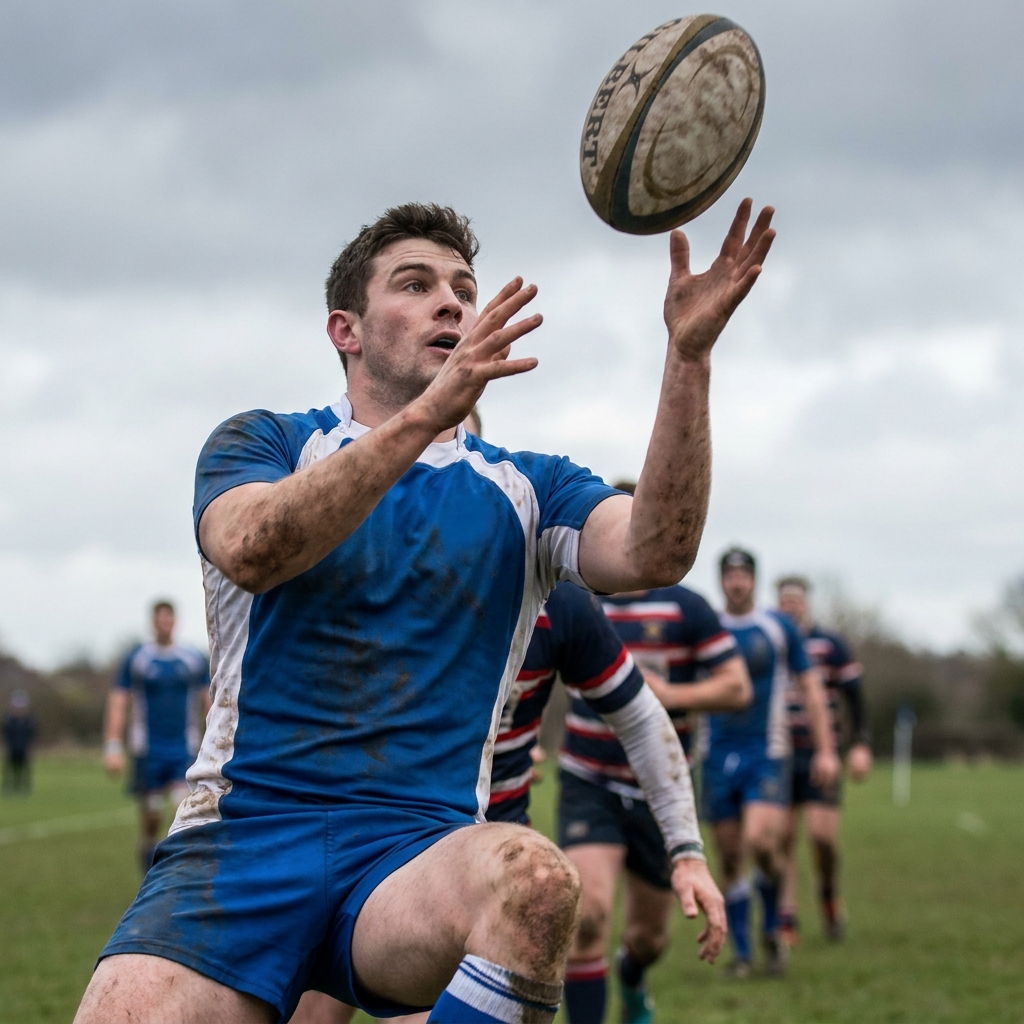
Kicking from hand is at record levels in elite rugby. Six Nations 2026 was the most kicked-from-hand championship since stats began, and the same trend is showing across the URC, Champions Cup and Super Rugby. Coaches have realised that good kicks force opponents into pressured returns - and pressured returns are the easiest scoring opportunities in the game.

The flip side is just as important. If your side is on the receiving end of all those kicks, your counter-attack is no longer a luxury skill - it is a core part of your attacking game plan. The most exciting tries in 2026 are not coming from set-piece strike moves. They are coming from broken-field returns.

Why the Counter-Attack Has Become Central

When a team kicks, three things happen at once. Their forwards are spread across the field as chasers rather than packed around the ball. Their defensive line is in motion, not set. And the receiving team has the ball with space in front of them. Combined, those three factors mean the defence is at its most vulnerable in the seconds immediately after a kick.

Modern attacking analysts call this the "transition window". It typically lasts six to eight seconds. If the receiving team can move the ball into space inside that window, they create a numerical or positional advantage that no structured attack could engineer in open play.

The Three Decisions Every Receiver Must Make

Catching the ball is the easy part. The decision that follows is what separates good counter-attacking teams from poor ones. Train your back three to run through three questions every time they collect a kick.

Decision 1 - Time and space: How close is the nearest chaser? If a chaser is within five metres and closing fast, the answer is almost always to return the kick. If the nearest chaser is ten metres away or more, the carry is on.

Decision 2 - Width on the field: Where are my support runners? A counter-attack needs at least two players in support. If the wingers are still on their wings and the full-back caught it, there is no point trying to run - the carrier will be isolated. Better to step infield to a phase, then launch the next play.

Decision 3 - The defensive picture: Which side is undermanned? Most chase lines come up flat and even, but there is almost always a weakness - usually on the far side of the field where the original kicker stayed back. Counter to that space, not into the strongest chase channel.

How to Build Counter-Attack Habits

Counter-attacking cannot be taught from a whiteboard. It is a reactive skill and must be trained in environments that look like the game. Here is a progression that works at every level from U16 upward.

Stage 1 - Catch and scan: Two minutes of high-ball drills where every catcher must shout the position of the nearest chaser before they hit the ground. This trains the pre-catch scan, which is the foundation of every good counter-attack.

Stage 2 - 3v2 from a kick: Coach kicks the ball into a back three. Two chasers come from 20 metres. The back three must keep the ball alive and beat the chasers using one of three responses: switch infield, hit a support runner on the outside, or counter-kick.

Stage 3 - Full-pitch transition game: Conditioned game where every kick must be returned. No mark allowed, no exit kick allowed. Forces players to find solutions and exposes which units have not learned to support the back three quickly.

The Forwards' Role in Counter-Attack

This is where most teams fail. The back three can be brilliant, but if the forwards are still standing where they were before the kick, the counter dies at the first ruck. Coach your forwards to react to opposition kicks like a fire alarm - the closest three drop into the back-field as immediate support, while the rest fan out across the pitch ready to play.

This habit takes weeks to embed. Start by freezing training every time a kick is fielded and asking each forward to show where they should be running. Repetition turns it from a thought into a reflex.

Key Coaching Points

  • The transition window is six to eight seconds - move the ball before it closes
  • Train the pre-catch scan: who is chasing, how close are they, where is the space?
  • Counter to the weak side of the chase, not into the strongest channel
  • Forwards must react to kicks as quickly as the back three
  • Avoid contact in your own 22 - if the counter is not on, return the kick

Recommended Drills

VIEW ALL DECISION-MAKING DRILLS

set play DRILLS
View All

3 Touch Kick Warm Up - Rugby D...

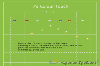
Split your players into two teams, giving one group of players a set of coloured bibs to set them apart, and quickly tell your players the following laws: We will be playing a rugby league style touch. When touched: set the ball down, stand over the ball, allow the scum-half to move the ball away from the point of contact. The defenders should stay on side following a touch, and should not compete for the ball. Any infringements in defence should result in the defending team conceding 10 Meters or possibly giving 1 or more extra touches to the attacking team. I'll leave this to your judgement depending on your team's age, skill level, and your session target/s. The attacking team can sustain three touches before they have to kick. Their kick should be as it would be in the game: a kick to touch, a kick for territory, or a kick that can be regained e.g. a grubber kick. The defenders should behave as they would in a real game. Quick put in's from the touchlines replace lineouts. Defenders who take the ball from an attacking kick should counter attack. A forth touch results in a turn over. The Scrum Half has a maxium of 5 seconds to move the ball from the point of touch. A ball kicked directly to touch from outside the attacking teams 22, or where the ball has been taken into the 22 by the attacking team and then kicked into touch - will result in a turn over with play starting on the five meter line closest to where the kick was made. The defence should be 10 meters back. A ball kicked from inside the attacking teams 22 can go directly to touch, as long as the attacking team did not carry the ball into their own 22 before the kick. The resulting put in will be to the opposition from where the ball has went into touch. Quick put-in's are enoucraged, if not possible the ball is played from the 5 meter line with the defence 10 meters back. Give points for quick put ins that work. Feel free to play with any of noted laws, let us know the law variations that work for you!

General

Unfortunately there were no results for your search! Please try again
set play ANSWERS
View All

what are simple drills for touch rugby...to get ready?

what are simple drills for touch rugby...to get ready for the season?

Archived User Coach

Hi there.I have a team of 11 to 13 year olds, some?

A MIX OF NEW AND EXPERIENCED PLAYERS. Hi there.I have a team of 11 to 13 year olds, some who are very new to the game, some who are experienced and have played to a high level for their age. What is the best way to set up a team to help the newer players along,and to play to the better players strengths? The players can be quite flexible as far as positions played goes.

Archived User Coach

PLAYERS STRUGGLE TO KEEPTHEIR POSITIONS ON PITCH. ?

PLAYERS STRUGGLE TO KEEPTHEIR POSITIONS ON PITCH. My young team of 11 to 13 year olds struggle to hold position on the pitch, with a stand off ending up on the wing, the winger ending up at scrum half etc! How can I help them to keep their positions?

Archived User Coach

Translation Please

I recently received this in my "inbox"%3A Building a Flat Line Defence System Dear Rugby Coach, Whether your in the northern hemisphere and winding down for this season, or maybe already planning for next, or your in the southern hemisphere and the new season has just begun, this week we are pleased to present the workings of a Flat Line Defensive System. The following is the principles of how the system is implemented, Full Members can download the training drills to coach the system with their team. Upgrade to full access today. When teaching any defensive formation, you must always consider, how it works both in open play / set-pieces and from the breakdown, and that all players understand the roles they play. Priniciples for Open Play Key pointsThe make sure you choose the system to fit playing strength%3A Either IN-2-OUT or OUT-2-IN. Considering using INSIDE-2-OUT Midfield Gain-Line never broken. Surrender very wide attack to cover defence. Offensive 2m tackles. Pendulum wide cover. Huge communication requirements. Step-in System. Up and Drift. Forgive me but I haven't got a scooby do (clue) what the above means - please could the technobabble be explained (maybe we should start a dictionary of coaching terms?)

Gary D Coach, Northern Ireland

New rules... how best to take long corners ?

Given the lovely new rules... Can you suggest how to coach a team taking long corners. No player can be 5 yards from player taking the long corner - So creating a 2v1 now is impossible. How do you coach this ? Thanks

Grant Hunt Coach, United Kingdom

Forward running; positoning after breakdown

I am trying to explain to my Under 12 forwards where they should run to after a breakdown. Inevitably the committed lads end up running from ruck to ruck without getting there hands on the ball. How do you coach positioning? When to hang in the back line, when to cover wide, when to set up a chain play? Traditional unopposed has the forwards going thru ruck after ruck when the backs have broken the play down but how do you explain positioning to the big men?

David Mason Coach, England

My son has played all season U9's on the wing and has?

My son has played all season U9's on the wing and has now be brought into a inside centre role. What are the key differences he needs to make to be successful in his new position

Archived User Coach

I am looking for Loop pass coaching games to improve?

I am looking for Loop pass coaching games to improve my player game.

Archived User Coach

Motion of the first receiver from a tap restart

From a tap restart may the player who is to first receive the ball start runnning before the player taps the ball? The player receiving the ball is at all times behind the player tapping the ball.

Archived User Coach

Any thoughts on a condiioned game where the emphasis?

Any thoughts on a condiioned game where the emphasis is on lineouts and in particular to coach a peel

Mike Taylor Coach, England

How do I coach women the game of rugby?

I just finished my collegiate rugby career. I feel inspired I would love to coach rugby to women in countries that have a lower popularity of women's rugby. How do I get started?

Archived User Coach

Can I and should I coach basic tackle skills to U8s?

Does anyone have a definitive answer to this question%3A can I coach basic tackling skills to U8s now, in preparation for next season, without falling foul of any RFU rules or regulations? Hugo

Hugo Norton-Taylor Coach, England

Blindside position - I'm new to the game and I'm not sure what to do?

This is my first year playing on a rugby team for my school, grade 9, im much smaller than everyone else but i run fast and can be strong. my position is the blind side wing, and i dont understand what im supposed to do. it seems like i just jog and stay far away, but i dont know what im supposed to do if someone from the opposite team comes near me and noone else is one them, am i supposed to tackle? i also have trouble tackling cause my arms dont rap fast enough when they run into me, any advice?

Archived User Coach

Trouble gettng the ball to our winger from first phase ball

We have two very fast wingers but we cannot get them the ball . Teams are coming up fast and we are lucky to get the ball to the O. C. We have tried setting up further back but too many times we are getting caught behind the gain lines when we do that. Any ideas?

john mcmullen Coach, United States of America

How to stop U12s forwards picking the ball up?

My forwards constantly pick and go from the rucks in games and this is starving the backs from any ball. Is there anything I can do, drills etc, which would help them realise there is a time and a place for pick and go, but to do it every time narrows the game and it becomes ineffective and not good teamwork.

Simon Luxton Coach, England

u10 attacking help

Hey guys,My under 10s side (u9 last year) was really lacking defence and I worked extremely hard with them to start loving the contact and defending as a team. so much that this year their defence is really good but they've falling behind in being able to attack. I started loosely having them play set positions I.e forwards and backs so the forwards pump the hit ups and backs try to spread the ball. it works well in training and they seem to get it but it goes out the window during games.Sundays game was 0-0 for 30mins with the other team slipping in for one try. mind you this same team beat us 52-0 last year.how can I help them start getting points on the board? cheers

Matt Barton Coach, United Kingdom

How do I coach women the game ...

I just finished my collegiate rugby career. I feel inspired I would love to coach rugby to women in countries that have a lower popularity of women's rugby. How do I get started?

Archived User Coach

Trouble gettng the ball to our...

We have two very fast wingers but we cannot get them the ball . Teams are coming up fast and we are lucky to get the ball to the O. C. We have tried setting up further back but too many times we are getting caught behind the gain lines when we do that. Any ideas?

john mcmullen Coach, United States of America

Getting 9-10 year olds to spre...

Getting quite frustrated that my u10's are not using the space on the pitch and tend to bunch up. Despite various drills and game scenarios to force them to spread out and pass to someone in space they revert in any game to bunching up around the ball and taking it back into the thick of the opposition rather than looking left or right! Any ideas how to change their ways?

Ian G Coach, England

First time coaching the U13s n...

I have just started helping our head coach with under12's team. He wants to retire and has put me forward to be head coach next season. I am a little worried on how i should aproach training with the boys, going to a full 15 a side team on a full pitch. Any ideas would be greatly appreciated.

Archived User Coach

JOIN SPORTPLAN FOR FREE

  • search our library of 1100+ rugby drills
  • create your own professional coaching plans
  • or access our tried and tested plans

Sportplan App

Give it a try - it's better in the app

YOUR SESSION IS STARTING SOON... Join the growing community of rugby coaches plus 1100+ drills and pro tools to make coaching easy.
LET'S DO IT