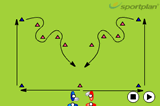
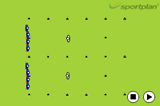
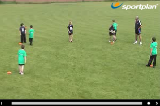
Within a set playing area split your players into two groups - catchers and runners.
It's the catcher's job to tag as many runners as possible with the ball.
Once a runner has been tagged they are "stuck", and must stand in a T-shape, with their arms up. They cannot move until they are released by another runner.
If you are stuck, the other players can release you by touching you on the head or running under your outstretched arms and/or legs.
The tag should make contact on another a players' trunk (between neck and waist height).
Play within a set period of time (ie 2 minutes) or until all runners have been caught.
With small groups only have one catcher. If you have a large group allocate 2-3 catchers.
Players should be using quick feet, changes of pace and direction to avoid being caught.
To make this drill easier/harder you can reduce/increase the size of the playing area.

in more ways than one
 sportplan_netball

in more ways than one
sportplan_rugby

Tacklers are aiming lower, so carriers who dip late put heads at risk. Teach footwork, a strong early body height and leg drive to win the collision safely.

The hooker's brake foot moved from trial into full law in July 2026. Here is how to coach it so your front row stays stable, legal and safe.

Your players can pass beautifully in a warm-up grid. Then a defender closes, their lungs are burning, and the ball goes to ground. Here is how to build catch-pass skills that hold up when it matters.