So You're Running a Junior Rugby Team
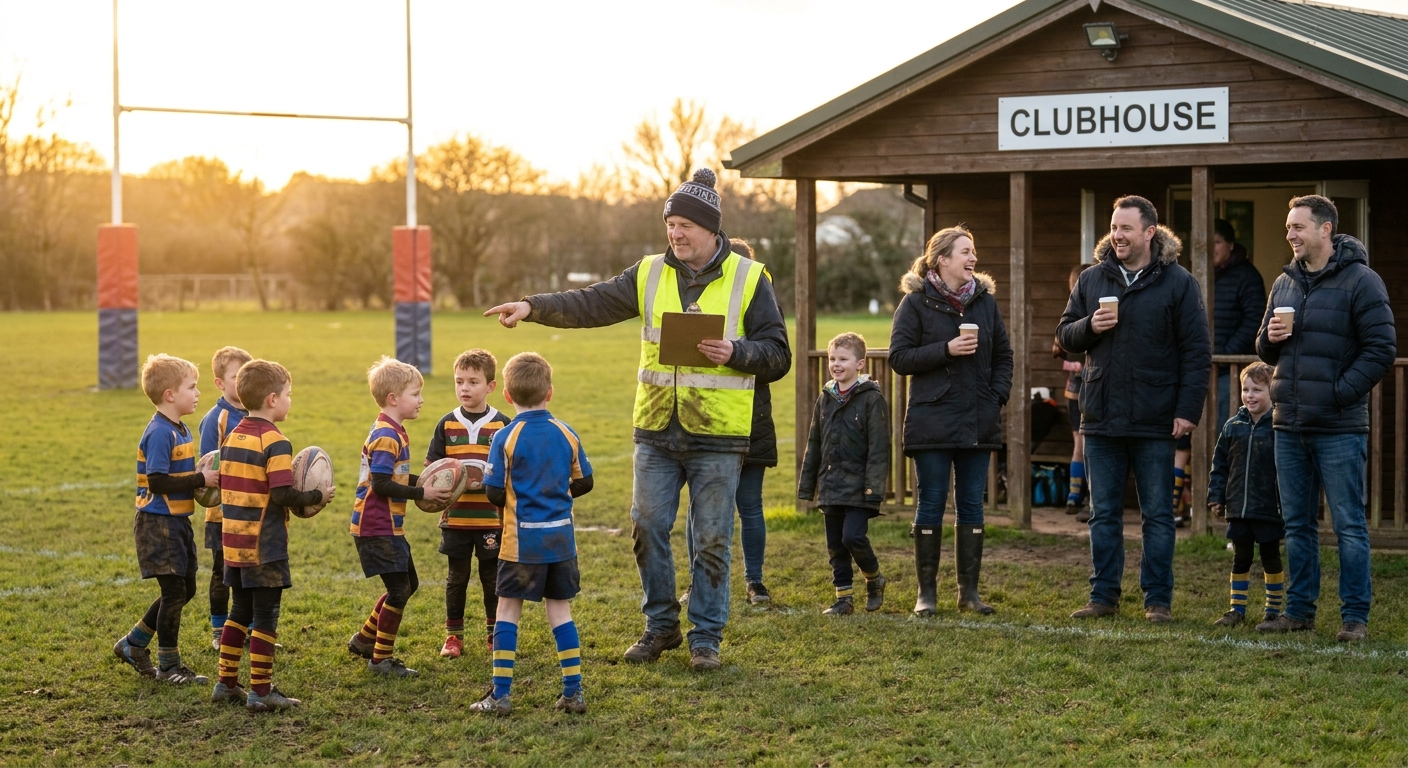
It usually starts with a quiet word at the clubhouse: "We're a coach short for the under-9s - could you help out?" Before you know it you have a team, a fixture list and twenty children looking up at you on a cold Sunday morning. If that is you, take a breath. Thousands of volunteers do exactly this every season with no playing background at all, and they get through their first year just fine. The job is mostly organisation, warmth and a willingness to learn - not a rugby CV.
This guide walks you through a first season in the order things actually happen: getting set up safely, sorting kit and equipment, planning sessions that are safe and fun, managing parents and the sideline, arranging fixtures and a pitch, and handling the money and admin. Work through it once and the rest of the season becomes routine.
Step 1: Get Set Up Safely
The single best decision a new junior coach can make is to join an existing RFU-affiliated club rather than trying to build something from scratch. An established club already has the pitch, the insurance, the safeguarding structure and the experienced volunteers you will lean on all season. Starting your own club is possible, but it is a much bigger undertaking - if that is genuinely your situation, work through our starting a rugby club checklist first, because affiliation, insurance and safeguarding all have to be in place before a single child runs onto the pitch.
Affiliation and player registration are handled by the club through RFU GMS (the RFU's Game Management System) - the official platform the RFU uses for club affiliation and registering players. As a new volunteer you will not usually drive that yourself; your club secretary does. But you do need to be properly set up as a coach, and there are three things to sort early.
Your Coaching Set-Up Checklist
- DBS and safeguarding: An in-date enhanced DBS check plus the RFU's safeguarding training, arranged through your club's Designated Safeguarding Officer. This is a condition of working with children - start it early, as checks take a few weeks.
- Entry-level coaching course: Book the RFU's introductory age-grade coaching qualification. It gives you the basics of running a safe, age-appropriate session and the confidence to lead one.
- HEADCASE concussion module: Complete the RFU's free HEADCASE course so you can recognise concussion and head injury. The principle is simple and non-negotiable - if in doubt, sit them out.
- Know the age-grade rules: Read the RFU age-grade regulations for your specific age group. They set out exactly what your players can and cannot do - tag, tackle, ruck, scrum - and the squad sizes and pitch dimensions.
- Find your helpers: You cannot run a session of twenty children alone. Recruit two or three parent helpers, and make sure anyone in a regular supervisory role is DBS-checked too.
None of this is meant to put you off - it is the framework that keeps children safe and lets you coach with confidence. Your club has done it many times and will hold your hand through every step.
Step 2: Kit and Equipment
Junior rugby is refreshingly light on kit, which is one reason it is such an accessible sport for families. There is a clear line, though, between what each child needs and what the team needs.
For every player: a properly fitted mouthguard (gum shield) is essential the moment contact is introduced - never let a child train or play in contact without one - along with rugby boots with moulded studs and a club shirt, shorts and socks. That is genuinely all most families need to buy.
For the team, your kit bag should hold: a good bag of balls in the right size for your age group, plenty of cones for marking grids and drills, a well-stocked first-aid kit with at least one trained first-aider present at every session, and water and spare bottles. For the older, contact age groups you will also want tackle bags and tackle shields so players can learn and rehearse safe contact technique against a soft target before they do it on each other. Tag belts are essential for the minis. Most of this lives at the club; check what is already there before you buy anything.
Step 3: Plan Safe, Fun Sessions
The golden rule of junior rugby coaching is simple: maximum activity, minimum standing around. Children come to run, touch the ball and laugh with their friends - long queues and long talks lose them fast. Keep instructions short, keep everyone moving, and build every session around games rather than drills wherever you can.
Safety is built into the structure of the game. The youngest age groups play tag rugby with no contact at all - players pull a tag from a belt instead of tackling - which lets children learn to run, pass and find space without any risk of collision. As they get older, the RFU age-grade rules introduce tackling, then rucking, then scrummaging, one step at a time, so contact is always taught progressively and only when children are ready. Always coach to your age group's rules, never the level above.
A reliable session shape for minis and juniors looks like this:
A Simple Junior Session Structure
- Welcome and warm-up (10 mins): a fun, ball-handling warm-up game that gets everyone moving and switched on.
- Skill focus (15 mins): one clear theme - passing, evasion, finding space - taught through small-sided games, not lines.
- Game time (20 mins): a conditioned game where they apply the skill. This is what they came for.
- Cool-down and well-done (5 mins): a gentle finish, a quick word of praise, and send them home grinning.
You do not have to invent any of this. Our free rugby session plan template gives you a ready-made structure to drop activities into, and the rugby drills for juniors guide is full of age-appropriate, low-contact practices. Here are two non-contact favourites to get you started:


Step 4: Manage Parents and the Sideline
Here is a truth no coaching course quite prepares you for: managing the parents is often harder than managing the children. The good news is that the vast majority are supportive and just want to help. A few simple moves keep the sideline positive all season.
Set expectations early. At your first session, gather the parents and explain your approach in a sentence or two: everyone plays, everyone develops, encouragement only from the touchline, and you - not the parents - do the coaching during the game. Most parents are relieved to be told. Recruit the willing ones into clear jobs: a first-aider, a kit person, someone to run the half-time oranges, someone to help with messages. A parent with a job is a parent on your side.
Communication is where new coaches sink or swim. You will be juggling availability for matches, subs and match-fee collection, kit reminders, fixture changes and the inevitable "is training on if it's raining?" Done by hand across a noisy WhatsApp group and a spreadsheet, this becomes a second job. Our guide to rugby club communication covers how to keep parents informed without it taking over your evenings.
Step 5: Fixtures, Festivals and a Pitch
In the minis and younger junior age groups, the season is built far more around festivals - friendly tournaments where several clubs bring teams for a morning of short games - than around a competitive league. They are the highlight of the junior calendar: lots of rugby, lots of children, and a brilliant, low-pressure way for your team to play different opposition.
Your job is to arrange friendly fixtures with nearby clubs, enter the local festivals, and make sure you have a pitch and a referee sorted for any games you host. Your club's age-group coordinator usually holds the festival calendar and the contacts, so ask early - the popular festivals fill up. Keep a simple shared calendar so parents always know where to be and when. Our guide to rugby fixtures and tournaments walks through arranging and running them smoothly.
Step 6: The Money and Admin
Finally, the admin. Even a single junior team has money flowing through it - annual subs or termly fees, match fees or festival contributions, and the occasional kit or social cost. For families, junior rugby is one of the more affordable team sports, but the club still has real running costs to cover: pitch upkeep, affiliation, insurance, coaching courses and kit. Setting fair subs that cover those costs without pricing anyone out is a genuine skill, and our guide to rugby subs and match fees covers exactly how to pitch them.
Collecting that money, chasing the ones who forget, and keeping a clean record of who has paid is where the evenings disappear. This is the admin-to-coaching bridge, and it is worth getting right early so it never owns your season.
A club admin app can take most of this off your plate by putting availability, subs and match fees, registration and parent communication in one mobile-first place - which is roughly 90% of how parents will actually engage - instead of a spreadsheet plus a WhatsApp group. Teamo is one such tool: it is free for up to 25 members with no ads, collects subs and match fees by Direct Debit (2% + 20p, cheaper than card for recurring subs) as well as card, builds live payment status into the team sheet so you collect the large majority of what you are owed, and gives the club a branded app and newsfeed for parent comms. In honesty, Teamo is made by Sportplan, the same team behind this site, so weigh that as you would any recommendation - but it is genuinely built for the whole club from day one. One important caveat: RFU GMS remains the official place for your club's affiliation and player registration - an admin app like Teamo complements that day-to-day club admin, it does not replace or sync with the RFU's system. If the weekly chasing is wearing you down, you can see how Teamo handles the day-to-day club admin.
You've Got This
That is a whole season laid out, and it can look like a lot on one page. In practice you tackle it one step at a time, the club carries you through the set-up, and within a few weeks the routine takes over. Keep the children safe, keep it fun, lean on your helpers, and do not be afraid to ask the experienced coaches for help - every one of them started exactly where you are. When you are ready to plan that first session, browse the full Rugby drills library for hundreds of age-appropriate practices.
Frequently Asked Questions
What do I need to start coaching junior rugby?
Start by joining an existing RFU-affiliated club rather than going it alone - they have the insurance, the pitch and the structure already in place. Then book the RFU's entry-level age-grade coaching course, complete an in-date DBS check and the RFU safeguarding course through the club, and do the RFU HEADCASE concussion module so you can spot a head injury. On the practical side you need a bag of balls, cones, a first-aid kit with a trained first-aider on hand, water, and for older age groups tackle bags and shields. Every child needs a mouthguard and rugby boots. You do not need to be an ex-player - enthusiasm, organisation and the right courses matter far more.
Do rugby coaches need a DBS and safeguarding training?
Yes. Anyone coaching or regularly supervising under-18s in rugby needs an in-date enhanced DBS check and must complete the RFU's safeguarding training, arranged through your club's Designated Safeguarding Officer. This is not optional box-ticking - it is a condition of working with children and of the club's RFU affiliation and insurance. Your club's safeguarding officer will guide you through the DBS application and tell you which course to book. Do it early, because checks can take a few weeks to come back.
Is junior rugby safe?
Junior rugby is designed to be progressive and age-appropriate. The youngest age groups play tag rugby with no contact at all, and the RFU age-grade rules then introduce tackling, rucking and scrummaging gradually as children get older, with strict limits on what each age group can do. Coaches are trained to teach safe technique, and the RFU HEADCASE programme makes concussion awareness central - the rule is simple: if in doubt, sit them out. No contact sport is risk-free, but a properly run age-grade session with trained coaches, the right kit and good supervision manages those risks carefully.
How much does junior rugby cost?
For families, junior rugby is one of the cheaper team sports. Most clubs charge an annual membership or termly subs - often somewhere around £50 to £120 a year depending on the club - plus the cost of boots and a mouthguard. Many clubs offer concessions or sibling discounts and will help any family for whom cost is a barrier. For the club, the bigger costs are pitch hire or ground upkeep, RFU affiliation, insurance, coaching courses and kit. Subs are set to cover those running costs, not to make a profit.

 sportplan_rugby