The community tackle height law is the story of this season, but the more interesting coaching problem is what happens immediately afterwards. Tackle lower, and the ball is no longer wrapped up in the tackle. It stays live, the carrier stays on their feet longer, and the contest at the breakdown arrives sooner and messier than it used to.
Teams that have only retrained their tackle technique will be well-drilled for the first second of contact and improvised for the next four. The breakdown is where a lower tackle height is either an advantage or a liability, and which one it becomes is entirely a coaching decision.
What Changes at the Contact Area
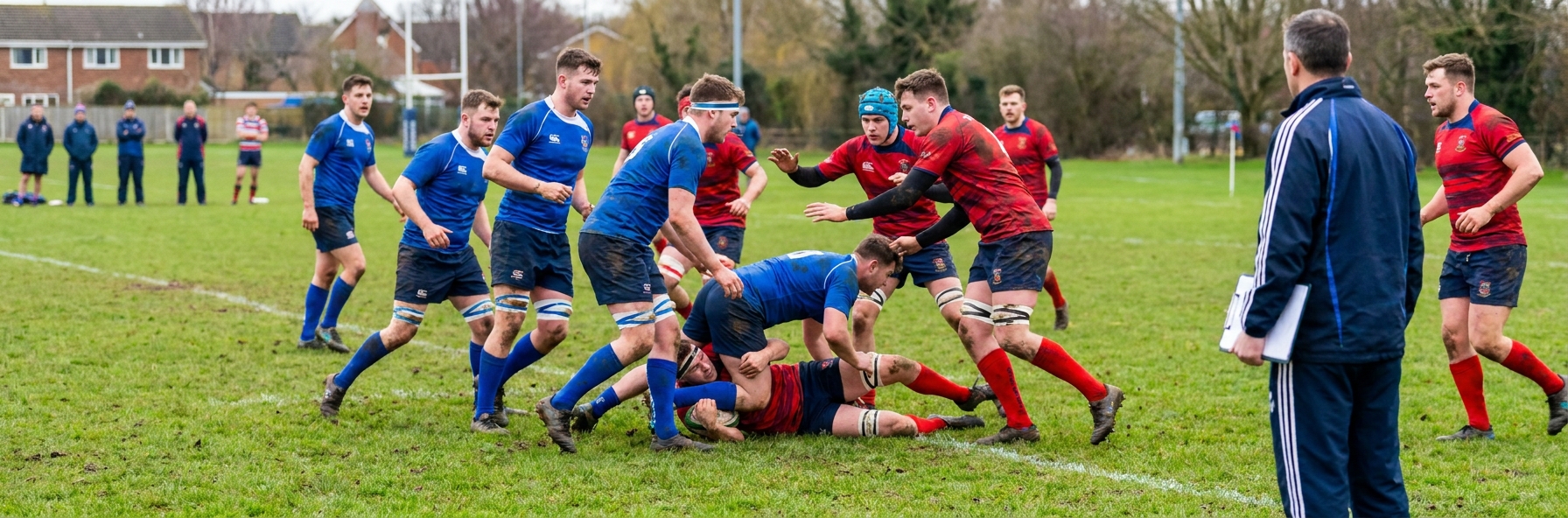
Three things shift when tackles come in lower. Offloads become more available, because the tackler's arms are around the legs rather than the ball. Carriers hit the ground later, which delays the moment the ruck legally forms. And the jackal contest becomes more attractive, because a ball carrier brought down by the legs often presents the ball in a vulnerable position.
Put together, that means the breakdown is quicker to arrive and less predictable. The team that has rehearsed its roles wins those moments; the team that relies on whoever gets there first does not.
The Attacking Side of It
For the attacking team, the opportunity is genuine. A carrier who stays on their feet through a leg tackle has a moment to get the arms free, and an offload out of that position breaks the defensive line completely because the defence has already committed.
The discipline required is knowing when not to. An offload attempted when support has not arrived is a turnover in the worst possible place. Coach the decision as a pair: the carrier's job is to stay alive and present the option, and the support player's job is to be close enough and square enough to take it.
The Defensive Side of It
For the defending team, the priority is the second player. The tackler goes low and takes the legs; the next arriving defender decides the outcome, either by contesting the ball or by shutting down the offload before it happens.
That second player has to arrive legally through the gate and in a strong body position, because the referee is watching the contact area more closely than ever this season. Sloppy entries were tolerable when the tackle wrapped the ball up. They are penalties now.
Coaching the Adaptation
Step One: Train tackle and support as one unit. Never run a tackle drill without a support player, on either side of the ball, from the first session of the year.
Step Two: Rehearse the offload decision. Set up leg tackles where support is sometimes present and sometimes not, so the carrier learns to read rather than to default.
Step Three: Drill the gate. Repetition of legal entry, on both feet, through the correct channel, until players stop thinking about it. This is the cheapest penalty in rugby to eliminate.
Step Four: Speed up the clear-out. If rucks are forming later, the clear-out has to arrive faster. Time it, and make the standard explicit.
Step Five: Contest selectively. Teach players the cues for when a jackal is on and when to fold back into the defensive line, because a failed contest leaves a gap.
Key Coaching Points
- Lower tackles leave the ball live longer, so the breakdown arrives sooner and less predictably.
- Never run a tackle drill without support players attached to it.
- Coach the offload as a decision shared between carrier and support, not as a trick.
- Legal entry through the gate is now a higher-value habit; drill it until it is automatic.
- Set an explicit time standard for the clear-out and hold players to it.
- Teach clear cues for when to contest the ball and when to reload into the line.
Recommended Drills


Frequently Asked Questions
Are offloads really more common with lower tackles?
They become more available, because a tackler around the legs is not contesting the ball. Whether they actually increase depends on whether your players are coached to recognise the moment and whether support arrives. Availability is not the same as execution.
How do I stop my players giving away breakdown penalties?
Most breakdown penalties at community level come from entry, not from intent. Drill coming through the gate on both feet until it is habit, and be strict about it in training. Players who are corrected in training stop doing it on Saturday.
Should every player be taught to jackal?
Every player should be taught the cues for when a contest is on, but not everyone needs to be a specialist. Identify two or three players with the body shape and timing for it, develop them properly, and teach everyone else to fold back into the defensive line instead.

 sportplan_rugby