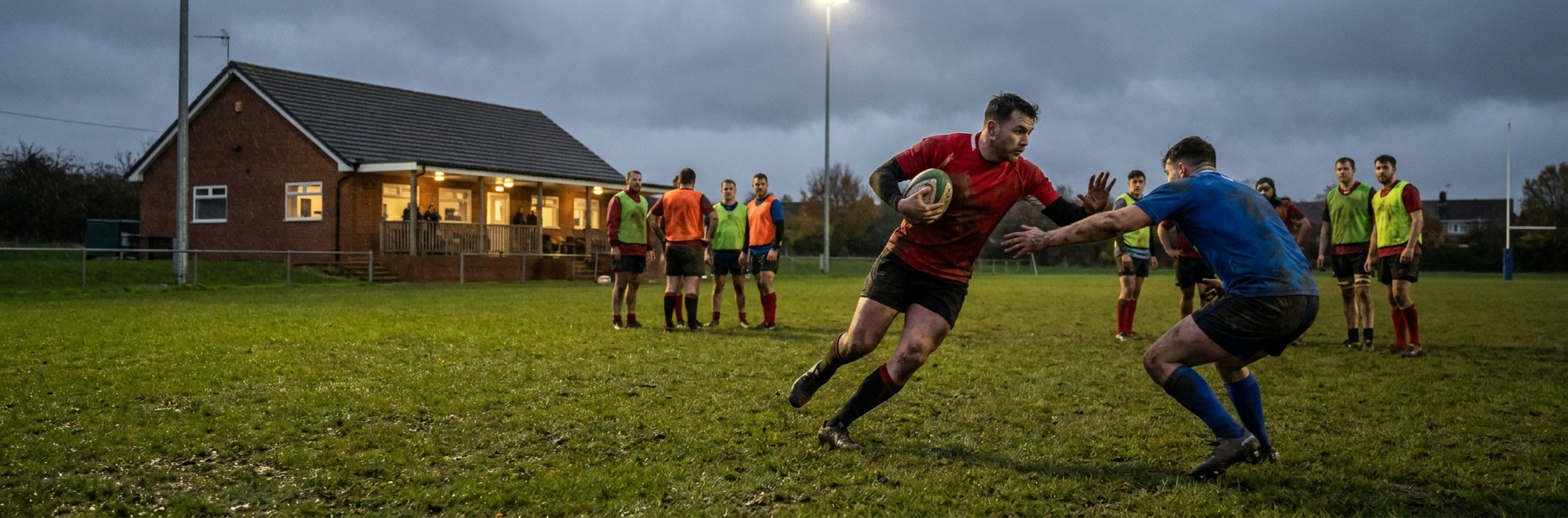
A month into the league season, most coaches have spotted the same pattern. Carriers run straight at the defender, drop their head and shoulders at the last moment and hope to bounce through. Sometimes it works. More often the ball carrier is stopped dead, the ball is buried and the support arrives to a slow ruck.
That late dip is also a welfare problem. In England, community rugby has played to a below-the-sternum tackle height since 2023, and the RFU's law variation asks ball carriers not to lower their height significantly before contact in open play. From July 2026, World Rugby has also written a lower tackle height option into law for community rugby worldwide. With tacklers bending lower, a carrier who suddenly dips brings two heads closer together. Good carrying is now both safer and more effective.
Why Carriers Dip
Dipping is usually a symptom, not a choice. Players arrive at the defender too upright, with no footwork and no plan, so the only thing left is to duck into the hit. Others have been told to "get low" without being taught when, so they drop at the moment of impact rather than setting their height early.
The fix is to move the work earlier. A carrier who uses footwork to shift the tackler, sets a strong, slightly lowered body position a few metres out and then drives through the legs does not need to dip. The RFU's own guidance points carriers towards evasion for exactly this reason.
A Four-Step Carrying Framework
Step One: Evade first. The best collision is the one you avoid. Attack the space beside the defender, not the defender. A change of pace, a step or a swerve two or three metres out makes the tackler turn and reach, which takes power out of the tackle.
Step Two: Set your height early. Lower into a balanced, athletic position before contact, with chest up, eyes forward and the ball held securely. The aim is a steady height you can hold through the contact, not a sudden drop at the last stride.
Step Three: Fight for the edge, not the middle. Use footwork to hit the tackler's weaker shoulder or the gap between two defenders. Leading into contact with a strong shoulder and a fend on the free arm gives you a chance of staying on your feet or getting an arm free.
Step Four: Leg drive, then present. Keep the feet pumping with short, powerful steps after contact. When you go to ground, land on your side, roll to face your own team and place the ball long and clean for the support player.
How to Train It
Warm-up (10 minutes): Footwork and evasion games in channels, such as 1v1 touch, where the attacker scores only by beating the defender with a step or swerve.
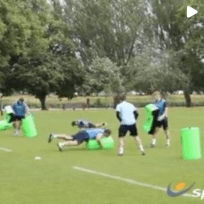
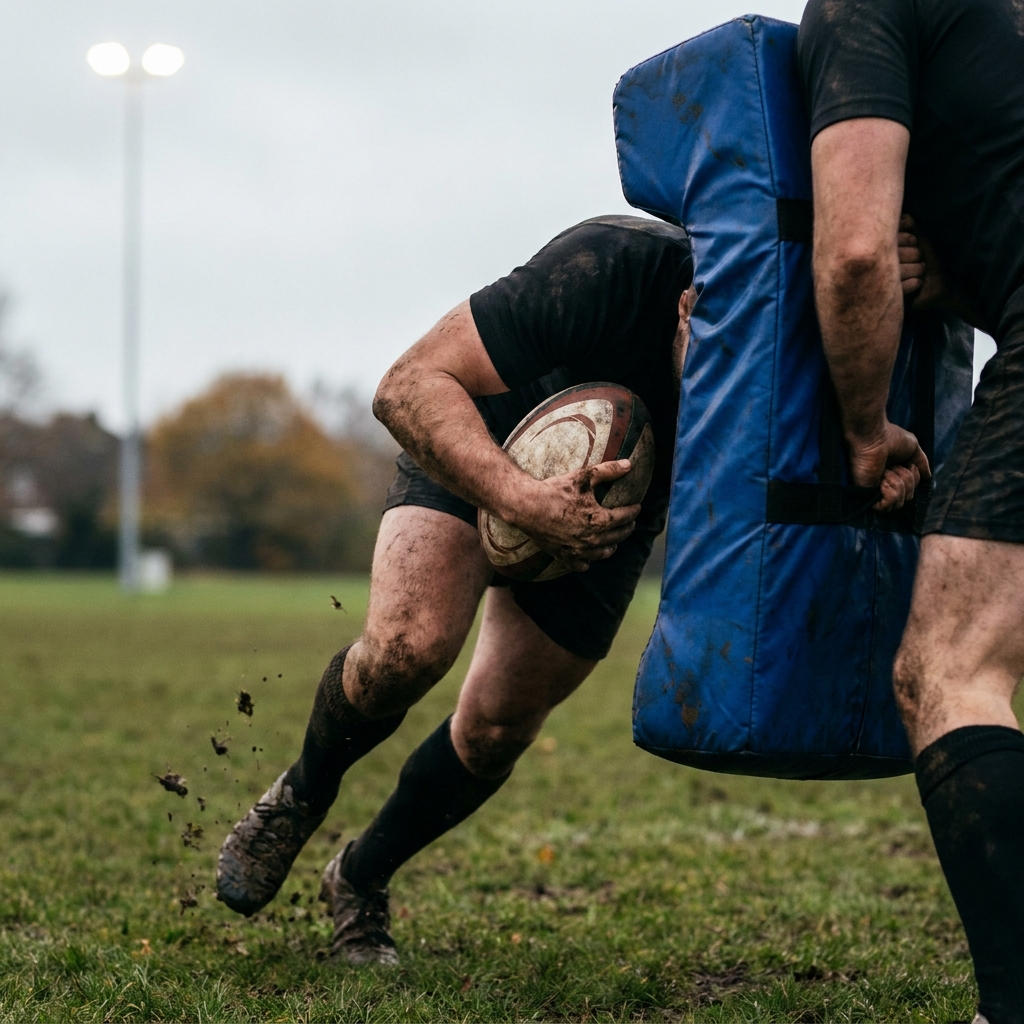
Technical (15 minutes): Walk-through contact on tackle bags or shields. Coaches watch for an early, steady body height and call out any late dip. Build to a jog, then to full pace on pads.
Decision-making (15 minutes): 2v1 and 3v2 in a narrow channel. The carrier must choose between evading, carrying to the edge of a defender or passing to support, then present the ball if tackled.
Game (15 minutes): Conditioned game where a clean carry and presentation earns a bonus point, and any carrier who dips late gives away a free pass to the opposition.
Key Coaching Points
- Evade first; make the defender turn and reach before any contact.
- Set body height early and hold it, rather than ducking at the moment of impact.
- Chest up and eyes forward, never leading with the head.
- Carry the ball securely and away from the tackler, ready to present.
- Short, powerful leg drive through contact to win extra metres.
- Land on your side and place the ball long for the support player.
Recommended Drills

VIEW ALL CONTACT SKILLS DRILLS
Frequently Asked Questions
Is it against the law for a ball carrier to dip into contact?
Under the RFU's community law variation, ball carriers should not lower their height significantly before making contact in open play. Pick and go close to the ruck is treated differently. Check the current RFU guidance for your level, and coach carriers to set their height early rather than duck late.
How do I teach young players to carry into contact safely?
Start with evasion games so contact is the last option, not the first. Then introduce contact on shields at walking pace, focusing on chest up, eyes forward and a firm grip on the ball. Only add live contact once the body position is reliable, and follow the RFU age grade regulations for your group.
Should my forwards carry differently from my backs?
The principles are the same. Forwards often carry closer to the ruck with less space, so leg drive and quick presentation matter more. Backs usually have room to evade, so footwork and fending come first. Everyone should set their height early and protect the ball.

 sportplan_rugby